



Popular
What specific vehicles does Richard Hammond drive in the show?
How does Richard Hammond's personality influence his approach to the challenges?
What are some of the specific challenges Richard faces in the show?
How does Richard's experience with the monster truck differ from his other driving experiences?
What role do the experts play in Richard's learning process throughout the series?
Should I watch it?
Ask Your Own Question

What is the plot?
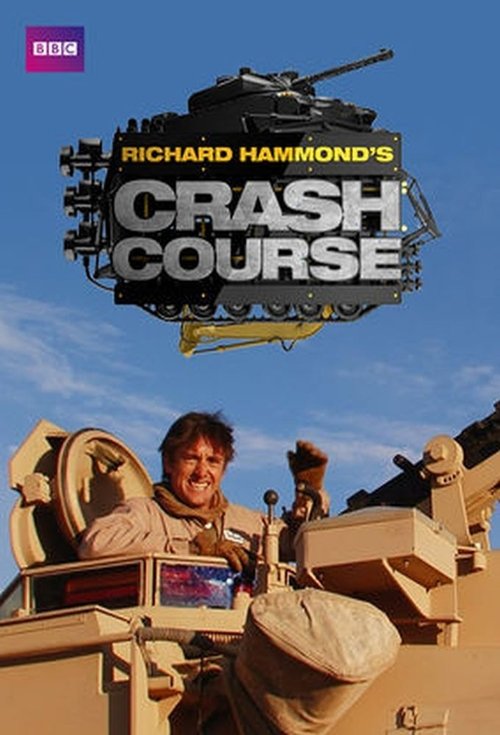
"Richard Hammond's Crash Course" is a television series that follows Richard Hammond as he explores various vehicles and machines, learning how to operate them and experiencing the challenges they present. The show is structured around different episodes, each focusing on a specific type of vehicle or machinery.
In the first episode, Richard Hammond introduces the concept of the show, explaining that he will be taking on various challenges involving different vehicles. He sets the tone with his characteristic humor and enthusiasm, making it clear that he is both excited and apprehensive about the tasks ahead.
The first vehicle he tackles is a tank. Hammond arrives at a military base where he is briefed on the tank's operations. He learns about the tank's controls, the importance of teamwork, and the various roles within the tank crew. As he climbs into the tank, he expresses a mix of excitement and nervousness. The first challenge involves driving the tank over rough terrain, which proves to be a daunting task. Hammond struggles with the controls, and there are moments of tension as he tries to navigate the tank without getting stuck.
After successfully maneuvering the tank, Hammond faces a new challenge: firing the tank's cannon. He receives instruction from a military expert, who emphasizes the importance of precision and safety. The moment he pulls the trigger is filled with anticipation, and the loud blast of the cannon is both exhilarating and intimidating. Hammond's reaction is a mix of joy and disbelief at the power of the weapon.
In the next episode, Hammond shifts gears to focus on a different vehicle: a fire engine. He arrives at a fire station, where he meets firefighters who explain the various functions of the fire engine. Hammond is eager to learn how to operate the equipment, particularly the ladder and hoses. He participates in a training exercise, which involves responding to a simulated fire. The urgency of the situation heightens the stakes, and Hammond feels the pressure as he tries to work efficiently alongside the firefighters.
As he climbs the ladder to reach a simulated rescue, Hammond experiences a moment of fear but pushes through, motivated by the need to save the "victim." The camaraderie he develops with the firefighters adds an emotional layer to the episode, showcasing the teamwork required in emergency situations.
In another episode, Hammond takes on the challenge of driving a Formula 1 car. He arrives at a racetrack, where he meets a professional driver who will coach him. The episode is filled with high-speed action as Hammond learns about the intricacies of F1 racing, including the importance of aerodynamics and tire management. The thrill of speed is palpable as he takes his first laps around the track, and his initial apprehension transforms into exhilaration.
However, the challenge intensifies when Hammond is tasked with competing against a professional driver. The race is filled with tension, and Hammond's determination to keep up leads to a few close calls. The adrenaline rush is evident as he navigates the track, and despite not winning, he feels a sense of accomplishment for having pushed his limits.
Throughout the series, Hammond also explores other vehicles, such as a helicopter and a monster truck. Each episode follows a similar structure: he learns about the vehicle, faces challenges, and ultimately experiences the thrill of operating it. His emotional journey is marked by moments of fear, excitement, and triumph, as he embraces the challenges and learns to appreciate the skill involved in operating these machines.
The series concludes with Hammond reflecting on his experiences, expressing gratitude for the opportunity to learn and grow through each challenge. His journey is one of personal growth, as he confronts his fears and discovers the joy of mastering complex vehicles. The final scenes capture his sense of achievement and the friendships he has formed along the way, leaving viewers with a sense of closure and inspiration.









What is the ending?
In the final episode of "Richard Hammond's Crash Course," Richard Hammond successfully completes his challenge of mastering various vehicles and driving techniques. He reflects on his experiences and the lessons learned throughout the series, showcasing his growth and newfound skills. The episode concludes with a sense of accomplishment and humor, as Hammond shares his journey with the audience.
As the episode begins, Richard Hammond stands in front of a large audience, ready to demonstrate the culmination of his experiences throughout the series. The atmosphere is charged with excitement and anticipation. He takes a moment to reflect on the various vehicles he has tackled, from racing cars to heavy machinery, and the challenges he faced along the way. His tone is light-hearted yet sincere, revealing his genuine passion for learning and adventure.
The first scene transitions to a montage of Hammond's most memorable moments, showcasing his humorous mishaps and triumphs. Clips of him struggling to control a powerful sports car, getting stuck in mud while driving a tractor, and his enthusiastic attempts at mastering a motorcycle flash across the screen. Each clip is accompanied by his witty commentary, highlighting his resilience and determination to improve.
Next, the scene shifts back to the live audience, where Hammond prepares for his final challenge. He introduces the vehicle he will be driving: a high-performance racing car. The crowd cheers, and there is a palpable sense of excitement. Hammond's internal motivation is clear; he wants to prove not only to the audience but also to himself that he has grown as a driver.
As he takes the wheel, the camera captures his focused expression. He navigates the track with a mix of caution and confidence, showcasing the skills he has honed throughout the series. The tension builds as he approaches a particularly challenging turn, and the audience holds its breath. With a deep breath, Hammond executes the turn flawlessly, eliciting cheers from the crowd.
After completing the race, Hammond steps out of the car, exhilarated and relieved. He shares his feelings of accomplishment with the audience, expressing gratitude for the journey he has undertaken. His emotional state is one of pride and fulfillment, having faced his fears and pushed his limits.
In the final moments of the episode, Hammond reflects on the importance of embracing challenges and the joy of learning new skills. He encourages viewers to step out of their comfort zones and pursue their passions, no matter how daunting they may seem. The episode closes with a humorous anecdote, leaving the audience with a smile and a sense of inspiration.
As the credits roll, viewers are left with a lasting impression of Richard Hammond's journey, his growth as a driver, and the joy of adventure that defines "Crash Course." Each character, including Hammond himself, emerges with a sense of accomplishment, having faced their fears and embraced the thrill of the unknown.
Is there a post-credit scene?
"Richard Hammond's Crash Course," produced in 2012, does not feature post-credit scenes. The show concludes each episode without any additional content after the credits roll. Instead, the focus remains on Richard Hammond's humorous and engaging exploration of various vehicles and driving experiences throughout the series. Each episode wraps up with a summary of the challenges he faced and the lessons learned, leaving viewers with a sense of closure without any extra scenes.
What specific vehicles does Richard Hammond drive in the show?
In 'Richard Hammond's Crash Course', Richard Hammond drives a variety of vehicles, including a powerful sports car, a monster truck, and a tank. Each episode features him tackling different driving challenges that highlight the unique capabilities and limitations of these vehicles.
How does Richard Hammond's personality influence his approach to the challenges?
Richard Hammond's personality is characterized by his enthusiasm, humor, and a touch of recklessness. This influences his approach to challenges as he often embraces risks and showcases a playful attitude, which leads to both entertaining moments and genuine learning experiences throughout the series.
What are some of the specific challenges Richard faces in the show?
Throughout 'Richard Hammond's Crash Course', Richard faces various challenges such as navigating a treacherous off-road course in a 4x4, attempting to drive a tank through an obstacle course, and mastering the art of drifting in a sports car. Each challenge tests his skills and adaptability.
How does Richard's experience with the monster truck differ from his other driving experiences?
Richard's experience with the monster truck is particularly unique as it requires him to adapt to the sheer size and power of the vehicle. Unlike his other driving experiences, where precision is key, driving the monster truck involves embracing its weight and height, leading to moments of both exhilaration and intimidation.
What role do the experts play in Richard's learning process throughout the series?
Experts play a crucial role in Richard's learning process by providing guidance, technical knowledge, and safety tips. They help him understand the mechanics of each vehicle and the skills required to operate them effectively, often leading to humorous interactions as Richard navigates their advice with his own adventurous spirit.
Is this family friendly?
"Richard Hammond's Crash Course" is generally considered family-friendly, as it is designed to entertain and educate viewers about various vehicles and driving experiences. However, there are a few aspects that might be potentially objectionable or upsetting for children or sensitive viewers:
-
Mild Language: There are instances of mild swearing or colloquial expressions that may not be suitable for very young audiences.
-
Dangerous Situations: The show features Richard Hammond engaging in various high-speed and potentially dangerous driving scenarios, which could be alarming for some viewers, especially younger children.
-
Physical Comedy and Mishaps: Hammond often finds himself in humorous yet precarious situations that involve falls, crashes, or minor injuries, which might be unsettling for sensitive viewers.
-
Emotional Reactions: There are moments of frustration or fear expressed by Hammond during challenging tasks, which could resonate differently with children who may not understand the context of the humor.
Overall, while the show is light-hearted and entertaining, parents may want to preview episodes to ensure they align with their children's sensitivities.