

























Popular
How do secondary characters influence the main storyline?
What challenges do the main characters face in their relationships throughout the series?
How does the character of Masha evolve throughout the series?
What role does the character of Andrei play in the conflict of the story?
What are the key turning points in Masha and Andrei's relationship?
Should I watch it?
Ask Your Own Question

What is the plot?
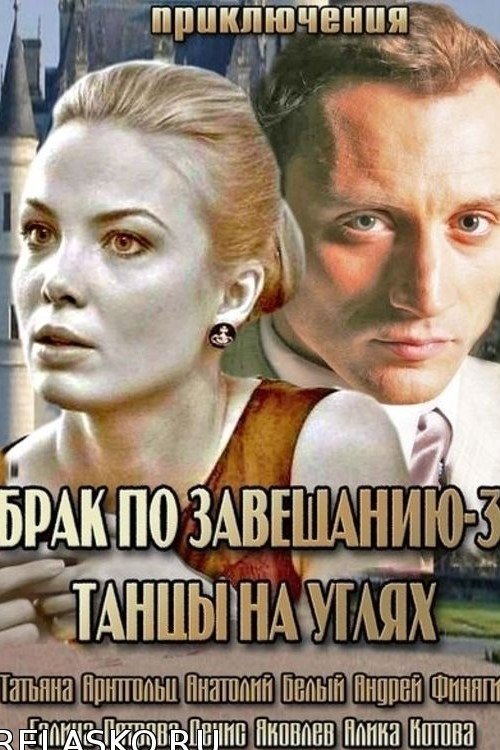
In the beginning of "Брак по завещанию 3. Танцы на углях," we are reintroduced to the main characters, including the central couple, who are navigating the complexities of their relationship after the events of the previous films. The story opens with a scene depicting their daily life, showcasing the tension that has built up between them. The couple is seen arguing over mundane issues, hinting at deeper unresolved conflicts. The emotional distance between them is palpable, and both characters are struggling with their feelings of love and resentment.
As the plot progresses, a significant event occurs when the couple receives a letter from a lawyer regarding the inheritance of a family estate. This letter reveals that the estate is tied to a series of conditions that must be met for them to claim it. The couple is initially excited about the prospect of the inheritance, but the conditions require them to work together, which they find challenging given their current state of discord. This sets the stage for the central conflict of the film.
The couple decides to visit the estate, which is located in a picturesque but dilapidated condition. Upon arrival, they are struck by the memories associated with the place, and the atmosphere is filled with nostalgia. However, the state of the estate also serves as a metaphor for their relationship, which is in disrepair. As they explore the property, they encounter various obstacles that require them to cooperate, forcing them to confront their issues head-on.
During their stay at the estate, they meet other characters, including family members and friends, who provide additional perspectives on their relationship. These interactions often lead to heated discussions, revealing the couple's differing views on love, commitment, and the future. The tension escalates when a family secret is uncovered, which adds another layer of complexity to their situation. This revelation causes both characters to reflect on their past choices and the impact of their family dynamics on their relationship.
As the couple continues to work on the estate, they begin to experience moments of connection amidst the conflict. They share memories and laughter, which rekindles some of the affection they once had for each other. However, these moments are often interrupted by arguments, showcasing the push and pull of their emotions. The couple's internal struggles are highlighted as they grapple with their feelings of love, betrayal, and the fear of losing each other.
A pivotal moment occurs when one character makes a bold decision to confront their fears and express their true feelings. This confrontation leads to a breakthrough in their communication, allowing them to address the underlying issues that have plagued their relationship. The emotional intensity of this scene is heightened by the setting, as they stand in the estate's overgrown garden, symbolizing both the beauty and neglect of their love.
As the story unfolds, the couple faces external challenges that test their resolve. They encounter financial difficulties related to the estate, which forces them to make tough decisions about their future. This situation brings to light their differing priorities and values, leading to further conflict. The stakes are raised when they must decide whether to sell the estate or invest in its restoration, a choice that reflects their commitment to each other and their relationship.
In the climax of the film, a dramatic confrontation occurs between the couple, where they lay bare their fears and insecurities. This scene is charged with emotion, as both characters reveal their vulnerabilities and the pain they have been carrying. The intensity of their exchange leads to a moment of clarity, where they realize the depth of their love and the importance of working together to overcome their challenges.
The resolution of the film sees the couple making a united decision about the estate, choosing to invest in its restoration as a symbol of their renewed commitment to each other. They begin to work together, not just on the estate but also on their relationship, embracing the idea of rebuilding what was once lost. The final scenes depict them finding joy in the process of restoration, both of the estate and their love, culminating in a heartfelt moment that signifies their growth and reconciliation.
The film concludes with a sense of hope and renewal, as the couple stands together in the restored garden, symbolizing their journey and the future they are willing to build together. The emotional weight of their journey is evident, leaving the audience with a sense of closure and optimism for their relationship.
🔥 Trending TV Shows Now
Browse All TV Shows →








What is the ending?
In the ending of Брак по завещанию 3. Танцы на углях, the main characters confront their unresolved feelings and relationships. The story culminates in a series of emotional revelations and reconciliations, leading to a sense of closure for the characters involved.
As the narrative unfolds, we see the characters grappling with their past decisions and the impact of their choices on their current lives. The final scenes depict a poignant gathering where the characters express their feelings, leading to a resolution of long-standing conflicts. Ultimately, the characters find a way to move forward, embracing new beginnings while acknowledging their shared history.
The ending of Брак по завещанию 3. Танцы на углях begins with a tense atmosphere as the main characters gather for a final confrontation. The setting is a dimly lit room, filled with remnants of their past--photos, letters, and mementos that evoke memories of happier times. The air is thick with unspoken words and unresolved emotions.
Scene 1: The Gathering The characters arrive one by one, each carrying the weight of their personal struggles. The protagonist, a woman torn between her past and present, enters last, her expression a mix of determination and vulnerability. As they sit in a circle, the tension is palpable. Each character's internal conflict is mirrored in their body language--crossed arms, downcast eyes, and hesitant movements.
Scene 2: The Confrontation The conversation begins awkwardly, with small talk that quickly fades into silence. The protagonist finally breaks the ice, voicing her feelings of betrayal and confusion. Her voice trembles as she recounts the events that led them to this moment. The others listen intently, their expressions shifting from defensiveness to understanding. One character, who has been particularly distant, finally admits his own fears and regrets, revealing the depth of his emotional turmoil.
Scene 3: Emotional Revelations As the dialogue deepens, each character shares their perspective, leading to a cathartic release of pent-up emotions. Tears are shed, and apologies are exchanged. The protagonist's eyes glisten with unshed tears as she confronts her own mistakes, acknowledging the pain she has caused others. The atmosphere shifts from one of confrontation to one of healing, as they begin to understand each other's motivations and fears.
Scene 4: The Resolution In the climax of the gathering, the characters make a pact to support one another moving forward. They express their hopes for the future, each character outlining their desires and dreams. The protagonist, feeling a sense of liberation, suggests they all take a step towards new beginnings. The others nod in agreement, their faces reflecting a newfound sense of hope.
Scene 5: The Farewell As the gathering comes to a close, the characters embrace, their relationships transformed. The protagonist shares a final, heartfelt goodbye, promising to cherish the memories while looking forward to what lies ahead. The camera lingers on their faces, capturing the mix of sadness and hope as they part ways, each character stepping into the next chapter of their lives.
In the end, the protagonist finds peace within herself, ready to embrace the future. The distant character, once filled with regret, now carries a sense of purpose. The others, too, leave with a renewed sense of connection, having faced their past and chosen to move forward together. The final scene fades out on the protagonist walking away, a small smile on her face, symbolizing the possibility of new beginnings and the strength found in vulnerability.
Is there a post-credit scene?
In "Брак по завещанию 3. Танцы на углях," there is no post-credit scene. The film concludes with a resolution to the main characters' arcs, focusing on the emotional and relational developments that have taken place throughout the story. The ending ties up the various plot threads, leaving the audience with a sense of closure regarding the characters' journeys and the challenges they faced. The absence of a post-credit scene emphasizes the finality of their experiences and the lessons learned, allowing viewers to reflect on the themes of love, sacrifice, and the complexities of relationships.
How do secondary characters influence the main storyline?
Secondary characters in 'Брак по завещанию 3. Танцы на углях' play crucial roles in shaping the main storyline. For example, Masha's best friend, Lena, provides emotional support but also challenges Masha to confront her reality, pushing her towards self-empowerment. Similarly, Andrei's colleague, who represents a potential romantic interest, complicates his journey by embodying the allure of a new beginning. These characters not only enrich the narrative but also serve as mirrors to the protagonists, reflecting their struggles and aspirations, ultimately influencing their decisions and growth.
What challenges do the main characters face in their relationships throughout the series?
Throughout 'Брак по завещанию 3. Танцы на углях', the main characters grapple with various challenges that test their relationships. For instance, the protagonist, Masha, struggles with her feelings of betrayal after discovering her husband's infidelity, which leads to intense emotional turmoil. Meanwhile, her husband, Andrei, battles with guilt and the desire to regain Masha's trust, creating a push-and-pull dynamic that is fraught with tension. Their interactions are marked by heated arguments and moments of vulnerability, showcasing their internal conflicts and the complexities of love.
How does the character of Masha evolve throughout the series?
Masha's character undergoes significant evolution in 'Брак по завещанию 3. Танцы на углях'. Initially portrayed as a devoted wife, her discovery of Andrei's affair shatters her perception of their marriage. As the series progresses, Masha transforms from a passive victim of her circumstances into a more assertive individual. She begins to explore her own desires and ambitions, leading to moments of self-discovery. This journey is marked by emotional highs and lows, as she navigates her pain while also seeking empowerment, ultimately redefining her identity beyond her marriage.
What role does the character of Andrei play in the conflict of the story?
Andrei serves as a pivotal character in the conflict of 'Брак по завещанию 3. Танцы на углях'. His infidelity acts as the catalyst for the unraveling of his marriage with Masha. Throughout the series, Andrei is depicted as a deeply flawed character, torn between his desires and the consequences of his actions. His internal struggle is palpable; he oscillates between remorse for hurting Masha and the temptation of pursuing new relationships. This duality creates a rich narrative tension, as viewers witness his attempts to reconcile his past mistakes while yearning for redemption.
What are the key turning points in Masha and Andrei's relationship?
Key turning points in Masha and Andrei's relationship are pivotal moments that define their journey in 'Брак по завещанию 3. Танцы на углях'. One significant turning point occurs when Masha confronts Andrei about his affair, leading to a raw and emotional confrontation that lays bare their vulnerabilities. Another crucial moment is when Masha decides to take a break from their marriage, allowing her to reflect on her needs and desires. This separation forces both characters to reevaluate their feelings and the future of their relationship, ultimately leading to a deeper understanding of love, trust, and forgiveness.
Is this family friendly?
"Брак по завещанию 3. Танцы на углях" contains several themes and scenes that may not be suitable for children or sensitive viewers. Here are some potentially objectionable aspects:
-
Emotional Turmoil: The characters experience intense emotional conflicts, including betrayal, heartbreak, and familial strife, which may be distressing for younger audiences.
-
Romantic Relationships: The show explores complex romantic entanglements, including infidelity and unrequited love, which may not be appropriate for children.
-
Conflict and Arguments: There are scenes of heated arguments and confrontations between characters, showcasing tension and conflict that could be upsetting.
-
Themes of Loss and Grief: The narrative touches on themes of loss, which may evoke strong emotions and could be challenging for sensitive viewers.
-
Mature Language: The dialogue may include strong language or adult themes that are not suitable for younger audiences.
These elements contribute to a narrative that, while engaging for adults, may not be family-friendly.