
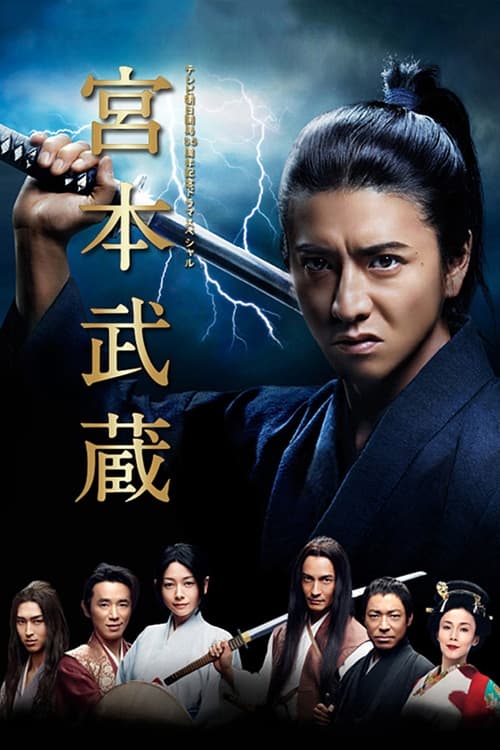












Popular
What motivates Miyamoto Musashi to become a master swordsman throughout the series?
How does Musashi's relationship with his rival, Sasaki Kojiro, develop over the course of the series?
What role does Otsu play in Musashi's life and how does their relationship impact his journey?
What are the key lessons Musashi learns from his various duels and encounters with other swordsmen?
How does the historical context of the Edo period influence the characters and events in the series?
Should I watch it?
Ask Your Own Question

What is the plot?
The story begins in the early 17th century, where a young Miyamoto Musashi, portrayed as a brash and headstrong warrior, is introduced. He is initially seen in a small village, where he is training in the art of swordsmanship. Musashi is driven by a desire to prove himself as a formidable swordsman, seeking glory and recognition. His early training is marked by a fierce determination, but also a sense of recklessness that often leads him into trouble.
As Musashi leaves his village, he encounters a rival swordsman named Kojiro Sasaki. Their first meeting is tense, filled with unspoken rivalry and mutual respect. Musashi's impulsive nature leads him to challenge Kojiro to a duel, but Kojiro, more composed and strategic, declines, suggesting that they should both continue to hone their skills before facing each other. This moment plants the seed of rivalry that will grow throughout the series.
Musashi travels to a nearby town where he meets a group of samurai who are impressed by his skills. They invite him to join their dojo, where he begins to train under a master swordsman. The dojo is a place of discipline and respect, contrasting with Musashi's earlier reckless behavior. Here, he learns the importance of strategy and patience in combat. His internal struggle is evident as he grapples with the teachings of his master, who emphasizes the need for control over raw power.
During his time at the dojo, Musashi forms a bond with a fellow student, who becomes a close friend and confidant. This friendship is tested when Musashi's impulsive nature leads him to challenge a senior student, resulting in a brutal fight. Musashi wins, but the victory is bittersweet as it alienates him from his peers and causes tension within the dojo. This incident forces Musashi to reflect on his approach to combat and the consequences of his actions.
As Musashi continues to train, he learns of a tournament being held to determine the best swordsman in the region. Driven by ambition, he decides to enter the tournament, seeing it as an opportunity to prove himself. The tournament is filled with skilled fighters, and Musashi faces several formidable opponents. Each match is intense, showcasing Musashi's growth as a swordsman, but also revealing his internal conflicts as he struggles to balance his desire for glory with the teachings of his master.
In a pivotal match, Musashi faces Kojiro Sasaki for the first time. The duel is a dramatic clash of styles, with Musashi's raw power pitted against Kojiro's calculated technique. The fight is choreographed with precision, highlighting the emotional stakes for both characters. As they battle, flashbacks reveal their motivations: Musashi fights for recognition, while Kojiro seeks to uphold the honor of his school. The duel ends in a draw, leaving both men frustrated and more determined than ever to improve.
After the tournament, Musashi's journey takes him to a remote mountain village, where he seeks solitude to reflect on his path. Here, he encounters a wise old hermit who teaches him about the philosophy of the sword and the importance of inner peace. This period of introspection allows Musashi to confront his past mistakes and develop a deeper understanding of himself and his motivations. He begins to realize that true strength lies not just in skill, but in the ability to control one's emotions and desires.
As Musashi returns to the world, he learns that a war is brewing between rival clans. He is drawn into the conflict, where he must choose between fighting for glory or protecting the innocent. This moral dilemma weighs heavily on him, and he struggles with the implications of his choices. Ultimately, he decides to fight for the people, aligning himself with a clan that values honor and justice.
The climax of the series occurs during a large-scale battle between the clans. Musashi fights valiantly, showcasing his skills and newfound wisdom. The battle is chaotic, filled with intense sword fights and emotional moments as characters confront their fates. Musashi's internal conflict comes to a head as he faces Kojiro once more, this time in the heat of battle. Their fight is a culmination of their rivalry, filled with tension and emotional stakes.
In the aftermath of the battle, Musashi is left to reflect on the cost of war and the choices he has made. He realizes that the path of the sword is not just about victory, but about the impact one has on others. The series concludes with Musashi standing on a hill, looking out over the land, contemplating his journey and the lessons he has learned. His character has evolved from a reckless youth to a wise warrior, embodying the true spirit of a samurai.









What is the ending?
In the ending of the 2014 TV show "Miyamoto Musashi," Musashi faces his final duel against his rival, Sasaki Kojiro. After a fierce and intense battle, Musashi emerges victorious, solidifying his reputation as a legendary swordsman. The series concludes with Musashi reflecting on his journey, the nature of strength, and the path of the warrior, while other characters, such as Otsu and his friends, find their own resolutions.
As the final episodes unfold, the tension builds towards the climactic duel between Miyamoto Musashi and Sasaki Kojiro. The scene opens with Musashi standing alone on a windswept beach, the sun setting behind him, casting long shadows. He is clad in simple, worn clothing, his expression a mixture of determination and introspection. The weight of his past battles and the lives he has touched hangs heavily on him. He recalls the teachings of his mentor and the lessons learned through hardship, his heart pounding with the anticipation of the confrontation ahead.
The scene shifts to Sasaki Kojiro, who is preparing for the duel in a secluded area, sharpening his famed sword, the "Monohoshizao." His face is calm, yet there is a flicker of excitement in his eyes. He is a man driven by the desire to prove himself, to be recognized as the greatest swordsman. As he practices his techniques, the camera captures the fluidity of his movements, showcasing his skill and confidence. The air is thick with tension, as both warriors are aware that this duel will define their legacies.
The day of the duel arrives, and the atmosphere is electric. A small crowd gathers, whispering in anticipation. Musashi arrives first, his demeanor stoic, yet there is a fire within him. He stands at the designated spot, the waves crashing behind him, a symbol of the tumultuous journey he has endured. As Kojiro approaches, the two men lock eyes, and the world around them fades away. The moment is heavy with unspoken words, a culmination of their rivalry and respect.
As the duel begins, the choreography of their movements is breathtaking. Musashi employs his unorthodox style, using a wooden sword to counter Kojiro's precision and speed. The clash of their blades echoes through the air, each strike resonating with the weight of their convictions. Musashi's internal struggle is palpable; he fights not just for victory, but to find peace within himself. He recalls the faces of those he has lost and the friendships he has forged, fueling his resolve.
The battle reaches its zenith as both warriors push their limits. Musashi, drawing on his experiences and the wisdom gained from his journey, begins to anticipate Kojiro's moves. In a pivotal moment, he feigns a strike, drawing Kojiro in, and with a swift, calculated motion, he delivers a decisive blow. The scene is both tragic and triumphant; Kojiro falls, his eyes wide with disbelief, as Musashi stands over him, breathing heavily, the weight of victory heavy on his shoulders.
In the aftermath, Musashi kneels beside Kojiro, a moment of silence passing between them. There is no celebration, only a profound sense of loss and reflection. Musashi acknowledges Kojiro's skill and the honor of their duel, understanding that true strength lies not in defeating an opponent, but in recognizing their humanity.
The series concludes with Musashi walking away from the beach, the sun rising on the horizon. He is a changed man, having found a deeper understanding of himself and the path of the warrior. Otsu, who has been waiting for him, runs to his side, her eyes filled with admiration and relief. They share a quiet moment, the bond between them stronger than ever, as they look towards the future together.
Other characters, such as Musashi's friends and former rivals, find their own resolutions. Some choose to follow their own paths, inspired by Musashi's journey, while others reflect on their own lives and the choices they have made. The series closes with a sense of hope and the enduring legacy of Musashi, a testament to the complexities of life, honor, and the warrior's path.
Is there a post-credit scene?
The 2014 television series "Miyamoto Musashi" does not feature a post-credit scene. The series concludes its narrative without any additional scenes after the credits roll. The final moments of the show focus on Musashi's reflections on his journey, his growth as a swordsman, and his philosophical insights into life and combat. The absence of a post-credit scene allows the audience to fully absorb the themes of the series and the resolution of Musashi's character arc, emphasizing the importance of his legacy and the impact of his experiences.
What motivates Miyamoto Musashi to become a master swordsman throughout the series?
Miyamoto Musashi is driven by a deep desire to prove himself and find his own path in life. Initially, he seeks revenge for the death of his mentor, but as the series progresses, his motivations evolve into a quest for self-discovery and mastery of the sword. His encounters with various opponents and mentors shape his understanding of strength, honor, and the true meaning of being a warrior.
How does Musashi's relationship with his rival, Sasaki Kojiro, develop over the course of the series?
Musashi's relationship with Sasaki Kojiro is complex and evolves from mutual respect to intense rivalry. Initially, they are both young swordsmen seeking their place in the world, but as they face each other in battles, their rivalry deepens. Musashi sees Kojiro as a formidable opponent who embodies the skills he aspires to master, while Kojiro views Musashi as a threat to his own legacy. Their encounters are charged with emotional intensity, reflecting their personal growth and the weight of their destinies.
What role does Otsu play in Musashi's life and how does their relationship impact his journey?
Otsu serves as a significant emotional anchor for Musashi throughout the series. Their relationship is marked by love, longing, and sacrifice. Otsu represents Musashi's connection to his humanity and the life he could have led outside of the sword. As Musashi becomes increasingly consumed by his quest for mastery, Otsu's unwavering support and eventual heartbreak highlight the personal costs of his ambition. Her presence in his life serves as a reminder of the balance between love and the path of a warrior.
What are the key lessons Musashi learns from his various duels and encounters with other swordsmen?
Throughout the series, Musashi learns invaluable lessons from each duel and encounter. He discovers the importance of adaptability, the need to understand one's opponent, and the significance of mental clarity in battle. Each swordsman he faces teaches him something unique, whether it be the value of strategy, the weight of honor, or the necessity of humility. These lessons shape his evolution from a reckless fighter to a wise and skilled master, reflecting his internal growth and understanding of the way of the sword.
How does the historical context of the Edo period influence the characters and events in the series?
The Edo period serves as a backdrop that profoundly influences the characters and events in 'Miyamoto Musashi.' The era is marked by peace, which leads to a decline in the need for samurai, creating a tension between tradition and the changing world. Characters grapple with their identities as warriors in a time of relative peace, leading to existential questions about purpose and honor. This historical context shapes Musashi's journey, as he navigates the expectations of a samurai while seeking his own path in a society that is evolving.
Is this family friendly?
The 2014 TV show "Miyamoto Musashi" contains several elements that may not be suitable for children or sensitive viewers. Here are some potentially objectionable aspects:
-
Violence and Sword Fighting: The series features numerous scenes of sword fighting and duels, which can be intense and graphic. The choreography emphasizes the brutality of combat, showcasing injuries and the consequences of violence.
-
Death and Loss: Characters face significant loss throughout the series, including the deaths of friends and loved ones. These moments are portrayed with emotional weight, which may be upsetting for younger viewers.
-
Themes of Revenge and Hatred: The narrative explores darker themes such as revenge, betrayal, and the psychological toll of conflict. Characters often grapple with their motivations, leading to morally complex situations.
-
Emotional Turmoil: The characters experience deep emotional struggles, including despair, loneliness, and existential crises. These themes may resonate strongly with sensitive viewers.
-
Historical Context: The show is set in a tumultuous period of Japanese history, which includes references to war and societal upheaval. The portrayal of these historical events may be distressing for some.
Overall, while the series is rich in storytelling and character development, its mature themes and depictions of violence may not be appropriate for all audiences.