















Popular
What happens to Griffith after he sacrifices his comrades during the Eclipse?
How does Guts react to the betrayal of Griffith during the Eclipse?
What role does Casca play during the Eclipse, and how does it affect her character?
What is the significance of the Behelit in the story, particularly during the Eclipse?
How does the relationship between Guts and Griffith evolve throughout the film, especially leading up to the Eclipse?
Should I watch it?
Ask Your Own Question

What is the plot?
Sorry, we aren't able to watch and write up a full detailed plot yet. Check back in a few days.
More Movies Like This
Browse All Movies →




What is the ending?
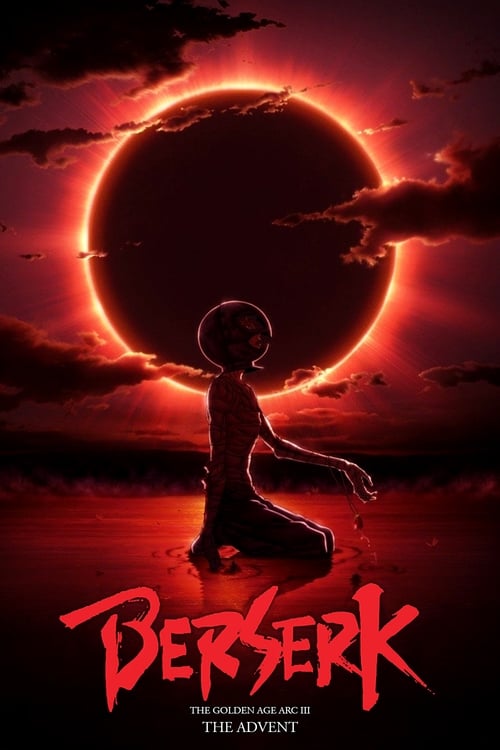
In the ending of "Berserk: The Golden Age Arc III - The Advent," Guts confronts Griffith, who has transformed into Femto, a member of the God Hand. The Eclipse occurs, leading to the brutal slaughter of the Band of the Hawk. Guts fights desperately to save Casca, but she is ultimately taken by Griffith. The film concludes with Guts and Casca's tragic separation, setting the stage for Guts' quest for vengeance.
As the film reaches its climax, the atmosphere is thick with tension and despair. The scene opens with Guts, bloodied and weary, standing amidst the chaos of the Eclipse. The sky is darkened, swirling with ominous clouds, as the ground trembles beneath the weight of the unfolding horror. The Band of the Hawk, once a proud and valiant group, is now surrounded by grotesque Apostles, monstrous beings that embody the very essence of nightmares.
Guts, driven by a fierce determination to protect his comrades, fights valiantly against the Apostles. His sword, Dragonslayer, cleaves through the enemies with brutal efficiency, but the overwhelming numbers begin to take their toll. The camera captures the raw intensity of his struggle, sweat and blood mingling as he pushes himself to the limit. His internal conflict is palpable; he is torn between the instinct to survive and the desperate need to save those he loves.
As the battle rages on, the scene shifts to Griffith, who stands atop a hill, exuding an otherworldly presence. He has transformed into Femto, a being of immense power, and his cold, calculating gaze pierces through the chaos. The moment is haunting, as Griffith's former comrades look upon him with a mix of horror and disbelief. The film emphasizes the stark contrast between Guts' raw humanity and Griffith's chilling detachment.
In a heart-wrenching moment, Guts reaches Casca, who is paralyzed by fear and confusion. He calls out to her, his voice filled with urgency and love, but the darkness of the Eclipse has a grip on her. As Guts fights to protect her, the Apostles close in, and the scene becomes increasingly frantic. The camera captures the desperation in Guts' eyes, a man who has fought through countless battles, now facing an insurmountable evil.
Suddenly, Griffith, now Femto, descends from the sky, and the atmosphere shifts dramatically. The Apostles part to reveal him, and the horror of his transformation becomes clear. In a moment that feels both surreal and tragic, Griffith reaches for Casca, and Guts' world shatters. The film portrays this moment with haunting visuals, emphasizing the betrayal and loss that Guts experiences. He screams in anguish, a raw expression of his heartbreak as he watches Griffith take Casca away.
The scene transitions to Guts, who is left standing amidst the carnage, surrounded by the bodies of his fallen comrades. The once vibrant Band of the Hawk is reduced to a graveyard of dreams and aspirations. The emotional weight of the moment is palpable, as Guts grapples with the reality of his loss. His internal struggle is evident; he is consumed by rage and sorrow, vowing to seek vengeance against Griffith and the God Hand.
As the Eclipse concludes, the remaining members of the Band of the Hawk are either dead or transformed into Apostles, leaving Guts and a few survivors to navigate the aftermath. The film closes with Guts, now a lone warrior, standing against the backdrop of a blood-red sky, symbolizing his unyielding resolve. The final shot lingers on his face, a mixture of pain and determination, as he prepares to embark on a dark journey of revenge.
In summary, the fates of the main characters are sealed in tragedy. Guts is left to confront his demons and the loss of Casca, who is now in the clutches of Griffith. Griffith, having achieved his ambition, stands as a cold, god-like figure, while the Band of the Hawk is irrevocably shattered. The film ends on a note of despair, setting the stage for Guts' relentless pursuit of vengeance in the face of overwhelming darkness.
Is there a post-credit scene?
Yes, "Berserk: The Golden Age Arc III - The Advent" features a post-credit scene.
As the credits roll, the scene shifts to a dark, ominous landscape, where the atmosphere is thick with tension. The camera pans over a desolate battlefield, littered with the remnants of war. The air is heavy with a sense of foreboding, and the distant sounds of clashing steel and anguished cries echo faintly.
In this scene, we see Guts, the protagonist, standing alone amidst the ruins. His massive sword, the Dragonslayer, is planted into the ground beside him, and he appears weary yet resolute. The weight of his past and the burdens he carries are palpable on his face, etched with scars both physical and emotional. His expression is a mix of determination and sorrow, reflecting the turmoil within him as he grapples with the loss of his comrades and the relentless pursuit of vengeance against Griffith.
Suddenly, the scene shifts to a more ethereal realm, where the God Hand, a group of powerful demonic entities, convenes. Their presence is menacing, and they discuss the unfolding events with a sense of foreboding. They speak of the "Eclipse" and the fate of Guts, hinting at the dark path that lies ahead for him and the challenges he will face. Their dialogue is cryptic, filled with ominous implications about the future and the inevitable clash between Guts and Griffith.
The scene concludes with a close-up of Guts' eyes, filled with a fierce resolve, as he grips the hilt of his sword tightly. The screen fades to black, leaving viewers with a lingering sense of anticipation and dread for what is to come in Guts' journey. This post-credit scene effectively sets the stage for the next chapter in the saga, emphasizing the themes of struggle, sacrifice, and the relentless pursuit of one's destiny.
What happens to Griffith after he sacrifices his comrades during the Eclipse?
After Griffith sacrifices his comrades during the Eclipse, he is reborn as Femto, a member of the God Hand. This transformation is marked by a dramatic change in his appearance, where he gains a dark, angelic form. Griffith's new identity as Femto signifies his complete embrace of his ambition and the betrayal of his former friends, particularly Guts and Casca.
How does Guts react to the betrayal of Griffith during the Eclipse?
Guts is consumed by rage and despair upon witnessing Griffith's betrayal during the Eclipse. He feels an overwhelming sense of loss and betrayal, especially as he sees his comrades being slaughtered. Guts's emotional state is tumultuous; he is driven by a desire for vengeance against Griffith, which fuels his determination to survive and fight against the forces of the God Hand.
What role does Casca play during the Eclipse, and how does it affect her character?
During the Eclipse, Casca is initially a strong and capable warrior, but she becomes a victim of Griffith's betrayal. After being assaulted by Femto, she suffers severe psychological trauma, which leads to her mental breakdown. This event profoundly affects her character, stripping her of her agency and leaving her in a vulnerable state, which has lasting implications for her relationship with Guts.
What is the significance of the Behelit in the story, particularly during the Eclipse?
The Behelit serves as a crucial plot device during the Eclipse, representing the choice between sacrifice and ambition. Griffith uses the Behelit to summon the God Hand, leading to the horrific events of the Eclipse. Its presence highlights the themes of fate and the cost of ambition, as it ultimately leads to the sacrifice of the Band of the Hawk and Griffith's transformation into Femto.
How does the relationship between Guts and Griffith evolve throughout the film, especially leading up to the Eclipse?
The relationship between Guts and Griffith evolves from one of camaraderie and mutual respect to one of deep betrayal and enmity. Initially, Guts admires Griffith's vision and leadership, but as Guts seeks his own path and independence, tensions rise. Leading up to the Eclipse, Guts's departure from the Band of the Hawk marks a turning point, as Griffith's desperation for power culminates in the catastrophic events of the Eclipse, shattering their bond.
Is this family friendly?
"Berserk: The Golden Age Arc III - The Advent" is not family-friendly and contains several potentially objectionable or upsetting scenes that may be distressing for children or sensitive viewers. Here are some aspects to consider:
-
Graphic Violence: The film features intense and brutal battle scenes, including dismemberment and bloodshed, which are depicted in a very graphic manner.
-
Death and Suffering: Characters experience significant trauma, loss, and suffering, which can be emotionally heavy and disturbing.
-
Sexual Content: There are scenes that involve sexual violence and exploitation, which are portrayed in a way that can be very unsettling.
-
Dark Themes: The narrative explores themes of betrayal, revenge, and the darker aspects of human nature, which may be too intense for younger audiences.
-
Psychological Horror: The film includes elements of horror and despair, showcasing the psychological toll of war and conflict on characters.
These elements contribute to a mature tone that is not suitable for children or those who are sensitive to such content.








