

Popular
What is the significance of the town of Anarene in the story?
How does Sonny's relationship with Ruth affect his character development?
What role does Sam the Lion play in the lives of the younger characters?
How does the character of Jacy influence the dynamics among the boys?
What is the significance of the final scene at the movie theater?
Should I watch it?
Ask Your Own Question

What is the plot?
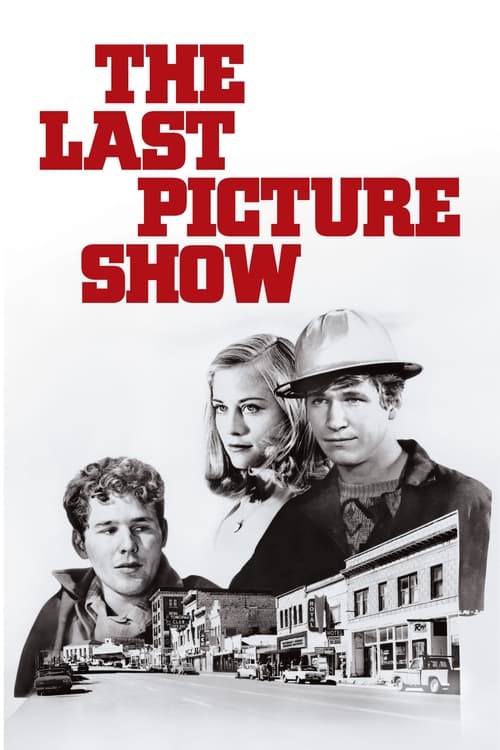
In 1951 in Anarene, Texas, Sonny Crawford and Duane Jackson are on the edge of adulthood in a town that already feels exhausted and half-forgotten, a place where the Royal Theater, the pool hall, the café, and the high school are about all that remains of communal life. The story opens with the boys moving through their routines in a drifting haze of school, football, flirting, and boredom, and everything from the first scenes suggests a world where desire is both urgent and pointless, where people chase each other not because they expect happiness but because there is nothing else to do. Sonny is initially tied to Charlene Duggs, an awkward, plump girlfriend who is no match for the glamour and gravity of Jacy Farrow, the wealthy and beautiful girl who immediately becomes the center of every male fantasy in town. Duane, more socially assured and more openly aggressive in his pursuit of women, makes no secret of wanting Jacy, and Sonny, who is less confident and more emotionally exposed, gets pulled into the orbit of people who are always a little out of his reach.
The town's adult world is embodied by Sam the Lion, the owner of the pool hall, café, and movie house, an older man whose calm authority makes him feel almost like the last decent adult in Anarene. He watches the boys, knows their impulses, and seems to understand the town's shrinking future more clearly than they do. The Royal Theater is not just a place to watch movies; it is where the town gathers, where teenagers perform their social hierarchies, and where the last remnants of shared culture survive. Even the weekly picture show feels like a ritual from a vanishing civilization. The atmosphere is dusty, quiet, and emotionally starved, and the film lets that emptiness seep into everything. People speak casually, but beneath the small talk is a continual pressure of loneliness, humiliation, and yearning.
Jacy Farrow is the bright center of that pressure. She is not simply desired; she knows she is desired, and she uses that knowledge as power. She moves between Sonny and Duane with a kind of bored elegance, giving each just enough attention to keep them competing. Her flirtation is never innocent. It is strategic, amused, and sometimes cruel. She likes the attention, likes the competition, and seems to enjoy proving that boys will rearrange their lives just to stay in her sight. Sonny and Duane are both vulnerable to her, but in different ways. Duane falls for her in a straightforward, almost naive way, while Sonny's attraction is quieter and more wounded, as if he senses from the beginning that he is entering a game he cannot win.
Sonny's private life becomes more complicated when he begins an affair with Ruth Popper, the lonely wife of Coach Popper, the school's coach. Ruth is one of the film's most devastating revelations, because she exposes the emptiness hidden inside the town's moral surface. She is not portrayed as a schemer or a glamorous adulteress, but as a woman starved for tenderness, trapped in a marriage that has become emotionally dead. Sonny's affair with her is awkward, secretive, and physically real, but what makes it powerful is the mutual need underneath it. She gives him warmth, and he gives her the feeling that she is still seen as a woman. Their encounters are not passionate in the usual sense; they are quiet acts of rescue between two people who have nowhere else to go. The film makes this feel both tender and tragic, because neither of them is truly healed by it. They are simply less alone for a moment.
Meanwhile, Jacy continues to manipulate the social field around her. One of the key early humiliations involves a public date and the constant shifting of allegiance between Sonny, Duane, Jacy, and Charlene, the sort of social choreography that in a small town becomes a form of combat. Jacy's behavior around Christmas and the nude swimming party shows how aggressively she pursues excitement and status. She drops Duane to attend the nude swimming party, where she meets Bobby Sheen, a richer and apparently more sophisticated boy who offers her the promise of something beyond Anarene. This is one of the first major turns that reveals the true logic of Jacy's character: she wants movement, luxury, and the thrill of being desired by whoever seems to offer the most escape. She is not in love with any one boy; she is in love with the possibility of outrunning the deadness of the town.
The boys' immature masculinity eventually creates trouble around Billy, a vulnerable local boy who is often treated as a joke or a pawn. Duane arranges a prank involving Billy, and the incident drags Sonny into a confrontation with Sam the Lion. The specifics of the prank matter less than the moral wound it creates. Sonny is embarrassed, angry, and shaken, and his break with Sam is not just a personal quarrel but a rupture with the town's last stable source of guidance. Sam has been a surrogate father figure for the boys, especially Sonny, and the loss of his trust feels like the loss of a compass. For a stretch of the film, Sonny is adrift from the one adult whose judgment he respects. The emotional weather darkens, because if Sam can be alienated, then nothing in Anarene is secure.
That breach does not last forever. The film slowly brings Sonny and Sam back into alignment, and then Sonny and Duane make a trip to Mexico together, a brief, almost dreamlike escape from the dead-end atmosphere of Texas. The trip is not shown as liberation so much as a temporary forgetting, a chance to leave behind the social traps of home. But when Sonny returns, the film delivers one of its central shocks: Sam the Lion has died suddenly. His death is a devastating turning point. It comes without melodrama, but its effect is enormous. The town loses its moral center, the boys lose their most reliable witness, and the world seems even emptier than before. Sam's death is not caused by another character; it is sudden and natural, and that makes it worse. There is no villain to blame. He is simply gone. The feeling is that the last adult who understood this town has vanished, and with him the possibility of wisdom.
Around the same time, the older generation's constraints continue to shape the younger generation's fate. Graduation arrives, marking the end of the boys' school life and the beginning of a future they cannot imagine with much optimism. Duane eventually leaves town and joins the army, preparing for deployment to Korea. That departure matters because it separates the two friends permanently in emotional terms even before the physical separation becomes official. The film does not present military service as heroic destiny so much as a grim route out of nowhere. In a place like Anarene, leaving is almost the only ambition available, and even leaving carries the flavor of defeat.
Jacy, by contrast, is not trapped in the same way as Sonny or Duane. She is rich enough to be moved by family power and social privilege. She is sent off to college in Dallas, and the move demonstrates the film's brutal class divide: some people can be extracted from the town's decay, while others remain in it. Jacy's movement is always outward, always toward a more glamorous horizon, even when she has to use men and manipulation to get there. The deeper twist is that her apparent freedom is limited by her parents' authority. She may perform independence, but when the moment of danger arrives, her family can pull her back and reshape her future.
Sonny and Jacy's relationship reaches a bizarre and painful climax when Jacy persuades Sonny to marry her. The proposal is one of the film's great emotional reversals because it seems, at least for a moment, to promise a conventional resolution to all the drifting desire and rivalry. But Jacy's motives are slippery. She ensures that her parents learn of the plan in time to stop it, and they intervene before the marriage can happen. This is one of the film's sharpest revelations about Jacy: she is not simply a careless flirt but a master of social consequence, capable of using romantic excitement as a temporary game and then retreating behind family power. Sonny is left exposed and humiliated, the possibility of a real future with her collapsing into another manipulation. Her father and mother remove her from the situation, and Jacy is sent away to college, while Sonny is left with the emotional wreckage.
The movie keeps tightening its circle of loss. Duane returns for a weekend, and the old friendship cracks under the pressure of what each boy has become. The confrontation between Duane and Sonny escalates into a violent fight that leaves Sonny hospitalized. This is not just a brawl; it is the physical collapse of the bond that once organized both their lives. The rivalry over Jacy and the stress of separation have corroded whatever easy loyalty they once had. The fight is ugly because it is personal and pointless, the kind of violence that grows out of frustration rather than conviction. Sonny's injury underlines how vulnerable he is in every sense, and the hospital becomes another sign of the town's emotional exhaustion.
While all of this is happening, the film keeps returning to the quiet, intimate ache of Sonny and Ruth Popper. Their affair, which had seemed like a secret refuge, is now shadowed by the general disintegration around them. Jacy's return and the exposure of Sonny's involvement with Ruth make the affair matter in a broader social sense, but even then it remains primarily about loneliness. Ruth is not a fantasy object but a human being whose needs are ignored until Sonny appears. She is embarrassed, angry, and then gradually softened by the knowledge that he comes back to her not for glory but for comfort. Their relationship grows even more meaningful after the town's other social dramas have failed to produce anything lasting. The film insists that genuine feeling can arise where social success cannot.
After Sam's death, Sonny takes over the pool hall and begins to work there, inheriting not just a business but a burden. The pool hall becomes a symbol of continuity and isolation at the same time. It is what Sam leaves behind, but it is also a reminder that Sonny is now occupying a role he never wanted. He is no longer the boy drifting through town under Sam's protection. He is one of the adults now, even if he feels no more prepared than before. The inherited space carries memory in its walls. It also means that Sonny has become the keeper of a fading town culture, one built on conversation, routine, and male companionship, all of it doomed to shrink further.
The final stretch of the story is dominated by a series of endings that arrive almost one after the other. Duane leaves for the army, and Sonny watches him depart by bus toward Korea. The emotional weight of this scene is considerable because it formalizes the departure of the friend who has defined his adolescence. Then comes the death of Billy, who is struck and killed by a passing truck while in town sweeping the streets. This is one of the film's most brutal and unceremonious deaths. Billy runs into the road, the truck driver does not stop, and the boy is simply gone. The hit-and-run has none of the emotional choreography of the earlier conflicts; it is random, sudden, and devastating. It reinforces the film's sense that life in Anarene can be ended by accident as easily as by choice. Billy's death is not caused by any deliberate enemy, only by a passing vehicle and the indifference of the world. It is the final reminder that the town is not just dying culturally but physically and spiritually.
Billy's death pushes Sonny into his last act of emotional retreat. He returns to Ruth Popper for consolation. By this point, all the major supports in his life have been stripped away: Sam is dead, Duane is gone, Jacy has been removed by her parents, and the town itself feels increasingly hollow. Ruth is left as the one place where he can still find some form of human contact. Their reunion is one of the film's most famous and painful scenes. Ruth first vents her anger over how he left her for Jacy, and the moment is raw with hurt. She accuses him in spirit, if not always in direct words, of using her and then abandoning her when something younger and brighter appeared. Sonny sits quietly, devastated by Billy's death and by the wreckage of his own choices. He does not defend himself. Instead, he lets the silence do the work. Ruth slowly softens. The emotional distance between them narrows. Her anger gives way to pity, tenderness, and something like forgiveness. When she says, "Never you mind… never you mind," the line lands as a kind of benediction, a small act of mercy in a place where mercy is rare. The gesture is not a triumphant romance. It is a recognition that both of them are wounded, lonely people who have survived the collapse of every other bond available to them.
The ending is quiet, but it is also devastating. There is no grand resolution, no escape, no reversal that redeems the town or the characters. Sonny does not win Jacy, Duane does not return, Sam does not come back, and Billy is not restored to life. Instead, Sonny remains in Anarene, holding on to what little human warmth is left. The last image lingers over the emptiness of the town, the Royal Theater, and the streets that once seemed full of possibility but now look hollow and abandoned. The title's meaning is fully realized in the final stretch: this is the last picture show, the last flicker of communal life before the screen goes dark. Sonny's return to Ruth is the film's final emotional gesture, and it is deeply sad because it is the best consolation left to him. He has not found happiness, only a temporary shelter from grief. The story closes on the sense that youth is over, the town is dying, and the people who remain are left to comfort one another in the ruins of their own expectations.






What is the ending?
In the ending of "The Last Picture Show," the main characters face the harsh realities of their lives as they transition into adulthood. Sonny, feeling lost and disillusioned, leaves town to seek a new life. Duane, having returned from the military, grapples with his own sense of loss and the changes in his relationships. The film concludes with a poignant sense of nostalgia and the inevitability of change, as the once vibrant town of Anarene fades into memory.
As the film approaches its conclusion, we find ourselves in the small, desolate town of Anarene, Texas, where the lives of the characters have been irrevocably altered by the passage of time and the choices they have made.
Scene 1: The Return of Duane Duane, played by Jeff Bridges, returns from military service, and the town feels different to him. He is greeted with a mix of excitement and melancholy, as he realizes that the people and places he once knew have changed. His reunion with Sonny, portrayed by Timothy Bottoms, is bittersweet. They share a moment of camaraderie, but the weight of their experiences hangs heavily in the air. Duane's relationship with Jacy, the beautiful and ambitious girl they both loved, has also shifted, leaving him feeling unmoored.
Scene 2: Jacy's Choices Jacy, played by Cybill Shepherd, has been navigating her own tumultuous path. She has become increasingly disillusioned with the superficiality of her relationships and the expectations placed upon her. In a pivotal moment, she confronts her mother, who embodies the societal pressures of the time. Jacy's desire for independence clashes with her mother's traditional views, leading to a painful confrontation that underscores Jacy's struggle for self-identity.
Scene 3: The Last Picture Show The titular last picture show at the local theater serves as a metaphor for the fading dreams of the characters. As the film plays, the audience is reminded of the innocence and hope that once filled their lives. Sonny and Duane sit together, reflecting on their past and the choices that have led them to this moment. The theater, once a vibrant hub of activity, now stands as a relic of a bygone era, mirroring the characters' own lost potential.
Scene 4: Sonny's Departure In the final moments, Sonny makes the decision to leave Anarene. He feels a profound sense of disconnection from the town and its memories. As he drives away, the landscape blurs past him, symbolizing his desire to escape the confines of his past. The weight of his experiences, including his complicated relationships with Jacy and his mother, propels him toward an uncertain future. His departure is marked by a sense of resignation, as he acknowledges that he cannot remain in a place that no longer feels like home.
Scene 5: Duane's Reflection Meanwhile, Duane is left to grapple with the changes in his life. He watches Sonny leave, feeling a mix of sadness and understanding. The loss of their friendship and the fading of their youthful dreams weigh heavily on him. Duane's journey has been marked by a search for meaning, and as he stands in the empty streets of Anarene, he realizes that he must confront his own path forward, even if it is fraught with uncertainty.
Scene 6: The Town's Decline The film closes with a haunting image of the town itself, now quiet and desolate. The once-bustling streets are empty, and the remnants of the past linger in the air. The characters' fates are intertwined with the fate of Anarene, as both face the inevitability of change and the passage of time. The final shot lingers on the fading landscape, leaving the audience with a sense of nostalgia and the bittersweet recognition that life continues, even as dreams fade away.
In summary, the ending of "The Last Picture Show" encapsulates the themes of loss, nostalgia, and the harsh realities of growing up. Each character faces their own struggles and choices, leading to a poignant conclusion that resonates with the inevitability of change and the passage of time.
Is there a post-credit scene?
The Last Picture Show, produced in 1971, does not have a post-credit scene. The film concludes with a poignant and reflective ending that encapsulates the themes of loss, nostalgia, and the passage of time. As the credits roll, the audience is left to ponder the fates of the characters and the fading glory of the small Texas town depicted in the film. The absence of a post-credit scene aligns with the film's overall tone, emphasizing the weight of the narrative rather than providing additional content after the story's conclusion.
What is the significance of the town of Anarene in the story?
The town of Anarene serves as a microcosm of American life in the early 1950s, reflecting the struggles and stagnation of small-town America. It is a place where dreams are stifled, and the characters grapple with their desires and disappointments. The town's decline, symbolized by the shuttering of the local movie theater, mirrors the characters' own lost aspirations.
How does Sonny's relationship with Ruth affect his character development?
Sonny's relationship with Ruth is complex and deeply impactful. Initially drawn to her as a source of sexual experience and emotional connection, Sonny finds himself entangled in a web of desire and guilt. Ruth, who is also seeking validation and escape from her own unfulfilled life, becomes a catalyst for Sonny's coming-of-age journey, forcing him to confront his own feelings of inadequacy and longing.
What role does Sam the Lion play in the lives of the younger characters?
Sam the Lion serves as a father figure and mentor to the younger characters, particularly Sonny and Duane. His wisdom and experience provide a stark contrast to the youthful impulsiveness of the boys. Sam's struggles with his own loneliness and the fading glory of his past highlight the themes of nostalgia and the passage of time, influencing Sonny and Duane's understanding of adulthood and responsibility.
How does the character of Jacy influence the dynamics among the boys?
Jacy is a pivotal character whose beauty and charm captivate both Sonny and Duane, creating tension and rivalry between them. Her manipulative nature and desire for excitement lead to a series of events that ultimately drive a wedge between the boys. Jacy's actions reflect the complexities of teenage relationships and the impact of desire on friendship, showcasing how her choices shape the emotional landscape of the group.
What is the significance of the final scene at the movie theater?
The final scene at the movie theater is laden with symbolism, representing the end of an era for both the town and the characters. As the theater closes, it signifies the loss of innocence and the fading of dreams for the young adults. The emotional weight of the scene encapsulates the bittersweet nature of growing up, as the characters confront their realities and the inevitability of change.
Is this family friendly?
"The Last Picture Show," directed by Peter Bogdanovich, is not considered family-friendly due to its mature themes and content. Here are some potentially objectionable or upsetting aspects that may affect children or sensitive viewers:
-
Sexual Content: The film includes several scenes depicting sexual relationships, infidelity, and nudity, which may be inappropriate for younger audiences.
-
Substance Abuse: Characters are shown drinking alcohol and smoking, reflecting the social norms of the time, but this may be concerning for some viewers.
-
Violence and Bullying: There are instances of physical altercations and bullying among the characters, which can be distressing.
-
Depression and Suicide: The film explores themes of despair and hopelessness, including a subplot involving a character contemplating suicide, which can be triggering for some.
-
Family Dysfunction: The portrayal of troubled family dynamics and relationships may be upsetting, particularly for younger viewers.
-
Racial Tensions: The film touches on issues of racism and prejudice, which may be uncomfortable for some audiences.
Overall, the film's exploration of complex adult themes and emotional struggles makes it more suitable for mature viewers.








