





































Popular
What motivates Newton Knight to lead a rebellion against the Confederacy?
How does Newton Knight's relationship with Rachel impact the story?
What role does the community play in the formation of the Free State of Jones?
How does the film depict the consequences of the Civil War on the South?
What challenges does Newton Knight face from both the Confederacy and his own community?
Should I watch it?
Ask Your Own Question

What is the plot?
Sorry, we aren't able to watch and write up a full detailed plot yet. Check back in a few days.




What is the ending?
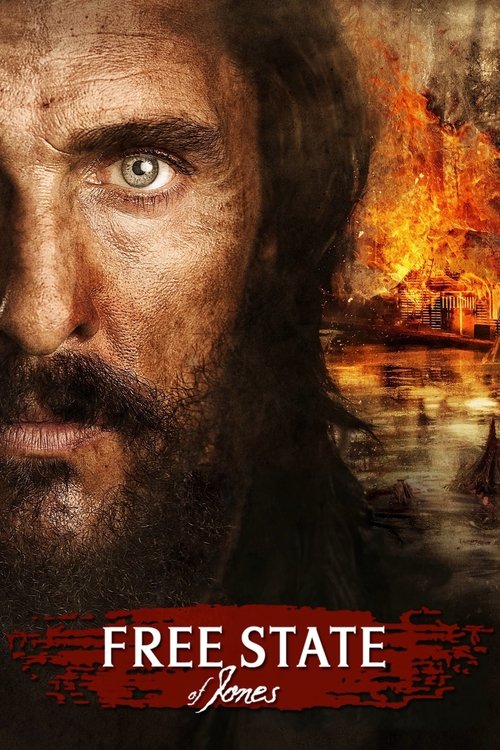
In the ending of "Free State of Jones," Newton Knight and his followers establish a community that stands against the Confederacy. The film concludes with a montage showing the legacy of Knight's fight for freedom and equality, culminating in the eventual recognition of the rights of African Americans.
As the film approaches its conclusion, we see Newton Knight, played by Matthew McConaughey, leading his group of rebels in the Mississippi swamps. They have successfully created a safe haven for escaped slaves and disillusioned soldiers who oppose the Confederacy. The tension is palpable as they navigate the dangers of the Civil War, constantly at risk of being discovered by Confederate forces.
In a pivotal scene, Knight and his men confront a Confederate patrol. The stakes are high, and the emotional weight of their struggle is evident on Knight's face. He is driven by a deep sense of justice and a desire to protect his newfound family, which now includes both black and white individuals united against oppression. The confrontation is intense, showcasing the desperation and determination of Knight and his followers.
Following this, the film shifts to a more reflective tone. We see Knight's relationship with Rachel, a former slave, deepen as they navigate the complexities of their lives together. Their bond symbolizes the hope for a future where racial divisions can be overcome. However, the realities of the time weigh heavily on them, and the threat of violence looms large.
As the war draws to a close, Knight's community faces increasing pressure from the outside world. The film depicts the struggles of maintaining their autonomy in a society that is resistant to change. Knight's leadership is tested as he must make difficult decisions to protect his people.
In the final scenes, we witness the aftermath of the war. Knight's efforts lead to the establishment of a community that stands for freedom and equality, but the fight is far from over. The film concludes with a montage that highlights the long-term impact of Knight's actions, showing how his legacy continues to resonate in the fight for civil rights. The final images serve as a reminder of the ongoing struggle for justice and equality, emphasizing that while Knight's immediate battles may have been won, the larger fight for freedom is a continuous journey.
The fates of the main characters are intertwined with this message. Newton Knight, having fought valiantly for his beliefs, becomes a symbol of resistance. Rachel, who has endured so much, finds a sense of belonging and hope in the community they have built together. The film closes on a note of resilience, underscoring the importance of standing up against injustice, regardless of the challenges faced.
Is there a post-credit scene?
In the movie "Free State of Jones," there is no post-credit scene. The film concludes with the story of Newton Knight and his efforts to establish a free state during the Civil War, focusing on themes of rebellion, justice, and the fight against oppression. The narrative wraps up with a poignant reflection on the legacy of Knight's actions and the impact they had on future generations, but it does not include any additional scenes or content after the credits.
What motivates Newton Knight to lead a rebellion against the Confederacy?
Newton Knight, played by Matthew McConaughey, is initially motivated by his disillusionment with the Confederate cause after witnessing the suffering of his fellow soldiers and the exploitation of poor farmers. His personal experiences, including the death of his nephew and the injustices faced by his community, drive him to take a stand against the oppressive system that favors the wealthy.
How does Newton Knight's relationship with Rachel impact the story?
Newton Knight's relationship with Rachel, a formerly enslaved woman portrayed by Gugu Mbatha-Raw, serves as a pivotal emotional anchor in the film. Their bond transcends racial boundaries and symbolizes the fight for freedom and equality. Rachel's strength and resilience inspire Newton, and their love story highlights the complexities of race and loyalty during the Civil War.
What role does the community play in the formation of the Free State of Jones?
The community plays a crucial role in the formation of the Free State of Jones, as Newton Knight rallies local farmers and former slaves to join his cause. Their collective desire for autonomy and justice fosters a sense of unity and purpose, allowing them to challenge the Confederate government. The community's involvement emphasizes the importance of solidarity in the face of oppression.
How does the film depict the consequences of the Civil War on the South?
The film vividly depicts the consequences of the Civil War on the South through scenes of devastation, poverty, and social upheaval. As the war progresses, the struggles of the common people become increasingly apparent, showcasing the stark contrast between the lives of wealthy plantation owners and the hardships faced by soldiers and their families. This portrayal underscores the war's impact on societal structures and individual lives.
What challenges does Newton Knight face from both the Confederacy and his own community?
Newton Knight faces significant challenges from the Confederacy, including violent reprisals and the threat of arrest for his rebellion. Additionally, he encounters skepticism and resistance from some members of his own community, who are torn between loyalty to the Confederacy and the desire for freedom. These conflicts highlight the complexities of allegiance and the personal sacrifices required to pursue justice.
Is this family friendly?
"Free State of Jones" is a historical drama that deals with themes of war, slavery, and social justice, which may not be suitable for all audiences, particularly children. Here are some potentially objectionable or upsetting aspects:
-
Violence and War: The film depicts the brutality of the Civil War, including battle scenes that show injuries and death. There are moments of intense violence that may be distressing.
-
Slavery: The film addresses the harsh realities of slavery, including scenes that depict the suffering and dehumanization of enslaved people. This can be emotionally challenging for viewers.
-
Racial Tension: There are scenes that illustrate the deep-seated racism of the time, which may be upsetting for sensitive viewers. The film explores themes of inequality and injustice.
-
Death and Loss: Characters experience significant loss, including the death of loved ones, which can evoke strong emotional responses.
-
Emotional Turmoil: The characters face moral dilemmas and personal struggles that may resonate deeply, potentially leading to discomfort for some viewers.
Overall, while the film is a powerful narrative about resilience and justice, its mature themes and intense scenes may not be appropriate for younger audiences or those sensitive to such content.







