

















Popular
What role does Raven play in the conflict between the Justice League and the Teen Titans?
How does Damian Wayne's character evolve throughout the movie?
What is Trigon's plan and how does it affect the Justice League?
How do the Teen Titans manage to confront Trigon in the climax of the film?
What is the significance of the relationship between Raven and her father, Trigon, in the story?
Should I watch it?
Ask Your Own Question

What is the plot?
Sorry, we aren't able to watch and write up a full detailed plot yet. Check back in a few days.
More Movies Like This
Browse All Movies →



What is the ending?
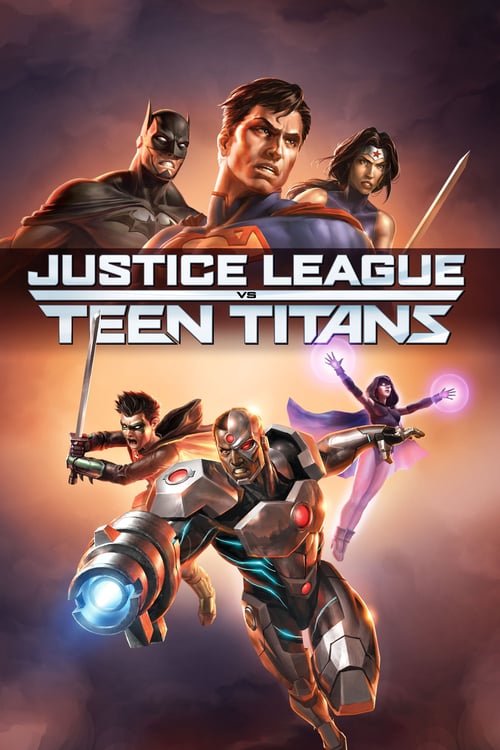
In the ending of "Justice League vs. Teen Titans," the Teen Titans, led by Raven, confront the Justice League, who have been possessed by the demon Trigon. After a fierce battle, Raven manages to free her father's hold over the League, and they unite to defeat Trigon. In the aftermath, Raven learns to embrace her powers, and the Titans solidify their bond as a team.
Now, let's delve into the ending in a more detailed narrative fashion.
As the climactic battle unfolds, the Teen Titans find themselves facing off against the Justice League, who have been corrupted by Trigon's dark influence. The scene is chaotic, with flashes of energy and the sounds of combat echoing through the air. Raven, feeling the weight of her lineage and the responsibility to save her friends, stands at the forefront, her emotions a tumultuous mix of fear and determination.
The Titans, including Nightwing, Starfire, Beast Boy, and Cyborg, engage in a desperate struggle against their former heroes. Nightwing, with his agile movements, tries to reason with the Justice League, but they are relentless, driven by Trigon's power. Starfire unleashes her energy blasts, while Cyborg uses his technology to counteract the League's attacks. Beast Boy shifts into various animals, attempting to distract and evade the powerful heroes.
In a pivotal moment, Raven confronts her father, Trigon, who looms ominously in the background, feeding off the chaos. She realizes that to save her friends and the Justice League, she must confront her own fears and embrace her true power. With a surge of inner strength, she channels her abilities, creating a powerful light that pierces through the darkness surrounding the Justice League.
As Raven's light envelops the heroes, they begin to break free from Trigon's control. Superman, Batman, and Wonder Woman momentarily regain their senses, confusion and pain evident on their faces as they struggle against the malevolent force. The Titans rally around Raven, their faith in her unwavering. Together, they focus their energies, combining their strengths to push back against Trigon's influence.
In a dramatic climax, Raven confronts Trigon directly, declaring her independence from his control. The confrontation is intense, filled with swirling energies and emotional stakes. Trigon, furious at Raven's defiance, attempts to overpower her, but she stands firm, her determination shining through. With a final surge of power, she manages to banish Trigon, freeing the Justice League from his grasp.
As the dust settles, the Justice League, now free, look at the Teen Titans with newfound respect. Batman, usually stoic, acknowledges the Titans' bravery, while Superman expresses gratitude for their help. The Titans, though exhausted, feel a sense of accomplishment and unity. Raven, in particular, experiences a profound moment of growth, realizing that her powers can be a force for good rather than a source of fear.
In the aftermath, the Titans gather together, their bond stronger than ever. They reflect on the battle, understanding that they have proven themselves not just as sidekicks but as heroes in their own right. Raven, now more confident in her abilities, smiles at her friends, feeling a sense of belonging and acceptance.
The film concludes with a sense of hope and camaraderie, as the Teen Titans stand together, ready to face whatever challenges lie ahead, having forged their identity as a team. Each character, having faced their fears and grown from the experience, looks forward to their future adventures, united in their purpose.
Is there a post-credit scene?
Yes, there is a post-credit scene in "Justice League vs. Teen Titans."
In this scene, we see a dark and ominous setting, where a figure is shrouded in shadows. The camera slowly reveals the character of Deathstroke, who is known for his tactical genius and combat skills. He stands confidently, surveying a map that displays various locations marked with targets.
As he examines the map, he speaks to himself, expressing his intent to take down the Teen Titans. His voice is calm yet menacing, indicating his determination and the threat he poses. The scene ends with a close-up of his mask, hinting at the challenges that lie ahead for the Titans, setting the stage for potential future conflicts. This moment leaves viewers with a sense of foreboding and excitement for what could come next in the Teen Titans' journey.
What role does Raven play in the conflict between the Justice League and the Teen Titans?
Raven is central to the conflict as her demonic heritage and connection to her father, Trigon, become the catalyst for the clash. Her struggle with her powers and the fear of losing control drives much of the emotional tension in the story. As Trigon seeks to manipulate her, Raven's internal battle between embracing her dark side and seeking redemption becomes a focal point.
How does Damian Wayne's character evolve throughout the movie?
Damian Wayne, initially portrayed as arrogant and dismissive of the Teen Titans, undergoes significant character development. His journey from a lone wolf, who believes in the superiority of the Justice League, to a more empathetic team player is marked by his interactions with the Titans, particularly with Raven. He learns the value of teamwork and friendship, ultimately standing by his new allies against Trigon.
What is Trigon's plan and how does it affect the Justice League?
Trigon's plan involves using Raven as a vessel to unleash his power upon the world. He manipulates her emotions and fears, aiming to turn her against her friends and the Justice League. His influence leads to a dark transformation of the Justice League members, turning them into monstrous versions of themselves, which heightens the stakes for the Teen Titans as they must confront both their mentors and the looming threat of Trigon.
How do the Teen Titans manage to confront Trigon in the climax of the film?
In the climax, the Teen Titans confront Trigon by uniting their strengths and overcoming their individual insecurities. They devise a plan to rescue Raven from Trigon's grasp, showcasing their growth as a team. Each member plays a crucial role, with Raven ultimately embracing her powers to fight back against her father, leading to a dramatic showdown that tests their resolve and unity.
What is the significance of the relationship between Raven and her father, Trigon, in the story?
The relationship between Raven and Trigon is pivotal, as it embodies the struggle between good and evil within her. Trigon represents the dark legacy Raven wishes to escape, and their connection is fraught with emotional turmoil. Throughout the film, Raven grapples with her identity, torn between her father's malevolent influence and her desire to forge her own path. This dynamic drives her character arc and the overall narrative tension.
Is this family friendly?
"Justice League vs. Teen Titans" contains several elements that may be considered objectionable or upsetting for children or sensitive viewers. Here are some aspects to be aware of:
-
Violence: The film features intense action sequences, including battles between superheroes and villains. There are scenes of physical combat that may be graphic for younger audiences.
-
Dark Themes: The storyline involves themes of possession, manipulation, and the struggle between good and evil, which may be unsettling for some viewers.
-
Supernatural Elements: The presence of demonic characters and the portrayal of dark magic can be frightening, particularly for younger children.
-
Emotional Conflict: Characters experience significant emotional turmoil, including feelings of betrayal, fear, and anger, which may resonate deeply and be distressing for sensitive viewers.
-
Mature Language: There are instances of mild language that may not be suitable for younger audiences.
-
Character Deaths: The film includes moments that imply danger to characters, which could be alarming for children.
These elements contribute to a tone that may not be entirely family-friendly, and parental discretion is advised.








