









Popular
What role does the setting play in the development of the plot?
What happens when the three friends discover Anna Fritz's corpse?
How does Anna Fritz's character influence the actions of the male characters?
What is the significance of the scene where they undress Anna Fritz?
How does the character of Pau change throughout the film?
Should I watch it?
Ask Your Own Question

What is the plot?
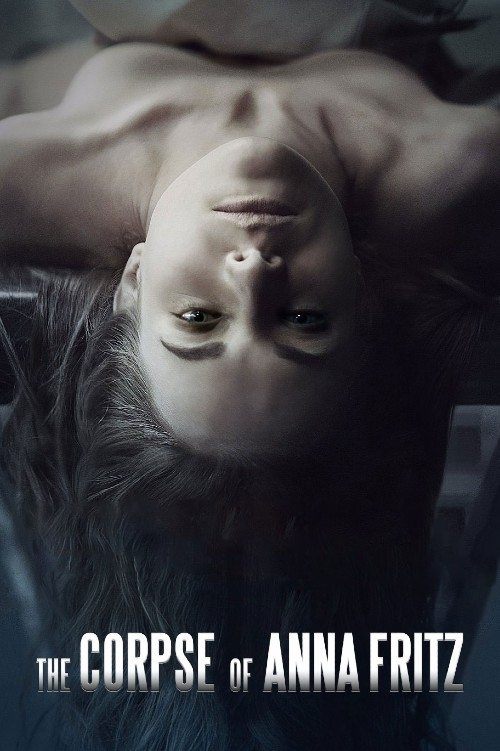
The Complete Story of "The Corpse of Anna Fritz"
The film opens not with a person, but with an image--a commodity. Anna Fritz, one of the most famous and desired actresses in the world, lies dead. As her lifeless body is transported through the hospital corridors toward the morgue, news commentators flood the soundtrack with their voices, discussing her impressive career, showering compliments on her beauty, gushing about how perfect she was as a human being. The opening establishes immediately that Anna Fritz is not a person to these people--she is a religion, an object of worship and desire, a thing to be consumed and discussed rather than mourned.
In the basement of the hospital, in the cold fluorescent-lit morgue, works Pau, a shy and introverted orderly in his twenties. Pau has a particular habit, a compulsion really. Whenever the bodies of young women are brought to the morgue, he cannot resist watching them, studying them, taking in their forms. There is something in Pau that is drawn to these moments of absolute vulnerability--when women are stripped of agency, of consciousness, of the ability to refuse his gaze. He tells himself it is just curiosity, just a moment of weakness, but it is a pattern, a ritual he repeats.
When Anna Fritz's body arrives at the hospital morgue, Pau is stunned. The photographs he has seen of her, the images of her on screens and in magazines, do not prepare him for the reality of her corpse. She is beautiful even in death--perhaps especially in death, when she cannot move away, cannot object, cannot assert her own will. Pau cannot resist. He takes out his phone and photographs her naked body. The image is captured, digitized, ready to be transmitted.
He sends the photograph to Ivan, one of his only friends. Ivan is a different type of man than Pau--where Pau is shy and introverted, Ivan is bold and aggressive. Ivan receives the photograph and immediately understands its significance. He calls Javi, their third friend, and within hours, both men arrive at the hospital. They are a little drunk, their inhibitions lowered by alcohol and bravado. Ivan wants to see the naked body of Anna Fritz in person, not just in a photograph. Javi is there too, though his presence is more complicated--he is part of the group, but something in him resists what is about to happen.
The three men make their way to the morgue. The space is isolated, cold, clinical. Anna Fritz lies on a metal table, her body exposed and vulnerable. Ivan and Pau look at her with desire. Javi is disgusted when Ivan and Pau suggest that he take a turn, that he participate in what they are about to do. Javi refuses. He will not do this thing. But his refusal is not enough to stop what happens next.
Ivan and Pau begin to rape Anna Fritz's corpse. They are committing necrophilia, or so they believe. They are violating a dead woman, a crime that is both legally and morally abhorrent, but a crime against someone who cannot suffer, cannot feel, cannot know what is being done to her body. Or so they think.
Then, in the middle of the violation, something impossible happens. Anna Fritz's eyes open. She is alive. She cannot move--her body is paralyzed, locked in whatever state of unconsciousness or coma she has been in--but her eyes are open and aware. She is conscious. She knows what is happening to her body. She is experiencing it, unable to move, unable to scream, unable to do anything but watch in terror as these men violate her.
Pau screams. The violation has transformed in an instant from necrophilia into rape, from a crime against the dead into a crime against a living, conscious victim. The other men come running into the room. The three of them stand there, confronted with the impossible reality of what they have done and what it means.
They are faced with a choice, and it is a choice that will determine everything that follows. They can report Anna's revival to the authorities. They can admit what they have done. But if they do, they will face rape charges. There is no way Anna could have consented to sex. She is paralyzed, unable to move, unable to communicate. The law will see this as rape, and they will go to prison.
Or they can kill her. They can murder her and cover up their crime. They can make it look like she died naturally, like her body simply gave out in the morgue. They can dispose of the evidence and walk away, free.
Pau and Ivan both want to hide their crime. The thought of prison, of being labeled rapists, of losing their freedom and their lives--it is too much. They want to make this go away. But Javi, the one who refused to participate in the rape, now pushes back. He wants them to save Anna. He wants them to take responsibility for what they have done. He wants them to do the right thing.
Javi's moral objection is overruled. The decision is made. They will kill her.
They decide to smother her with bunched-up sheets. This method will leave no marks on her body, no evidence of violence. It will look like she simply stopped breathing, like her heart simply stopped. While Ivan disposes of the evidence--cleaning up, removing traces of what happened--Pau takes on the task of preparing the body. He cleans Anna's body carefully, methodically. He covers her in a white sheet, as if dressing her for burial, as if performing some final act of respect after what he has done to her.
But as Pau is about to leave the morgue, something shifts in him. He leans down close to Anna's ear and whispers to her: "Pretend you are dead." It is revealed that he has faked the murder. He has not actually killed her. He has staged her death, made it appear that she is dead, but he has left her alive.
Why does Pau do this? The film does not explain his motivation clearly. Perhaps he experiences a moment of genuine remorse, a sudden recognition of the humanity of the woman he has violated. Perhaps he cannot bring himself to actually commit murder, even after committing rape. Perhaps he is attempting to manipulate the situation to his advantage, to have it both ways--to have participated in the violation but to be able to tell himself that he saved her life. The ambiguity is intentional. Pau's action is neither heroic nor clearly redemptive. It is a betrayal of the plan, a fracturing of the conspiracy.
Ivan returns to the morgue and discovers what Pau has done. He is furious. By faking Anna's death, Pau has betrayed him. Ivan has disposed of evidence. Ivan has participated in what he believed was a murder. Ivan is now complicit in a murder that never actually occurred, while Pau--the one who initiated the violation--may escape responsibility. Ivan confronts Pau, and his rage is physical. He grabs Pau by the throat and begins to choke him, his hands tightening around Pau's neck.
"You conspired to blame all of it on me," Ivan says, his voice filled with fury and betrayal. Pau struggles, gasping for air. The friendship between these two men, such as it was, is shattered in this moment. Ivan finally releases Pau, his hands falling away from Pau's throat. "I don't care anymore," Ivan says, his voice hollow. "I don't care if you want to go to jail."
But Ivan's moment of release is his undoing. As he stands there, breathing heavily, his rage spent, Anna Fritz moves. She has been waiting, conscious and aware, for her moment. She sneaks up behind Ivan and raises a knife. She stabs him twice, the blade finding his neck both times. Ivan bleeds to death, his blood pouring from the wounds in his neck, pooling on the morgue floor. The man who was willing to rape and murder dies at the hands of the woman he violated.
Anna turns to Pau. Silent, methodical, deliberate, she repeatedly stabs him. Pau, who attempted to save her life by faking her death, who experienced some moment of conscience or hesitation, dies by her hand. The knife goes in again and again. There is no mercy, no recognition of his attempt to spare her. There is only the violence of a woman reclaiming agency over her own body and her own fate.
The morgue falls silent. Two men lie dead on the cold floor, their blood mixing together. Anna Fritz stands alone, her body covered in their blood, her face streaked with tears. She stares off into the distance, her eyes empty and haunted.
The film ends with this image--Anna, alive but traumatized, covered in blood, alone in the morgue where she was violated and nearly murdered. There is no resolution, no sense of justice served. There is no police arriving to take her to safety, no medical care, no counseling, no path toward healing. There is only a woman who has survived through violence, who has killed her attackers, who is left standing in the wreckage of what has been done to her.
The tears on her face suggest that survival and revenge do not bring peace. She has reclaimed agency over her body through violence, but at a profound psychological cost. She is not portrayed as a hero or as having achieved justice. She is portrayed as a traumatized survivor who has committed murder. The film refuses to celebrate her violence or to present it as cathartic or redemptive. Instead, it presents violence as a tragic consequence of violation, as the only recourse available to a woman in a world that has stripped her of every other option.
The final image--tears and blood--encapsulates the film's bleak vision. In this world, women are objectified, violated, and left with no institutional recourse, no legal protection, no social support. They are left alone with their trauma and with the terrible choice between accepting violation or committing violence. Anna Fritz chooses violence. She survives. But survival, the film suggests, comes at a cost that no person should have to pay.


What is the ending?
In the ending of "The Corpse of Anna Fritz," the three main characters--Pablo, Ivan, and the deceased actress Anna Fritz--find themselves in a harrowing situation. After a series of disturbing events, Pablo is left to confront the consequences of their actions, leading to a tragic conclusion. The film ends with a sense of despair and moral ambiguity, leaving the fates of the characters intertwined with the dark choices they made.
As the final act unfolds, the tension escalates. Pablo, who initially seemed to be the most conflicted about their actions, is now faced with the reality of what they have done. He is haunted by guilt and fear, especially after witnessing the emotional turmoil of Ivan, who has become increasingly unstable. Ivan, who had initially been the most eager to exploit Anna's corpse, is now spiraling into madness, unable to cope with the weight of their actions.
In a climactic moment, Pablo attempts to distance himself from the situation, but the bond between the three characters has become irrevocably tainted. The atmosphere is thick with dread as they grapple with the consequences of their choices. The film culminates in a shocking and tragic resolution, where the characters are left to confront the moral implications of their actions, leading to a devastating end for all involved.
Pablo ultimately faces the repercussions of his complicity, while Ivan's descent into madness leaves him isolated and broken. The fate of Anna Fritz, though she is deceased, looms large over the narrative, serving as a haunting reminder of the exploitation and violation that occurred. The film closes on a somber note, emphasizing the darkness that can arise from human desires and the fragility of life, leaving the audience with lingering questions about morality and humanity.
Is there a post-credit scene?
The Corpse of Anna Fritz does not have a post-credit scene. The film concludes its narrative without any additional scenes after the credits roll. The story wraps up with the intense and disturbing events that unfold throughout the film, leaving the audience with a sense of unease and contemplation about the moral implications of the characters' actions. The focus remains on the psychological and emotional turmoil experienced by the characters rather than extending the narrative further in a post-credit sequence.
What role does the setting play in the development of the plot?
The setting, primarily confined to a secluded morgue, plays a crucial role in amplifying the film's tension and claustrophobia. The sterile, cold environment contrasts sharply with the emotional turmoil of the characters. This isolation heightens their desperation and moral decay, as they are cut off from the outside world, forcing them to confront their darkest impulses in the presence of Anna's lifeless body.
What happens when the three friends discover Anna Fritz's corpse?
When the three friends, Pau, Ivan, and Javi, discover the corpse of the famous actress Anna Fritz, they are initially shocked and intrigued. They decide to take advantage of the situation, driven by a mix of morbid curiosity and the desire to have a memorable experience. They film themselves with her body, which leads to a series of increasingly disturbing decisions.
How does Anna Fritz's character influence the actions of the male characters?
Anna Fritz, even in death, exerts a powerful influence over the male characters. Her status as a beloved actress and the object of their fantasies drives Pau, Ivan, and Javi to objectify her, leading them to make morally questionable choices. Their fascination with her beauty and fame blinds them to the ethical implications of their actions.
What is the significance of the scene where they undress Anna Fritz?
The scene where the friends undress Anna Fritz is pivotal as it marks the climax of their moral descent. It showcases their complete disregard for her humanity, reducing her to an object of desire. This act is laden with tension, as it reveals their internal conflicts and the extent of their depravity, highlighting the film's exploration of voyeurism and exploitation.
How does the character of Pau change throughout the film?
Pau begins as a seemingly carefree and adventurous character, eager to push boundaries with his friends. However, as the events unfold and the consequences of their actions become apparent, he experiences a profound internal struggle. His initial excitement turns to horror and guilt, leading to a moral reckoning that forces him to confront the reality of what they have done.
Is this family friendly?
The Corpse of Anna Fritz is not family-friendly and contains several potentially objectionable or upsetting scenes. Here are some aspects that may be concerning for children or sensitive viewers:
-
Graphic Content: The film includes explicit scenes involving a deceased body, which may be disturbing to many viewers.
-
Sexual Themes: There are scenes that depict sexual acts involving the corpse, which are both graphic and unsettling.
-
Morbid Humor: The film employs dark humor that revolves around death and the treatment of a corpse, which may be inappropriate for younger audiences.
-
Emotional Distress: The characters experience intense emotional turmoil, including themes of exploitation, guilt, and moral conflict, which could be distressing.
-
Violence: There are moments that may involve physical aggression or violence, contributing to an overall unsettling atmosphere.
These elements make the film unsuitable for children and potentially upsetting for sensitive viewers.








