


Popular
What is the significance of the baby in Eraserhead?
Who is Mary X and what role does she play in Henry's life?
What does the character of the Lady in the Radiator symbolize?
How does the setting of the industrial landscape affect the story?
What is the relationship between Henry and his father, and how does it impact the plot?
Should I watch it?
Ask Your Own Question

What is the plot?
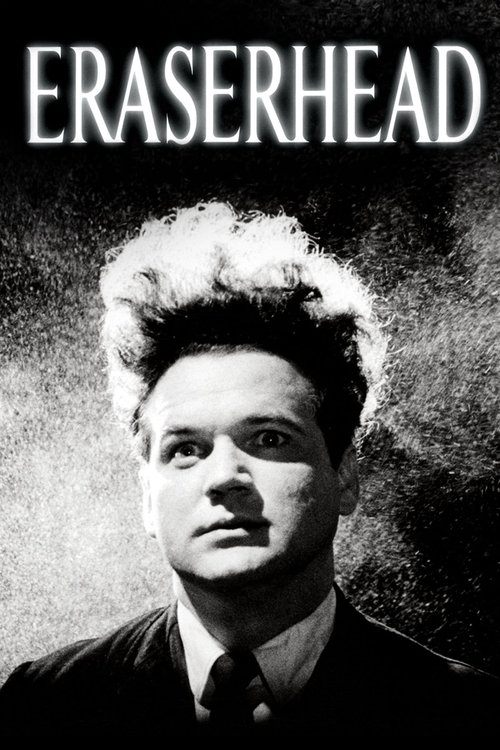
Henry Spencer drifts through an industrial wasteland at the start of Eraserhead, a world of ash, pipes, dead plants, and unnatural silence broken only by machinery and wind. He is a shy, solitary printer on vacation from work, walking home through a desolate district with groceries in hand, until he reaches his cramped apartment building and steps into a room that already feels abandoned by life. The place is covered in dirt, clutter, and dead vegetation, as if neglect has been slowly eating it alive. Outside his door, the woman across the hall stops him and delivers the message that sets everything in motion: Mary X wants him to come to dinner at her family's home.
Henry accepts, and when he goes to Mary X's house, the tone becomes even more oppressive. The home is cramped, formal, and uncomfortable, with every gesture feeling wrong, every pause too long. Mary X's parents, Mr. X and Mrs. X, receive Henry with a strained politeness that quickly turns invasive and unnatural. Their conversation circles awkwardly around Henry's relationship with Mary, and the tension tightens when the truth is revealed: Mary has recently given birth. Henry is stunned, because the pregnancy and birth have been hidden from him, and the child was delivered absurdly quickly, in a way that seems less like a medical event than a nightmare come to life. The baby is not shown as an ordinary infant but as a grotesque, bandaged, barely recognizable creature, a writhing mass of flesh and irritation whose cries seem to fill every corner of the house.
The dinner scene becomes the first major confrontation, and it is one of the film's defining social horrors. Mr. X and Mrs. X exert quiet but relentless pressure on Henry, making it clear that they expect him to marry Mary and accept responsibility for the child. No one says exactly what Henry must do in direct terms, but the implication is relentless: he is trapped, and the family has already decided his role. The atmosphere grows more suffocating as the parents' concern turns into manipulation, and Henry, unable to defend himself, is pushed into an immediate marriage to Mary X. He is not given room to refuse, and the whole event feels less like a choice than a ritualized ambush. The revelation of the child, the marriage, and the family's control all land at once, locking Henry into a life he clearly does not understand and does not want.
Henry and Mary move into Henry's apartment with the baby, and the film settles into its most agonizing stretch of domestic misery. The apartment, once merely bleak, becomes the site of constant crying, sleeplessness, and rising dread. The infant is kept wrapped in bandages and laid in a crib, where it wails with unbearable persistence, its sound turning the room into a chamber of guilt and panic. Mary, who had already seemed fragile and overwhelmed, begins to collapse under the strain. Henry tries to cope, but the household is immediately infected by exhaustion and disgust. The baby's cries dominate the rhythm of daily life, and the tension between the couple hardens into misery. Their marriage is not built on affection but on pressure and terror, and the apartment becomes a prison where no one can breathe.
Mary's breakdown is one of the film's most important emotional turns. She can no longer endure the sound of the child, and her fear becomes openly physical. In one of the story's major confrontations, she and Henry struggle through the impossible reality of caring for the infant, but there is no real resolution. The stress becomes too much for her, and she finally leaves Henry alone with the baby. This abandonment is not staged as a grand exit but as a devastated collapse, a quiet surrender to the unbearable. Once Mary is gone, Henry is left to face the creature entirely by himself, and the film's emotional center shifts from forced domesticity to total isolation. From this point forward, the story belongs almost entirely to Henry's spiraling mind.
As Henry is left alone, the film begins to blur reality, desire, fantasy, and hallucination into one anxious flow. His apartment and the corridors of the building become more charged and unstable, and his encounters with the outside world take on a feverish, dreamlike quality. The beautiful girl across the hall, whose presence has already been hinted at in the opening exchange, becomes an object of longing and escape. Henry is drawn toward her because she represents something warm and human in a world that has become mechanical and hostile. When he finally goes to her room, the encounter turns into another surreal release of tension, one that briefly offers physical comfort but does not solve anything. The scene plays like a fantasy of relief that is cut through with awkwardness and vulnerability, underscoring how badly Henry needs connection and how little reality can provide it.
The Lady in the Radiator emerges as the film's most important surreal figure, appearing in a strange, stage-like space behind the radiator where she seems to live in a parallel emotional universe. She performs a song about "in heaven, everything is fine," stamping her feet on tiny, worm-like beings as if crushing the discomfort and decay beneath her. Her image functions like a promise of escape, a vision of innocence, transcendence, or death, depending on how the film is understood. For Henry, she becomes increasingly central as the world around him deteriorates. Her appearances are not explanatory but symbolic, a strange solace hovering over the filth and panic of his life.
Meanwhile, the baby remains the source of his immediate horror. Its cries never stop. The bandages conceal the full shape of the creature, but the sound alone is enough to wear Henry down until he seems half-crazed by fatigue and guilt. The film's tension builds from this relentless pressure, making every quiet moment feel temporary and every shift in lighting feel like a warning. Henry is increasingly consumed by visions and anxiety, and the line between what is happening and what he is imagining dissolves. His apartment, once merely a domestic space, becomes an arena of psychic collapse.
The decisive revelation comes when Henry finally confronts the creature directly and opens its bandages. What lies beneath is worse than the already grotesque exterior. The wrappings had hidden a soft, alien body with exposed, organ-like flesh, and the exposed interior makes the thing look less like a baby than an injured, living mass. This is the film's central visual shock, the moment when the horror of parenthood, bodily fragility, and unwanted responsibility becomes literal. The child is no longer even partially manageable or deniable; it is a raw, pulsing burden that can no longer be safely contained.
Henry's response is immediate and catastrophic. He takes a pair of scissors and cuts into the exposed body of the creature. This is the film's only clear death, and Henry is the direct cause of it. The act is not framed as triumphant or even fully conscious; it is desperate, frantic, and surreal, a last attempt to stop the screaming and end the nightmare. The scissors slice through the exposed tissue, and the creature dies in a burst of grotesque rupture. This is the final confrontation between Henry and the burden imposed on him by Mary's pregnancy and her family's pressure. No one else dies in the film, but this single death carries the full weight of everything that has been building since the beginning: obligation, disgust, guilt, and the wish to escape an impossible reality.
After the killing, the film moves into its most completely dreamlike and symbolic ending. Henry is no longer simply in the apartment or in the industrial cityscape; he seems to pass into a state where fantasy and dissolution dominate everything. The Lady in the Radiator appears again as the image of release becomes more powerful, and the whole world seems to tilt toward her strange, blinding promise that "everything is fine." The film does not offer a conventional resolution, because Henry's act does not restore order or peace. Instead, the final movement feels like a collapse into transcendence, annihilation, or psychic surrender. The industrial environment, the oppressive machinery, the dead plants, the suffocating domestic spaces, and the screaming creature all recede into a final symbolic release.
The ending leaves Henry absorbed into the film's nightmare logic rather than safely returned to reality. The marriage is over in any meaningful sense, Mary is gone, the child is dead by Henry's hand, and the world itself has never been able to explain what it is. What remains is the image of escape through collapse, with the Lady in the Radiator holding the last emotional note of the story. The final scene does not clarify whether Henry has died, dreamed himself away, or slipped into some other realm entirely. It simply completes the film's grim movement from industrial dread to psychic rupture, ending on the sense that the only way out of this world is through a nightmare that is even stranger than the one that began it.






What is the ending?
In the ending of "Eraserhead," Henry Spencer finds himself in a surreal and nightmarish confrontation with his fears and responsibilities. After a series of disturbing visions and experiences, he ultimately faces the fate of his child, leading to a climactic and ambiguous conclusion.
As the film approaches its conclusion, Henry is in his dimly lit, industrial apartment, where the atmosphere is thick with tension and dread. The sound of the baby's incessant wailing fills the air, a constant reminder of his overwhelming responsibilities. The baby, a grotesque and deformed creature, symbolizes Henry's anxieties about fatherhood and the burdens of life.
In a pivotal scene, Henry is drawn to a vision of the Lady in the Radiator, who has appeared throughout the film as a figure of comfort and escape. She sings a haunting song about the beauty of life beyond the struggles of existence. This moment serves as a stark contrast to Henry's grim reality. The Lady's presence offers a glimmer of hope, yet it is intertwined with the surreal and unsettling nature of Henry's world.
As the climax unfolds, Henry is confronted by the baby, which has become increasingly difficult to manage. In a moment of desperation, he takes drastic action. The scene is filled with a sense of dread as he grapples with the implications of his choices. The baby, representing his fears and the weight of his responsibilities, becomes a focal point of his internal conflict.
In a surreal and climactic moment, Henry experiences a vision of the Lady in the Radiator again, who encourages him to embrace the release from his burdens. The imagery becomes increasingly abstract, with Henry's emotional state spiraling into chaos. The film culminates in a shocking and ambiguous moment where Henry appears to find a form of liberation, but it is shrouded in uncertainty.
The final scenes are marked by a stark visual contrast, as Henry's world shifts from the oppressive darkness of his apartment to the ethereal light surrounding the Lady in the Radiator. The film ends with a haunting image of Henry, leaving the audience with lingering questions about the nature of his fate and the implications of his choices.
In summary, the ending of "Eraserhead" encapsulates Henry's struggle with fatherhood, fear, and the search for meaning in a chaotic world. Each character's fate is intertwined with Henry's emotional journey, leaving a lasting impact on the viewer.
Is there a post-credit scene?
"Eraserhead," directed by David Lynch and released in 1977, does not have a post-credit scene. The film concludes with a haunting and surreal sequence that leaves viewers with a sense of ambiguity and unease, characteristic of Lynch's style. After the final scene, the credits roll without any additional content or scenes following them. The film's ending is designed to linger in the audience's mind, emphasizing its themes of anxiety, fatherhood, and the grotesque nature of existence.
What is the significance of the baby in Eraserhead?
The baby in Eraserhead is a grotesque, deformed creature that represents Henry Spencer's fears and anxieties about fatherhood and responsibility. Its constant crying and unsettling appearance create a sense of dread and highlight Henry's feelings of inadequacy and isolation.
Who is Mary X and what role does she play in Henry's life?
Mary X is Henry's girlfriend, who becomes the mother of the baby. Her character embodies the pressures of domestic life and the expectations of parenthood. Her relationship with Henry is strained, and her eventual departure amplifies Henry's feelings of loneliness and despair.
What does the character of the Lady in the Radiator symbolize?
The Lady in the Radiator is a surreal figure who appears in Henry's dreams. She represents a form of escape from his bleak reality. Her song, 'In Heaven,' suggests a longing for peace and a release from the burdens of life, contrasting sharply with the chaos surrounding Henry.
How does the setting of the industrial landscape affect the story?
The industrial landscape in Eraserhead is characterized by dark, oppressive environments filled with machinery and decay. This setting reflects Henry's internal turmoil and alienation, creating a nightmarish backdrop that enhances the film's themes of anxiety and existential dread.
What is the relationship between Henry and his father, and how does it impact the plot?
Henry's relationship with his father is strained and distant. His father represents traditional expectations and societal pressures, which heighten Henry's feelings of inadequacy. This dynamic contributes to Henry's internal conflict and amplifies his sense of isolation as he navigates the challenges of fatherhood.
Is this family friendly?
"Eraserhead," directed by David Lynch in 1977, is not family-friendly and contains several potentially objectionable or upsetting scenes and aspects that may be distressing for children or sensitive viewers.
-
Disturbing Imagery: The film features surreal and grotesque visuals, including unsettling creatures and nightmarish landscapes that can provoke fear and anxiety.
-
Body Horror: There are scenes that involve body horror elements, particularly concerning the main character's child, which may be disturbing to viewers.
-
Parental Anxiety: The film explores themes of fatherhood and anxiety, showcasing the protagonist's overwhelming fear and confusion about his responsibilities, which can be emotionally intense.
-
Sound Design: The film employs a jarring soundscape, including industrial noises and unsettling sound effects that contribute to a sense of dread and discomfort.
-
Sexual Themes: There are scenes that imply sexual situations and relationships that are presented in a surreal and disturbing manner.
-
Existential Themes: The film delves into themes of alienation, existential dread, and the absurdity of life, which may be difficult for younger audiences to comprehend or process.
Overall, "Eraserhead" is a deeply unsettling film that explores complex and dark themes, making it unsuitable for children and potentially distressing for sensitive viewers.








