




















Popular
What is the relationship between Ryo Saeba and Kaori Makimura in City Hunter?
How does Ryo Saeba's character develop throughout the film?
What role does the antagonist, the villainous group led by the character 'The General', play in the story?
What comedic elements are present in Ryo Saeba's interactions with women throughout the film?
How does the setting of the luxury cruise ship influence the plot of City Hunter?
Should I watch it?
Ask Your Own Question

What is the plot?
Sorry, we aren't able to watch and write up a full detailed plot yet. Check back in a few days.



What is the ending?
In the ending of the movie "City Hunter," Ryo Saeba confronts the main antagonist, who has taken hostages on a cruise ship. After a series of intense battles, Ryo manages to save the hostages and defeat the villain. The film concludes with Ryo and his partner, Kaori, sharing a moment of affection, hinting at their complicated relationship.
Now, let's delve into the ending in a more detailed narrative fashion.
As the climax of "City Hunter" unfolds, Ryo Saeba finds himself aboard a luxurious cruise ship, where the villain, a nefarious criminal named Kuroda, has taken several hostages, including the beautiful and resourceful Shizuko. The atmosphere is tense, filled with the sounds of the ocean and the muffled cries of the hostages. Ryo, with his trademark confidence and charm, navigates through the ship, determined to rescue the captives and confront Kuroda.
In a dimly lit corridor, Ryo encounters Kuroda's henchmen. A fierce fight ensues, showcasing Ryo's martial arts prowess and agility. He dodges punches and counters with swift kicks, his movements fluid and precise. The camera captures the intensity of the battle, with close-ups of Ryo's determined expression and the grim faces of his opponents. As he defeats the last henchman, Ryo's focus sharpens; he knows Kuroda is still at large.
Ryo finally confronts Kuroda in the ship's grand ballroom, where the hostages are being held. The room is opulent, adorned with chandeliers and lavish decorations, but the atmosphere is charged with danger. Kuroda, confident and menacing, taunts Ryo, revealing his plan to escape with the hostages. Ryo, fueled by a mix of anger and determination, engages in a fierce showdown with Kuroda. The fight is brutal, with both men exchanging blows, showcasing their strength and resolve.
As the battle rages on, Ryo's internal struggle becomes evident. He fights not just for the hostages but also to prove himself, to protect those he cares about, especially Kaori, who has been a constant presence in his life. The stakes are high, and the tension escalates as Ryo finally gains the upper hand. With a final, powerful move, he defeats Kuroda, sending him crashing to the ground. The hostages, witnessing the confrontation, erupt in cheers, their fear replaced by relief.
With Kuroda subdued, Ryo quickly frees the hostages, ensuring their safety. Shizuko, grateful and impressed by Ryo's bravery, shares a moment of connection with him, acknowledging his heroism. Meanwhile, Kaori, who has been anxiously waiting for Ryo's return, rushes to his side. Their relationship, filled with playful banter and underlying affection, comes to the forefront as they share a tender moment amidst the chaos. Kaori's eyes reflect a mix of admiration and frustration, highlighting the complexity of their bond.
As the ship docks, the authorities arrive to take control of the situation. Ryo, now a hero in the eyes of the public, stands alongside Kaori and Shizuko, who express their gratitude. The film closes with Ryo and Kaori sharing a light-hearted exchange, hinting at their ongoing romantic tension. Ryo's carefree demeanor contrasts with Kaori's serious nature, leaving the audience with a sense of unresolved feelings between them.
In the final moments, as the camera pans away from the ship, Ryo's laughter echoes, symbolizing his resilience and the enduring spirit of adventure that defines him. The fate of each character is clear: Ryo emerges victorious, having saved the day, while Kaori remains by his side, their relationship evolving yet still fraught with challenges. Shizuko, having witnessed Ryo's bravery, departs with a newfound respect for him, leaving the door open for future encounters. The film concludes on a note of hope and camaraderie, encapsulating the essence of "City Hunter."
Is there a post-credit scene?
In the 1993 film "City Hunter," there is indeed a post-credit scene that adds a humorous twist to the film's conclusion. After the credits roll, the scene opens with a comedic moment featuring the main character, Ryo Saeba, played by Jackie Chan.
In this scene, Ryo is seen in a somewhat chaotic situation, where he is attempting to flirt with a beautiful woman. His usual charm and confidence are on display, but as is typical for Ryo, things quickly spiral out of control. The scene is filled with slapstick humor, showcasing Jackie Chan's signature physical comedy style.
As Ryo tries to impress the woman, he inadvertently causes a series of mishaps, leading to a comical chase or a series of misunderstandings. The scene encapsulates the lighthearted and playful tone of the film, leaving the audience with a final laugh. It serves as a fitting end to Ryo's escapades, reinforcing his character as a lovable rogue who often finds himself in over his head, especially when it comes to matters of the heart.
This post-credit moment is a delightful addition that resonates with the film's overall comedic and action-packed spirit, providing fans with a final glimpse of Ryo's antics.
What is the relationship between Ryo Saeba and Kaori Makimura in City Hunter?
Ryo Saeba and Kaori Makimura share a complex relationship characterized by a mix of professional partnership and romantic tension. Ryo, a private detective known for his womanizing ways, often finds himself in comedic situations due to his infatuation with women, while Kaori, his partner, is fiercely protective of him and often acts as a counterbalance to his reckless behavior. Despite Ryo's flirtations, Kaori's feelings for him are deep, and she frequently expresses her frustration with his antics, leading to a dynamic filled with both humor and underlying affection.
How does Ryo Saeba's character develop throughout the film?
Ryo Saeba begins as a carefree and somewhat irresponsible private detective, driven by his desires and often distracted by beautiful women. However, as the plot unfolds, particularly during the high-stakes mission aboard the luxury cruise ship, Ryo's character is tested. He faces various challenges that force him to confront his responsibilities and the consequences of his actions. His interactions with Kaori and the need to protect her and others from danger reveal a more serious and heroic side of him, showcasing his growth from a self-indulgent detective to a more committed and selfless individual.
What role does the antagonist, the villainous group led by the character 'The General', play in the story?
The antagonist, known as 'The General', leads a group of criminals who hijack a luxury cruise ship, setting the stage for the film's central conflict. His motivations are rooted in power and control, as he seeks to use the ship and its passengers for his nefarious plans. The General's presence creates a palpable sense of danger, pushing Ryo and Kaori into action. His ruthless tactics and cunning strategies challenge Ryo's skills as a detective, forcing him to confront not only the physical threats posed by the General's henchmen but also the moral dilemmas of protecting innocent lives.
What comedic elements are present in Ryo Saeba's interactions with women throughout the film?
Ryo Saeba's interactions with women are filled with comedic elements that highlight his character's flirtatious nature and the absurdity of his situations. His over-the-top reactions to attractive women often lead to slapstick moments, such as exaggerated nosebleeds and clumsy attempts to impress them. These comedic scenes serve to both entertain and emphasize Ryo's immaturity, as he frequently finds himself in trouble due to his inability to control his impulses. Kaori's reactions to Ryo's antics, including her physical confrontations with him, add to the humor and create a dynamic that balances the action with lightheartedness.
How does the setting of the luxury cruise ship influence the plot of City Hunter?
The luxury cruise ship serves as a pivotal setting that influences the plot of City Hunter significantly. It creates a confined environment where the stakes are heightened, as Ryo and Kaori must navigate the challenges posed by the hijackers while also dealing with the ship's glamorous atmosphere. The ship's various locations, from the opulent dining areas to the hidden corners, provide opportunities for both action and comedy. The isolation of being at sea amplifies the tension, as Ryo and Kaori must rely on their wits and teamwork to outsmart the villains, all while maintaining the film's comedic tone amidst the chaos.
Is this family friendly?
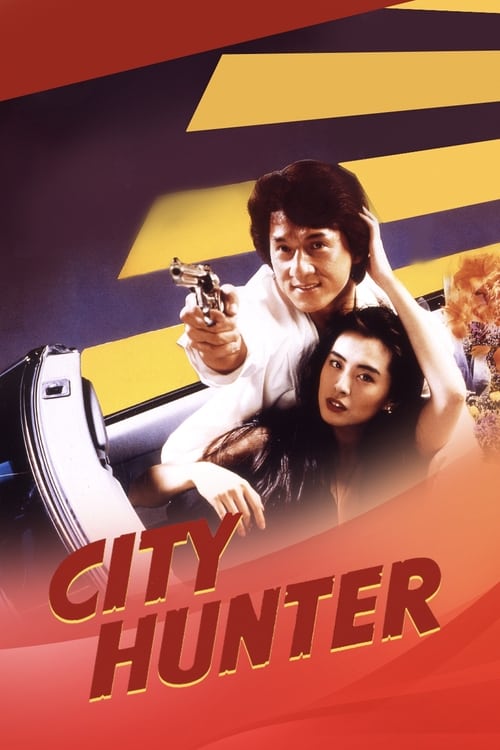
"City Hunter," produced in 1993, is a live-action adaptation of the popular manga and anime series. While it features comedic elements and action, it contains several aspects that may not be suitable for children or sensitive viewers.
-
Mature Themes: The film includes adult themes, such as sexual innuendos and suggestive situations, which may be inappropriate for younger audiences.
-
Violence: There are action sequences that involve fighting, gunplay, and some level of cartoonish violence, which might be unsettling for sensitive viewers.
-
Suggestive Humor: The film employs a significant amount of sexual humor and gags that could be considered offensive or uncomfortable.
-
Character Behavior: The protagonist, Ryo Saeba, often engages in lewd behavior and has a flirtatious demeanor, which may not be suitable for children.
-
Language: There are instances of strong language and crude jokes that could be objectionable.
Overall, while "City Hunter" has comedic and action-packed moments, its mature content makes it less family-friendly.








