
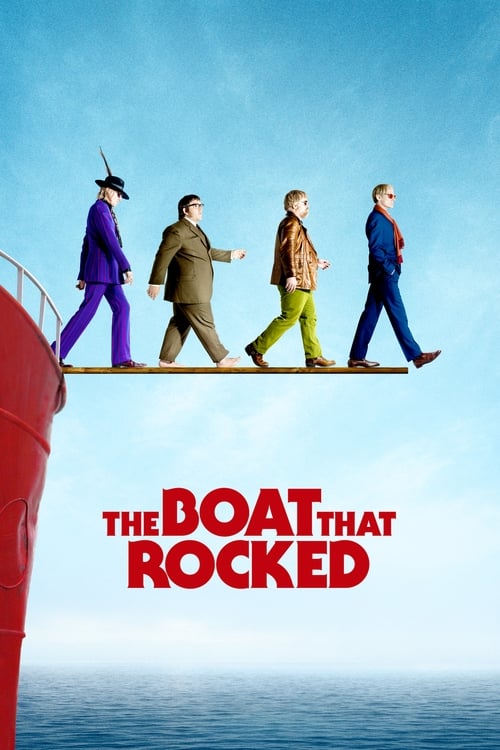
































Popular
What motivates the character of Quentin to run the pirate radio station?
How does the character of Carl come to join the crew of the radio ship?
What is the significance of the character of Sir Alistair Dormandy in the story?
How does the relationship between Carl and the character of Marianne develop throughout the film?
What role does music play in the interactions among the crew members of the radio ship?
Should I watch it?
Ask Your Own Question

What is the plot?
Sorry, we aren't able to watch and write up a full detailed plot yet. Check back in a few days.








What is the ending?
At the end of "The Boat That Rocked," the pirate radio station aboard the ship, Radio Rock, is shut down by the British government. The crew members face various fates, with some continuing their lives in music and others facing the consequences of their rebellious actions. The film concludes with a sense of nostalgia and the enduring power of rock and roll.
As the film approaches its climax, the tension escalates aboard the ship. The crew of Radio Rock, a motley band of DJs and musicians, has been broadcasting their love for rock music from the North Sea, defying the British government's attempts to silence them. The government, led by the stern and humorless Minister of Information, Sir Alistair Dormandy, is determined to put an end to the pirate radio phenomenon.
In the final scenes, the government launches a full-scale operation to shut down Radio Rock. The ship is surrounded by naval vessels, and the crew prepares for a confrontation. The atmosphere is charged with a mix of defiance and camaraderie as the DJs rally together, determined to continue their broadcasts despite the impending threat. They play their music loudly, celebrating their love for rock and roll, and the spirit of rebellion fills the air.
As the naval forces close in, the crew members face the reality of their situation. They know that their time is running out, but they refuse to back down. The ship is ultimately boarded by the authorities, and the DJs are arrested. The scene is chaotic, with the crew members trying to maintain their dignity and passion for music even in the face of defeat.
In the aftermath, we see the fates of the main characters unfold. The charismatic DJ, Quentin, played by Bill Nighy, remains a symbol of the rock and roll spirit, continuing to inspire others even after the station is shut down. The young and impressionable Carl, who has grown throughout his time on the ship, is left with a newfound appreciation for music and the friendships he has formed. He returns to land, carrying the memories of his time on Radio Rock with him.
Other characters, like the flamboyant DJ, Dave, and the eccentric crew members, also find their paths after the ship's closure. Some continue to pursue careers in music, while others reflect on their experiences and the impact they had on the lives of their listeners. The film closes with a montage of scenes showing the lasting influence of rock music, emphasizing that while the ship may have been silenced, the spirit of rock and roll lives on.
The final moments of the film are filled with a sense of nostalgia, as the characters look back on their time together. The music plays on, a reminder of the joy and freedom they experienced aboard the ship. The film ends on a hopeful note, suggesting that the fight for artistic expression and the love of music will never truly be extinguished.
Is there a post-credit scene?
In the movie "The Boat That Rocked," there is no post-credit scene. The film concludes with a final montage that showcases the aftermath of the pirate radio station's impact on the characters and the music scene. As the credits roll, viewers see glimpses of the characters' lives after the events of the film, but there are no additional scenes or content after the credits. The focus remains on the celebration of music and the camaraderie among the crew, leaving the audience with a sense of nostalgia and joy rather than a cliffhanger or additional narrative.
What motivates the character of Quentin to run the pirate radio station?
Quentin, played by Bill Nighy, is driven by a passion for music and a desire to create a space where free expression can thrive. He is disillusioned by the restrictive nature of mainstream radio and seeks to provide a platform for rock music, which he believes is being stifled by the government. His charismatic leadership and love for the music fuel the station's rebellious spirit.
How does the character of Carl come to join the crew of the radio ship?
Carl, portrayed by Tom Sturridge, is sent to live with his godfather, Quentin, after being expelled from school. Initially reluctant, he is drawn to the vibrant and chaotic life aboard the ship. The camaraderie among the crew and the allure of the rock and roll lifestyle captivate him, leading him to embrace his new environment and the freedom it represents.
What is the significance of the character of Sir Alistair Dormandy in the story?
Sir Alistair Dormandy, played by Kenneth Branagh, represents the establishment and the opposition to the pirate radio station. As a government official, he is determined to shut down the station, viewing it as a threat to societal order. His character embodies the conflict between authority and the free-spirited nature of the crew, highlighting the tension between regulation and artistic freedom.
How does the relationship between Carl and the character of Marianne develop throughout the film?
Carl's infatuation with Marianne, played by Talulah Riley, evolves from a naive crush to a deeper emotional connection. Initially, he is smitten by her beauty and charm, but as they spend time together, he learns about her complexities and struggles. Their relationship is marked by moments of joy and tension, ultimately culminating in a poignant realization of love and the challenges of their respective worlds.
What role does music play in the interactions among the crew members of the radio ship?
Music serves as the lifeblood of the crew's interactions, fostering camaraderie and a sense of purpose. The characters bond over shared musical tastes, engage in lively debates about songs, and use music as a means of self-expression. It acts as a catalyst for their friendships, conflicts, and personal growth, illustrating how it unites them in their quest for freedom and individuality.
Is this family friendly?
"The Boat That Rocked," also known as "Pirate Radio," is a comedy-drama that features a number of elements that may not be considered family-friendly. Here are some potentially objectionable or upsetting aspects:
-
Strong Language: The film contains frequent use of profanity, which may not be suitable for younger audiences.
-
Sexual Content: There are several scenes that depict sexual situations, innuendos, and nudity, including characters engaging in sexual activities and discussions that may be inappropriate for children.
-
Substance Use: The characters are often shown drinking alcohol and smoking, which could be concerning for sensitive viewers or children.
-
Rebellious Themes: The film revolves around a group of rogue DJs operating a pirate radio station, which includes themes of rebellion against authority and societal norms that may not resonate well with all families.
-
Mature Humor: The humor in the film often leans towards the risqué and may not be suitable for younger viewers.
These elements contribute to a tone that is more aligned with adult audiences, making it less appropriate for children or sensitive individuals.





