




















Popular
What motivates Rick Janssen to participate in the Titan project?
How does the transformation process affect Rick's relationship with his wife, Abigail?
What are the physical changes Rick experiences during the Titan transformation?
What role does Dr. Nicole Shentel play in Rick's transformation?
How does Rick's transformation impact his mental state throughout the film?
Should I watch it?
Ask Your Own Question

What is the plot?
Sorry, we aren't able to watch and write up a full detailed plot yet. Check back in a few days.
More Movies Like This
Browse All Movies →






What is the ending?
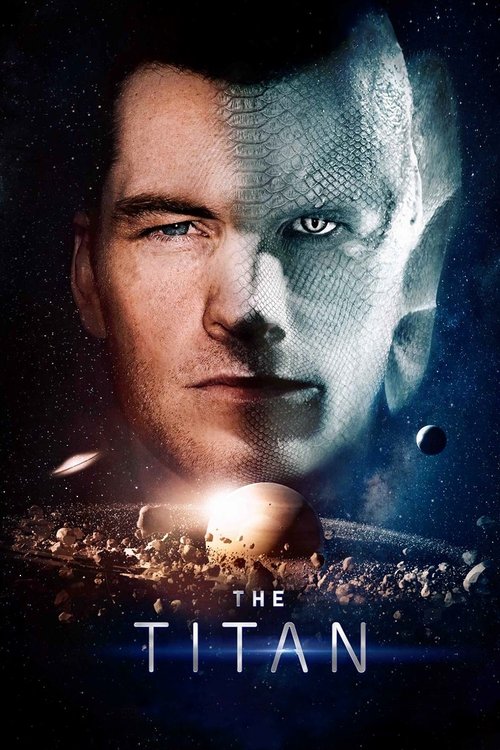
In the ending of "The Titan," Rick Janssen, after undergoing a transformation into a superhuman being, ultimately sacrifices himself to save his family and humanity. He realizes that the experiment has made him unstable and dangerous. In a final act of heroism, he chooses to confront the military and prevent further harm, leading to a tragic but noble conclusion.
As the film approaches its climax, we find Rick Janssen, played by Sam Worthington, grappling with the consequences of the Titan Project. The once devoted family man is now a product of a military experiment designed to adapt humans for life on Saturn's moon, Titan. The transformation has granted him extraordinary abilities but has also stripped away his humanity, leaving him in a state of emotional turmoil.
In the penultimate scenes, Rick's wife, Abigail (played by Taylor Schilling), is increasingly alarmed by the changes in her husband. She witnesses his physical prowess but also the emotional detachment that comes with it. The tension escalates when Rick, in a moment of rage, unintentionally harms a fellow soldier during a training exercise. This incident serves as a wake-up call for Rick, who begins to understand the potential threat he poses not only to others but also to his own family.
As the military prepares to further the Titan Project, Rick's internal conflict deepens. He is torn between the promise of becoming something greater and the fear of losing his humanity entirely. In a poignant scene, he confides in Abigail, expressing his love for her and their children, revealing his fear of what he might become. Abigail, desperate to save her husband, pleads with him to abandon the project, but Rick feels a sense of duty to see it through.
The climax unfolds when Rick, now fully transformed, confronts the military officials who wish to exploit his abilities. In a tense standoff, he realizes that the project is not just about him; it poses a threat to everyone he loves. In a moment of clarity, he decides to take action. He breaks free from the facility, determined to protect his family and prevent the military from using him as a weapon.
In the final confrontation, Rick faces off against the military personnel who have been monitoring him. He uses his enhanced abilities to overpower them but is also aware that he is losing control. In a heart-wrenching moment, he chooses to sacrifice himself, knowing that his existence poses a danger to those he loves. He makes a desperate leap into the unknown, a symbolic act of both liberation and sacrifice.
The film concludes with Abigail and their children mourning Rick's loss. They stand together, reflecting on the man he was and the hero he became in the end. The emotional weight of his sacrifice hangs heavy in the air, leaving them to grapple with the legacy of his choices. The final scenes emphasize the themes of love, sacrifice, and the cost of ambition, as Abigail holds onto the hope that Rick's sacrifice was not in vain, and that humanity can learn from the Titan Project's dark legacy.
Is there a post-credit scene?
The movie "The Titan," produced in 2018, does not have a post-credit scene. The film concludes with its final moments, focusing on the transformation of the protagonist, Rick Janssen, and the implications of the Titan project. After the credits roll, there are no additional scenes or content that extend the story or provide further insight into the characters or plot. The film wraps up its narrative without any additional material following the credits.
What motivates Rick Janssen to participate in the Titan project?
Rick Janssen, a former soldier, is motivated to participate in the Titan project primarily due to his desire to provide a better life for his family after the loss of his job. The project promises not only financial stability but also the chance to be part of a groundbreaking scientific endeavor that could lead humanity to colonize other planets.
How does the transformation process affect Rick's relationship with his wife, Abigail?
As Rick undergoes the transformation process into a Titan, the physical and psychological changes create a rift in his relationship with Abigail. Initially supportive, Abigail becomes increasingly concerned and fearful as Rick's humanity diminishes, leading to emotional turmoil and conflict between them.
What are the physical changes Rick experiences during the Titan transformation?
During the Titan transformation, Rick experiences significant physical changes, including enhanced strength, agility, and resilience. His body becomes more muscular and capable of withstanding extreme conditions, but these changes also come with severe side effects, such as pain, aggression, and a loss of emotional connection to his previous self.
What role does Dr. Nicole Shentel play in Rick's transformation?
Dr. Nicole Shentel is a key figure in the Titan project, serving as the lead scientist overseeing the transformation process. She is both fascinated and conflicted by the ethical implications of her work, and her relationship with Rick evolves from professional to personal as she becomes increasingly invested in his well-being and the consequences of the experiment.
How does Rick's transformation impact his mental state throughout the film?
Rick's transformation significantly impacts his mental state, leading to feelings of isolation, confusion, and aggression. As he becomes more Titan-like, he struggles with his identity, grappling with the loss of his humanity and the increasing disconnect from his family and former life, which culminates in a profound internal conflict.
Is this family friendly?
"The Titan," produced in 2018, is not considered family-friendly due to several potentially objectionable or upsetting scenes. Here are some aspects that may be concerning for children or sensitive viewers:
-
Violence and Aggression: The film contains scenes of physical conflict and aggression, including military training that can be intense and unsettling.
-
Body Horror: There are graphic depictions of physical transformations and mutations that may be disturbing to some viewers, showcasing the consequences of the experimental procedures.
-
Psychological Distress: Characters experience significant emotional turmoil, including feelings of isolation, fear, and despair, which may be distressing for sensitive audiences.
-
Death and Sacrifice: Themes of mortality and sacrifice are prevalent, with characters facing life-and-death situations that can be heavy and impactful.
-
Intense Emotional Scenes: There are moments of deep emotional conflict and loss that may resonate strongly and evoke sadness or discomfort.
These elements contribute to the film's mature themes and may not be suitable for younger audiences or those who are sensitive to such content.









