































Popular
What is Patrick Bateman's profession and how does it influence his character?
How does Patrick Bateman's relationship with his fiancée Evelyn reflect his character?
What role does the character Paul Allen play in the story?
How does Bateman's obsession with material possessions manifest throughout the film?
What is the significance of the character Detective Kimball in the story?
Should I watch it?
Ask Your Own Question

What is the plot?
Sorry, we aren't able to watch and write up a full detailed plot yet. Check back in a few days.





What is the ending?
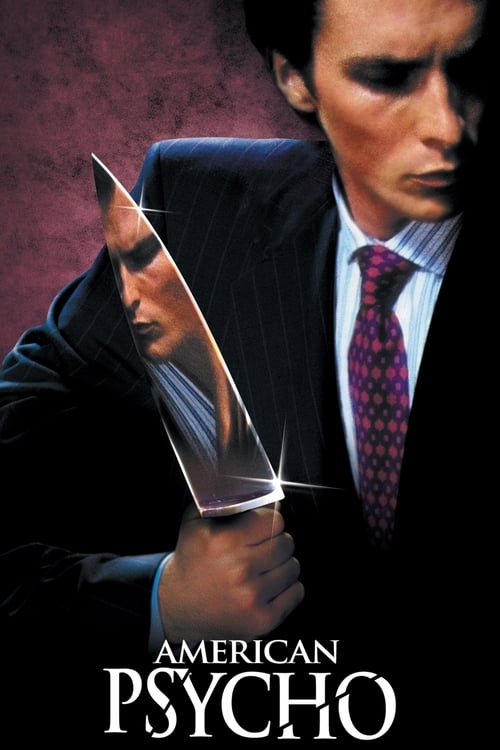
In the ending of "American Psycho," Patrick Bateman confesses to his crimes, but he is met with disbelief and indifference from those around him. He realizes that he may not be held accountable for his actions. The film concludes ambiguously, leaving the audience questioning the reality of Bateman's experiences.
As the film approaches its climax, Patrick Bateman, played by Christian Bale, finds himself increasingly paranoid and desperate. After a series of brutal murders, he decides to confess to his lawyer, Harold, during a meeting in a high-rise office. Bateman, dressed in a sharp suit, sits across from Harold, who is oblivious to the gravity of Bateman's confessions. Bateman describes in graphic detail the horrific acts he has committed, including the murders of Paul Allen and several others. However, Harold dismisses Bateman's claims as a joke, laughing it off and suggesting they go out for drinks instead. This moment highlights Bateman's isolation and the superficiality of the world around him, where even the most heinous acts can be overlooked.
Following this encounter, Bateman returns to his apartment, where he is confronted by the police. In a frantic state, he attempts to dispose of evidence, including the bodies he has hidden. He drives through the city, his mind racing, and he becomes increasingly unhinged. In a moment of desperation, he calls his lawyer again, but the call is met with indifference. Bateman's reality begins to blur as he grapples with the consequences of his actions.
In the final scenes, Bateman visits a building where he believes he has hidden the bodies. He finds nothing, and the police are unable to find any evidence of his crimes. This leads him to question whether he ever committed the murders at all. The film culminates in a scene where Bateman sits in his office, reflecting on his life. He realizes that he is trapped in a cycle of emptiness and materialism, unable to escape the persona he has created.
The fate of the main characters is left ambiguous. Bateman's lawyer, Harold, remains oblivious to Bateman's true nature, while Bateman himself is left in a state of existential dread, unsure of his own reality. The film closes with Bateman's voiceover, expressing a sense of futility and despair, as he acknowledges that he may never be held accountable for his actions. The ending leaves viewers questioning the nature of identity, morality, and the consequences of a life devoid of genuine human connection.
Is there a post-credit scene?
The movie "American Psycho," produced in 2000, does not have a post-credit scene. The film concludes with Patrick Bateman, played by Christian Bale, confessing to his crimes in a phone call to his lawyer, Harold, who dismisses his confessions as a joke. The final moments leave viewers in a state of ambiguity, as Bateman's fate remains uncertain, and the film ends without any additional scenes after the credits roll. The lack of a post-credit scene reinforces the film's themes of identity, reality, and the superficiality of the world Bateman inhabits.
What is Patrick Bateman's profession and how does it influence his character?
Patrick Bateman is a wealthy investment banker working on Wall Street in the 1980s. His profession is central to his character, as it embodies the materialism and superficiality of the era. Bateman's job allows him to indulge in a lavish lifestyle filled with designer clothes, fine dining, and exclusive clubs, which he uses to mask his psychopathic tendencies. His obsession with status and appearance drives much of his behavior, leading to a stark contrast between his polished exterior and his violent inner life.
How does Patrick Bateman's relationship with his fiancée Evelyn reflect his character?
Patrick Bateman's relationship with Evelyn is superficial and devoid of genuine emotion. Evelyn, portrayed as a shallow socialite, is more concerned with appearances and status than with Bateman's true self. This dynamic highlights Bateman's own emotional detachment and his inability to form authentic connections. He often dismisses her concerns and views her as an extension of his image rather than a partner, which further emphasizes his isolation and the emptiness of his life.
What role does the character Paul Allen play in the story?
Paul Allen is a colleague of Patrick Bateman and becomes one of his victims. Bateman's obsession with Allen stems from jealousy and a desire to assert dominance. After luring Allen to his apartment under the pretense of discussing business, Bateman brutally murders him, showcasing his violent tendencies. This act serves as a pivotal moment in the film, as it marks the beginning of Bateman's descent into a more chaotic and reckless lifestyle, further blurring the lines between his reality and delusions.
How does Bateman's obsession with material possessions manifest throughout the film?
Bateman's obsession with material possessions is vividly illustrated through his meticulous descriptions of designer brands, luxury items, and his daily routines. He often compares himself to others based on their possessions, showcasing his need for validation through wealth and status. This obsession is not just superficial; it reflects his inner emptiness and the lengths he goes to maintain his facade. Scenes where he meticulously prepares for the day, showcasing his expensive grooming products and tailored suits, highlight his fixation on appearance and societal approval.
What is the significance of the character Detective Kimball in the story?
Detective Kimball serves as a foil to Patrick Bateman, representing law and order in stark contrast to Bateman's chaotic and violent nature. Throughout the film, Kimball investigates the disappearance of Paul Allen, which brings him into contact with Bateman. Kimball's suspicions about Bateman's behavior create tension, as Bateman attempts to maintain his facade while evading detection. The interactions between them highlight Bateman's growing paranoia and the precariousness of his carefully constructed identity.
Is this family friendly?
"American Psycho," produced in 2000, is not family-friendly and contains numerous potentially objectionable or upsetting scenes and aspects. Here are some key elements that may be distressing for children or sensitive viewers:
-
Graphic Violence: The film features explicit scenes of violence, including murder and torture, which are depicted in a disturbing manner.
-
Sexual Content: There are several scenes that include sexual situations, nudity, and sexual violence, which may be inappropriate for younger audiences.
-
Drug Use: Characters are shown using drugs, which is portrayed in a casual and sometimes glamorized manner.
-
Psychological Distress: The protagonist exhibits severe mental health issues, including psychopathy, which may be unsettling for viewers.
-
Dark Humor: The film employs a satirical tone that addresses themes of consumerism and identity, but this humor is often intertwined with disturbing content.
-
Animal Cruelty: There are scenes that depict harm to animals, which can be particularly upsetting for viewers sensitive to animal welfare.
-
Themes of Materialism and Superficiality: The film critiques the excesses of the 1980s yuppie culture, which may be uncomfortable for some viewers due to its portrayal of moral vacuity.
Overall, "American Psycho" is intended for mature audiences and contains content that could be highly distressing or inappropriate for children and sensitive individuals.








