
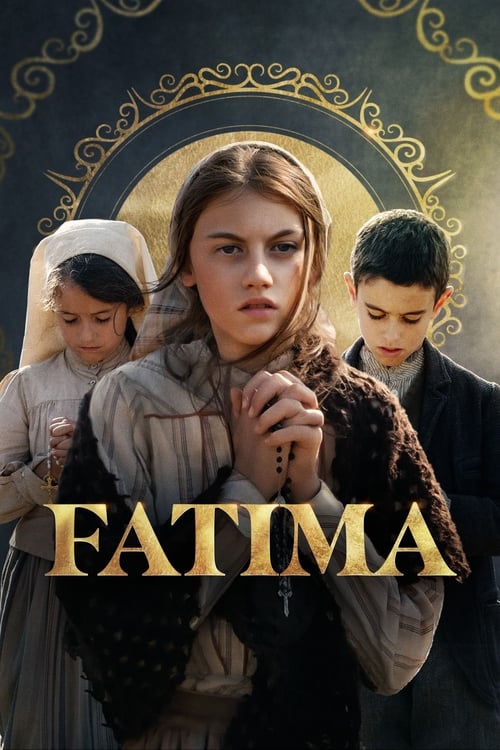























































Popular
What role does Lucia dos Santos play in the story of Fatima?
How do the other children, Francisco and Jacinta Marto, contribute to the story?
What are the key messages that the Virgin Mary conveys to the children during the apparitions?
How does the local community react to the children's claims of seeing the Virgin Mary?
What challenges do the children face from authorities regarding their visions?
Should I watch it?
Ask Your Own Question

What is the plot?
Sorry, we aren't able to watch and write up a full detailed plot yet. Check back in a few days.









What is the ending?
In the ending of the movie "Fatima," the story culminates with the aftermath of the apparitions and the impact they have on the characters involved. The film concludes with a sense of hope and faith, as the characters reflect on their experiences and the significance of the messages they received.
As the film progresses towards its conclusion, we see the characters grappling with the consequences of the events that have unfolded. Lúcia, now older, is shown in a more reflective state, contemplating her past and the weight of her experiences. The film emphasizes her internal struggle as she balances her faith with the skepticism of the world around her.
The final scenes depict the aftermath of the apparitions, with the community's response to the events. The film highlights the tension between faith and doubt, as well as the personal journeys of the characters as they come to terms with their beliefs. The ending leaves viewers with a sense of resolution, as the characters find peace in their faith and the messages they have received.
In the expanded narrative:
As the film approaches its conclusion, we find ourselves in the serene yet somber landscape of Fatima, where the sun sets over the hills, casting a golden hue over the fields. Lúcia, now a young woman, stands at the site of the apparitions, her expression a mixture of nostalgia and contemplation. The weight of her experiences hangs heavily on her shoulders, and we can see the internal conflict within her as she reflects on the visions she witnessed as a child.
In a poignant scene, Lúcia is visited by her mother, who expresses her concern for Lúcia's well-being and the toll that the public scrutiny has taken on her. The tension between Lúcia's faith and her mother's protective instincts is palpable. Lúcia reassures her mother, her voice steady yet filled with emotion, as she speaks of the importance of the messages she received from the Virgin Mary. This moment highlights Lúcia's deep commitment to her faith, even in the face of doubt from those she loves.
The narrative then shifts to the townspeople, who gather to discuss the events surrounding the apparitions. Some express skepticism, while others are fervently devoted, creating a palpable tension in the air. The community is divided, and we see the emotional turmoil this causes among the characters. The camera captures the worried faces of the townsfolk, their eyes filled with uncertainty as they grapple with the implications of Lúcia's visions.
In a climactic moment, Lúcia stands before the crowd, her voice rising above the murmurs of doubt. She recounts the messages of hope and peace that were imparted to her during the apparitions. Her passion and conviction resonate with some, while others remain unconvinced. This scene serves as a powerful testament to Lúcia's unwavering faith and her desire to share the truth of her experiences, despite the skepticism surrounding her.
As the film draws to a close, we see Lúcia's journey come full circle. She is shown in a quiet moment of prayer, her face illuminated by the soft glow of candlelight. The camera lingers on her expression, revealing a profound sense of peace and acceptance. The final shot captures her looking up at the sky, a symbol of her enduring faith and connection to the divine.
The fates of the main characters are intertwined with the themes of faith, doubt, and the search for truth. Lúcia, having faced the trials of skepticism and the burden of her revelations, emerges as a figure of hope and resilience. Her mother, initially protective and fearful, comes to understand the depth of Lúcia's convictions, finding solace in her daughter's unwavering faith. The townspeople, while divided, are left to ponder the messages of love and peace that Lúcia has shared, suggesting a lingering impact on their lives.
In the final moments, the film leaves viewers with a sense of hope, as the characters find their own paths toward understanding and acceptance of the extraordinary events that have unfolded in Fatima. The screen fades to black, leaving the audience to reflect on the enduring power of faith and the personal journeys that each character has undertaken.
Is there a post-credit scene?
The movie "Fatima," produced in 2020, does not have a post-credit scene. The film concludes its narrative without any additional scenes or content after the credits roll. The story wraps up with a focus on the impact of the events surrounding the apparitions of the Virgin Mary in Fatima, Portugal, and the lasting significance of faith and hope in the lives of the characters. The ending emphasizes the emotional and spiritual journey of the main characters, particularly the children who witnessed the apparitions, and leaves the audience with a sense of closure regarding their experiences.
What role does Lucia dos Santos play in the story of Fatima?
Lucia dos Santos is the central character in the film, serving as the primary witness to the apparitions of the Virgin Mary at Fatima. As a young girl, she is portrayed with a deep sense of faith and responsibility, grappling with the weight of her experiences. Her internal conflict is palpable as she navigates the skepticism of adults and the burden of sharing the messages she receives from the Virgin Mary.
How do the other children, Francisco and Jacinta Marto, contribute to the story?
Francisco and Jacinta Marto are Lucia's cousins and play crucial roles in the Fatima apparitions. Francisco is depicted as a gentle and shy boy, deeply devoted to his sister Jacinta, who is portrayed as spirited and compassionate. Their unwavering faith and innocence amplify the emotional stakes of the story, as they too experience visions and share in the messages of hope and warning from the Virgin Mary.
What are the key messages that the Virgin Mary conveys to the children during the apparitions?
During the apparitions, the Virgin Mary conveys messages of prayer, penance, and the importance of faith. She emphasizes the need for the children to pray the Rosary daily and to make sacrifices for the conversion of sinners. These messages resonate deeply with the children, shaping their actions and motivations throughout the film as they strive to fulfill the requests of the Virgin.
How does the local community react to the children's claims of seeing the Virgin Mary?
The local community's reaction is mixed, ranging from skepticism to fervent belief. Many adults dismiss the children's claims as mere fantasies, leading to ridicule and isolation for Lucia, Francisco, and Jacinta. However, as the apparitions continue and miraculous events occur, some community members begin to rally around the children, creating a tension between faith and doubt that permeates the narrative.
What challenges do the children face from authorities regarding their visions?
The children face significant challenges from local authorities, particularly from the mayor, who is determined to suppress their claims. He subjects them to intimidation and threats, attempting to coerce them into recanting their stories. This conflict highlights the children's bravery and steadfastness in their faith, as they endure emotional turmoil and fear while remaining committed to their beliefs.
Is this family friendly?
The movie "Fatima" (2020) is generally considered family-friendly, but it does contain some scenes and themes that may be potentially objectionable or upsetting for children or sensitive viewers. Here are a few aspects to consider:
-
Religious Themes: The film centers around the apparitions of the Virgin Mary to three shepherd children, which may be intense for those unfamiliar with or sensitive to religious themes.
-
Skepticism and Conflict: There are scenes depicting skepticism from adults, including confrontations and arguments about the children's visions, which may be distressing for younger viewers.
-
Historical Context: The film is set during a time of war and social unrest, which may include references to suffering and hardship that could be upsetting.
-
Emotional Struggles: The children experience fear and anxiety regarding their visions and the reactions of those around them, which may evoke strong emotions.
-
Depictions of Suffering: There are moments that touch on themes of loss and suffering, particularly in relation to the historical context of the story, which may be heavy for some viewers.
Overall, while the film conveys a message of hope and faith, these elements may require parental guidance for younger audiences.







