






























Popular
How does Roy Cohn first meet Donald Trump in The Apprentice, and what does Cohn offer him?
What are Roy Cohn’s three rules that he teaches Donald Trump in the film?
How is Fred Trump portrayed in relation to Donald in The Apprentice?
What role does Roy Cohn play in Donald Trump’s rise in The Apprentice?
What specific business ambitions does Donald Trump pursue in the film before and after meeting Roy Cohn?
Should I watch it?
Ask Your Own Question

What is the plot?
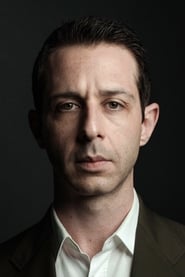
The film opens with archival footage of President Richard Nixon delivering his "I am not a crook" address; his defiant insistence that he will welcome any inquiry into his conduct plays over the title, and the date shifts to 1973. In a crowded Manhattan nightclub, a young Donald Trump (portrayed by Sebastian Stan) dines with an attractive companion and idly points out the city's wealthy regulars until his gaze fixes on Roy Cohn (Jeremy Strong), the feared lawyer famous for prosecuting the Rosenbergs and for having once been chief counsel to Senator McCarthy. When Trump reveals that he is Fred Trump's son, Cohn's interest sharpens; he draws the younger man into his circle and begins to tutor him.
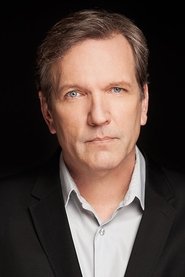
At this stage Trump is still trying to find his footing; he hawks goods door-to-door and sits uneasily at his family's table while his father Fred (Martin Donovan), mother Mary Anne (Catherine McNally), and elder brother Fred Jr. "Freddie" (Charlie Carrick) argue over the federal investigation into Fred's real-estate practices and allegations that his company discriminates against Black tenants. Freddie appears battered by alcohol and drugs, a source of shame to his father and a point of conflicted tenderness for Donald. Trump courts Cohn's favor by asking the lawyer to take his father's case; Cohn agrees and sets down three hard rules for the younger man: attack without hesitation, never concede wrongdoing, and never admit defeat.
Cohn demonstrates those rules in court. He browbeats a law office secretary on the phone, then denies he threatened her when her boss calls. He uncovers and threatens to expose compromising photographs of the lead prosecutor with another man, leveraging the prosecutor's closeted life to force a favorable settlement. Using blackmail tapes and intimidation, Cohn secures the dismissal of the government suit against Fred Trump despite substantial evidence of discrimination. Trump watches the maneuvering and absorbs the lesson: power often lies in coercion and in controlling narratives.
After the courtroom victory, Trump is inducted further into New York's nightlife. At Cohn's lavish party he meets artists and socialites, including Andy Warhol (Bruce Beaton). In an upstairs room he opens a door on a sexual orgy and sees Cohn among the participants; Trump shuts the door, startled but not entirely repelled. On a separate night, he notices a Czech model, Ivana Zelníčková (Maria Bakalova), being denied entry to his club. Trump tells the bouncer that she is on Cohn's list, pays to admit her and her friends, and later offers her a ride home. He later pursues her to Aspen and courts her persistently until she accepts his proposal; Cohn advises Trump to insist on a prenup, advice that angers Ivana and sparks a tense scene in which Trump chases after her to reassure her that he wants to marry her regardless. The couple hold their wedding, and Ivana moves into the orbit of the Trump Organization.
Ambition drives Trump to larger projects. He envisions transforming the derelict Commodore Hotel, adjacent to Grand Central, into a Hyatt and pursues a $160 million tax abatement to make the redevelopment feasible. He fails to inform his father of the plan and brings Cohn into negotiations to grease the wheels with city officials. Cohn produces audiotapes and leverage against elected figures and threatens disclosure to obtain the abatement, and the city awards the benefit while community advocates and housing activists protest that the deal favors the wealthy over the poor. The victory elevates Trump's profile and ushers in more ambitious developments; he moves on to build Trump Tower and later finances projects including the Trump Taj Mahal in Atlantic City. Some projects turn into financial burdens, and losses on ventures like the Taj Mahal strain his business.
The private life behind the business grows fraught. Ivana establishes herself as an interior designer and gives birth to the couple's first child, Donald Jr.; at the same time, Trump becomes more volatile. He cruelly criticizes unions and the working classes in public interviews and jokes about a potential presidential run when asked about losing his fortune. Freddie's alcoholism intensifies; after a particularly bad visit to Donald, Freddie's addiction spirals and he dies. At Freddie's funeral the family is stunned; Donald cries beside Ivana, and the loss deepens the fissures in the household. Trump, increasingly focused on image, arranges cosmetic procedures for himself -- liposuction and a scalp-reduction operation -- and pushes Ivana toward breast augmentation, a demand that she later resents.
As the 1980s progress, Trump's infidelities and contempt for Ivana escalate. He tells her, in private, that he has lost all desire for her. After she attempts to separate from him, he forces himself upon her in their hotel room, an act of sexual violence that she endures. Their marriage continues outwardly for a time, with Ivana visible as a partner in public appearances while their intimacy collapses. Cohn watches these developments and periodically attempts to restrain Trump's excesses, but he also sows the now-familiar methodology of ruthless image management and attack politics into Trump's playbook.
Cohn's own life unravels in a way he refuses to admit publicly. He is a closeted man with a long-term partner, Russell, who becomes ill with an opportunistic disease in the mid-1980s. Cohn, facing potential disbarment and shunning, denies that he is dying of AIDS, publicly calling it some other ailment. He asks Trump to house Russell at the Hyatt; Trump, citing complaints from other tenants, ejects Russell. Cohn confronts Trump on the street, curses him, and strikes him in anger -- a physical altercation that concretely signals the end of any genuine loyalty. Russell later dies of complications from AIDS. Trump, who has distanced himself, then summons Cohn to Mar-a-Lago for a birthday celebration, brings cufflinks he claims contain diamonds, and toasts Cohn with public ceremony. At dinner Ivana, unbeknownst to Cohn, tells him privately that the cufflink stones are not diamonds but cheap simulants. Cohn hears this, breaks down in tears when a cake is brought out, and excuses himself; his health deteriorates. Cohn dies in hospital care from AIDS-related complications a short time later, after being wheeled away from the dining room in visible distress.
Alongside these personal developments, Trump navigates political choreography. He and Roger Stone vet slogans for Ronald Reagan's campaign; they approve a line that will resurface decades later: "Let's Make America Great Again." Trump's image is increasingly national; magazine profiles and television segments portray him as a brash, successful mogul even as creditors threaten him over rising debts. When lenders and unions press for unpaid obligations on new projects, Trump resorts to the same tactics he learned from Cohn: threats, litigation, and public posturing. He uses the press to cast himself as a winner and those who oppose him as losers.
As his mentor's influence recedes, Trump assembles his own mythology. He meets with a ghostwriter, Tony Schwartz, and collaborates on The Art of the Deal. In interviews during the book's creation Trump recites the three rules he picked up from Cohn: attack, deny wrongdoing, and never concede defeat. He tests those maxims publicly, defending his family and his enterprises, refusing to acknowledge irregularities in his business dealings. He also perseveres with the cosmetic changes he believes will preserve his brand; the film shows him undergoing surgical procedures and then quickly returning to the public eye.
The film does not depict murders; instead it records a string of deaths from illness and addiction and specifies how each occurs. Fred Jr. succumbs to problems tied to alcoholism; he dies away from public acclaim, his collapse presented as the result of substance abuse and deteriorating health rather than foul play. Russell dies from complications of AIDS after being evicted from Trump's hotel; no character kills him. Roy Cohn dies of AIDS-related illness after a prolonged decline and after custody of his public image slips into denial. The film shows each death with detail: Freddie's downward spiral and the family's stunned reaction at the funeral, Russell's gradual wasting and the empty bed at the Hyatt after his eviction, Cohn's tears at the birthday dinner and his being wheeled away before passing.
Conflict scenes throughout the story are concrete and specific. Cohn's courtroom blackmail involves locating and threatening to expose the prosecutor's clandestine relationship with another man; he calls the prosecutor and lays out the evidence, then watches as the case is settled. The battle over the Commodore tax abatement plays out at city hall, where Cohn uses tapes of elected officials to force a $160 million concession; protesters gather outside holding signs decrying corporate favoritism. At Cohn's parties Trump walks in on sex acts and later confronts the moral cost of alliances while weighing their practical advantages. When Russell falls ill and Trump orders him removed from the Hyatt, Cohn approaches Trump in the street, hurls invective, and slaps him; the altercation ends with Cohn walking away and Trump standing stunned in public. The assault on Ivana is presented as a discrete, brutal episode that follows Trump's avowal of indifference toward her; he rapes her in their hotel room after she expresses a desire to leave him. Financial confrontations occur at boardrooms and construction sites: lenders issue foreclosure threats, union leaders picket the Taj Mahal project, and contractors confront Trump about late payments.
Characters' motivations and relationships are mapped in action rather than in commentary. Donald seeks to replace his father's limited, parochial success with a national brand; he pursues visibility, leverages influence to secure deals, and adopts Cohn's tactics to neutralize opponents. Cohn seeks power and control through others; he mentors Trump to secure an heir to his combative legal philosophy while protecting his own secrets. Ivana tries to carve a professional identity and sustain a marriage that grows abusive; she supports projects publicly while privately contending with humiliation and violence. Freddie seeks dignity and acceptance, but addiction strips him of both. Russell seeks care in a culture of stigma and is expelled when Trump prioritizes image over compassion.
In the final sequences, Cohn's death removes Trump's principal mentor and forces a consolidation of the methods learned there into his public persona. Trump stands in front of Manhattan's skyline and rehearses his public lines about winners and about his own inevitability; he speaks to the ghostwriter about crafting a narrative of success. The film closes with scenes of Trump promoting The Art of the Deal, repeating Cohn's three rules as if they are his own creed, and picturing a future in which he moves from the world of real estate celebrity into national politics. The last shot frames Trump looking over New York with an American flag visible against the skyline; he speaks of making the country stronger, and the image cuts to black as his voice trails off, leaving his next moves outwardly uncharted but implied by the ambitions he vocalizes.



What is the ending?
The film ends with Donald Trump fully adopting the ruthless rules Roy Cohn taught him, while Cohn is dying and being left behind. In the final stretch, Trump is shown as having moved past needing Cohn, and the movie closes with Trump presenting himself as the author of his own success, even as the audience has just watched how much of that persona was built through Cohn's influence.
First, in the ending's simplest terms: Roy Cohn becomes sick and isolated, and Donald Trump grows richer, colder, and more self-satisfied. The movie finishes by showing Trump's public rise and the private cost of that rise.
Roy Cohn's fate is shown clearly: he is weakened by AIDS, estranged from the life he once controlled, and he dies after Trump has already outgrown his role in his life.
Trump's final fate in the film is not death, but transformation. He ends as a man who has embraced image, victory, and self-mythmaking, and who later presents the lessons he learned as if they were always his own.
Ivana's fate in the ending is that she is no longer the center of Trump's emotional life; their marriage has become part of the background of his rise, and the film leaves her as one more relationship consumed by his drive for success.
Fred Trump's fate is similar in function: he remains the background force of Trump's upbringing and ambition, but by the end he is no longer the defining voice in Trump's life, because Trump has fully stepped into the persona shaped by Cohn's methods.
Now the expanded ending, scene by scene:
The ending moves into the period when Trump is no longer the young, uncertain son learning how to survive in New York real estate. He is now a man with money, visibility, and confidence, and the film shows him acting as if the rules of business are simply the rules of life.
Roy Cohn, meanwhile, is visibly declining. The film shows him physically weakened and emotionally diminished, and his relationship with Trump has changed from teacher-and-student to something more painful and one-sided.
Trump still makes contact with Cohn near the end, including an awkward birthday gathering in Florida shortly before Cohn's death. The scene is presented as a strained attempt at connection, but the film makes clear that Trump's attention is already elsewhere.
In that later period, Trump's business behavior becomes increasingly aggressive and expansive. He keeps pursuing new deals and new properties, and he acts as though caution no longer applies to him. The film presents this as the point where he has learned to use Cohn's lessons without needing Cohn himself.
Cohn's death follows, and the film treats it as the end of the old partnership. He dies after a period of illness tied to AIDS, and the movie emphasizes that Trump no longer has room in his life for the man who helped build him.
After Cohn is gone, the film shifts fully onto Trump's self-construction. He is shown speaking to Tony Schwartz, the ghostwriter of The Art of the Deal, and he explains his view of success as if it were a natural law.
In that conversation, Trump says that business is not just a means to an end for him; it is the thrill itself. He lays out his rules for winning, including the idea that he never admits wrongdoing and always claims victory. The scene presents him as someone who has turned strategy into identity.
The film then makes a final visual turn toward Trump's physical self-presentation. It shows cosmetic procedures, including liposuction and hair-related surgery, as part of his effort to shape not only his business image but his body itself. The ending uses these images to show how completely he is committed to control over appearance.
The last movement of the ending leaves Trump in a state of completion rather than resolution. He is not defeated, and he is not softened. He is shown as the version of himself that will carry forward: polished, self-asserting, and willing to rewrite the story of where his success came from.
If you want, I can also give you a shorter "final scene only" version or a character-by-character ending breakdown.
Is there a post-credit scene?
No. The Apprentice (2024) does not have a post-credit scene or any extra scene during the credits.
The end credits simply play out normally; according to end-credits guides, there is nothing additional after the film, and the credits run for about 7 minutes.
How does Roy Cohn first meet Donald Trump in The Apprentice, and what does Cohn offer him?
Trump first meets Roy Cohn in 1973 at a New York City social club after pointing out wealthy people to his date. Trump complains that the federal government is investigating his father Fred Trump for discrimination against African-American tenants, and Cohn offers to help him.
What are Roy Cohn’s three rules that he teaches Donald Trump in the film?
According to the film's coverage, Cohn teaches Trump three rules for success: always attack, never admit mistakes and always deny everything, and always claim victory even when you lose.
How is Fred Trump portrayed in relation to Donald in The Apprentice?
Fred Trump is portrayed as an authoritarian, skeptical father who belittles Donald and treats him as less capable than his siblings. Reviews describe Donald as still under Fred's emotional control, with Fred using him for work in the family real-estate business rather than trusting him with real power.
What role does Roy Cohn play in Donald Trump’s rise in The Apprentice?
Cohn becomes Trump's mentor and political fixer, helping him navigate legal and business problems while teaching him tactics based on deception, intimidation, and media manipulation. The film presents Cohn as the key figure who helps shape the younger Trump into the persona the world later recognizes.
What specific business ambitions does Donald Trump pursue in the film before and after meeting Roy Cohn?
The film follows Trump as he tries to step out of his father's shadow and make a name for himself in Manhattan real estate. One review notes that he initially wants control of a rundown hotel in Midtown Manhattan, while later the story shows him rising into a more openly corrupt and powerful figure after absorbing Cohn's lessons.
Is this family friendly?
No, The Apprentice (2024) is not family friendly. It is rated R in the U.S. for sexual content, graphic nudity, language, sexual assault, and drug use, and 15 in the U.K. for sex, sexual violence, strong language, drug misuse, and discrimination.
Potentially objectionable or upsetting elements include: - Explicit sex/nudity, including scenes with frontal nudity and oral sex, plus group-sex content. - Sexual violence/rape, which several parental guides flag as disturbing. - Strong profanity and slurs, including frequent coarse language and offensive terms targeting racial, religious, and LGBTQ+ groups. - Drug use, including cocaine-related content. - Violence and upsetting imagery, including a graphic surgery scene, some physical violence, and archival footage of real-world brutality.
For children or sensitive viewers, the biggest concerns are the explicit sexual material, sexual violence, and hateful language.








