
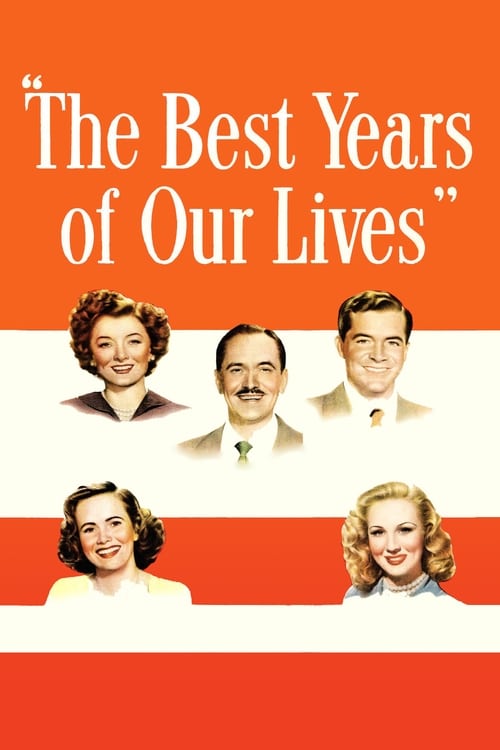


Popular
What challenges does Al Stephenson face when he returns home from the war?
How does Fred Derry's character evolve throughout the film?
What is the significance of Homer Parrish's character and his injury?
How does the film portray the impact of war on family dynamics?
What role does the setting of Boone City play in the story?
Should I watch it?
Ask Your Own Question

What is the plot?
Sorry, we aren't able to watch and write up a full detailed plot yet. Check back in a few days.




What is the ending?
In the ending of "The Best Years of Our Lives," the three main characters--Alfred D. P. "Fred" Derry, Homer Parrish, and Wilma Cameron--come to terms with their experiences and the changes in their lives after returning from World War II. Fred reconciles with his wife, Marie, and they begin to rebuild their relationship. Homer finds a sense of acceptance and love with his girlfriend, and the film concludes with a sense of hope for the future.
As the film approaches its conclusion, the narrative unfolds with a poignant sense of resolution for the three main characters, each grappling with their own struggles after returning from the war.
The first scene of the ending focuses on Fred Derry, who has been wrestling with the emotional scars of his wartime experiences and the strain on his marriage. After a series of tense interactions with his wife, Marie, Fred finally confronts the reality of their relationship. In a quiet moment, they sit together in their living room, the atmosphere thick with unspoken words. Fred expresses his feelings of alienation and frustration, revealing how the war has changed him. Marie, in turn, shares her own feelings of loneliness and confusion. This heartfelt exchange marks a turning point; they begin to understand each other better, and Fred takes a step toward reconciling with his past and his marriage. The scene closes with a tentative but hopeful embrace, suggesting that they are willing to work on their relationship.
Next, the focus shifts to Homer Parrish, who has been struggling with his identity after losing his hands in the war. He has been hesitant to fully embrace his relationship with his girlfriend, Wilma Cameron, fearing that his disability will drive her away. In a pivotal scene, Wilma confronts Homer about his insecurities. She expresses her unwavering love for him, emphasizing that his worth is not defined by his physical condition. This moment of vulnerability allows Homer to finally accept himself and his situation. The two share a tender kiss, symbolizing their commitment to each other and the strength of their bond. The scene captures the essence of love overcoming adversity, and Homer's emotional journey culminates in a newfound confidence.
The final scenes bring the three men together, highlighting their shared experiences and the camaraderie that has developed between them. Fred, Homer, and their friend, Al, gather at a local bar, reflecting on their time in the service and the challenges they face in civilian life. The atmosphere is filled with a mix of nostalgia and hope as they share stories and laughter, reinforcing their friendship. This gathering serves as a reminder of the bonds formed during the war and the importance of support in healing.
As the film draws to a close, the camera pans out to show Fred, Homer, and Al walking together down the street, a visual representation of their journey toward healing and acceptance. Each character has faced their demons and emerged with a sense of purpose. Fred is ready to rebuild his marriage, Homer has embraced his relationship with Wilma, and Al has found a renewed sense of direction in his life. The film ends on a hopeful note, suggesting that while the scars of war may linger, the strength of human connection and love can lead to brighter days ahead.
Is there a post-credit scene?
The Best Years of Our Lives, produced in 1946, does not have a post-credit scene. The film concludes with a poignant ending that encapsulates the emotional journeys of the main characters as they reintegrate into civilian life after World War II. The focus remains on the resolution of their personal struggles and the hope for the future, leaving no additional scenes or content after the credits. The film's powerful themes of adjustment, trauma, and the search for belonging are fully realized within the main narrative, making a post-credit scene unnecessary.
What challenges does Al Stephenson face when he returns home from the war?
Al Stephenson, played by Fredric March, struggles with reintegrating into civilian life after serving as a banker in the war. He faces the challenge of reconnecting with his wife, who has grown accustomed to managing the household alone, and he grapples with feelings of alienation and the burden of his wartime experiences. Al's internal conflict is heightened by his desire to provide for his family while feeling out of place in his previous job.
How does Fred Derry's character evolve throughout the film?
Fred Derry, portrayed by Dana Andrews, is a World War II veteran who returns home to find his life drastically changed. Initially, he is excited to reunite with his wife, but he soon discovers that their relationship has deteriorated. Fred struggles with feelings of disillusionment and the trauma of war, which leads him to seek solace in alcohol. His character evolves as he confronts his past and attempts to rebuild his life, ultimately finding a sense of purpose and connection with others.
What is the significance of Homer Parrish's character and his injury?
Homer Parrish, played by Harold Russell, is a veteran who lost both of his hands during the war. His character represents the physical and emotional scars of combat. The significance of his injury lies in his struggle for independence and acceptance. Homer initially feels ashamed and is hesitant to engage in relationships, particularly with his girlfriend, Wilma. His journey throughout the film highlights themes of resilience and the quest for normalcy, as he learns to adapt to his new reality and embrace love.
How does the film portray the impact of war on family dynamics?
The Best Years of Our Lives intricately portrays the impact of war on family dynamics through the experiences of its main characters. Al Stephenson's return creates tension with his wife, who has taken on a more independent role, leading to misunderstandings and emotional distance. Fred Derry's relationship with his wife deteriorates due to the changes in his personality and the trauma he carries. Homer's relationship with his family is also strained as they struggle to understand his emotional and physical challenges. The film captures the complexities of these relationships as they navigate the aftermath of war.
What role does the setting of Boone City play in the story?
Boone City serves as a microcosm of post-war America, reflecting the societal changes and challenges faced by returning veterans. The setting is depicted with a sense of nostalgia and realism, showcasing the contrast between the veterans' experiences and the civilian life that has continued in their absence. The city becomes a backdrop for the characters' struggles, as they confront the realities of unemployment, societal expectations, and the lingering effects of war. The interactions within this setting highlight the emotional and psychological barriers the characters must overcome to find their place in a changed world.
Is this family friendly?
"The Best Years of Our Lives" is generally considered a poignant and impactful film that addresses the challenges faced by returning World War II veterans. While it is a significant work that explores themes of reintegration into civilian life, it does contain some elements that may be considered objectionable or upsetting for children or sensitive viewers.
-
Depictions of War Trauma: The film portrays the psychological effects of war, including flashbacks and emotional distress experienced by veterans, which may be intense for younger audiences.
-
Alcoholism: One of the characters struggles with alcoholism, which is depicted in a serious light, showcasing the impact of addiction on family and relationships.
-
Domestic Tension: There are scenes that illustrate marital strain and conflict, particularly as characters navigate their changed relationships after the war.
-
Disability: The film features a character who is physically disabled due to war injuries, which may be difficult for some viewers to process.
-
Emotional Struggles: Characters experience deep feelings of alienation, depression, and anxiety, which are central to the narrative and may resonate strongly with sensitive viewers.
These elements contribute to the film's serious tone and may require parental discretion for younger audiences.









