
























Popular
Who is Nina, and why did she give up Max before the events of the film?
Who kidnaps Max, and what do they want from Nina?
What is the relationship between Max and his adoptive family?
Who is the man whose brother Nina killed, and why is he important to the story?
What role do the gangsters play in Nina’s attempt to rescue Max?
Should I watch it?
Ask Your Own Question

What is the plot?
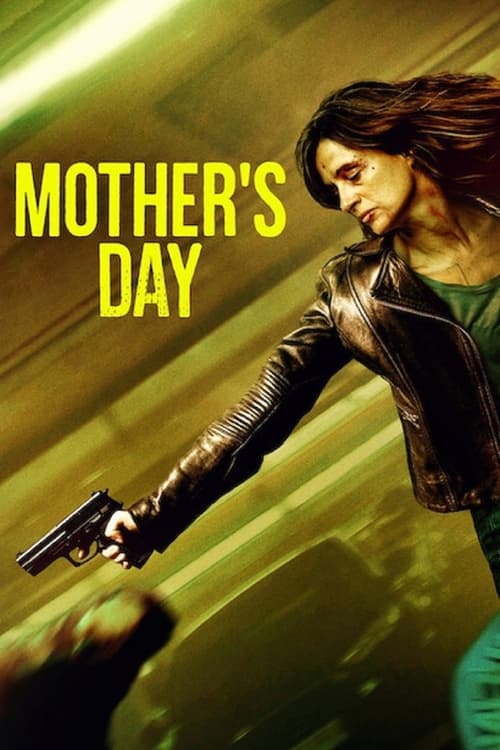
On Mother's Day, Nina Nowak is living as a woman with a stolen past: a former NATO special operations agent who has faked her own death, disappeared from her old life, and buried herself in hiding in Warsaw while quietly watching the son she gave up years earlier, Max, grow up without knowing she is his mother. The holiday framing is not decorative; it defines the whole movie, because every action Nina takes is driven by the fact that she is a mother who has been forced to love from a distance, surviving in secrecy while carrying the grief of separation and the guilt of abandonment.
The story begins with that tension already alive in the background. Nina is not just hiding; she is surviving in the shadow of her own past, a past that includes enough violence and bloodshed to keep dangerous people hunting her even after she has supposedly died. Max, meanwhile, is living a normal life with his adoptive parents, old enough to be a teenager and still completely unaware that the woman whose face he has never known is his biological mother. The first emotional truth of the film is that Nina has never stopped watching him. She follows his life from afar, including online, and every glimpse reinforces the same painful contradiction: she gave him away to protect him, but the sacrifice did not erase her love.
That fragile balance shatters when ruthless gangsters kidnap Max. The abduction is the inciting wound that rips Nina out of hiding and forces the buried version of herself back to the surface. Until this moment, she has been able to maintain the illusion that her old life is dead. After Max disappears, that illusion collapses instantly, and the film shifts into a rescue thriller with a deeply personal core: a mother who has spent years denying herself gets one brutal chance to recover the child she never got to raise. The kidnappers are not random predators. The film quickly establishes that the abduction is tied to revenge, and that Nina's past as an operative has come back to exact a price through her son.
Nina moves immediately, and the movie settles into a relentless pursuit structure. She tears through criminal spaces and different locations in Warsaw, fighting her way past goons, interrogating people who know more than they admit, and using the lethal instincts that once made her effective in the field. The action is described as wave after wave of violence, and that is exactly how the story feels: each time Nina gains ground, another obstacle appears, another armed man steps into her path, another clue proves to be part of a larger lie. The film's tension comes not only from whether Max will survive, but from the way every confrontation threatens to expose the cost of Nina's former life. The brutal woman who can kick down a door and survive a gunfight is also the mother who has spent years regretting the day she disappeared from her son's world.
One of the key early revelations is that the kidnapping is connected to Dusan Dragan, who is introduced as the son of Spiridon Dragan, a man Nina killed during a previous operation. That history gives the thriller its revenge logic: blood for blood, parent for parent, child for child. The implication is vicious and simple. Nina's past mission created an enemy family, and now that enemy family has struck back by taking the one person Nina would sacrifice everything to save. The name Spiridon Dragan carries special weight because his death is not only backstory; it is the pivot on which the present crisis turns. Nina's old work has not stayed buried. It has matured into a vendetta, and Max is the hostage through which that vendetta becomes emotionally unbearable.
As Nina presses forward, the plot widens into a web of criminal corruption. The sources indicate that the criminal world around her includes drug smuggling, weapons trafficking, and human trafficking, which gives the story a broader sense of organized rot rather than a simple one-man revenge scheme. She is not merely hunting kidnappers; she is pushing through a system of violence protected by money, leverage, and police corruption. A crooked police officer becomes an important part of the hunt, feeding Nina information and acting as a bridge between the official world and the criminal one. At first, he appears useful, maybe even necessary. He seems like a compromised insider who can help her navigate the maze that Max has been dragged into. But the movie keeps tightening the screws, making it clear that no one inside this system is trustworthy.
The story then sharpens into a series of confrontations. Nina is forced through "waves of goons" in different places as she follows the trail to her son. She does not just fight; she endures. Every scene pushes the next one harder, with the camera and staging emphasizing both physical punishment and emotional desperation. The violence is intense and often ugly, with gunfire, close-quarters brutality, and an atmosphere of desperation rather than clean heroics. Nina's competence is never in doubt, but the film uses that competence to underline how much she has been denied. She is capable of moving like a weapon, yet all of that skill is being spent on one thing: getting back to Max before time runs out.
The major twist arrives when the apparent revenge plot begins to fracture. The story had led Nina--and the audience--to believe that Dusan Dragan was the mastermind behind Max's kidnapping, the son seeking vengeance for Spiridon's death. But that explanation turns out to be only part of a larger deception. The supposedly direct revenge angle is revealed to be a cover for a deeper conspiracy involving corrupt police officers. In one account, the figure helping orchestrate the operation is Nina's old contact, Sniffy, who lures her toward a trap and then runs her over with his car in a parking garage. When Nina wakes, she finds herself in a van atop Woltmeter's bagged-up money and realizes that Sniffy was not an ally at all but the person who arranged the whole scheme. In another account, the fake Dusan Dragan storyline is exposed as a lie, with police accomplices revealing that Dusan does not even exist in the way Nina was led to believe, and that a forged phone message was used to direct her toward the rescue path. The important point is the same in both descriptions: the kidnapping is a manipulation layered over a manipulation, and Nina has been steered through false clues by people inside the system who are stealing money and using Max as leverage.
The film's setting of Warsaw becomes crucial during this spiral. Nina races through the city as her world narrows to a single objective, and each location reflects a different layer of the conspiracy: a parking garage where an old contact turns traitor, police-connected spaces where evidence and access are controlled, and criminal hideouts where Max is moved like cargo. The city is not simply a backdrop; it is a maze of institutions and underworld deals, all of them feeding the same machine that has kidnapped her son. The story's forward motion comes from the collision of personal urgency and institutional corruption. Nina is not just fighting thugs. She is fighting the fact that the people who should protect Max are either helpless, compromised, or actively involved in the plot against him.
At the center of this hidden machinery is the corrupt officer, whose motives are finally dragged into the light during the climax. Nina reaches a point where she has the upper hand and forces him to answer for what he has done. He admits that he would do anything for Zosia and that he did all of it for a payday. His confession strips the plot down to greed and opportunism, even if he tries to dress it up with personal loyalty. The revelation matters because it destroys the illusion of noble vengeance. This was not a righteous retaliation for a dead gangster's son. It was a criminal and police scheme driven by money, deception, and the willingness to use a child as bait. The officer's confession also confirms that Nina's search has been hijacked from the beginning by people who knew exactly where to push her and how to turn her maternal panic into a tool.
The climax builds as Nina closes in on the final truth and Max's fate hangs in the balance. She has already endured enough to understand that the real enemy is bigger than the first face she was given. The plot revelations have exposed the lie, but the emotional stakes remain urgent: Max is still in danger, and Nina still has to get him back alive. The film does not soften here. It keeps the violence sharp and the suspense immediate, making Nina's progress feel like a series of brutal thresholds she has to cross before she can even think about what comes next. She is not only rescuing her son; she is reclaiming the right to be his mother after years of absence.
The deaths tied to the film's backstory are crucial to understanding why this crisis exists at all. Spiridon Dragan is the key named death the sources identify explicitly: Nina killed him during a previous operation, and that death fuels the supposed revenge plot against her. Another source notes that Nina's former team and significant other were hunted down and that her partner was killed, which explains why she faked her own death and vanished. Those deaths are not part of the present-day rescue structure, but they define Nina's emotional and tactical reality. They explain why she cannot simply go to the police, why she lives in secrecy, and why her old world is still able to reach into her current life with such devastating force. The available sources do not provide a complete, verified on-screen death count for every secondary character, so the only deaths that can be stated with confidence from the material here are the backstory deaths that directly drive the plot: Spiridon Dragan's death at Nina's hands, and the death of Nina's partner in the earlier events that forced her into hiding.
When Nina finally gets control of the situation, she makes a choice that defines her character as much as any gunfight. She does not kill the corrupt officer. After extracting the truth from him, she knocks him out and leaves him at the scene of the accident. That decision is important because the movie has repeatedly shown Nina as someone who can absolutely destroy the people in her way. Yet at the end, she refuses to let revenge become the final word. She has spent the whole story moving through violence to save her child, but she does not let that violence consume the ending. Her mercy is not weakness; it is the final proof that the film is about motherhood, not just retribution.
After the conspiracy is exposed and the immediate danger passes, Nina brings Max back to his adoptive parents. This scene carries the emotional weight of the entire film. She does not simply take him away and claim him. She returns him to the people who raised him and tells him that it is up to him whether they will see each other again. That choice respects the life he has already lived while acknowledging the bond that has just been revealed. Nina is not trying to erase the family Max knew; she is trying to enter his life honestly, after years of watching from the outside. The scene lands as both a release and a test. She has saved him, but now she has to accept that saving him does not automatically grant her a place in his heart.
Max chooses that place anyway. He decides to see his birth mother, and later he arrives at Nina's apartment. The reunion is quiet compared to the violence that precedes it, but emotionally it is the true climax. Max and Nina finally face each other not as victim and rescuer, not as strangers shaped by separate lies, but as mother and son. They hug, and the film allows that simple physical gesture to carry everything the story has been storing up: loss, shock, recognition, relief, and the possibility of a new beginning. The apartment, which has already been established as a place of concealment and private grief, becomes the site of emotional repair. This is where Nina's secret life finally connects to the son she has only ever known at a distance.
The ending does not stop there. As Nina and Max sit together, Max asks to know more about his father. That question opens the future rather than closing it, signaling that this relationship will not be resolved in a single night. Nina is about to answer when the doorbell rings. She gets up, armed with a knife, still unable to fully leave behind the instinct to protect herself and her son with violence if necessary. When she opens the door, she finds her own mother there. The reveal is sharp and destabilizing. Nina's mother warns that things are about to go down and that they are lucky she has shown up. The film ends this way, with the emotional reunion interrupted by a new threat and the implication that Nina's hidden life is far from over. Just as she is finally reconnecting with Max, another layer of family, secrecy, and danger pushes in through the front door.
A mid-credit scene extends the aftermath by returning to the crooked cop, who is trying to talk himself out of trouble at the embassy. He does not get away with it. There is already more than enough video evidence to put him away, which confirms that his effort to survive the fallout is futile. This small extra beat functions like a final legal and moral correction: the man who sold out the truth for money is still trapped by the evidence of his own corruption. The main story has already given Nina her son back, at least for the moment, but this coda makes clear that the conspiracy still has consequences and that the people who manipulated Max's kidnapping cannot simply vanish into the diplomatic shadows.
What remains at the end is not a neat resolution but a hard-won human one. Nina survives. Max survives. The corrupt scheme is exposed. The false revenge narrative is dismantled. Nina chooses mercy over killing. Max chooses to know her. And yet the final note is not peace but warning, because the arrival of Nina's mother suggests that the past keeps arriving in new forms, and the world that produced Nina's secrecy has not finished demanding payment. The movie ends with Nina standing at the threshold between her violent history and a possible future with her son, while the door opens on yet another layer of danger.





What is the ending?
Nina gets Max back alive, and after the fighting is over she returns him to his adoptive parents before later seeing him again at her apartment, where they begin to reconnect. The ending then shifts into a new warning, because Nina's mother arrives and says that now that Nina is back in the open, danger is still coming.
Nina starts the ending in the middle of the rescue fallout, still fighting to survive after uncovering that the kidnapping was tied to corrupt police rather than the named criminal mastermind she had been chasing. She has already learned that the supposed underworld figure Dusan Dragan was never real, and that the police operation around her had been fake from the start. At that point, she regains control of the situation and keeps pressing forward to get Max out alive.
In the final stretch, Nina gets the upper hand on the crooked officer involved in the plot. He admits that he did all of it for money and says he would have done anything for Zosia, then Nina chooses not to kill him. Instead, she knocks him out and leaves him behind at the scene, alive but defeated.
After that, Nina takes Max back to his adoptive parents. She does not force the relationship, and she tells him that it is his decision whether they will see each other again. Max then chooses to come to Nina's apartment later, and the two of them finally sit together face to face. He hugs her, and then he asks to know more about his biological father.
Before Nina can answer, the doorbell rings. Nina goes to check it, and it is her mother. She tells Nina that things are about to become dangerous and that they are lucky she arrived when she did. The film ends with that warning hanging over them, making it clear that Nina and Max are not fully out of danger yet.
The fate of the main characters at the end is as follows: Nina survives, gets Max back, and is left facing a new threat with her mother's arrival. Max survives, returns safely to his family, and then chooses to begin a relationship with Nina. The crooked officer survives after being knocked out, and he is later shown being interrogated, where surveillance evidence appears to expose him. Nina's mother appears alive and active at the door, with signs that she is connected to the larger danger.
If you want, I can also give you the ending again in an even simpler, shorter version.
Is there a post-credit scene?
Yes. The 2023 film Mother's Day has a mid-credits/post-credits-style scene that shows the police chief presenting Igor with video evidence that incriminates him in the events of the film.
In that scene, Igor is already in police custody and is being shown surveillance footage connected to the cash and the men involved in the crime. The evidence makes it clear that he cannot realistically escape responsibility, and the scene ends with Igor looking defeated and asking whether he can call his daughter to speak with her.
Some coverage describes this as a mid-credits scene rather than a full separate post-credits sequence, but the function is the same: it serves as a final coda after the main story and reinforces Igor's downfall.
Who is Nina, and why did she give up Max before the events of the film?
Nina is a former NATO special operations agent who went into hiding and gave up her son Max to keep him safe from the dangerous life tied to her past. The story frames that separation as a deliberate sacrifice, and her old identity resurfaces when Max is later kidnapped.
Who kidnaps Max, and what do they want from Nina?
Max is kidnapped by ruthless gangsters who use him as bait to force Nina out of hiding. The kidnapping is tied to a larger conflict involving people connected to Nina's previous life, and the criminals are trying to leverage her skills and history against her.
What is the relationship between Max and his adoptive family?
Max has been living with his adoptive family while Nina stays away, which means he grows up without knowing his biological mother. The film's central tension comes from that separation and from Nina being pushed back into his life under violent circumstances.
Who is the man whose brother Nina killed, and why is he important to the story?
The film describes a man from Nina's past whose brother she killed while working as an operative, and he becomes a key driver of the revenge plot. His motive is payback, and that personal grievance helps explain why Max is targeted and why Nina is forced into action.
What role do the gangsters play in Nina’s attempt to rescue Max?
The gangsters are the immediate antagonists who hold Max and attempt to control the situation through violence and leverage. They are not just random criminals; they function as the armed force behind the pressure on Nina, making her rescue mission a direct confrontation with organized criminal power.
Is this family friendly?
No -- the 2023 film Mother's Day is not especially family-friendly for young children. It is a PG-13 action thriller with kidnapping, intense violence, profanity, and some mature material, so it is better suited to teens and adults than to kids.
Potentially upsetting or objectionable content includes:
- Kidnapping / threat to a child and other intense peril.
- Frequent action violence and "plenty of pain," with a gritty tone.
- Profanity and coarse language.
- Mature themes involving crime and danger.
- Likely tense, suspenseful scenes throughout, since the plot centers on a mother trying to rescue her son from dangerous criminals.
If you want, I can also give a more detailed parent-style content breakdown for age 10, 13, or 16.









