
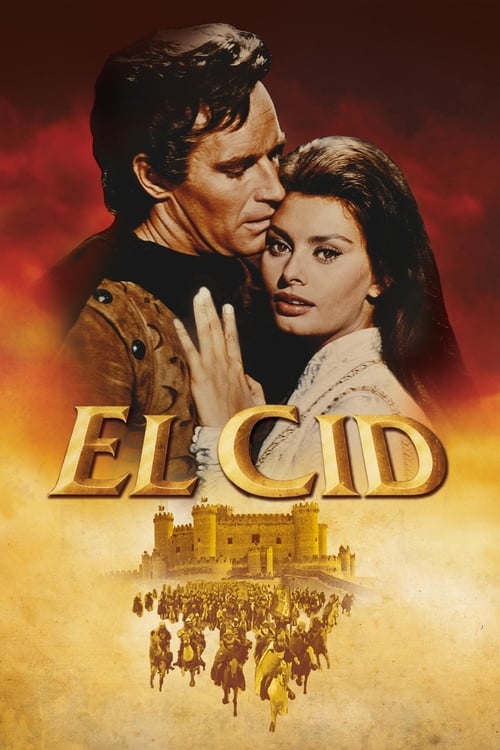


Popular
What motivates El Cid to fight for both the Moors and the Christians?
How does the relationship between El Cid and Jimena evolve throughout the film?
What role does King Sancho play in El Cid's journey?
How does El Cid's relationship with the Moorish leader, Ibn Yahya, impact the story?
What are the key events that lead to El Cid's exile, and how does he respond to it?
Should I watch it?
Ask Your Own Question

What is the plot?
Sorry, we aren't able to watch and write up a full detailed plot yet. Check back in a few days.


What is the ending?
In the ending of the movie "El Cid," the noble warrior Rodrigo Díaz de Vivar, known as El Cid, dies after a victorious battle against the Moors. His body is tied to his horse, and he rides into battle one last time, inspiring his men. After the battle, the Christians achieve victory, but El Cid's death leaves a profound impact on his wife, Jimena, and his loyal followers.
As the film concludes, Jimena mourns her husband, and the kingdom is united in his honor, recognizing his legacy as a hero who fought for both faith and country.
The final scenes of "El Cid" unfold with a palpable tension as the Christian forces prepare for a decisive battle against the Moors. The atmosphere is thick with anticipation, and the stakes are high. El Cid, portrayed with a commanding presence, stands resolute, embodying the spirit of a leader who has faced insurmountable odds. His internal struggle is evident; he knows that this battle could be his last, yet he is driven by a sense of duty to his people and his beloved Jimena.
As the battle commences, the clash of swords and the cries of warriors fill the air. El Cid fights valiantly, his every move a testament to his skill and determination. The cinematography captures the chaos of war, with sweeping shots of the battlefield, the dust rising from the hooves of galloping horses, and the fierce expressions of the combatants. El Cid's men rally around him, inspired by his bravery, and they push forward against the Moorish forces.
In a pivotal moment, El Cid is gravely wounded. The camera lingers on his face, revealing a mix of pain and unwavering resolve. He knows he must continue to lead, even as his strength wanes. In a dramatic turn, he is tied to his horse, a symbolic gesture of his indomitable spirit. The sight of him, still fighting despite his injuries, stirs a deep emotional response among his men. They charge into battle, emboldened by the sight of their fallen leader, who rides into the fray as if he were still alive and commanding them.
The battle reaches its climax as the Christians, fueled by El Cid's legacy, achieve a hard-fought victory over the Moors. The camera captures the moment of triumph, but it is tinged with sorrow. As the dust settles, the reality of El Cid's death becomes apparent. His body, still tied to the horse, is a haunting image of sacrifice and valor. The soldiers, once filled with adrenaline, now stand in silence, grappling with the loss of their leader.
In the aftermath, Jimena, portrayed with deep emotional depth, approaches the fallen hero. Her grief is palpable, and the scene is filled with a profound sense of loss. She kneels beside El Cid, her tears flowing freely as she mourns the man who fought not only for his country but for their love. The camera captures her sorrow, emphasizing the personal cost of war and the sacrifices made by those who fight.
As the film draws to a close, the kingdom honors El Cid's legacy. The final scenes depict a united Christian front, inspired by his heroism. Jimena stands as a symbol of resilience, vowing to carry on El Cid's memory and ideals. The film ends on a note of hope, suggesting that while El Cid may be gone, his spirit and the values he embodied will continue to inspire future generations.
In summary, the fates of the main characters are sealed in this poignant conclusion: El Cid dies a hero, Jimena is left to mourn and uphold his legacy, and the kingdom is united in the memory of their fallen leader, forever changed by his sacrifice.
Is there a post-credit scene?
The movie "El Cid," produced in 1961, does not have a post-credit scene. The film concludes with a powerful and emotional ending that encapsulates the themes of honor, sacrifice, and the legacy of the titular character, Rodrigo Díaz de Vivar, known as El Cid. After his death, the film depicts the loyalty and respect he commanded, culminating in a poignant farewell that emphasizes his enduring spirit and the impact he had on his people. The credits roll without any additional scenes following the main narrative.
What motivates El Cid to fight for both the Moors and the Christians?
El Cid, or Rodrigo Díaz de Vivar, is driven by a deep sense of honor and loyalty. His motivations are complex; he is a nobleman who seeks to unify Spain and protect his homeland from invaders. His internal conflict arises from his love for the beautiful Jimena and his duty to serve King Sancho, which often puts him at odds with his own values and the political landscape.
How does the relationship between El Cid and Jimena evolve throughout the film?
El Cid and Jimena's relationship begins with tension, as Jimena initially blames El Cid for her father's death. However, as the story progresses, their bond deepens through shared trials and tribulations. Jimena's admiration for El Cid's bravery and honor grows, leading to a powerful love that transcends their initial animosity.
What role does King Sancho play in El Cid's journey?
King Sancho is a pivotal character who represents both a source of support and conflict for El Cid. Initially, Sancho relies on El Cid's military prowess to reclaim territories, but as the story unfolds, Sancho's jealousy and ambition create tension. El Cid's loyalty to Sancho is tested, especially when Sancho's decisions threaten the unity of Spain.
How does El Cid's relationship with the Moorish leader, Ibn Yahya, impact the story?
El Cid's relationship with Ibn Yahya is marked by mutual respect and understanding, despite their opposing backgrounds. This relationship is crucial as it highlights El Cid's ability to see beyond religious divides. Their interactions reveal El Cid's strategic mind and his desire for peace, which complicates his role as a warrior and leader.
What are the key events that lead to El Cid's exile, and how does he respond to it?
El Cid's exile is precipitated by political machinations and betrayal, particularly from those who envy his power and influence. After being wrongfully accused of treason, he is forced to leave his homeland. In response, El Cid channels his anger and sense of injustice into becoming a formidable warrior, ultimately leading him to fight for both his honor and the future of Spain.
Is this family friendly?
The movie "El Cid," produced in 1961, is generally considered family-friendly, but it does contain some scenes and themes that may be potentially objectionable or upsetting for children or sensitive viewers. Here are a few aspects to consider:
-
Violence and Battle Scenes: The film features several intense battle sequences, including sword fights and large-scale warfare. These scenes depict the brutality of combat, which may be distressing for younger viewers.
-
Death and Sacrifice: Characters face significant peril, and there are moments of death and sacrifice that carry emotional weight. The portrayal of loss can be poignant and may evoke strong feelings.
-
Political Intrigue and Betrayal: The narrative includes themes of betrayal and political maneuvering, which may be complex for younger audiences to fully grasp. The emotional fallout from these betrayals can be intense.
-
Romantic Tension: There are romantic elements in the story, including moments of longing and heartbreak, which may be more suitable for older children or teens.
-
Cultural and Religious Conflict: The film addresses themes of religious and cultural conflict, which may require some contextual understanding for younger viewers.
Overall, while "El Cid" is an epic historical drama with noble themes of honor and bravery, parents may want to consider these elements when deciding if it is appropriate for their children.









