
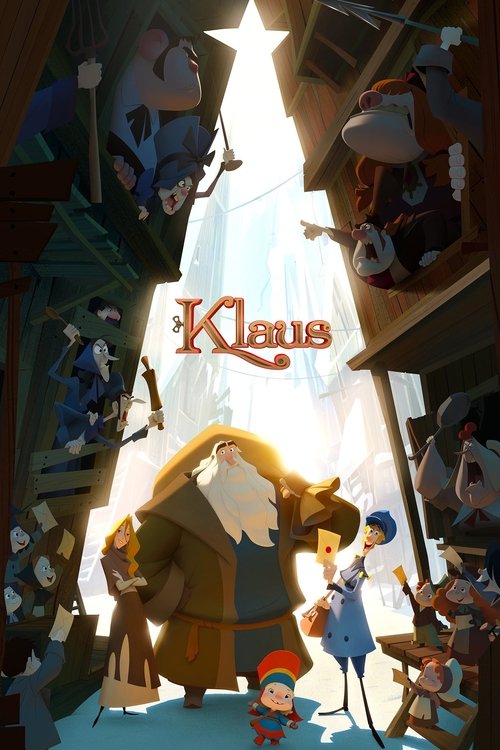

























Popular
What motivates Jesper to initially move to Smeerensburg?
How does Jesper's relationship with Klaus evolve throughout the film?
What role do the feuding families play in the story?
How does the character of Klaus change throughout the film?
What is the significance of the toys Klaus makes for the children?
Should I watch it?
Ask Your Own Question

What is the plot?
Sorry, we aren't able to watch and write up a full detailed plot yet. Check back in a few days.
More Movies Like This
Browse All Movies →








What is the ending?
In the ending of Klaus, Jesper, the postman, and Klaus, the reclusive toymaker, successfully bring joy and kindness to the town of Smeerensburg, transforming it from a place of conflict and bitterness into one filled with warmth and community spirit. Jesper learns the true meaning of friendship and selflessness, while Klaus finds a sense of belonging and purpose. The film concludes with Jesper and Klaus continuing their mission of spreading joy, and the legacy of their actions lives on through the generations.
As the story approaches its climax, we find Jesper, the ambitious but lazy postman, grappling with the consequences of his actions. After initially using Klaus's toys to manipulate the townspeople of Smeerensburg into sending letters, Jesper has a change of heart. He realizes that the joy and happiness brought by Klaus's gifts are genuine and transformative.
In a pivotal scene, Jesper confronts the town's longstanding feud between the Krums and the Ellingboes. He understands that the only way to truly unite the town is to foster kindness and connection. With Klaus by his side, Jesper organizes a grand event, inviting everyone to come together to celebrate the spirit of giving. The townspeople, initially hesitant, are drawn in by the promise of joy and the allure of Klaus's toys.
As the event unfolds, we see the townspeople begin to interact with one another, breaking down the barriers that have kept them apart for so long. Jesper, filled with a newfound sense of purpose, encourages them to share their stories and experiences, fostering a sense of community. Klaus, who has been a quiet observer, steps into the spotlight, revealing his own vulnerability and the love he has for the children of Smeerensburg.
In a heartwarming moment, Klaus delivers a heartfelt speech about the importance of kindness and the impact of small acts of generosity. The townspeople, moved by his words, begin to embrace the spirit of giving, and the atmosphere shifts from one of animosity to one of camaraderie.
As the film reaches its conclusion, Jesper and Klaus's efforts bear fruit. The town is transformed, and the once-feuding families come together, united in their newfound friendship. Jesper, who initially sought only to fulfill his postal duties, discovers a deeper calling in bringing joy to others. Klaus, who had lived in isolation, finds a family in the community he helped create.
In the final scenes, we see Jesper and Klaus continuing their work, delivering toys and spreading joy to children far and wide. The legacy of their friendship and the spirit of giving they instilled in Smeerensburg lives on, as the townspeople pass down the stories of Klaus and Jesper to future generations. The film closes with a sense of hope and the enduring power of kindness, leaving viewers with a heartwarming reminder of the impact one person can have on the lives of many.
Is there a post-credit scene?
In the movie "Klaus," there is no post-credit scene. The film concludes with a heartfelt resolution that ties together the themes of kindness and the spirit of giving. After the main story wraps up, the credits roll without any additional scenes or content following them. The focus remains on the emotional journey of the characters and the impact of their actions throughout the film, leaving the audience with a sense of warmth and fulfillment.
What motivates Jesper to initially move to Smeerensburg?
Jesper, a spoiled and lazy postman, is motivated by his father's desire to teach him a lesson about responsibility. His father sends him to the remote town of Smeerensburg, where he must deliver a certain number of letters in order to earn his way back home.
How does Jesper's relationship with Klaus evolve throughout the film?
Initially, Jesper sees Klaus as a means to an end to fulfill his letter quota. However, as they work together to bring joy to the children of Smeerensburg, Jesper develops a deep friendship with Klaus, realizing the importance of kindness and community.
What role do the feuding families play in the story?
The feuding families, the Ellingboes and the Krumms, create a hostile environment in Smeerensburg, which Jesper must navigate. Their animosity serves as a backdrop for Jesper's transformation and the eventual reconciliation that occurs through the spirit of giving.
How does the character of Klaus change throughout the film?
Klaus starts as a reclusive and sorrowful woodcutter, burdened by the loss of his family. As he begins to connect with Jesper and the children of Smeerensburg, he transforms into a figure of joy and generosity, rediscovering his purpose in life.
What is the significance of the toys Klaus makes for the children?
The toys Klaus makes symbolize hope and joy in a town that has been plagued by conflict and despair. They serve as a catalyst for change, fostering friendships among the children and helping to bridge the divide between the feuding families.
Is this family friendly?
"Klaus" is generally considered family-friendly, but there are a few scenes and themes that might be potentially objectionable or upsetting for younger children or sensitive viewers.
-
Conflict and Rivalry: The film features a significant amount of conflict between the characters, particularly the rivalry between the children of Smeerensburg, which can lead to bullying and emotional distress.
-
Isolation and Loneliness: The protagonist, Jesper, experiences feelings of isolation and disconnection, which may resonate with children who have felt similar emotions.
-
Dark Themes: The town of Smeerensburg has a history of animosity and bitterness among its residents, which is depicted through their interactions and the overall atmosphere of the town.
-
Violence: While not graphic, there are moments of slapstick violence and chaos, particularly during the children's antics, which may be startling for some viewers.
-
Emotional Moments: There are scenes that explore themes of loss and sacrifice, which could be emotionally heavy for younger audiences.
Overall, while "Klaus" contains heartwarming messages about kindness and community, it also addresses some darker themes that may require parental guidance for younger viewers.









