

Popular
What is the significance of Thomas More's refusal to endorse King Henry VIII's divorce?
How does the character of Richard Rich evolve throughout the film?
What role does the character of Thomas Cromwell play in the story?
How does the relationship between Thomas More and his family influence the narrative?
What is the significance of the final scene between Thomas More and his executioner?
Should I watch it?
Ask Your Own Question

What is the plot?
Sorry, we aren't able to watch and write up a full detailed plot yet. Check back in a few days.


What is the ending?
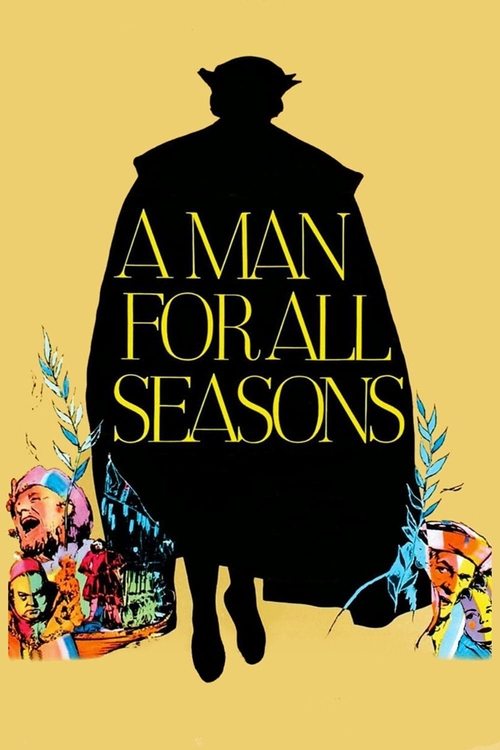
In the ending of "A Man for All Seasons," Sir Thomas More is executed for refusing to endorse King Henry VIII's divorce and the establishment of the Church of England. Despite the pressure from his family and friends, More remains steadfast in his principles. His final moments are marked by a calm acceptance of his fate, and he dies with dignity, proclaiming his loyalty to the law and his conscience.
As the film draws to a close, we see the consequences of More's unwavering stance. His friend, Richard Rich, who betrays him for personal gain, is appointed Attorney General, while More's family is left to grapple with the loss of their father and husband. The film ends with a reflection on More's legacy as a man of integrity, standing firm against the tide of corruption and moral compromise.
The final scenes of "A Man for All Seasons" unfold with a palpable tension, as Sir Thomas More, played with quiet dignity by Paul Scofield, prepares for his execution. The setting is the Tower of London, a stark and foreboding backdrop that symbolizes the weight of More's convictions. He is imprisoned, surrounded by the cold stone walls that echo the gravity of his situation. The air is thick with the knowledge of his impending death, yet More remains resolute, embodying the very principles he has fought for throughout the film.
In the days leading up to his execution, More engages in poignant conversations with his family. His daughter, Margaret, portrayed with a mix of love and desperation by Susannah York, pleads with him to reconsider his stance. She is torn between her loyalty to her father and her fear for his life. More, however, reassures her with a calmness that belies the turmoil within. He expresses his love for her and his belief in the importance of standing by one's conscience, even in the face of death. This emotional exchange highlights the personal cost of More's integrity, as his family must bear the burden of his choices.
As the day of execution arrives, More is led through the Tower, his demeanor unyielding. He walks with a measured pace, reflecting a man who has made peace with his fate. The guards, though stern, cannot help but show a degree of respect for him, recognizing the strength of his character. More's final moments are marked by a profound sense of serenity; he is not a man broken by fear but one who has embraced his principles to the very end.
When he reaches the scaffold, the crowd is a mix of onlookers, some sympathetic to his plight, others eager for the spectacle. More addresses them with a quiet dignity, affirming his beliefs and the reasons for his refusal to accept the King's supremacy over the Church. His words resonate with those who understand the gravity of his sacrifice, as he stands firm against the tide of tyranny.
As the executioner prepares, More's final request is for a moment of silence, a brief pause before the inevitable. He reflects on his life, his choices, and the legacy he leaves behind. In his last words, he expresses his unwavering loyalty to the law and his faith, declaring, "I die the King's good servant, but God's first." This statement encapsulates his internal struggle and ultimate resolution, as he prioritizes his moral convictions over earthly power.
The execution is swift, and More's death is portrayed with a somber respect. The camera lingers on his lifeless body, a stark reminder of the cost of integrity in a world rife with corruption. The scene shifts to Richard Rich, who, having betrayed More, is now appointed Attorney General. His ascent to power is juxtaposed with More's demise, illustrating the moral decay that accompanies ambition and betrayal.
In the aftermath, More's family is left to mourn their loss. Margaret, heartbroken yet proud, embodies the conflict between personal loyalty and the broader implications of her father's choices. The film closes with a reflection on More's legacy, emphasizing the importance of standing firm in one's beliefs, even when faced with insurmountable odds. The final image of More's steadfastness serves as a powerful testament to the enduring struggle for integrity in the face of tyranny, leaving the audience with a profound sense of the weight of moral conviction.
Is there a post-credit scene?
The movie "A Man for All Seasons," produced in 1966, does not have a post-credit scene. The film concludes with a powerful and poignant ending that encapsulates the themes of integrity, conscience, and moral conviction. After Sir Thomas More is executed for refusing to endorse King Henry VIII's separation from the Catholic Church, the film ends on a somber note, emphasizing More's steadfastness in his beliefs. The credits roll without any additional scenes or content following the main narrative.
What is the significance of Thomas More's refusal to endorse King Henry VIII's divorce?
Thomas More's refusal to endorse King Henry VIII's divorce is pivotal to the plot, as it highlights his unwavering commitment to his principles and the Catholic Church. More, portrayed as a man of deep moral conviction, grapples with the conflict between his loyalty to the king and his faith. His internal struggle is palpable, as he understands the potential consequences of his stance, including imprisonment and execution. This refusal sets the stage for the ensuing conflict between More and the monarchy, showcasing his character as a man of integrity.
How does the character of Richard Rich evolve throughout the film?
Richard Rich begins as an ambitious young man seeking to advance his career. Initially, he admires Thomas More and seeks his guidance. However, as the story progresses, Rich's moral compass deteriorates. He betrays More by testifying against him, motivated by his desire for power and status. This transformation is marked by a palpable shift in his demeanor; he becomes increasingly self-serving and unscrupulous, ultimately representing the corrupting influence of ambition.
What role does the character of Thomas Cromwell play in the story?
Thomas Cromwell serves as a cunning and pragmatic antagonist to Thomas More. He is depicted as a master manipulator, working closely with King Henry VIII to secure More's downfall. Cromwell's character is driven by political ambition and a desire to reshape England's religious landscape. His interactions with More are charged with tension, as he attempts to persuade More to conform to the king's wishes. Cromwell's relentless pursuit of More's conviction underscores the themes of power and betrayal.
How does the relationship between Thomas More and his family influence the narrative?
The relationship between Thomas More and his family is central to the narrative, providing emotional depth to his character. More's love for his wife, Alice, and his daughters, particularly Margaret, showcases his humanity amidst the political turmoil. Their conversations reveal More's internal conflict; he is torn between his duty to his family and his moral beliefs. The family's concern for More's safety adds tension to the story, as they fear for his life due to his steadfastness against the king's demands.
What is the significance of the final scene between Thomas More and his executioner?
The final scene between Thomas More and his executioner is laden with emotional weight and significance. As More faces his execution, he maintains his dignity and composure, embodying the principles he has fought for throughout the film. His calm demeanor contrasts sharply with the grim reality of his fate, highlighting his unwavering commitment to his beliefs. This moment encapsulates More's character as a martyr for his faith, leaving a lasting impact on the audience and reinforcing the film's exploration of integrity and sacrifice.
Is this family friendly?
"A Man for All Seasons," produced in 1966, is generally considered suitable for older children and families, but it does contain some themes and scenes that may be challenging for younger viewers or sensitive individuals. Here are some potentially objectionable or upsetting aspects:
-
Political Intrigue and Betrayal: The film delves into complex political themes, including betrayal and moral dilemmas, which may be difficult for younger audiences to fully grasp.
-
Religious Conflict: The story centers around the conflict between King Henry VIII and Sir Thomas More regarding the King's desire to annul his marriage. This conflict involves significant religious implications that may be unsettling for some viewers.
-
Imprisonment and Torture: There are references to imprisonment and the harsh treatment of dissenters, including scenes that depict the emotional toll of imprisonment on More and his family.
-
Death and Execution: The film addresses the consequences of standing up for one's beliefs, culminating in a scene of execution that, while not graphic, is serious and may be distressing.
-
Emotional Strain on Family: The impact of More's choices on his family, particularly his daughter Margaret, is portrayed with emotional depth, showcasing their struggles and fears.
These elements contribute to the film's serious tone and may require parental guidance for younger viewers.









