







Popular
What happens to the group of friends when they first arrive at the mountain?
How does the character of Fred change throughout the film?
What is the significance of the mysterious figure that the group encounters?
How does the character of Chloé react to the unfolding events?
What role does the environment play in the characters' struggles?
Should I watch it?
Ask Your Own Question

What is the plot?
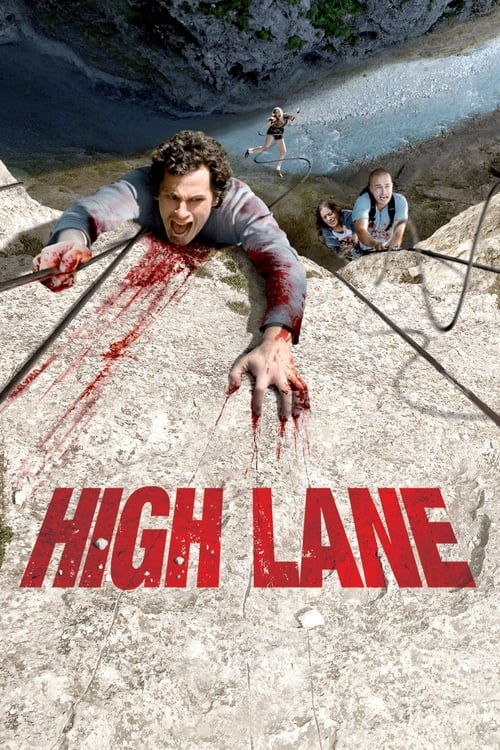
High Lane opens on a bright, deceptive note of adventure as five young French friends arrive in Croatia for a mountain-climbing and hiking trip that is supposed to be thrilling, liberating, and a little reckless. Fred, played as the group's most experienced climber, immediately sets the tone with his confidence and authority, and the others let him lead because he seems to know exactly what he is doing. At his side is his girlfriend Karine, athletic and dependable, and with them are Chloé, a medical trainee/nurse figure who carries private guilt over a young patient she once lost, Guillaume, the quieter, stronger man who clearly has feelings for Chloé, and Loïc, Chloé's awkward boyfriend, who is painfully self-conscious and plagued by vertigo. From the beginning, the social dynamics are as fragile as the mountain route itself: Fred's certainty pulls the group forward, Karine supports him, Chloé is caught between men, Guillaume watches and waits, and Loïc already looks like he would rather be anywhere else.
The trip's first warning comes almost immediately when they reach the trailhead and find the route blocked, marked as closed, and reinforced with rocks and warning signs because the path is unsafe and under repair. The sensible choice would be to turn around, but Fred refuses to let caution win. He dismisses the closure, brushes off the danger, and persuades the others to go on anyway, turning a simple hiking excursion into a fatal mistake. Loïc is especially uneasy, his fear and vertigo making him an obvious weak link, but Fred pushes everyone past the barrier and deeper into the mountains, where the scenery quickly stops feeling like an adventure and starts feeling like a trap. The camera's sense of height and exposure matters here: the trail clings to the rock, the equipment looks old and unreliable, and the mountain itself seems less like a natural landscape than an abandoned machine waiting to fail.
As they climb, the route begins to deteriorate in ways that feel almost personal. A rope bridge they cross later collapses after they make it through, cutting off one route back and confirming that the area is not merely difficult but actively dangerous. A damaged handhold on the mountain fails as well, reinforcing the sense that the infrastructure is rusted, neglected, and untrustworthy. The group is forced into close physical cooperation, and the tension between them grows sharper with every ledge and every pause. Karine remains solid and athletic, helping with the climbing, while Chloé's unease is tied not just to the mountain but to the emotional weight she is carrying from the past. Guillaume stays near Chloé, and Loïc's discomfort is written across him so visibly that every exposed drop seems to drain the color from his face. Fred, meanwhile, keeps moving as if speed itself is a solution.
Then the mountain makes its first direct attack. Fred and Karine move ahead to help the others through a difficult section, but Fred suddenly steps into a bear trap hidden in the path. The metal jaws slam shut around his leg, and the scene turns from tense adventure to brutal injury in an instant. He is dragged away in the chaos, vanishing from the rest of the group after the wound, and what had looked like a climbing accident now carries the unmistakable shape of something intentional. Bear traps are not part of ordinary mountain hazards. Karine helps the others continue, using ropes to bring them upward, but Fred is gone, and the group's confidence fractures with him. The mountain, which had been presenting itself as merely difficult, now reveals a hidden hostility.
Their panic deepens when Chloé later falls into a hidden pit-like hole containing a trap, another grotesque reminder that someone has prepared this place for hunting. The group begins to ask what kind of person would seed such a remote route with snares and leave them to wait. The answer arrives gradually, in scraps of evidence and in the growing certainty that they are being watched. What started as a vacation has become a closed system of pursuit, injury, and fear. The mountain trail is no longer just a route; it is territory, and they have trespassed into it.
Night falls, and with darkness comes the story's true horror. The group searches for Fred, but instead of rescue they find Karine speared and killed by an unseen attacker during the night search. The exact mechanics are brutal and abrupt: one moment the group is still trying to explain Fred's disappearance, and the next Karine is dead, proving that there is a human predator on the mountain and that it is close enough to strike without warning. The attack destroys whatever illusion remained that they might still be dealing with natural danger alone. Now the threat has a shape, a will, and a habit of violence.
Eventually Chloé, Guillaume, and Loïc discover a cave that serves as the killer's hidden lair. This is one of the film's central revelation scenes. Inside, the truth of the mountain's violence comes into focus: the area is the hunting ground of a deranged, inbred poacher and killer named Anton, a man who has made the mountain his territory and treats intruders as prey. Some summaries describe Anton as a kidnapped child who vanished at age five and grew up feral in the mountains, which gives his presence a grim folklore quality as well as a predatory one. The cave is not merely a shelter; it is evidence of a long-running pattern of abduction, trapping, and murder. It is the place where the group's worst suspicions become certainty. They also find Fred dead there, confirming that his injury did not lead to survival but to capture and death. The experienced leader who had been so sure of himself is now just another body in the killer's domain.
The cave sequence also becomes the first major human conflict within the group after the external threat has already shattered them. Guillaume searches for flares, trying to salvage some chance of rescue, but Loïc's fear mutates into suspicion and jealousy. Loïc locks Guillaume into a basement-like space, convinced that Guillaume will betray him and also resenting the way Guillaume has been trying to get close to Chloé. This is an ugly, intimate betrayal born not from strategy but from panic and rivalry. The mountain has not only trapped them physically; it is stripping their relationships down to raw impulses. The basement becomes a prison within the killer's lair, and it is there that the social fracture reaches its ugliest point. Guillaume is trapped by a man who should have been an ally, and the scene turns the group's internal triangle into a weapon.
Anton returns carrying Karine's body, a chilling confirmation that the killer is not only active but controlling the pace of the hunt. The image is horrible in its simplicity: Karine is no longer merely missing; she is dead, and Anton brings her back like proof. A short fight breaks out, and in the confusion Loïc runs. He abandons his girlfriend and his companions, leaving the others behind as Anton closes in. The film makes his cowardice feel like both a moral collapse and a survival reflex. He has been afraid from the start, and now fear becomes abandonment. The mountain, which has exposed everyone's weaknesses, pushes his to the surface at the worst possible moment.
Just when it seems Chloé is about to be killed, Loïc's conscience briefly returns. He comes back and distracts Anton, drawing the killer away from Chloé and out into the exposed mountain space. For a moment, this feels like redemption. Loïc even manages to fight Anton, beating him hard enough to gain an edge, but the landscape itself betrays him again when he becomes caught on a hanging metal ladder. The scene becomes a nightmare of suspension and helplessness, with Loïc dangling over danger while the killer regains control. The metal ladder sways, his body hangs precariously, and the visual tension is absolute. He cannot climb, cannot fall, and cannot escape.
Guillaume and Chloé find him there, and the emotional climax of the film's betrayal arrives in a single hideous decision. Chloé cannot clearly see what Guillaume is doing, and Guillaume, rather than save Loïc, lets him fall to his death. He does this deliberately, even if he masks it as loss of grip, because he wants to remove his rival and possibly win Chloé for himself. It is one of the film's coldest twists: the most physically capable man in the group betrays the weakest to secure the woman he wants. Loïc's death is not caused by Anton at that instant but by Guillaume's choice, and that choice destroys whatever moral center the survivors still had. Guillaume immediately pretends the fall was accidental, but the audience understands the truth. The mountain has not just exposed fear; it has exposed desire stripped of ethics.
That treachery is not rewarded. Anton responds almost immediately by shooting Guillaume in the head with a crossbow. The killer's retaliation is swift and merciless, and it underlines the film's cruel logic: betrayal does not save anyone, it only creates another corpse. Guillaume's attempt to manipulate the situation and claim Chloé costs him his life, and his death is as abrupt as it is final. The likely romantic rival is eliminated not by the woman he pursued, but by the predator whose territory he invaded. By this point, the body count has become a chain reaction driven by panic, jealousy, and violence.
Chloé is left alone in the final stretch, and the film shifts fully into survival mode around her. This is where her earlier emotional background matters most: the guilt she has carried over a young patient's death gives her a deep internal wound, and now she is forced into the only kind of absolution the movie offers--direct, furious resistance. Enraged by the deaths of her friends, she attacks Anton when he lets his guard down. The final confrontation is brutal and personal. Chloé is no longer the frightened woman trying to keep up on the trail; she becomes someone willing to kill to survive. She cuts Anton's throat, and for an instant it seems as though the nightmare is finally ending.
But High Lane refuses a clean victory. Anton is still alive, only barely. That final detail is crucial because it denies closure. Even after Chloé's desperate retaliation, the mountain's evil is not neatly erased. The killer has been wounded but not defeated, and the film leaves that menace hanging over the survivors' fate. The ending is grim and ambiguous in a way that makes the whole journey feel like a disappearance rather than a rescue. According to one summary, Loïc's body is found three days later, while Fred, Karine, Guillaume, and Chloé are never found. That reported outcome turns the mountain into a place where people simply vanish, swallowed by terrain, violence, and silence. The final emotional impression is not triumph but erasure: a vacation becomes a slaughter, the closed trail becomes a tomb, and the mountain keeps its secrets.





What is the ending?
In the ending of "High Lane," the group of friends faces a terrifying confrontation with a mysterious and deadly presence in the mountains. As they struggle to survive, the remaining characters confront their fears and the harsh realities of their situation. The film concludes with a shocking twist, leaving the fate of the characters uncertain and highlighting the fragility of life in the face of danger.
As the climax of "High Lane" unfolds, the remaining friends, including the protagonist, are trapped in a perilous situation. The group has already suffered significant losses, and the tension is palpable as they navigate the treacherous terrain of the mountains. The atmosphere is thick with dread, and the once-beautiful landscape now feels like a claustrophobic prison.
In the final scenes, the protagonist, who has been grappling with feelings of guilt and fear throughout their ordeal, finds themselves alone after a series of harrowing events. The group had previously split up in a desperate attempt to escape the unseen threat stalking them. The protagonist's internal struggle is evident as they reflect on their choices and the consequences that have led to this moment of isolation.
As night falls, the protagonist hears unsettling noises echoing through the dark woods, heightening their anxiety. They stumble upon the remains of their friends, a grim reminder of the danger they face. The emotional weight of loss hangs heavily in the air, and the protagonist's heart races as they realize the true horror of their situation.
In a final confrontation, the protagonist encounters the mysterious figure that has been hunting them. The scene is tense, filled with suspense as the protagonist fights for survival. The struggle is visceral, showcasing the raw instinct to live against overwhelming odds. The protagonist's fear transforms into a desperate determination to escape, but the outcome is left ambiguous.
The film concludes with a haunting image of the protagonist, battered and exhausted, standing at the edge of a cliff. The camera lingers on their face, capturing a mix of despair and resilience. As they look out over the vast expanse of the mountains, the screen fades to black, leaving the audience with a chilling sense of uncertainty about their fate.
In the end, the fate of the other characters is grim; they have either succumbed to the dangers of the mountain or the unseen threat that has pursued them. The film closes on a note of ambiguity, emphasizing the unpredictability of life and the harsh realities of survival in the face of nature's unforgiving elements. The emotional journey of the protagonist serves as a poignant reminder of the fragility of human existence when confronted with the unknown.
Is there a post-credit scene?
The movie "High Lane," also known as "Vertige," does not have a post-credit scene. The film concludes with a tense and dramatic ending, focusing on the survival of the main characters after a harrowing experience in the mountains. The narrative wraps up without any additional scenes or hints at future developments, leaving the audience with the weight of the characters' struggles and the consequences of their choices.
What happens to the group of friends when they first arrive at the mountain?
When the group of friends arrives at the mountain, they are excited and eager to start their adventure. They are filled with a sense of camaraderie and thrill as they prepare to hike. However, the atmosphere quickly shifts when they discover that the trail is closed due to a recent rockslide. Despite the warning signs, they decide to forge ahead, driven by their adventurous spirits and the desire to escape their everyday lives.
How does the character of Fred change throughout the film?
Fred starts as a confident and somewhat reckless character, eager to lead the group on their adventure. However, as the group faces increasingly dangerous situations, including the threat of a mysterious predator, Fred's bravado begins to crumble. He becomes more anxious and desperate, struggling with feelings of guilt and responsibility for leading his friends into danger. His transformation highlights the emotional toll of survival and the weight of leadership.
What is the significance of the mysterious figure that the group encounters?
The mysterious figure that the group encounters serves as a catalyst for their descent into chaos. Initially perceived as a potential rescuer, the figure quickly becomes a source of fear and paranoia. This character embodies the unknown dangers of the wilderness and represents the group's growing sense of isolation and vulnerability. The encounters with this figure heighten the tension and force the characters to confront their deepest fears.
How does the character of Chloé react to the unfolding events?
Chloé, who is initially portrayed as adventurous and spirited, becomes increasingly terrified as the group's situation deteriorates. Her emotional state shifts from excitement to panic as they face life-threatening challenges. Chloé's reactions are marked by a mix of fear, desperation, and a fierce will to survive, showcasing her resilience even as she grapples with the reality of their dire circumstances.
What role does the environment play in the characters' struggles?
The environment plays a crucial role in amplifying the characters' struggles. The treacherous terrain, steep cliffs, and dense forests create a sense of claustrophobia and danger. As the group navigates the harsh landscape, the physical challenges mirror their internal conflicts and fears. The mountain becomes a character in itself, representing both the beauty and the peril of nature, ultimately testing the limits of their endurance and friendship.
Is this family friendly?
"High Lane," a 2009 French horror film, is not considered family-friendly due to its intense and graphic content. Here are some potentially objectionable or upsetting aspects that may affect children or sensitive viewers:
-
Graphic Violence: The film contains several scenes of intense violence, including injuries and bloodshed, which may be disturbing to viewers.
-
Death and Threat: Characters face life-threatening situations, leading to moments of extreme fear and panic, which can be unsettling.
-
Psychological Tension: The film builds a sense of dread and anxiety, with characters experiencing extreme stress and fear, which may be distressing.
-
Mature Themes: The narrative explores themes of survival and betrayal, which may be too intense for younger audiences.
-
Disturbing Imagery: There are scenes that may include unsettling visuals that could be frightening or disturbing.
Overall, the film's horror elements and mature themes make it unsuitable for children and potentially upsetting for sensitive viewers.








