





























Popular
What motivates Mr. Brooks to continue his killing spree despite wanting to stop?
How does Mr. Brooks' relationship with his daughter, Jane, impact his actions?
What role does the character of Detective Tracy Atwood play in the story?
How does Mr. Brooks' alter ego, Marshall, influence his decisions throughout the film?
What is the significance of the thumbprint left at the crime scenes?
Should I watch it?
Ask Your Own Question

What is the plot?
Sorry, we aren't able to watch and write up a full detailed plot yet. Check back in a few days.



What is the ending?
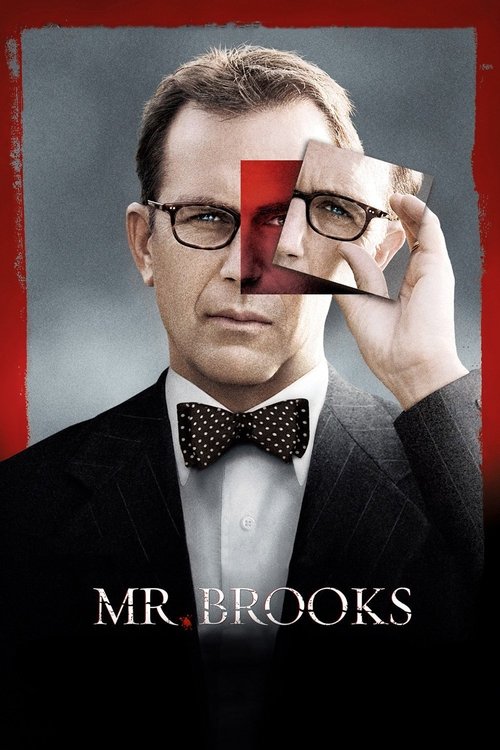
In the ending of "Mr. Brooks," the titular character, Earl Brooks, is confronted by his dark alter ego, Marshall, and faces the consequences of his actions. After a tense confrontation with his daughter, Jane, and a final showdown with the blackmailer, Mr. Smith, Brooks makes a fateful decision that leads to a tragic conclusion for several characters.
As the film concludes, Brooks manages to escape the immediate threat posed by Mr. Smith but is left grappling with the reality of his dual life. His daughter, Jane, is revealed to have inherited his violent tendencies, and the cycle of violence continues. The film ends with a haunting sense of inevitability regarding Brooks' nature and the legacy he leaves behind.
Now, let's delve into the ending in a more detailed, chronological narrative.
The climax of "Mr. Brooks" unfolds in a dimly lit warehouse where Earl Brooks, played by Kevin Costner, is cornered by Mr. Smith, the blackmailer portrayed by Dane Cook. Smith has been manipulating Brooks, threatening to expose his secret life as a serial killer. As Brooks arrives, he is visibly tense, knowing that he must confront the consequences of his actions. The atmosphere is thick with suspense, and the stakes are high.
In this scene, Brooks is not alone; his alter ego, Marshall, played by William Hurt, is present in his mind, urging him to embrace his darker instincts. Marshall represents Brooks' suppressed desires and the thrill of killing, and he taunts Brooks, pushing him to take decisive action against Smith. The internal struggle is palpable as Brooks grapples with his identity and the morality of his choices.
As the confrontation escalates, Brooks realizes that he must eliminate Smith to protect his secret. In a moment of cold calculation, he pulls out a gun and shoots Smith, who had been holding a knife to Brooks' throat. The act is swift and brutal, showcasing Brooks' chilling ability to switch from a loving family man to a ruthless killer in an instant. The camera captures the shock on Smith's face as he falls, blood pooling around him, emphasizing the finality of Brooks' decision.
After the murder, Brooks is left shaken but resolute. He knows he must return to his family, but the weight of his actions hangs heavily on him. He drives home, the tension in his body evident as he navigates the dark streets. The internal dialogue with Marshall continues, with Marshall celebrating the kill and urging Brooks to embrace his true self. This duality highlights Brooks' ongoing battle with his nature.
Upon arriving home, Brooks is greeted by his daughter, Jane, played by Danielle Panabaker. She is unaware of the darkness that surrounds her father, but there is an unsettling connection between them. In a pivotal moment, Jane reveals that she has been struggling with her own violent impulses, hinting that she may have inherited her father's dark tendencies. This revelation is chilling, as it suggests that the cycle of violence is poised to continue.
The film reaches its emotional climax when Brooks, in a moment of vulnerability, tries to connect with Jane. He expresses his love for her, but the underlying tension remains. The scene is fraught with unspoken words and the weight of their shared legacy. Brooks' internal conflict is mirrored in Jane's eyes, as she grapples with her own identity and the potential for darkness within her.
In the final moments, Brooks receives a call from his wife, who is oblivious to the chaos that has unfolded. As he speaks to her, the camera lingers on his face, capturing the turmoil within. The film closes with Brooks looking out into the night, a man trapped by his own nature, aware that he cannot escape the monster he has become. The haunting score underscores the inevitability of his fate, leaving the audience with a sense of dread about the future of both Brooks and Jane.
In summary, the ending of "Mr. Brooks" encapsulates the tragic consequences of a life lived in the shadows. Earl Brooks is left to confront the reality of his dual existence, while Jane stands on the precipice of a similar fate, suggesting that the cycle of violence may continue. The film concludes with a powerful sense of unresolved tension, emphasizing the struggle between good and evil within each character.
Is there a post-credit scene?
The movie "Mr. Brooks" does not have a post-credit scene. After the credits roll, the film concludes without any additional scenes or content. The story wraps up with the final events that unfold in the main narrative, leaving the audience with the implications of Mr. Brooks' actions and the unresolved tension surrounding his character.
What motivates Mr. Brooks to continue his killing spree despite wanting to stop?
Mr. Brooks, played by Kevin Costner, is driven by a compulsion that he struggles to control. His alter ego, Marshall, represents his darker desires and urges, pushing him to commit murder even when he wishes to lead a normal life. This internal conflict creates a tension between his desire for a peaceful existence and the thrill he derives from killing.
How does Mr. Brooks' relationship with his daughter, Jane, impact his actions?
Mr. Brooks has a complex relationship with his daughter, Jane, portrayed by Danielle Panabaker. He is protective of her and wants to shield her from his dark side. However, as the story unfolds, Jane's own struggles and her eventual involvement in the murder plot reveal a disturbing connection between them, forcing Mr. Brooks to confront the possibility that his violent tendencies may be hereditary.
What role does the character of Detective Tracy Atwood play in the story?
Detective Tracy Atwood, played by Demi Moore, is a determined investigator who becomes obsessed with solving the case of the Thumbprint Killer, unaware that it is Mr. Brooks. Her relentless pursuit of justice adds pressure on Mr. Brooks, heightening the stakes as he tries to maintain his double life while evading capture. Atwood's character also serves as a foil to Mr. Brooks, representing the law and morality he struggles against.
How does Mr. Brooks' alter ego, Marshall, influence his decisions throughout the film?
Marshall, portrayed by William Hurt, is the embodiment of Mr. Brooks' darker impulses. He constantly taunts and encourages Mr. Brooks to embrace his violent nature, often leading him to make choices that spiral out of control. This internal dialogue illustrates Mr. Brooks' struggle with his identity and the duality of his character, as he grapples with the desire to suppress Marshall while being drawn to the thrill of murder.
What is the significance of the thumbprint left at the crime scenes?
The thumbprint serves as a calling card for Mr. Brooks, symbolizing his need for recognition and the thrill of the hunt. It becomes a crucial piece of evidence that Detective Atwood pursues, representing the psychological game between hunter and hunted. The thumbprint also highlights Mr. Brooks' meticulous nature and his desire to maintain control over his actions, even as he becomes increasingly reckless.
Is this family friendly?
"Mr. Brooks" is not considered family-friendly due to its mature themes and graphic content. Here are some potentially objectionable or upsetting aspects:
-
Violence and Murder: The film features scenes of murder, including graphic depictions of violence and the aftermath of killings, which may be disturbing to younger viewers.
-
Psychological Themes: The protagonist struggles with a violent alter ego, leading to intense psychological conflict that may be unsettling for sensitive audiences.
-
Substance Abuse: There are references to alcohol consumption and the protagonist's struggles with addiction, which may not be suitable for children.
-
Sexual Content: The film includes scenes that imply sexual situations and infidelity, which may be inappropriate for younger viewers.
-
Moral Ambiguity: The story explores themes of morality, guilt, and the duality of human nature, which may be complex and challenging for children to understand.
Overall, the film's dark themes and graphic content make it more appropriate for adult audiences.







