


































Popular
What motivates Elizabeth to take the throne despite the dangers involved?
How does Elizabeth's relationship with Robert Dudley evolve throughout the film?
What role does Sir William Cecil play in Elizabeth's rise to power?
How does the film portray the conflict between Catholics and Protestants during Elizabeth's reign?
What are the consequences of Elizabeth's decision to remain unmarried?
Should I watch it?
Ask Your Own Question

What is the plot?
Sorry, we aren't able to watch and write up a full detailed plot yet. Check back in a few days.





What is the ending?
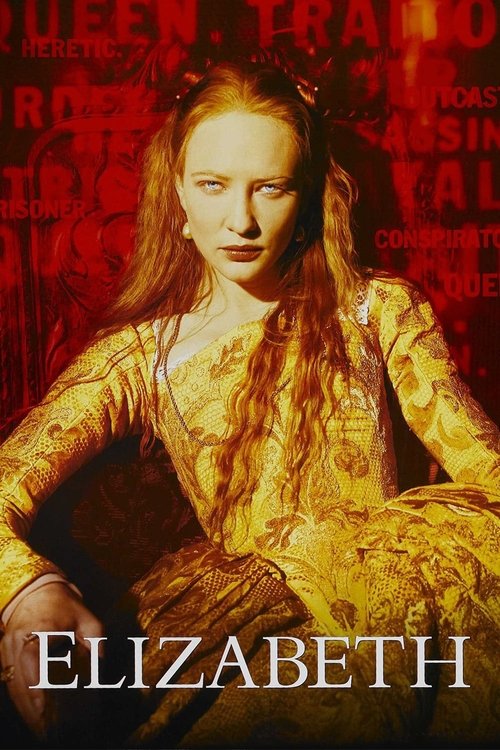
In the ending of the movie "Elizabeth," Queen Elizabeth I solidifies her power and independence, rejecting the idea of marriage to secure her reign. She faces betrayal and danger but ultimately emerges as a strong and resolute monarch. The film concludes with her iconic declaration, "I am married to England," symbolizing her commitment to her country over personal relationships.
As the film approaches its climax, we see Elizabeth grappling with the weight of her crown and the expectations placed upon her. The tension escalates as she navigates the treacherous waters of court politics, where loyalty is fleeting, and betrayal lurks around every corner.
In a pivotal scene, Elizabeth confronts her cousin, Mary Stuart, Queen of Scots, who poses a significant threat to her rule. Mary, imprisoned and a figurehead for Catholic opposition, represents the dangers of Elizabeth's reign. Elizabeth's decision to execute Mary is not made lightly; it is a moment filled with emotional turmoil. She understands that this act is necessary to secure her position, yet it weighs heavily on her conscience. The execution is carried out, and Elizabeth watches from a distance, her face a mask of stoicism, but her eyes betray the conflict within her.
As the narrative unfolds, Elizabeth's relationship with Robert Dudley, the Earl of Leicester, becomes increasingly strained. Their love, once passionate and hopeful, is now overshadowed by political necessity. Dudley, who has been a steadfast supporter, is ultimately revealed to be involved in plots against her. In a heart-wrenching moment, Elizabeth must confront the reality that personal attachments can lead to betrayal. She dismisses Dudley, realizing that her duty to her country must come before her heart. The pain of this decision is palpable, as she watches him leave, her expression a mixture of sorrow and resolve.
The final scenes depict Elizabeth's transformation into the formidable monarch she is destined to become. She stands before her court, adorned in regal attire, embodying the strength and authority of her position. In a powerful declaration, she proclaims, "I am married to England," a statement that encapsulates her commitment to her role as queen. This moment signifies her acceptance of the sacrifices she must make for her country, solidifying her identity as a ruler who prioritizes her nation over personal desires.
The film concludes with Elizabeth alone in her chamber, reflecting on the choices she has made. The weight of her crown is heavy, but she stands resolute, embodying the complexities of her reign. The fate of the main characters is sealed: Mary Stuart is executed, Robert Dudley is cast aside, and Elizabeth emerges as a powerful, independent queen, ready to face the challenges ahead. The ending leaves the audience with a sense of both triumph and melancholy, highlighting the personal costs of leadership and the burdens of power.
Is there a post-credit scene?
The movie "Elizabeth," produced in 1998, does not have a post-credit scene. The film concludes with a powerful and dramatic ending that encapsulates the transformation of Elizabeth I into the formidable queen she becomes. After the climactic events of her ascension to the throne and the challenges she faces, the film ends on a note that emphasizes her resolve and the weight of her responsibilities, leaving no additional scenes or content after the credits. The focus remains on her character development and the historical context rather than any further narrative.
What motivates Elizabeth to take the throne despite the dangers involved?
Elizabeth's motivation to take the throne stems from her desire for power and stability in a tumultuous political landscape. After the death of her half-sister Mary I, Elizabeth is thrust into a position where she must navigate the treacherous waters of court politics, religious conflict, and personal betrayal. Her determination to assert her authority and establish her reign is fueled by a deep-seated need to prove herself as a capable ruler, especially in a male-dominated society.
How does Elizabeth's relationship with Robert Dudley evolve throughout the film?
Elizabeth's relationship with Robert Dudley is complex and evolves significantly throughout the film. Initially, there is a strong romantic connection between them, marked by mutual admiration and affection. However, as Elizabeth ascends to the throne, she grapples with the political implications of their relationship. Dudley's ambition and desire for power create tension, leading Elizabeth to ultimately prioritize her role as queen over her personal feelings, resulting in heartbreak and a sense of isolation.
What role does Sir William Cecil play in Elizabeth's rise to power?
Sir William Cecil serves as Elizabeth's chief advisor and plays a crucial role in her rise to power. His pragmatic approach to governance and deep understanding of the political landscape help Elizabeth navigate the challenges she faces as a new queen. Cecil's loyalty and counsel provide Elizabeth with the strategic insight needed to consolidate her power, manage threats from rival factions, and establish her authority, making him an indispensable figure in her court.
How does the film portray the conflict between Catholics and Protestants during Elizabeth's reign?
The film vividly portrays the conflict between Catholics and Protestants as a central theme in Elizabeth's reign. This religious strife is depicted through various characters and events, illustrating the tension and violence that permeate the period. Elizabeth's struggle to maintain a Protestant England while facing threats from Catholic factions, including plots against her life, highlights the precariousness of her position and the societal divisions that threaten her rule.
What are the consequences of Elizabeth's decision to remain unmarried?
Elizabeth's decision to remain unmarried has profound consequences for her reign and personal life. By choosing to prioritize her role as queen over marriage, she gains political independence but also faces criticism and pressure from suitors and foreign powers. This choice isolates her emotionally, as she sacrifices personal happiness for the sake of her kingdom. The film illustrates how her single status becomes a point of contention, leading to political alliances and conflicts that shape her rule.
Is this family friendly?
The movie "Elizabeth" (1998) is not considered family-friendly due to several potentially objectionable or upsetting scenes and themes. Here are some aspects that may be concerning for children or sensitive viewers:
-
Violence and Betrayal: The film depicts political intrigue and betrayal, including scenes of violence and executions that may be disturbing.
-
Religious Conflict: The story involves intense religious themes, including the persecution of Catholics and the tension between Protestant and Catholic factions, which may be complex and unsettling for younger audiences.
-
Sexual Content: There are references to sexual relationships and implications of infidelity, including a notable scene involving Elizabeth's relationship with Robert Dudley, which may not be suitable for children.
-
Death and Suffering: The film portrays the harsh realities of power struggles, including the deaths of key characters and the emotional toll of leadership, which can be heavy and distressing.
-
Emotional Turmoil: Elizabeth's internal struggles with loneliness, betrayal, and the burdens of leadership are depicted with intensity, which may resonate deeply and evoke strong emotions.
These elements contribute to a mature narrative that may not be appropriate for younger viewers or those sensitive to such themes.









