





Popular
Who is Alex in The Mouse Trap (2024), and what is her role in the arcade night that turns dangerous?
How does the Mickey-masked killer first come to life in The Mouse Trap (2024), and what triggers the violence?
Who are the main friends at Alex’s birthday party, and how are they involved in the trap inside the arcade?
What is the killer’s connection to the arcade owner or staff in The Mouse Trap (2024)?
Why are Alex and the others unable to leave the arcade once the attacks start?
Should I watch it?
Ask Your Own Question

What is the plot?
The night begins with Alex Fen working a late shift at Fun Haven, the amusement arcade where she spends her birthday trapped behind the counter instead of celebrating freely, and the film immediately turns that ordinary detail into dread by making her 21st birthday the setup for a massacre. In the present-day framing story, that same blood-soaked night is already over, and Detectives Cole and Marsh are pressing a terrified survivor named Rebecca for answers while she sits locked in a cell, insisting that if she tells them the whole truth, they will die too.
The story first moves back into the arcade before the killings begin, to the final hours of the night when Alex is still trying to do her job and keep the place under control. Her coworkers are there with her, including the arcade manager Tim Collins and employee Jayna, and the atmosphere is one of forced cheerfulness, with birthday energy trying to survive the fluorescent hum of the emptying arcade. The surprise arrives when Alex's friends show up to celebrate her birthday at Fun Haven, transforming the workplace into a makeshift party space and giving the film its first false sense of safety. The mood is all neon color, cheap arcade noise, and awkward fun, but the setting feels enclosed from the start, like a toy box waiting to snap shut.
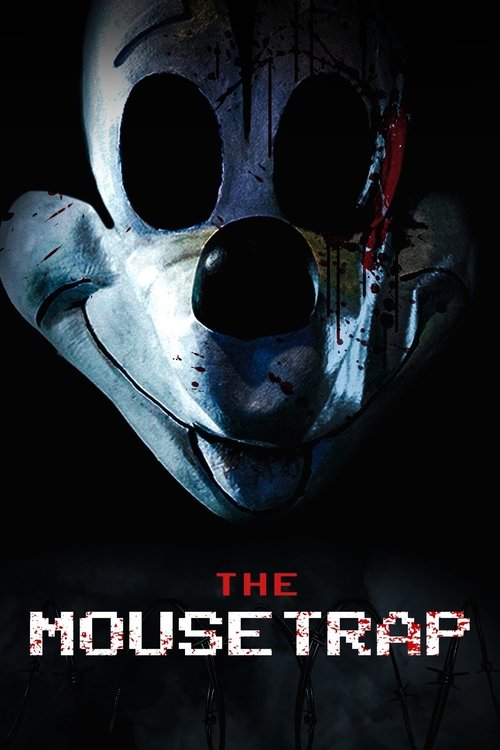
That sense of unease sharpens when the group learns they are staying late because of a last-minute private booking. The manager, Tim Collins, keeps the staff on duty while the friends settle into the arcade for the celebration, and the film quietly places him in the center of the building's strange energy. At first, he seems like just another tired adult supervising a late shift, but the story later reveals that he is the heart of the horror, not its victim. The masked killer who stalks the arcade is not a random intruder at all, but Tim himself, transformed by a grotesque obsession with Mickey Mouse and the imagery of Steamboat Willie.
The first signs of danger come when Alex goes toward the back of the arcade, and a tall, creepy figure in a Mickey Mouse mask appears near the rear door. The moment is staged like a nightmare breaking through a normal evening: the costume is both childish and obscene, the smile frozen into menace, the body underneath moving with predatory purpose. Alex runs, and for a beat it seems like the whole thing might be a prank or an intimidation game, but the mask keeps advancing, and the party atmosphere starts to dissolve into fear. The killer begins separating people from one another, turning the arcade's halls, doorways, and play areas into traps.
The murders escalate quickly. One of the first explicitly described deaths is Paul and his girlfriend, who peel away from the others to make out in another part of the building, only to be found by the Mickey-masked killer. Their private moment becomes a death sentence; the killer attacks them in the shadows, and both are killed there before the others can reach them. The film uses their deaths to make one thing clear: nowhere in Fun Haven is private enough to be safe. The arcade is supposed to be full of games, but now every corner is part of one enormous hunt.
As the survivors scramble, the story keeps switching between panic and discovery. The killer does not behave like an ordinary man in a mask. He seems to teleport, appearing and disappearing across the arcade in impossible bursts, as though the building itself is helping him or as though he has already stopped obeying ordinary physical rules. This is one of the film's biggest early shocks, because it takes the threat beyond simple stalking and makes the arcade feel haunted by something more abstract and invasive than a human murderer. People try to run, hide, and regroup, but he keeps coming back in impossible positions, yanking away any feeling that there is a corridor long enough or a door strong enough to escape through.
The survivors begin to test the environment, and in the process they uncover the killer's weakness: bright light. Under strong illumination, the Mickey-masked figure loses the supernatural edge that makes him so terrifying, and the victims finally have a way to fight back. The film turns the arcade itself into a battlefield of switches, lights, and shadows, with the survivors learning to weaponize the very space designed for entertainment. When the killer is exposed, Marcus and Ryan strike him with whatever they can grab, beating him down while he is vulnerable. The scene carries the desperate energy of people who have no training and very little time, yet for a moment it works: the mask can be hit, the body underneath can be hurt, and the monster can be forced to the floor.
That victory does not last. The power goes out, and the arcade falls into emergency lighting, which does not provide the same protection. The change is immediate and cruel: the room's once-useful brightness becomes weak, red, and unreliable, and the killer regains his ability to move freely. The survivors have just enough time to understand the rule before the rule changes on them. The film makes this one of its most effective moments of tension, because it shows how fragile survival is when it depends on a light switch. What looked like a solution becomes just another illusion.
The deeper explanation for the killer's behavior comes through the framing story and the flashback structure. In the interrogation scenes, Rebecca tells Detectives Cole and Marsh that the massacre happened at Fun Haven and that the killer was not an unknown stranger but Tim Collins, the arcade's owner or manager, depending on how the film's sources describe his role. Rebecca is reluctant, visibly shaken, and insists that the truth is dangerous to speak aloud. She keeps warning that if she finishes the story, everyone involved will be killed, and the detectives do not fully believe her. That skepticism becomes part of the film's horror, because the official world outside the arcade is already trying to reduce the night to a standard murder case, while Rebecca is trying to describe something that sounds like possession, obsession, and trauma all fused together.
The origin of Tim's transformation is tied to Steamboat Willie and to a projector in the arcade. According to the accounts in the sources, Tim is watching a copy of the short on a film projector when he begins hearing voices or enters a trance-like state. A Mickey Mouse mask, kept nearby or in a box, seems to call out to him, and the moment is framed as the point where his obsession overtakes his mind. The mask asks him, in essence, whether he wants to see things the way Mickey has been seeing them. In the story's logic, that invitation is less like a possession ritual and more like a surrender to a fixation that has already been growing inside him, until the image of Mickey becomes a murderous identity he can step into. From that moment on, Tim is no longer simply an arcade manager in costume; he becomes the killer the survivors can only call Mickey.
The middle of the film is a long, stressful night of hiding, running, and trying to keep enough people alive to reach morning. The arcade's layout becomes crucial: game cabinets, hallways, side rooms, a jungle gym area, and other enclosed spaces all feed the sense of being trapped inside a giant, colorful maze built for children and now repurposed as a slaughterhouse. The surviving group keeps trying to organize itself around the light rule, but each time they gain ground, the killer's strange movement and the unstable power supply pull it away again. One of the sources describes the group setting up a mouse trap in the jungle gym arena and luring the killer there so they can beat him down in physical form. The irony of the name is obvious and vicious: the humans become the bait, and the mouse becomes the thing being hunted.
At some point in the chaos, the survivors realize that conventional escape is impossible, so they ring the fire alarm to call the fire brigade for rescue. It is a desperate move, a final attempt to force the outside world to enter the nightmare before everyone is killed. But even that plan fails to deliver immediate safety. Before help arrives, Mickey teleports back into the game zone and attacks again. The moment the alarm starts, the hope starts too, and then the movie yanks both away at once.
The confrontation in the arcade's final stretch is the film's most sustained action sequence. Ryan, Alex, Marcus, and Marie are among the last survivors described in the sources, and they coordinate under pressure while trying to exploit the killer's fear of strobe-like light. They use the arcade's mechanisms and lighting against him, baiting him into brighter areas and then striking when his power falters. These scenes are not elegant victories; they are ugly, panicked scraps between people who can barely breathe and a killer who keeps returning as soon as the lighting fails. The film wants the audience to feel the instability of every second, because any pause can mean the difference between another survivor and another body.
The evidence about the exact death count is incomplete in the available sources, but the story clearly confirms that Paul and Paul's girlfriend die early in the night, and that multiple other members of the birthday group are killed over the course of the massacre. The survivors narrow as the movie progresses, until only a small core remains to confront the killer directly. The sources do not provide a fully reliable official roster of every named victim, so the film's complete kill list is not fully recoverable from the material here, but the pattern is unmistakable: one by one, the arcade party is erased by the masked figure in the mouse costume.
The final physical defeat of the killer does not come cleanly. The survivors trap him in the jungle gym arena with a makeshift mouse trap setup and use the strong light to force him into a state where he can be beaten as a normal man. For a brief moment, the film gives them control. The mask is no longer invincible, and the body underneath is just flesh, struggling and flailing under the glare. But the movie refuses to let this turn into a traditional slasher ending. The power outage has already shown how fragile their advantage is, and the killer's ability to reassert himself keeps the ending from settling into victory. What the survivors get is not triumph but an unstable pause.
The framing story then returns fully, and the film reveals that Rebecca's testimony is not over. She has been telling Detectives Cole and Marsh about what happened, but she remains fearful and guarded, as if even speaking the events aloud might summon them back. The detectives, however, do not fully accept her story. In one version of the ending described by the sources, they leave her locked in her cell, treating her as if she may be the suspect or simply the only source of a story too strange to believe. Her warning that they will all be killed hangs over the scene, unanswered.
Then the film goes one step further in its post-credits sting. In that scene, Mickey appears at the police station, frees Rebecca from her cell, and tells her that there are some people he wants her to meet. Another source summarizes the post-credit beat as Mickey opening Rebecca's room and inviting her to join him and several others who are "just starting out," implying a new group, a new continuation, and the survival of the killer beyond the arcade. The effect is chilling: the night at Fun Haven is not the end of the story at all, and the monster has already moved into the world beyond the massacre.
The last emotional note belongs to the survivors who are left in the wreckage of the arcade night. The film's structure, with its interrogation frame and its unresolved post-credits scene, makes the violence feel ongoing rather than contained. Rebecca's fear is not treated as paranoia but as the only accurate response to a truth the police cannot yet process. Detective Cole and Detective Marsh remain outside the full reality of what happened, while the audience is left with the knowledge that Tim Collins, through the mask and the Mickey persona, has crossed from obsession into serial violence and that whatever force or trance took hold of him may still be active.
By the time the film ends, Fun Haven is no longer just an arcade. It has become the place where Alex's birthday turns into a night of survival, where Paul and his girlfriend are killed in the dark, where bright light briefly becomes a weapon, where power failure restores the killer's reach, and where a masked manager in a Mickey costume becomes the center of a nightmare that cannot be neatly closed. The final image leaves Rebecca facing the possibility that the horror has not ended, only changed locations, and that the smile of Mickey Mouse is now attached to something far more dangerous than a costume.


What is the ending?
The ending of The Mouse Trap is that the surviving friends try to fight Mickey together, but the killer escapes, then returns and kills Alex by decapitating her with a sword. In the post-credits scene, Rebecca is still in police custody, and Mickey comes to free her and leads her away.
The ending unfolds in this order:
The survivors--Ryan, Alex, Marcus, and Marie--decide they cannot keep hiding, so they ring the fire alarm to bring in the fire brigade and force an escape. They also try to use the killer's weakness against him: the bright strobe light, which interrupts his teleporting and briefly leaves him vulnerable. They manage to beat him down for a moment in the jungle gym area while the lights are working against him.
Then the power goes out, and the emergency lighting comes on. That does not stop him in the same way, and he regains his ability to move around and strike suddenly. After that, the group is no longer able to keep him pinned down, and he disappears again.
Back in the arcade, Alex says he is not coming back. Mickey appears behind her and kills her instantly by slicing off her head with a broadsword. Ryan and Marcus see it happen and are shocked and devastated. The film then ends with the remaining survivors left stunned in the aftermath.
The fates of the main characters at the end are:
- Alex: killed at the end when Mickey decapitates her.
- Ryan: survives the final attack, but is left traumatized by Alex's death.
- Marcus: survives the final attack, also traumatized by what he witnesses.
- Marie: survives the final attack and is part of the group that tries to resist Mickey.
- Rebecca: survives the massacre that the detectives are questioning her about, but is shown in prison at the start and again in the post-credits scene.
- Mickey / Tim Collins: survives the ending and remains active after the attack.
The post-credits scene shows Rebecca sitting in her cell when Mickey arrives at the police station. The cell door opens, Mickey tells her there are people he wants her to meet, and Rebecca smiles and follows him.
Is there a post-credit scene?
Yes. The 2024 film The Mouse Trap has a post-credit scene in which Mickey goes to Rebecca's prison cell, magically opens the door, and invites her to "come play" with him while implying he has more victims in mind.
The scene functions as a sequel hook: Rebecca is left trapped inside while Mickey's killing spree is shown to be continuing, rather than over.
Who is Alex in The Mouse Trap (2024), and what is her role in the arcade night that turns dangerous?
Alex is the amusement-arcade employee whose birthday becomes the center of the after-hours gathering. Her friends arrive to surprise her at the arcade, and she is one of the people trapped inside when the masked killer begins attacking the group.
How does the Mickey-masked killer first come to life in The Mouse Trap (2024), and what triggers the violence?
The killer is tied to a short circuit during a showing of the black-and-white Steamboat Willie cartoon, which brings the masked figure to life and starts the killing spree. One description says the blackout or electrical fault during the cartoon screening is what causes the animated character to leave the screen and possess a man, after which the attacks begin.
Who are the main friends at Alex’s birthday party, and how are they involved in the trap inside the arcade?
The film centers on Alex and a group of friends who show up for her surprise 21st-birthday celebration after hours. They become trapped in the arcade with the killer and have to try to survive the night together.
What is the killer’s connection to the arcade owner or staff in The Mouse Trap (2024)?
One review claims the killer is not Mickey himself but the arcade operator, who has a Mickey obsession and appears to be drawn into violence after watching Steamboat Willie on a projector. Other descriptions focus more on the killer as a masked serial killer brought into existence by the cartoon incident, so the exact identity is presented differently across sources.
Why are Alex and the others unable to leave the arcade once the attacks start?
The group is trapped inside the arcade after hours while the killer stalks them, and one account specifically says they are chained in the building as they struggle to survive. The story's setup also keeps the staff and guests isolated in the amusement arcade during the private party, which limits escape options.
Is this family friendly?
The Mouse Trap (2024) is not family friendly for most children; it is a slasher horror film with killings, blood, profanity, and some sexual content.
Potentially objectionable or upsetting elements include: - Violence and gore: multiple murders, throat slashing, head-cutting, and blood spray are described in the parental guide. - Frightening scenes: the film centers on a masked killer in a tense, threatening setup, which can be unsettling for sensitive viewers. - Profanity: frequent strong language is noted, including repeated use of "fuck." - Sexual content: there is a brief interrupted sexual situation, with a character in a bra and another shirtless. - Alcohol/vaping use: the parental guide notes alcohol and vaping. - A child injury: one note mentions a kid getting cut on the arm, though the injury is minor.
If you want, I can also give you a very short age-suitability recommendation by age group.








