




Popular
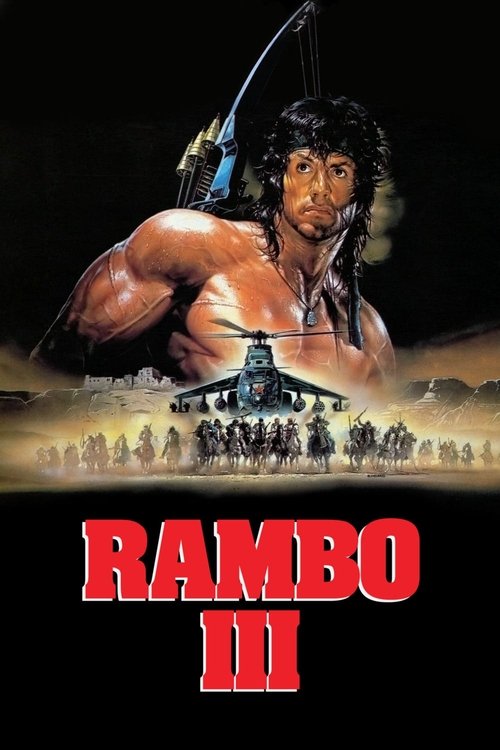
What motivates John Rambo to go to Afghanistan in Rambo III?
How does Rambo manage to infiltrate the Soviet base to rescue Trautman?
What role does the Afghan resistance play in Rambo III?
What is the significance of Rambo's relationship with Colonel Trautman?
How does Rambo's character evolve throughout the film?
Should I watch it?
Ask Your Own Question

What is the plot?
The story opens in humid twilight in rural Thailand, somewhere in 1988, as men gather in a ring lit by harsh floodlights and burning torches. Bare feet slap against packed earth. Two fighters stand opposite each other, stripped to the waist, gripping long hardwood staffs. Sweat glistens. The crowd leans in, hungry for violence.
One of the fighters is John Rambo. His hair is long to his shoulders, tied back with a strip of cloth, his body corded with scars and muscle. His eyes stay calm, almost distant, as if he is only half present. A referee barks something in Thai. Money changes hands around the pit. A bell clangs.
The match explodes into motion. The other fighter charges, swinging his staff for Rambo's head. Rambo moves with brutal efficiency. He slips the blow, counters with a crushing strike to ribs, another to the leg, and then a snapping upward crack to the jaw. The opponent drops to his knees, dazed. Rambo steps forward and finishes him with a single, hard blow that sends him flat on the ground, unconscious or very close to it. The crowd roars. Men who bet on Rambo cheer and grab their winnings; others curse and shove.
Rambo doesn't celebrate. He stands breathing slowly, looking down at his fallen opponent with no hatred, only resignation. When it's over, he takes his share of the money quietly and leaves the ring, pushing through the crowd toward the darkness beyond the lights.
He walks back toward a nearby Buddhist monastery, a modest complex of wooden buildings and stone statues, where monks in orange robes chant as dusk falls deeper. Rambo has been living here, helping repair the structures, hauling stones, rebuilding statues, trying to bury the part of himself that lives for war. He sleeps in a simple space, eats simple food, keeps his possessions to almost nothing. When he works with the monks, he is gentle and careful, his hands that can kill turning soft as they smooth fresh plaster over the cracked face of a Buddha.
Into this calm comes Colonel Sam Trautman.
One day, as Rambo carries lumber along a low wall, a rugged, middle‑aged American in fatigues and boots steps into the courtyard. Trautman moves like a soldier even in a place of prayer, his gaze sharp, his posture stiff but tired. He watches Rambo for a long second, then calls out with old familiarity: "How you doing, John?"
Rambo turns. His face shows a flicker of recognition, then guarded warmth. "Good," he answers, his voice low. "Good."
They sit later in a quiet corner of the monastery, the hum of insects in the background, monks chanting in the distance. Trautman spreads out a folder--grainy black‑and‑white photos of Afghanistan: villages in ruins, women and children dead or maimed, Soviet helicopters strafing mud‑brick compounds. He talks about the Soviet‑Afghan War, about mujahideen fighting against armored columns and helicopter gunships with little more than rifles and courage.
"I've been recruited by the State Department," Trautman explains. "Covert operation. We're shipping Stinger missiles to the rebels, to even the odds against Soviet air power." He looks at Rambo. "I want you to come with me."
Rambo studies the photos, his eyes dark. He hears the pitch: sneak into Afghanistan, help the mujahideen strike Soviet units, turn the tide in a forgotten war. Trautman appeals to what he knows is still inside Rambo: loyalty, outrage at injustice, the instinct to fight for people who can't fight for themselves.
Rambo's answer is quiet but final. "It's not my war," he says. "I've done my time."
Trautman pushes harder, reminding him of the men who can't walk away, the civilians under Soviet fire. Rambo's jaw tightens. "I don't know anybody over there," he replies. "I don't want to get involved." He looks away, out at the statues. "I'm through with this."
Trautman sees he will not win. There is frustration in his eyes, and disappointment, but also understanding. He stands. "You know what you're doing," he says, but then he adds, with a trace of warning, "You'll always be a soldier, John."
Rambo doesn't answer. Trautman leaves, his boots echoing faintly on the stone path, and the monastery returns to its rhythm. For the moment, war remains far away.
Time passes--days, maybe weeks. Rambo continues his work, still occasionally fighting in the underground stick matches. But in some quiet corner of him, he knows something about Trautman's mission doesn't sit right. We don't see it immediately. Instead, the perspective shifts.
Trautman follows through without Rambo. He flies into the region, assembles a small American team along the border near Peshawar, Pakistan, and moves toward Afghanistan with crates of Stinger missiles. The operation is meant to be deniable, surgical, limited. But as his convoy snakes along a narrow border route toward Khost, a region near the Pakistani–Afghan frontier, Soviet intelligence moves faster.
In the dead of night, Soviet troops spring an ambush. The darkness explodes with tracer rounds, flares, and explosions. Men scream. Trucks burn. Trautman fights back with a rifle, barking orders, trying to fall back, but he is outgunned and outnumbered. His team is systematically cut down: Americans and local guides fall in bursts of automatic fire, one after another. Each man who dies is killed by Soviet soldiers under the command of Colonel Alexei Zaysen, a cold, ambitious officer in the Soviet army. Zaysen's men, including his brutal right‑hand enforcer Sergeant Kourov, encircle Trautman's position. Grenades burst, one of Trautman's last men is blown apart, another is riddled with bullets as he attempts to flee.
Finally Trautman finds himself facing a wall of gun barrels. He is knocked to his knees, a rifle butt to the back. Zaysen steps out of the darkness into the glow of burning trucks, his face smooth, controlled, almost amused. "Colonel Trautman," he says in accented English. "Welcome to Afghanistan."
The Stinger missiles are confiscated. Trautman is bound, shoved into a military helicopter, and flown deep into Afghan territory, toward a massive Soviet mountain fortress carved into rock near Khost. His team, every member of it, lies dead along the border--slain by Soviet gunfire and explosives in Zaysen's ambush.
Back in Thailand, Rambo is back in the dirt fighting ring, staff in hand, going through another brutal match. This time, the opponent lands a hard blow. Rambo takes it, then comes back with twice the force, dropping the man with a heavy, echoing crack of wood and bone. As he walks away, covered in sweat and dust, someone in the crowd pushes through: a clean‑cut American in a suit and tie, out of place among gamblers and fighters.
This is Robert Griggs, an American embassy and intelligence official. He finds Rambo after the fight, in the shadowed back alleys behind the arena. "John Rambo?" he asks. Rambo eyes him suspiciously.
Rambo leads him back toward the monastery, where they can talk away from the noise. They sit at a rough wooden table in a small room, a Buddha statue looking down. Griggs gets right to the point. "Your old colonel, Sam Trautman, is in trouble."
He explains that Trautman's mission in Afghanistan went bad. "His unit was ambushed near the border. Everybody else is dead," Griggs says. "Trautman's been captured by the Soviets."
Rambo doesn't move, but the air around him tightens. Griggs lays out the political reality: officially, the United States can do nothing. "If we go in there and rescue him, it's an act of war," Griggs says. "Washington won't risk that. They won't send a team. They won't negotiate. They deny everything."
Rambo's voice is controlled, but the question is simple. "So what are you doing here?"
Griggs looks at him steadily. "I'm here to tell you that if something were to happen, off the books… nobody would know. But if you go in, you're on your own. You're denied. If you're captured, we'll say we don't know you."
Rambo stares at the wall, anger and loyalty warring inside. "Why now?" he asks. "Why tell me this now?"
"Because he's your friend," Griggs answers. "You're the only one who has a chance. And because without help, he's dead."
Rambo thinks of Trautman at the monastery, asking him for help. Of the photos. Of the war he tried to walk away from. He looks back at Griggs. "I'll need equipment," he says. "Weapons. Explosives. Blue light sticks. Detonators."
"You get to Peshawar," Griggs says. "I'll set it up."
Rambo agrees. The decision feels like fate snapping shut. Before he leaves, he says a stark farewell to the monks who took him in. One elder monk, who has come to care for him, asks quietly if he is going back to war. Rambo hesitates, then answers, "It's something I have to do." The monk wishes him peace anyway, though both know he is walking into anything but peace.
Rambo travels to Pakistan, arriving in the noisy, chaotic city of Peshawar. The streets are crowded, dusty, full of vendors, soldiers, refugees. He moves through an underworld of arms dealing and covert politics until he finds the man Griggs told him to look for: Mousa Ghani (often pronounced Ghani or Ghanin), a lean, sharp‑eyed Afghan arms dealer who operates halfway between idealist and profiteer.
They meet in Mousa's cluttered office, weapons and spare parts stacked everywhere. Mousa is cautious, almost mocking at first. "I heard of you, Mr. Rambo," he says. "Big American soldier. Now you want to fight the Soviets?"
Rambo doesn't bother with small talk. "I'm looking for Colonel Samuel Trautman," he says. "He's being held in a Soviet base near Khost."
Mousa knows exactly the place: a heavily fortified mountain fortress, ringed with land mines, machine guns, and helicopters. "You can't get in there," Mousa warns. "Not alive. Not alone." He laughs nervously and tries to steer the conversation away.
Rambo's eyes harden. He moves so fast Mousa barely sees it--suddenly Rambo has him shoved up against a metal cabinet, one powerful forearm pressed into Mousa's throat. "You're going to take me as close as you can," Rambo says calmly, but with a deadly undercurrent. "Or you're going to have a big problem."
Mousa, choking, raises his hands. "Okay, okay! I take you!" Rambo releases him. Mousa rubs his neck and mutters in Pashto under his breath, but he starts planning a route.
From Peshawar they move by truck, then on horseback, deeper into the Afghan desert toward the region of Khost. Along the way, Rambo sees the face of this war firsthand: columns of refugees, bombed‑out villages, destroyed fields. Mousa explains the basics--how the mujahideen fighters operate in small bands, how they've been resisting the Soviets for years with almost nothing, how Soviet helicopter gunships massacre civilians without mercy.
Rambo and Mousa stop in an Afghan village built into dusty hills, where Rambo is introduced to local tribal leader Masoud--a proud, dignified commander (not directly labeled by date or rank in dialogue, but clearly a seasoned mujahideen leader). Masoud looks Rambo up and down, skeptical of outsiders, especially Americans. But he also sees a hardened fighter he might use. The two men share tea in an underground room lit by small lamps. Children peek around the door. One of them is a scrappy, big‑eyed boy of around twelve named Hamid, quick to smile, quicker to boast, who takes an instant liking to Rambo.
Masoud outlines the stakes. The Soviets, led in this region by Colonel Alexei Zaysen, have been terrorizing Afghan villages, bombing them from the air, shelling them with artillery, torturing prisoners at the mountain base. The Afghans are brave but outgunned. Rambo listens silently. At one point Hamid asks him, "Are you a great warrior?" Rambo shrugs. "Sometimes," he says.
We see a rare softening in Rambo. He plays a brief game with some of the children, tossing a makeshift ball back and forth. He watches the villagers pray. He hears, from Masoud, a simple truth: "For us, this is our country. For you, it is your friend." That draws a faint nod from Rambo.
At night, Rambo and Mousa sit by a low campfire at the edge of the village. Mousa warns him again about the Soviet base. "It is a fortress in the mountains," he says. "Guns, mines, tanks--everything. You and your knife, your bow… they are not enough." Rambo stares into the flames. "They'll have to be," he says.
Early the next morning, before dawn has fully broken, Mousa leads Rambo and Hamid--who refuses to be left behind despite orders otherwise--toward the fortress. The boy insists on coming, telling Rambo he knows the area, that he can help. Rambo tries to send him back, but Hamid's stubbornness wins a grudging acceptance. Mousa complains, but he guides them anyway.
They reach high ground overlooking the Soviet mountain base. The fortress squats like a concrete scar against rock cliffs, ringed with barbed wire, searchlights, and guard towers. Tanks and vehicles are parked inside the yard. Soviet soldiers patrol with AK‑47s. A Mi‑24 Hind-D attack helicopter rests on a landing pad, a hulking metal predator.
Rambo studies the layout through binoculars. Inside, though he cannot see him, Colonel Trautman is in chains.
Trautman, stripped to bare essentials, is held in a filthy, stone‑walled cell. His face is bruised, his body beaten. Soviet guards drag him periodically to an interrogation room where Colonel Zaysen waits with questions and pain. Zaysen is cold and articulate. He asks for American plans, for information on rebel supply routes, for names. With him, always, stands Sergeant Kourov, a hulking Spetsnaz commando with a shaved head and dead eyes, who enjoys inflicting pain.
In one interrogation, Zaysen speaks almost conversationally. "The world has changed, Colonel," he says. "The Americans will not come for you. They will wait until we are done with Afghanistan, and then they will forget it." Trautman, defiant, tells him he is underestimating people like Rambo. Zaysen smiles faintly. "Rambo? Is he still in the game? We will see."
That very night, Rambo makes his first move.
Under cover of darkness, he, Mousa, and Hamid slip down from the ridge toward the fortress, moving in the shadows of the rock wall. Rambo, clad in dark clothes with blackened face, uses a grappling hook and rope to scale a lesser‑watched section of the cliff near the fort's perimeter. He moves like a spider, almost noiseless, fingers seeking holds in the stone. Hamid and Mousa remain hidden in rocks, waiting for a signal.
Perched on a ledge, Rambo takes out a guard silently with a knife from behind, then lowers himself into the base's interior, hugging darkness and blind spots. He cuts through a fence, plants small charges, and works his way toward the prison block. But this first attempt is sloppy by Rambo's high standards--he doesn't fully know the rhythms of the guards yet, and soon, a mis-timed movement is noticed.
A Soviet sentry shouts. An alarm klaxon wails across the compound, harsh and metallic. Searchlights swing wildly, locking on shadows. Automatic weapons erupt in staccato bursts.
Rambo dives for cover and returns fire with a captured rifle, dropping soldiers as they rush out of barracks, but now the base is fully alert. Outside the walls, Mousa and Hamid hear the chaos. Hamid, impulsive and brave, breaks from cover and runs forward, trying to help, firing a small pistol and shouting. A burst of Soviet gunfire answers from a guard tower. A bullet tears into Hamid's leg, slamming him to the ground. He screams in pain, grabbing at the bloody wound.
Seeing this from within, Rambo's fury ignites. He blasts the soldiers who shot the boy, one after another, killing them with quick, merciless accuracy. But now platoons are converging on his position. Tracer rounds slice the dark. Wooden crates splinter around him, sending shards flying. One heavy wooden beam explodes near his side, jagged fragments slamming into his flank--wood shards driven deep into his flesh.
Bleeding and grimacing, he fights his way back toward the outer perimeter. Mousa, risking his life, drags the crying Hamid behind a rock outcropping, trying to shield him from stray bullets. Rambo reaches them under a hail of fire, slinging his bow and gear, and covers their retreat with short, controlled bursts from his rifle. Several Soviet soldiers charge over a rise and Rambo cuts them down, each man dying in a jerk of limbs and a spray of blood as the bullets from Rambo's weapon tear into them. Their deaths--violent, instantaneous--are the first casualties at Rambo's hands inside this war zone.
Finally they escape into the night, scrambling up rough terrain back toward Mujahideen territory, the fortress shrinking behind them. The Soviets fire flares into the sky, but Rambo, Mousa, and Hamid disappear into the darkness.
Later, in the quiet of a rocky ravine, Rambo kneels over Hamid, who whimpers as Rambo examines the leg. The wound is deep but survivable. Rambo moves with surprising gentleness, cleaning it, wrapping it with bandages from his kit. Hamid looks at him through tears, ashamed. "I wanted to help," he says. Rambo tells him calmly, "You did."
Then Rambo turns to his own side. Blood soaks his shirt from the embedded wood fragments. There is no doctor within reach, no time to rest. He bites down on a strip of cloth, pulls the jagged splinters from his flesh one by one with a knife, grunting with pain but never crying out. Then he takes gunpowder from a cartridge, pours it into the wound, and lights it. Flame blooms for a second, searing the torn skin closed. His face contorts. Sweat pours down. But the bleeding stops.
In the morning light, he makes a hard decision. He tells Mousa to take Hamid back to safety, to the village, now. "I go back alone," Rambo says. Mousa protests--he wants to help, doesn't want to abandon him. Rambo looks him straight in the eyes. "You'll just slow me down," he says, not unkindly but with absolute certainty. "Take care of the boy."
Hamid clutches at Rambo's arm. "I can still fight," he says desperately. Rambo shakes his head. "You've already done enough," he answers. "Go home." He watches as Mousa helps Hamid onto a horse. They ride away, dust trailing behind them.
As the sun climbs, Rambo prepares for his second attempt. He tightens his bandage, rechecks his gear: knife, bow, arrows (some tipped with explosives), detonators, blue chem‑light sticks, and captured Soviet weapons. Then, alone, he returns to the mountain fortress.
He climbs again, higher this time, scaling a sheer cliff face that seems almost impossible. His fingers bleed. Pebbles drop into the abyss below. High above the main gate, he pries open a narrow ventilation or drainage shaft and squeezes through, emerging in the bowels of the base, in rough, dimly lit tunnels carved from stone.
He moves like a shadow, silently dispatching lone guards who cross his path--one strangled from behind with a garrote, one knifed in the chest, one quietly thrown from a low ledge. Each death is clinical, efficient, born of long experience. He hides the bodies in dark corners.
Trautman, on this same day, is dragged again from his cell. This time the Soviets prepare a different kind of torment. Zaysen brings him to a large chamber where fuel drums and equipment sit next to a mounted flamethrower. "You are a stubborn man, Colonel," Zaysen says. "We will see how much heat you can take."
They chain Trautman to a support post. A Soviet soldier straps on the flamethrower harness, checks the ignition. Kourov watches with satisfaction, arms folded, a slight smirk on his face. Zaysen gives a nod.
The soldier takes aim. A gout of flames roars out--only to slam into stone as something distracts him. The lights flicker. An explosion thumps in a distant hallway. A siren starts to rumble.
Then all hell breaks loose.
Rambo bursts from the shadows, crossbow raised. An explosive arrow slams into the flamethrower tank on the soldier's back. The man has just enough time to look shocked before the tank erupts. Fire blossoms in a violent orange sphere, engulfing him. His body is shredded and burned in a fraction of a second, killed by the explosion ignited by Rambo's arrow. His charred remains slam into the wall.
Soviet guards rush in from both sides. Rambo dives, firing his rifle. One soldier goes down with three shots to the chest. Another takes a round in the throat, staggers, and collapses, choking on blood. A third tries to raise an alarm and is cut down by a burst from Rambo's weapon. Each of these men dies by Rambo's hand in this sudden onslaught.
Rambo reaches Trautman and hacks through his chains with his knife. Trautman, weak but burning with anger, manages a strained joke: "I knew you'd come." Rambo gives the faintest smile. "You're lucky I'm late," he replies.
They move together through the base, firing in concert. In a nearby cell block, Rambo shoots open locks and frees several Afghan and Western prisoners, gaunt and hollow‑eyed. Some of them grab weapons from fallen guards. They fan out, following Rambo's terse commands as he blows control panels and lights.
More Soviet soldiers pour into the corridors. A firefight erupts in a stone hallway, muzzle flashes lighting rough walls. Rambo guns down several troops who rush around a corner. Two Spetsnaz commandos attempt a flanking maneuver; Rambo rolls a grenade at their feet. The grenade detonates, tearing them apart in a red‑spray burst of fragments and shockwave. Blood spatters the walls; their remains slump.
The facility becomes a chaos of smoke, shouting, and fire. Alarms wail. Zaysen, in his office, realizes the base is under full attack. He orders troops to cut off the escape routes, sends Kourov with a squad of elite commandos to intercept Rambo and Trautman.
But Rambo has a bigger plan. Through the inner courtyard, among strafing bullets and panicking soldiers, he spots the hulking profile of a Soviet Mi‑24 Hind attack helicopter. He shouts to Trautman and the rescued prisoners to follow him as he fights his way toward it. They cut down the last ground crew with bursts of automatic fire. One mechanic tries to flee; Rambo hits him in the back with a single precise shot, killing him instantly.
Rambo climbs into the pilot's seat; Trautman takes the co‑pilot/gunner position. They haul the doors closed as bullets ping off the metal. With a roar, the rotor spins up. Rambo yanks the controls, and the helicopter lifts from the pad, rising through tracer‑lit air as Soviet soldiers below fire wildly. Some rounds punch into the fuselage. Sparks flare. A fuel line tears. Warning lights flash in the cockpit.
Still, the Hind clears the walls and streaks away from the fortress, banking hard into the rugged terrain. Inside, the freed prisoners cling to whatever they can, faces pale. Trautman monitors gauges, calling out stresses. "We've lost fuel pressure!" he warns. Smoke trails from a damaged engine.
They don't get far. The damage is too severe. A sputter, a shudder, then the helicopter lurches downward uncontrollably. Rambo fights the stick, gritting his teeth. "Hold on!" he yells. The Hind slams into a rocky valley floor, bouncing, skidding, throwing debris. Metal crunches, glass shatters. Miraculously, the main cabin doesn't explode.
The crash knocks everyone around, but most survive with bruises, cuts, and shaken nerves. Trautman and Rambo stagger out through a torn side door. One of the freed prisoners lies motionless, neck twisted at an impossible angle, killed in the impact. His death is the first among the escapees; he dies from the crash, indirectly caused by the damage inflicted during their escape.
They are still deep in enemy territory, on foot, with wounded and exhausted men. They move into a network of caves in a nearby rocky outcropping, hoping to hide. Rambo knows the Soviets will come.
At the fortress, Zaysen gets the crash report. He is enraged that his prisoners have escaped, but he sees opportunity. He orders Spetsnaz teams, led by Sergeant Kourov, to track them down and kill them. He also readies another Hind gunship and ground forces to pursue.
Night falls as Rambo, Trautman, and the survivors settle into the caves, dimly lit by flickering fires. The atmosphere is tense. Rambo moves through the caverns like a predator, setting traps: tripwires, explosive charges, carefully placed knives. Trautman, despite his injuries, stands watch with a rifle.
In the early dark hours, the Soviets come.
Outside, a Hind helicopter sweeps the valley, its searchlight stabbing at crevices. Zaysen, in this phase, remains back at his main force, but he has dispatched an advance team. The gunship hovers near the cave entrance and drops Spetsnaz commandos, who slide down ropes and move into the cave system with flashlights and submachine guns, led by Kourov himself.
Inside, shadows flicker. Rambo hears boots crunching on gravel. He whispers to the others to stay low and hidden. Then he disappears into the darkness.
The Spetsnaz unit advances carefully. Kourov, heavily armed, signals silently to his men. One soldier steps through a narrow passage and triggers a hidden tripwire. A small charge detonates above him, blasting shards of rock and metal into his body. He slams to the ground, dead from shrapnel. Another soldier behind him is thrown back, bleeding. He wheezes for a few seconds before he goes still. Both men die from Rambo's booby trap.
The Soviets, now fully alert, fire into the darkness. Bullets ricochet from rock. A flashlight beam swings--then suddenly its carrier is yanked upward into the shadows. Rambo, hanging from a crevice, pulls him up and snaps his neck with a brutal twist. The body slams down. Another soldier turns toward the noise and gets a knife in the chest, thrown from the blackness. He clutches at the hilt, staggers, and drops, dead by Rambo's hand.
In the dim light, the cave turns into a killing ground for the Russians. Rambo uses his environment ruthlessly, emerging behind men and slitting throats, pushing one screaming soldier into a bottomless chasm. The man's cries echo into darkness as he falls, ending abruptly when he hits unseen rock. His death, too, belongs to Rambo.
Finally, Sergeant Kourov pushes deeper in, separated from his dwindling squad. He spots Trautman and some prisoners huddled behind a boulder and raises his weapon. Before he can fire, Rambo launches himself from a ledge, tackling Kourov in a brutal hand‑to‑hand fight.
They crash onto jagged stone, trading savage blows. Kourov is strong and skilled, driving fists into Rambo's ribs, trying to wrench his arm into a break. Rambo head‑butts him, driving the bone of his forehead into Kourov's face. Blood gushes from the Russian's nose. They roll toward a drop. Kourov reaches for his sidearm; Rambo grabs his wrist, forcing the barrel away. The two men strain, teeth gritted, veins standing out.
In the end, Rambo's ferocity wins. He manages to wrench the pistol from Kourov's hand and, in a split second, reverses it, pressing the muzzle into Kourov's chest. Kourov's eyes widen. Rambo fires. The shot thunders in the confined space. Kourov jerks once, blood blooming on his shirt, then slumps lifeless. Sergeant Kourov dies in that cave, killed at point‑blank range by John Rambo's own hand.
The last remaining Spetsnaz commandos, hearing Kourov's fate and seeing their comrades strewn dead, try to retreat. Rambo cuts off their escape. He detonates another pre‑set explosive, collapsing a section of the tunnel. A cascade of rock crashes down, crushing at least one fleeing soldier under tons of stone. His death is brutal and final; he is killed by the cave‑in triggered by Rambo.
Outside, the Hind helicopter hovers near the cave entrance, its pilot trying to locate what is happening inside. Rambo moves toward the mouth of the cave with his bow, now loaded with an explosive‑tipped arrow. Trautman covers his flank with a rifle. A Soviet soldier leans in from the chopper's side door, firing into the dark. The air is full of dust and muzzle flashes.
Rambo steps into view for a second, draws, and lets the arrow fly. The missile streaks through the air and buries itself in the open side of the helicopter, near the fuel tank. For one frozen instant it sticks there, blinking. Then the warhead detonates.
The Hind erupts in a massive explosion. Fire jets from its side, the fuselage shatters, rotor blades shear off and spin away like scythes. The crew inside have no chance--the pilot and gunner are incinerated and shredded in the blast, killed by the explosive arrow fired by Rambo. Burning fragments of helicopter rain down into the valley, lighting the rocks with sudden orange light.
The cavern mouth quakes with the concussion, dust and debris billowing back. Rambo and Trautman, silhouetted by the fireball, watch the wreckage fall. There is a grim satisfaction--another Soviet weapon neutralized, its crew dead for their part in this war.
Dawn approaches. The escapees now move again, slipping away from the caves before Zaysen can throw more men at them. Rambo and Trautman lead them across harsh, broken terrain, heading always toward the Pakistani border, the notional line of safety. Their bodies are exhausted, their ammunition low, but their resolve hardens with every mile.
Back at his operations area, Colonel Alexei Zaysen no longer underestimates his enemy. He realizes he is dealing with a single, highly trained commando--Rambo--who fights with the tenacity of a ghost. Zaysen now commits heavily. He assembles a mechanized column: tanks, armored personnel carriers, truckloads of infantry, and another Hind attack helicopter with himself aboard. His goal is simple: intercept and annihilate Rambo and Trautman before they can reach Pakistan.
The next day--no specific calendar date is spoken, but it is clearly very soon after the cave battle--the sun beats down hard on a scrubby plain near low hills marking the border region. Heat ripples off the ground. Rambo, Trautman, and the freed prisoners pick their way forward, wary, knowing that the Soviets cannot be far behind. Trautman, limping from his earlier torture and exertions, moves as fast as he can. Rambo keeps scanning the horizon.
Then they hear it: the low rumble of engines, growing louder. Dust plumes rise on the far side of a ridge. Rambo lifts his binoculars. A line of Soviet tanks and armored vehicles emerges, endless and heavy, with troops riding on top, rifles ready. Overhead, a Hind helicopter swoops, its rotors chopping the air, a shark above the steel herd. Zaysen is here.
There is nowhere to hide, no easy escape. Trautman looks at Rambo. "Looks like we're outnumbered," he says dryly. Rambo answers, "They've got us where we want them."
Zaysen, in the helicopter, gives the order to fire. The Hind launches rockets that explode nearby, showering Rambo's group with shrapnel. Some of the freed prisoners are hit--one man's chest is torn open by a fragment, killing him instantly; another's leg is blown apart, leaving him screaming on the ground. Rambo has no choice but to leave the mortally wounded; the man dies moments later, bleeding out, killed by Soviet rocket fire under Zaysen's command.
All seems lost. Then, in the distance, a different sound: the thunder of hooves.
Over a dune, like something out of another century, appears a force of Afghan riders--Masoud's mujahideen, dozens of them, some with turbans streaming, some holding rifles high, all on horseback. Among them, Rambo recognizes Mousa Ghani and, incredibly, the young Hamid, leg bandaged but eyes blazing. They have chosen to ride back into hell rather than stay safe.
Masoud lifts his arm and gives a fierce cry. The riders charge, a wave of men and horses hurtling toward Soviet steel. Dust foams around hooves. The Soviets open fire with machine guns. Horses scream. Men fly from saddles in sprays of blood. Some mujahideen die instantly, mowed down by bullets from tank‑mounted guns and infantry rifles--killed by Soviet soldiers in the ranks under Zaysen's overall command. But the Afghans do not break. They weave, fire from the saddle, toss grenades at armored tracks. A cavalry charge meets an armored column in a collision of centuries.
Rambo sees opportunity in chaos. A Soviet tank grinds close, its rider crew distracted by the flanking horsemen. Rambo sprints across open ground under fire, bullets kicking up dirt around his feet. A round grazes his arm, tearing flesh and drawing blood--he winces but keeps going. He reaches the tank, grabs a handhold, and hauls himself up. A Soviet soldier pops up from the hatch to stop him. Rambo head‑butts the man and throws him over the side. The soldier hits the ground headfirst with a sickening crunch, neck snapping; he dies instantly from Rambo's attack.
Rambo drops into the tank's interior. Inside, he confronts the remaining crew. A close‑quarters eruption: he fires his rifle in the cramped space, cutting down one crewman; another lunges at him with a wrench, and Rambo smashes his head against metal, killing him. The third man frantically reaches for controls; Rambo shoots him point‑blank in the face. Blood spatters the interior. The tank's crew is dead, all killed by Rambo in seconds.
Now Rambo is at the controls of several dozen tons of Soviet armor. He swings the turret, fires the main gun at an approaching armored personnel carrier. The shell slams into the APC and detonates, blowing it apart in a brilliant explosion. Soviet troops inside are incinerated or shredded by metal--their deaths directly caused by Rambo's shell. Burning wreckage rains down, adding to the chaos.
All around, the battle rages. Trautman, with a rifle and rocket‑propelled grenade launcher, fights alongside Masoud's men. At one point Trautman is hit--a bullet grazes his side, knocking him down. He clutches his wound, blood seeping between his fingers, but he pushes himself back up and keeps firing. He yells to Rambo over the radio, "John, we've got to get out of here!" Rambo answers grimly, "Not yet."
Zaysen, circling above in his Mi‑24, sees that his ground forces are taking serious damage. He decides that to win, he must personally kill Rambo. He directs his helicopter toward the captured tank, rockets and heavy machine guns primed. The Hind dives, guns blazing. Rounds slam into the ground around the tank. One rocket explodes close enough to wrench it sideways; inside, Rambo is slammed against the bulkhead, his shoulder bruised. Jagged shrapnel from another near miss rips through the tank's exterior, cutting his cheek with a thin line of blood.
Masoud rides close enough to the tank to shout up at Rambo, tossing something into his hands--a Molotov cocktail, a simple wine bottle filled with fuel and rag sticking out. "Use it!" he yells. Rambo nods, understanding immediately.
With Zaysen's helicopter circling for another pass, Rambo pops the tank hatch, exposing himself to fire. The Hind's guns chatter, bullets striking sparks from the tank's hull. Rambo lights the rag of the Molotov with a match or lighter, the flame catching, fuel sloshing inside the glass.
The Hind roars in low. Rambo stands half‑exposed in the hatch, wind tearing at his hair, and hurls the flaming bottle with all his strength. It arcs through the air and smashes against the underbelly of the helicopter near an engine intake. Liquid fire splashes across its side. Flames erupt, licking along the metal. Zaysen feels the jolt, alarms blaring in his cockpit.
It is not enough to bring the helicopter down, but it weakens it. Smoke trails from the engine. Zaysen snarls, enraged, and lines up for a final, direct attack. He arms rockets, levels the Hind's nose at Rambo's tank, and dives. From his vantage, he sees the tank begin to roll toward him. The two war machines, like dueling beasts, lock onto each other.
On the ground, Trautman and the mujahideen see what is happening. Men pause in their own firefights to watch. The tank and helicopter accelerate toward one another, a deadly game of chicken.
Rambo grips the controls, eyes narrowed. He knows he cannot outmaneuver the agile Hind forever. He has one chance: go straight at it. As the distance closes, he also swings the tank's turret to bear, bringing its machine gun to bear on the helicopter's front.
At the last possible second, Rambo opens fire. The tank's heavy machine gun spits long bursts directly at the Hind's cockpit. Bullets rip through the glass, shredding instrumentation. Inside, Colonel Alexei Zaysen is hit multiple times. The rounds punch into his chest and head. Blood explodes against the inside of the canopy. Zaysen jerks, then slumps forward, hands slipping from the controls. Colonel Alexei Zaysen dies in that instant, killed by Rambo's machine‑gun fire through the tank's gun turret.
But momentum is already set. The pilotless Hind hurtles forward, on a collision course with the tank. Rambo does not flinch. He keeps the tank straight. The two titans slam together in a titanic impact.
Metal shrieks as the tank's front plows into the helicopter's belly. The Hind crumples, its rotor smashing apart, blades severed and flying in all directions. Fuel tanks rupture. In one massive, engulfing explosion, both machines vanish in a fusion of fire and black smoke. Any surviving crew member in the helicopter--if any remained beyond Zaysen--is killed instantly by the collision and the resulting blast, their bodies torn apart or burned beyond recognition. Inside the tank, the interior becomes an inferno, everything flung violently.
For a terrifying moment, those watching are certain Rambo is dead--killed in the suicidal charge, incinerated with Zaysen.
But the firestorm clears, debris falling like fiery snow. Out of the wrecked, smoking tank turret, a hatch grinds open. John Rambo hauls himself out, scorched and bruised but alive. He drops heavily to the ground, rolls, and pushes himself up, staggering. His face and hair are streaked with soot and blood. He looks around at the battlefield.
The Soviet column is destroyed or routed. Burning tanks belch black smoke. Dead Soviet soldiers lie scattered, killed by Rambo's guns, Stinger missiles from the mujahideen, grenades, and tank shells. Some have been shot off their vehicles, others crushed under treads, others killed in secondary explosions. All of their deaths tie back, in one chain or another, to the combined efforts of Rambo, Trautman, Masoud, and Masoud's men.
A few surviving Soviet troops, seeing their commander gone and their armor in ruins, throw down their rifles and flee, running or driving away in the few functional vehicles. Rambo and Trautman do not pursue. The point has been made. The field belongs to them.
Rambo staggers over to where Trautman is taking cover behind a rock. Trautman, wounded but standing, looks him over and shakes his head with a half‑astonished, half‑admiring smile. "You're not human," he says. Rambo, still catching his breath, replies simply, "I'm your worst nightmare," echoing the myth that has grown around him.
Around them, Masoud and the surviving mujahideen gather, catching their breath, tending to their own wounded. Some of Masoud's men lie still in the dust, killed in the charge or by Soviet return fire--dead for their country and their code. Mousa, dusty and alive, lifts a hand in greeting. Hamid hobbles up on his injured leg, grinning despite the carnage. "You did it!" he exclaims to Rambo, pride shining in his eyes. Rambo puts a hand on the boy's shoulder for a moment, a rare gesture of tenderness.
Now the story winds toward its end.
With Zaysen dead and his column broken, immediate pursuit ends. Rambo and Trautman have their path to the Pakistan border. The sky is hazy with smoke but beginning to clear. The mujahideen mount their horses, gathering to ride back toward their scattered villages and hideouts, their war far from over but with one great victory to remember.
Rambo and Trautman stand slightly apart with Masoud, Mousa, and Hamid. There is a brief, quiet moment of farewell. Masoud says, with solemn respect, that Rambo and Trautman are always welcome among them. "You are our brothers now," he says. Rambo nods, understanding the depth of that bond.
The last major revelation is not in a twist of plot but in what is left unsaid: Rambo has fought, again, not for a flag or for orders, but for a friend, and in doing so he has tied himself to another people's struggle. He has seen once more that war does not end; it only moves.
Trautman turns to Rambo. "What are you going to do now?" he asks, a gentle echo of countless endings to missions past.
Rambo looks out across the rocky landscape, toward the blurry line that separates Afghanistan from Pakistan, war from the uneasy world beyond. "I'll see what happens," he answers. It is as close as he comes to a plan.
They climb into a vehicle--often shown as a truck or transport arranged by the mujahideen--and start toward the border. Behind them, Masoud and his riders move off in another direction, disappearing into dust. Mousa raises a hand in one last wave. Hamid watches the departing Americans with the awe of a boy who has seen legends walk through fire and live.
The camera holds on Rambo and Trautman as their vehicle drives away, growing smaller against the harsh, beautiful Afghan landscape. The war here is not over, but their part in this chapter is. Rambo has once again survived what should have killed him--escaped a fortress, outwitted a colonel, killed a feared sergeant, destroyed helicopters and tanks, and walked away from explosions that would have ended any normal man.
The final image is Rambo moving off into the uncertain future, his figure receding, as the brutal echo of the battle he just won lingers in the dust and smoke behind him.
What is the ending?
In the ending of Rambo III, John Rambo successfully rescues his friend Colonel Trautman from captivity in Afghanistan. After a fierce battle against Soviet forces, Rambo and Trautman escape, and Rambo decides to stay and help the Afghan rebels fight against their oppressors. The film concludes with Rambo reflecting on his past and the ongoing conflict, suggesting a sense of unresolved struggle.
Now, let's delve into the ending in a more detailed, chronological narrative.
As the climax of Rambo III unfolds, John Rambo, having infiltrated the Soviet base where Colonel Trautman is held captive, engages in a series of intense confrontations. The atmosphere is thick with tension as Rambo, armed with a bow and arrows, stealthily takes out guards, showcasing his survival skills and tactical prowess. The dimly lit corridors of the Soviet compound echo with the sounds of distant gunfire and the muffled cries of prisoners, heightening the urgency of Rambo's mission.
Rambo finally locates Trautman, who is being tortured for information. The sight of his mentor, bruised and battered, ignites a fierce determination within Rambo. He swiftly dispatches the guards, and the two men share a brief moment of relief and camaraderie. Trautman, despite his injuries, expresses his gratitude and acknowledges Rambo's unwavering loyalty. Their bond is palpable, underscoring the themes of friendship and sacrifice that run throughout the film.
As they make their escape, the alarm sounds, and the Soviet forces mobilize to recapture them. Rambo and Trautman navigate through the chaos, dodging bullets and explosions. The tension escalates as they reach the compound's exterior, where Rambo commandeers a helicopter, showcasing his resourcefulness and combat skills. The helicopter becomes a symbol of their escape, but also of the ongoing conflict that looms over Afghanistan.
In a dramatic aerial battle, Rambo uses the helicopter to fend off pursuing Soviet troops. The visuals are striking, with the helicopter soaring through the rugged Afghan landscape, juxtaposed against the backdrop of war-torn villages and the resilience of the Afghan people. Rambo's determination to protect Trautman and the Afghan rebels is evident as he takes down enemy aircraft, demonstrating his commitment to the fight for freedom.
As they finally break free from the Soviet stronghold, Rambo and Trautman land in a safe area, but the victory is bittersweet. Rambo, reflecting on the devastation he has witnessed, feels a deep sense of responsibility towards the Afghan people. He realizes that the fight is far from over, and he cannot simply walk away. Trautman, recognizing Rambo's internal struggle, encourages him to stay and help the rebels, understanding that Rambo's skills are desperately needed in the ongoing battle against oppression.
The film concludes with Rambo standing amidst the Afghan landscape, a lone figure against the vastness of the mountains. His expression is one of resolve and contemplation, hinting at the emotional scars he carries from his past and the weight of the future he has chosen. The final moments emphasize Rambo's transformation from a solitary warrior to a committed ally of those fighting for their freedom, leaving the audience with a sense of hope intertwined with the harsh realities of war.
In terms of character fates, Rambo chooses to remain in Afghanistan, embracing his role as a protector of the oppressed. Colonel Trautman, having survived the ordeal, is left to support Rambo's decision, knowing that their fight is not just for survival but for a greater cause. The film closes on a note of uncertainty, reflecting the ongoing conflict and the personal battles that both men continue to face.
Is there a post-credit scene?
Rambo III does not have a post-credit scene. The film concludes with John Rambo, played by Sylvester Stallone, reflecting on his experiences and the toll of war. After the climactic battle in Afghanistan, Rambo is seen leaving the conflict behind, symbolizing his desire for peace and a return to a more normal life. The film ends on a poignant note, focusing on Rambo's internal struggle and the emotional weight of his past, rather than setting up any future events or sequels.
What motivates John Rambo to go to Afghanistan in Rambo III?
John Rambo is motivated to go to Afghanistan to rescue his former commander, Colonel Sam Trautman, who has been captured by Soviet forces while attempting to aid the Afghan resistance.
How does Rambo manage to infiltrate the Soviet base to rescue Trautman?
Rambo infiltrates the Soviet base by using his skills in stealth and combat. He disguises himself and utilizes the terrain to his advantage, ultimately launching a surprise attack to free Trautman.
What role does the Afghan resistance play in Rambo III?
The Afghan resistance plays a crucial role in Rambo III as they are the allies that Rambo teams up with to combat the Soviet forces. Their struggle against oppression mirrors Rambo's own fight for freedom and justice.
What is the significance of Rambo's relationship with Colonel Trautman?
Rambo's relationship with Colonel Trautman is significant as it represents a deep bond forged through shared experiences in war. Trautman serves as a father figure and mentor to Rambo, and his capture serves as a catalyst for Rambo's actions throughout the film.
How does Rambo's character evolve throughout the film?
Throughout Rambo III, Rambo evolves from a solitary warrior haunted by his past to a leader who embraces camaraderie and purpose. His journey reflects a shift from isolation to connection, as he learns to trust and fight alongside the Afghan resistance.
Is this family friendly?
"Rambo III" is not considered family-friendly due to several potentially objectionable or upsetting scenes and aspects. Here are some elements that may be concerning for children or sensitive viewers:
-
Violence and Action: The film features intense combat scenes, including gunfights, explosions, and hand-to-hand combat. The violence is graphic and may be distressing.
-
Death and Injury: Characters are shown being killed or injured in brutal ways, which can be upsetting. The film does not shy away from depicting the consequences of war.
-
Torture and Captivity: There are scenes that involve torture and the threat of violence against prisoners, which can be disturbing.
-
Emotional Trauma: The film explores themes of loss, sacrifice, and the psychological impact of war, which may resonate deeply and evoke strong emotions.
-
Cultural and Political Context: The backdrop of the Soviet-Afghan War may introduce complex themes of conflict and suffering that could be difficult for younger audiences to understand.
These elements contribute to a mature tone that may not be suitable for children or sensitive viewers.








