
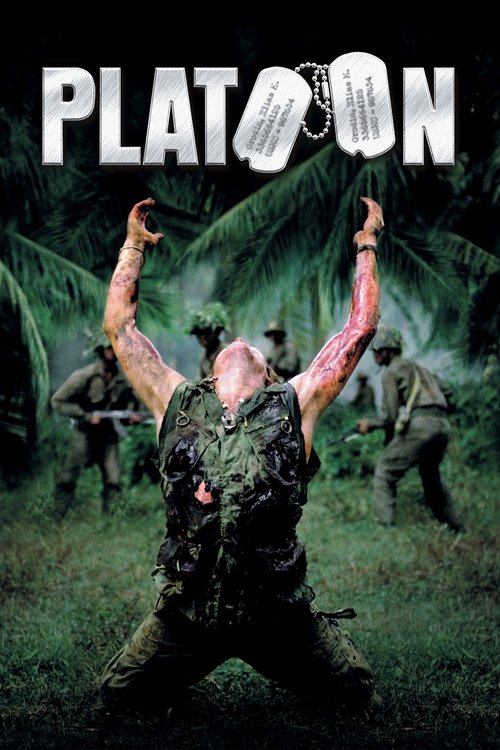

















Popular
What motivates Chris Taylor to enlist in the Vietnam War?
How does the relationship between Chris Taylor and Sergeant Barnes evolve throughout the film?
What role does the character Elias play in Chris Taylor's development?
What is the significance of the village raid scene in the film?
How does the film portray the impact of war on the soldiers' mental states?
Should I watch it?
Ask Your Own Question

What is the plot?
Sorry, we aren't able to watch and write up a full detailed plot yet. Check back in a few days.
What is the ending?
At the end of "Platoon," Chris Taylor survives the final battle but is left traumatized by the horrors he has witnessed. He escapes the chaos of the Vietnam War, but the emotional scars remain. The film concludes with a montage of soldiers being evacuated, and Chris reflects on the loss of his comrades, particularly the contrasting fates of Sergeant Barnes and Sergeant Elias.
In an expanded narrative of the ending:
As the sun sets over the dense jungles of Vietnam, the air is thick with tension and the sounds of gunfire echo in the distance. Chris Taylor, played by Charlie Sheen, finds himself in the midst of a chaotic battle. The platoon is under heavy fire, and the atmosphere is charged with fear and desperation. Chris, who has been deeply affected by the war, is now faced with the ultimate test of his humanity and morality.
In the heat of the battle, Chris witnesses the brutal conflict between Sergeant Barnes, portrayed by Tom Berenger, and Sergeant Elias, played by Willem Dafoe. The two men represent opposing philosophies of survival and morality in war. As the fighting intensifies, Chris is torn between his loyalty to Barnes, who embodies a ruthless survival instinct, and Elias, who represents a more compassionate approach to the horrors of war.
In a pivotal moment, Elias is ambushed while trying to escape the enemy. Chris watches helplessly as Elias is shot down, his cries for help echoing in Chris's mind. The scene is visceral, filled with the raw emotion of betrayal and loss. Chris's internal struggle is palpable; he feels the weight of his choices and the consequences of the war on his soul.
As the battle rages on, Chris is forced to confront the reality of his situation. He is caught in a crossfire, and the chaos around him is overwhelming. In a moment of clarity, he realizes that he must fight for his own survival. The camera captures his transformation as he becomes more hardened, reflecting the toll that the war has taken on him.
In the final moments of the film, Chris is seen escaping the battlefield, but the victory feels hollow. He is evacuated along with other soldiers, and as they are airlifted away, the haunting images of his fallen comrades linger in his mind. The montage of soldiers being transported away from the war zone is interspersed with flashbacks of Elias and the camaraderie of the platoon, emphasizing the deep sense of loss and trauma that Chris carries with him.
As the helicopter ascends, Chris looks out over the jungle, a landscape that has become a symbol of both beauty and horror. The film closes with a poignant reflection on the cost of war, leaving Chris forever changed. The fate of Sergeant Barnes remains ambiguous, as he is left behind in the chaos, embodying the moral decay that war can bring. The ending encapsulates the emotional and psychological scars that the characters endure, highlighting the profound impact of their experiences in Vietnam.
Is there a post-credit scene?
The movie "Platoon," produced in 1986, does not have a post-credit scene. The film concludes with a powerful and emotional ending that encapsulates the horrors of war and the personal struggles of the characters. After the climactic battle, the narrative focuses on Chris Taylor, played by Charlie Sheen, as he reflects on the chaos and loss he has experienced. The film ends with a poignant montage of images, including the aftermath of the conflict and the impact on the soldiers, but there are no additional scenes or credits that follow. The absence of a post-credit scene reinforces the film's serious tone and the weight of its themes.
What motivates Chris Taylor to enlist in the Vietnam War?
Chris Taylor, played by Charlie Sheen, is motivated to enlist in the Vietnam War by a desire to escape his privileged life and seek a sense of purpose. He feels disillusioned with his upbringing and believes that serving in the military will provide him with a deeper understanding of life and a chance to make a difference.
How does the relationship between Chris Taylor and Sergeant Barnes evolve throughout the film?
The relationship between Chris Taylor and Sergeant Barnes, portrayed by Tom Berenger, evolves from initial respect to deep conflict. At first, Chris admires Barnes for his toughness and leadership, but as the war progresses, he becomes increasingly disturbed by Barnes' brutal methods and moral ambiguity, leading to a climactic confrontation.
What role does the character Elias play in Chris Taylor's development?
Elias, played by Willem Dafoe, serves as a moral compass for Chris Taylor. He represents the more humane and compassionate side of the war, contrasting sharply with Barnes. Elias's dedication to protecting the men and his tragic fate profoundly impact Chris, pushing him to confront the harsh realities of war and his own values.
What is the significance of the village raid scene in the film?
The village raid scene is significant as it highlights the moral complexities and horrors of war. During this brutal attack, the soldiers, led by Barnes, commit atrocities against the villagers, showcasing the dehumanizing effects of combat. This moment serves as a turning point for Chris, who witnesses the loss of innocence and the moral decay of his fellow soldiers.
How does the film portray the impact of war on the soldiers' mental states?
The film portrays the impact of war on the soldiers' mental states through intense and visceral scenes that depict their psychological struggles. Characters like Chris, Barnes, and Elias experience fear, paranoia, and moral conflict, illustrating how the brutality of combat leads to trauma and a loss of humanity, culminating in a sense of hopelessness and despair.
Is this family friendly?
"Platoon," produced in 1986, is not considered family-friendly due to its intense and graphic portrayal of the Vietnam War. Here are some potentially objectionable or upsetting aspects that may affect children or sensitive viewers:
-
Graphic Violence: The film contains numerous scenes of intense combat, including gunfire, explosions, and injuries, which can be very disturbing.
-
Death and Dismemberment: There are explicit depictions of soldiers being killed or severely injured, showcasing the brutal realities of war.
-
Strong Language: The dialogue includes frequent use of profanity and derogatory terms, reflecting the harsh environment and emotional states of the characters.
-
Drug Use: The film portrays drug use among soldiers, including smoking marijuana and using other substances, which may be inappropriate for younger audiences.
-
Moral Ambiguity: The film explores complex themes of morality, loyalty, and the psychological effects of war, which may be difficult for younger viewers to understand.
-
Emotional Trauma: Characters experience significant emotional distress, including fear, anger, and despair, which can be heavy and unsettling.
-
Sexual Content: There are scenes that imply sexual violence and exploitation, which can be distressing.
Overall, "Platoon" presents a raw and unfiltered look at the horrors of war, making it unsuitable for children and potentially upsetting for sensitive viewers.









