





















































Popular
What is the significance of the character John Milton in The Devil's Advocate?
How does Kevin Lomax's character evolve throughout the film?
What role does Mary Ann Lomax play in the story, and how does she impact Kevin?
What is the significance of the courtroom scenes in The Devil's Advocate?
How does the film portray the theme of temptation through specific character interactions?
Should I watch it?
Ask Your Own Question

What is the plot?
Sorry, we aren't able to watch and write up a full detailed plot yet. Check back in a few days.



What is the ending?
In the ending of "The Devil's Advocate," Kevin Lomax confronts the truth about his life and the manipulations of his boss, John Milton. After a series of harrowing events, including the death of his wife, Mary Ann, Kevin ultimately rejects Milton's offer to join him in a life of power and corruption. The film concludes with Kevin waking up in a world where he has the chance to change his fate, suggesting that he can choose a different path.
Now, let's delve into the ending in a detailed, chronological narrative.
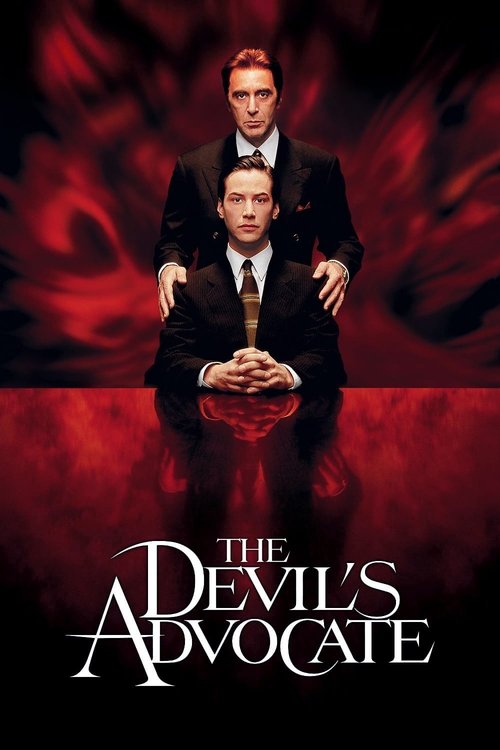
As the climax of the film unfolds, Kevin Lomax, played by Keanu Reeves, finds himself in a lavish penthouse office, facing John Milton, portrayed by Al Pacino. The atmosphere is thick with tension, as Milton reveals his true identity as Satan. He has been manipulating Kevin throughout the film, using his ambition and desire for success to draw him into a dark world of moral corruption. Milton's charismatic demeanor contrasts sharply with the sinister implications of his words, as he offers Kevin ultimate power and control, tempting him to embrace his darker instincts.
In a moment of realization, Kevin's internal struggle becomes palpable. He recalls the tragic events that have transpired, particularly the mental breakdown of his wife, Mary Ann, played by Charlize Theron. The audience sees flashbacks of her descent into madness, culminating in her tragic suicide, which Kevin feels responsible for. The weight of his choices bears down on him, and he grapples with the consequences of his ambition.
As Milton continues to taunt him, Kevin's resolve strengthens. He rejects Milton's offer, declaring that he will not be a pawn in his game. This moment is pivotal; it signifies Kevin's awakening to the reality of his situation and the realization that success at the cost of his soul is not worth it. The tension escalates as Milton, furious at Kevin's defiance, transforms into a more monstrous version of himself, revealing the true horror of his nature.
In a dramatic turn, Kevin confronts Milton, and the scene shifts to a chaotic climax where the office begins to disintegrate around them. The walls crack, and the very foundation of Milton's power seems to crumble as Kevin stands firm in his decision. In a final act of defiance, Kevin shoots Milton, but instead of killing him, the bullet seems to have no effect. Milton's laughter echoes ominously, reinforcing the idea that evil cannot be easily vanquished.
Suddenly, the scene shifts again, and Kevin finds himself back in the courtroom where he had initially triumphed in a case. It is as if he has been given a second chance. He sees Mary Ann, alive and well, and the weight of his previous choices hangs in the air. The courtroom is filled with people, and Kevin is faced with the opportunity to make different choices. He is approached by a reporter who asks him about his recent case, and in a moment of clarity, Kevin realizes he can choose a path that does not lead to destruction.
The film concludes with Kevin smiling, suggesting hope and redemption. However, the final twist reveals that Milton, disguised as the reporter, is still lurking, hinting that the battle between good and evil is ongoing. The screen fades to black, leaving the audience with a sense of unease about the nature of temptation and the choices we make.
In summary, Kevin Lomax ultimately rejects the dark path offered by John Milton, leading to a moment of potential redemption. Mary Ann's tragic fate serves as a stark reminder of the consequences of ambition unchecked by morality. The ending leaves viewers contemplating the eternal struggle between good and evil, and the choices that define our lives.
Is there a post-credit scene?
The movie "The Devil's Advocate," produced in 1997, does not have a post-credit scene. The film concludes with a dramatic and intense climax, where Kevin Lomax, played by Keanu Reeves, confronts the true nature of his employer, John Milton, portrayed by Al Pacino. After a series of harrowing events that reveal the manipulative and malevolent forces at play, the story wraps up without any additional scenes after the credits. The final moments leave viewers with a sense of ambiguity and reflection on the themes of temptation, ambition, and morality, but there are no further scenes to extend the narrative beyond the film's conclusion.
What is the significance of the character John Milton in The Devil's Advocate?
John Milton, played by Al Pacino, is a charismatic and manipulative figure who serves as the head of a powerful law firm. His character embodies the seductive nature of ambition and power, often blurring the lines between good and evil. Milton's true identity as the Devil is revealed gradually, showcasing his ability to exploit the weaknesses of others, particularly Kevin Lomax. His charm and persuasive rhetoric draw Kevin deeper into a morally ambiguous world, ultimately leading to Kevin's internal conflict and downfall.
How does Kevin Lomax's character evolve throughout the film?
Kevin Lomax, portrayed by Keanu Reeves, begins as a confident and ambitious young lawyer who is eager to win at any cost. As he becomes more entrenched in the morally corrupt environment of Milton's law firm, his character experiences a significant transformation. Initially, he is blinded by success and the allure of power, but as he witnesses the consequences of his choices, including the deterioration of his marriage and the moral decay around him, he becomes increasingly tormented and conflicted. This evolution culminates in a desperate struggle between his ambition and his conscience.
What role does Mary Ann Lomax play in the story, and how does she impact Kevin?
Mary Ann Lomax, played by Charlize Theron, is Kevin's wife, whose character serves as a moral compass and emotional anchor for him. As Kevin becomes more involved in the dark world of Milton's law firm, Mary Ann's mental state deteriorates, reflecting the toxic environment they are in. Her struggles with paranoia and fear highlight the consequences of Kevin's choices and ambition. Her eventual breakdown serves as a pivotal moment for Kevin, forcing him to confront the reality of his situation and the cost of his success.
What is the significance of the courtroom scenes in The Devil's Advocate?
The courtroom scenes in The Devil's Advocate are crucial as they showcase Kevin Lomax's legal prowess and ambition. These scenes are not just about winning cases; they symbolize the moral dilemmas Kevin faces as he navigates the legal system. The tension in these moments often reflects the larger themes of the film, such as the battle between good and evil, and the seductive nature of power. Each courtroom victory further entangles Kevin in Milton's web, illustrating how his success comes at a significant personal and ethical cost.
How does the film portray the theme of temptation through specific character interactions?
The theme of temptation is vividly portrayed through Kevin's interactions with John Milton and other characters. Milton's seductive offers and manipulative tactics serve as a constant temptation for Kevin, who is drawn to the power and prestige that come with his new position. The film illustrates this through various scenes where Milton entices Kevin with promises of success, wealth, and influence, often preying on his insecurities and desires. These interactions highlight Kevin's internal struggle as he grapples with the allure of ambition versus the moral implications of his choices.
Is this family friendly?
The Devil's Advocate, produced in 1997, is not considered family-friendly due to its mature themes and content. Here are some potentially objectionable or upsetting aspects that may occur for children or sensitive viewers:
-
Graphic Violence: The film contains scenes of violence that may be disturbing, including depictions of murder and physical confrontations.
-
Sexual Content: There are explicit sexual situations and nudity that are integral to the plot, which may be inappropriate for younger audiences.
-
Strong Language: The dialogue includes frequent use of profanity and harsh language, which may be offensive to some viewers.
-
Themes of Temptation and Corruption: The film explores dark themes such as moral corruption, temptation, and the struggle between good and evil, which may be unsettling for sensitive viewers.
-
Supernatural Elements: The presence of demonic figures and supernatural occurrences can be frightening and may evoke anxiety or fear.
-
Psychological Distress: Characters experience intense emotional turmoil, including paranoia and existential dread, which may be distressing for some viewers.
These elements contribute to the film's overall tone and may not be suitable for children or those who are sensitive to such content.








