

















































Popular
What are the seven deadly sins represented in the murders?
What motivates John Doe to commit the murders?
How does Detective Mills react to the discovery of the final victim?
What is the significance of the box that John Doe delivers to Mills?
How does Detective Somerset's perspective on the case evolve throughout the film?
Should I watch it?
Ask Your Own Question

What is the plot?
Sorry, we aren't able to watch and write up a full detailed plot yet. Check back in a few days.




What is the ending?
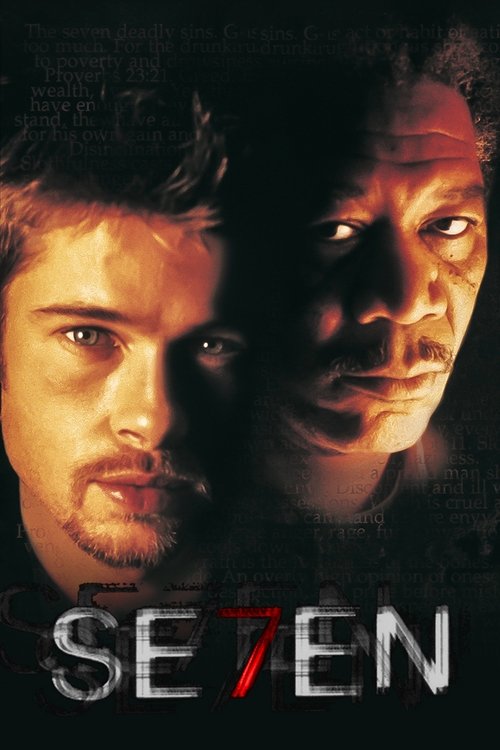
In the ending of Se7en, Detective David Mills discovers that his wife, Tracy, has been murdered by the serial killer John Doe. In a fit of rage and despair, Mills kills Doe, completing the killer's plan to embody the final sin of wrath. The film concludes with Mills being taken away by the police, leaving a haunting sense of loss and hopelessness.
As the climax of Se7en unfolds, the scene shifts to a remote, desolate area where Detective David Mills and his partner, Detective William Somerset, have been led by John Doe, the enigmatic serial killer. The atmosphere is thick with tension, the air heavy with the weight of impending doom. Mills, filled with a mix of anger and desperation, is on edge, his emotions raw and palpable. Somerset, more composed but equally troubled, tries to maintain a sense of control as they await the final revelation.
John Doe, played with chilling calmness by Kevin Spacey, reveals that he has orchestrated a final act that will complete his twisted vision of the seven deadly sins. As they approach a box that Doe has instructed them to open, the dread builds. Mills, driven by a need to understand and confront the horror that has unfolded, is desperate for answers. Somerset, aware of the potential for tragedy, tries to prepare Mills for what they might find.
When the box is opened, the shocking truth is revealed: inside lies the severed head of Mills' wife, Tracy. The emotional impact is immediate and devastating. Mills is struck by a wave of horror and disbelief, his world shattering in an instant. The camera captures his face, a mixture of anguish and rage, as he realizes the extent of Doe's cruelty. The revelation is not just a personal loss; it is the culmination of Doe's plan to push Mills to the brink.
In a moment of uncontrollable fury, Mills turns on John Doe, his face contorted with grief and rage. Somerset, witnessing the transformation of his partner, understands that Mills is about to cross a line from which there is no return. Mills, consumed by wrath, pulls his gun and shoots Doe multiple times, killing him. This act of violence is not just a response to the murder of his wife; it is the embodiment of the sin of wrath that Doe had sought to provoke.
As the dust settles, Mills is left standing over Doe's lifeless body, the weight of his actions crashing down upon him. Somerset, who has been a mentor and a voice of reason throughout the investigation, watches helplessly as Mills is taken away by the police. The final moments of the film are haunting; Mills is led away in handcuffs, his face a mask of despair and realization. The camera lingers on Somerset, who is left to grapple with the consequences of their pursuit of justice and the darkness that has enveloped them.
The film concludes with a sense of profound loss and hopelessness. Mills, once a dedicated detective, is now a broken man, having lost everything to the very sins he sought to combat. Somerset, left alone, reflects on the futility of their efforts against the pervasive evil in the world. The final shot encapsulates the film's bleak message: that in the battle against darkness, the line between good and evil can blur, leaving behind a trail of devastation.
Is there a post-credit scene?
The movie "Se7en," directed by David Fincher and released in 1995, does not have a post-credit scene. The film concludes with a powerful and haunting climax that leaves a lasting impact on the audience. After the intense confrontation between Detective David Mills and the serial killer John Doe, the film ends on a somber note, focusing on the emotional turmoil and moral implications of the events that have unfolded. The credits roll immediately after the final scene, without any additional content or scenes following them.
What are the seven deadly sins represented in the murders?
In 'Se7en', the seven deadly sins are represented through a series of gruesome murders, each corresponding to one of the sins. The sins are: Gluttony, represented by a victim who was force-fed to death; Greed, depicted through a lawyer who is killed with a scale; Sloth, shown through a victim who was kept in a drugged state for a year before being discovered; Lust, represented by a woman who is forced into a violent sexual act; and Pride, which is symbolized by the murder of a woman who is disfigured to punish her husband for his infidelity.
What motivates John Doe to commit the murders?
John Doe, the antagonist, is driven by a twisted sense of morality and a desire to expose the hypocrisy of society. He believes that by committing these murders, he is delivering a message about the prevalence of sin in the world. His meticulous planning and execution of each crime reflect his belief that he is enacting divine justice, punishing those he deems guilty of their respective sins.
How does Detective Mills react to the discovery of the final victim?
Detective Mills is initially filled with a mix of horror and disbelief upon discovering the final victim, which is his own wife, Tracy. The emotional weight of this revelation crushes him, leading to an explosive rage. Mills is devastated, feeling a profound sense of loss and helplessness, which ultimately drives him to confront John Doe in a fit of vengeance, showcasing his emotional unraveling.
What is the significance of the box that John Doe delivers to Mills?
The box that John Doe delivers to Mills is significant as it contains the head of Mills' wife, Tracy. This act is the culmination of Doe's plan to push Mills over the edge, forcing him to confront the sin of wrath. The box symbolizes the ultimate manipulation and the personal toll of Doe's actions, serving as a catalyst for Mills' transformation from a dedicated detective to a man consumed by vengeance.
How does Detective Somerset's perspective on the case evolve throughout the film?
Detective Somerset begins the investigation with a cynical view of humanity, believing that people are inherently flawed and that the world is filled with despair. As the case progresses, he becomes increasingly invested in the pursuit of justice and the protection of Mills and Tracy. However, the brutal nature of the crimes and the eventual outcome lead him to a deeper sense of hopelessness, culminating in his realization that despite their efforts, evil persists in the world.
Is this family friendly?
"Se7en," directed by David Fincher and released in 1995, is not a family-friendly film. It contains several potentially objectionable or upsetting scenes and aspects that may be distressing for children or sensitive viewers. Here are some key elements:
-
Graphic Violence: The film features several scenes of intense violence and murder, depicted in a graphic manner that can be disturbing.
-
Murder Victims: The bodies of the victims are shown in various states of mutilation, which can be very unsettling.
-
Themes of Sin and Morality: The film explores dark themes related to the seven deadly sins, which may be heavy and complex for younger audiences to understand.
-
Psychological Horror: The atmosphere is filled with tension and dread, creating a sense of psychological horror that can be unsettling.
-
Strong Language: The dialogue includes frequent use of strong profanity, which may not be suitable for younger viewers.
-
Sexual Content: There are references to sexual violence and exploitation, which are depicted in a disturbing context.
-
Emotional Distress: The characters experience significant emotional turmoil, including despair, anger, and hopelessness, which can be heavy for sensitive viewers.
Overall, "Se7en" is a dark and intense film that deals with mature themes and graphic content, making it inappropriate for children and potentially upsetting for sensitive individuals.









