





























Popular
What role does the character of the Director play in the story?
How does the character of Marty differ from the other friends in the cabin?
What is the significance of the 'Harbinger' character in the film?
What are the different monsters that the group encounters in the cabin?
How does the character of Dana evolve throughout the film?
Should I watch it?
Ask Your Own Question

What is the plot?
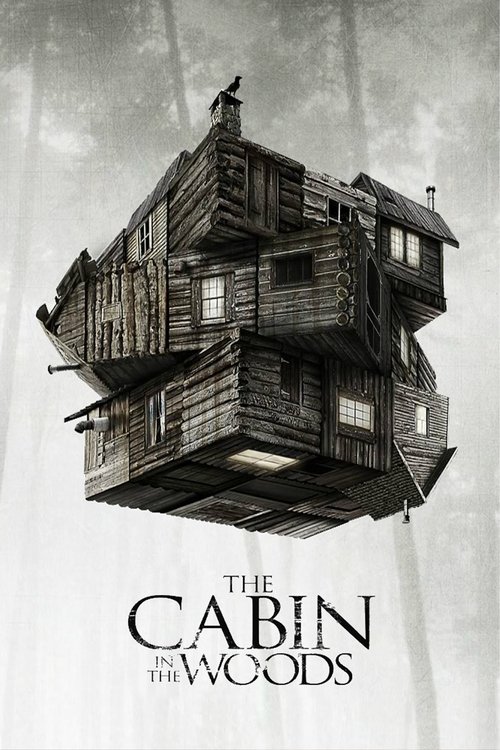
The story begins not in the woods but deep underground, in the sterile, fluorescent-lit Facility, where Gary Sitterson and Steve Hadley move through a morning of grim routine as if they are running a factory line that happens to end in apocalypse. They speak casually, almost like office workers discussing a deadline, yet every screen around them shows human lives being steered toward a sacrifice that is meant to keep the world safe. Above them, in the ordinary daylight world, five college friends are already being nudged into place: Dana Polk, Curt Vaughan, Jules Louden, Holden McCrea, and Marty Mikalski. The film immediately reveals its central conceit: the "haunted cabin" is not a coincidence or a curse, but a carefully managed production, and the people in it are being shaped into roles long before they understand they are inside a ritual. The Facility monitors everything, calibrating behavior with chemicals, surveillance, and staged coincidences, while similar operations around the world perform the same kind of blood-soaked pageant for a hidden purpose.
On the road to the cabin, the group looks like the kind of familiar horror-movie assortment the Facility wants: Curt is the confident athlete, Jules his cheerful girlfriend; Dana is quieter, more reserved, the "virgin" the system wants in the final position; Holden is the thoughtful scholar; and Marty is the strange, marijuana-smoking skeptic whose resistance to the Facility's sedatives makes him the least controllable of the group. Their weekend trip is supposed to be harmless, but even before they arrive, the machinery of manipulation is already at work. Their moods, impulses, and even the small irritations between them are being adjusted so they will fall into the recognizable shapes the ritual requires. The camera keeps cutting away from the road trip to the underground control room, where technicians watch the group as though they are betting on a game, with Gary explaining the logic of the operation and Steve treating the whole thing like a messed-up but necessary job.
When the friends stop at a gas station, they meet the eerie old owner Mordecai, the local warning figure who fulfills the classic role of the cryptic harbinger. He tells them not to go to the cabin, his warning delivered with the exhausted seriousness of a man who has seen this script before. His presence is not random; it is part of the ritual's choreography, one more nudge pushing them toward the destination the Facility has already prepared for them. They ignore him, as horror characters are meant to, and continue on into deeper isolation. The road grows emptier, the setting more remote, and the atmosphere thickens with the feeling that they have crossed into a space where ordinary choices no longer matter.
At the cabin itself, the illusion of normality lasts only long enough for the social tensions to sharpen. Curt and Jules are immediately under pressure from the environment and from each other, and Dana feels increasingly caught in the emotional mess surrounding them. Holden tries to remain rational. Marty, meanwhile, is already suspicious, sensing something wrong in the air and voicing his paranoia in a way that sounds at first like stoner rambling but gradually becomes the only sane response in the room. The Facility's chemical control is supposed to push them into predictable archetypes, but Marty's resistance weakens that plan, and his awareness makes him dangerous.
The most important room in the cabin is hidden below it. When the group descends into the basement, they find not a dusty storage room but a grotesque museum of cursed objects, a carefully arranged inventory of horror possibilities. Skulls, idols, ritual tools, masks, and other relics sit like products in a sinister shop, each one capable of calling up a different nightmare. This is the first enormous revelation of the film: the terror aboveground is not spontaneous. It is chosen. Dana is the one who reads from a strange old book or diary, and that act becomes the trigger that releases the first wave of killers. The story deliberately frames this as a choice, but it is a choice made under pressure, inside a rigged system, and it instantly ignites the violence that the Facility has been waiting to unleash.
As soon as the book is read, the woods around the cabin come alive with menace. The Buckner family, reanimated into zombie-like killers, begins stalking the group through the trees and around the property, and the film shifts from eerie setup into frantic survival horror. The first deaths are brutal and swift. Jules Louden is attacked outside and decapitated, her death one of the earliest and most shocking reminders that the ritual is no longer theoretical; the body count is now real, and the Facility's technicians can only watch it unfold. The technicians, who had been casually discussing control and procedure, now scramble to stay ahead of the situation. The horror they engineered is beginning to behave with a life of its own.
The house becomes a killing ground. Holden McCrea, who had tried to keep the group stable and rational, is separated from the others and then struck down in the escalating chaos. The attack sequence is violent, confused, and frantic, with the various monsters and undead threats forcing the friends into desperate, increasingly hopeless decisions. Curt Vaughan, the confident jock who began the story as the one most likely to survive a conventional slasher, is eventually pulled into the same machinery of death. His end comes amid the broader attack sequence that the Facility has summoned into motion, and the film uses his death to keep stripping away the expected safety of the archetypes. In a story like this, he should be the survivor for a while longer; instead, he falls too, proving that the ritual is not simply about matching clichés but about feeding the machinery beneath them.
Marty Mikalski becomes the film's accidental truth-teller. Because he is harder to chemically influence, he is more able than the others to sense that the world around them is staged. He notices patterns, comments on suspicious details, and increasingly recognizes that the cabin, the woods, and even their own behavior are being manipulated. He also survives in part because his outsider status makes him less predictable to the system. The film plays him as the comic skeptic, but he is also the one who keeps the story from slipping entirely into the control of the Facility. His resistance becomes crucial later, when the ritual begins to fail.
Meanwhile, the underground Facility continues to reveal itself in pieces. The technicians are not merely observing; they are guiding the story in real time, opening doors, releasing threats, and tracking the victims as if they were pieces on a board. Their workspace is vast, with containment halls full of monsters and tools for every possible horror scenario. The audience learns that the cabin incident is only one version of a recurring annual sacrifice, and that similar systems around the world stage local variations of the same ritual. These are not random freak accidents, but carefully structured performances meant to satisfy the Ancient Ones, colossal subterranean beings whose awakening would destroy the world.
The film widens even further when it cuts to a Japanese operation site, showing that other countries run parallel scenarios. This revelation matters because it shows the scale of the system and the desperation behind it: humanity is not surviving by chance or by one heroic intervention, but by repeated, managed bloodletting. The American facility is one node in a global network of sacrificial control, and the whole structure depends on people never understanding that the horror is a machine. When the Japanese operation fails, the stakes of the American group's survival become even more severe. There is no backup plan left. If this last ritual fails, the world ends.
Back at the cabin, the violence escalates through a series of confrontations with the Buckner family and the other monsters the Facility releases. The group tries to escape using a vehicle, but the environment itself is against them. The roads are blocked, the woods are full of threats, and the system seems designed to funnel them back into danger no matter what they do. Dana and Marty become the key surviving pair, and their bond forms out of shared confusion, fear, and the dawning realization that the cabin is a trap built on top of something ancient and terrible. Marty's observations and Dana's growing courage push them deeper into the truth even as they struggle to stay alive.
One by one, the deaths continue. The Buckners and the other released horrors tear through the remaining group and the Facility's own personnel. The technicians, who had believed they were in control, begin dying too, caught in the collapse of the system they manage. Gary Sitterson and Steve Hadley, the two central technicians, are both killed during the final breakdown when the ritual spirals out of control and the buried things beneath the earth begin to stir. Their deaths are not graceful or heroic; they are the casualties of a broken machine that they helped maintain. Other staff members in the control rooms and containment areas are killed as the monsters pour loose and the Facility becomes a battlefield rather than a command center.
The climax arrives when the last survivors descend into the lower levels and the movie finally reveals the heart of the conspiracy. There, the Director--played by Sigourney Weaver--appears as the ultimate authority behind the system. She explains that the ritual is older than civilization and that humanity's survival depends on completing it properly. The "Virgin" must die last, though not absolutely necessarily, and the rest of the group can die in any order; what matters is that enough of the archetypal sequence is fulfilled to appease the Ancient Ones. The revelation reframes everything that came before it. The cabin is not a random setting but a stage. The characters are not just victims but sacrificial roles. The monsters are not wild forces but tools. The entire horror movie has been manufactured to satisfy a cosmic bargain.
The Director gives Dana the unbearable choice at the end of the line: kill Marty and complete the ritual, or let the world be destroyed. This is the film's moral trap. The system asks Dana to become complicit in the cycle that has killed everyone she knows, in order to preserve a humanity that has only survived by repeating the same slaughter over and over again. Dana refuses. The choice she makes is not one of victory in a conventional sense, but of rejection. She will not save a world built on this hidden ritual, and she will not become the final obedient piece in the machine.
Marty's role in the ending is crucial. After all the supposed deaths, he returns as the film's most stubborn survivor, and the two of them find themselves confronting not just the Director but the meaning of the entire system. The Director tries to force the ritual's completion, but Dana and Marty resist the script. Their conversation carries the weariness of people who have seen through a lie too big to fully process. They understand that if they go along with it, they preserve humanity at the cost of endlessly repeating the same moral crime. They decide that humanity is not worth saving through this ritual, and that the whole structure deserves to fail.
With that decision, the world tips over. The Ancient Ones rise from beneath the earth, and the massive, apocalyptic hand of one of the gods erupts from the ground as the Facility collapses into chaos around them. The final image is not of triumphant survival but of cosmic punishment. Marty and Dana, sitting together in the wreckage, smoke Marty's last joint as the ground splits open and the world is consumed by the awakening of the beings humanity has kept sleeping through sacrifice. It is a bleak, funny, furious ending: they reject the rules, and the apocalypse answers. The last moment is not a rescue but a surrender to destruction, with the implication that the old order is gone and humanity's era is over.
By the end, Dana Polk is the character who refuses to carry the ritual forward, Marty Mikalski is the one who survives long enough to share that refusal, and the rest of the central cast is dead--Jules Louden decapitated, Holden McCrea killed in the attacks, Curt Vaughan killed in the violence around the cabin, Gary Sitterson and Steve Hadley killed in the collapsing Facility, the Director killed when Dana turns the violence back on the woman asking her to preserve the cycle, and many unnamed technicians and monsters destroyed in the breakdown. The film closes not with restoration but with collapse, not with the saving of humanity but with the exposure of the bargain that kept it alive. The cabin story ends, but the hidden story behind it ends too: the machine breaks, the gods wake, and the world is left to whatever comes next.






What is the ending?
In the ending of "The Cabin in the Woods," the last two survivors, Dana and Marty, confront the reality of their situation. They discover that they are part of a ritual sacrifice orchestrated by a mysterious organization to appease ancient gods. As they face the final choice, they decide to reject the system, leading to the awakening of the ancient gods. The film concludes with the gods rising, indicating the end of humanity.
Now, let's delve into the ending in a more detailed narrative fashion.
As the film reaches its climax, Dana and Marty find themselves in the control room of the facility, where they have been manipulated throughout their ordeal. They are horrified to learn that their friends--Jules, Holden, and even the seemingly innocent character of the "Harbinger"--were all part of a sacrificial ritual designed to appease ancient gods. The organization behind this ritual, represented by characters like the Director and the technicians, has orchestrated every event, from the choice of the cabin to the monsters that attacked them.
In a tense moment, Dana and Marty are presented with a choice: to sacrifice one another to fulfill the ritual and save the world from the wrath of the ancient gods. The weight of this decision hangs heavily in the air, as both characters grapple with their survival instincts and the moral implications of their choice. Dana, feeling the pressure of the situation, initially contemplates sacrificing Marty, but as they discuss their options, they realize that they are both unwilling to betray each other.
In a moment of defiance, they choose to reject the system that has manipulated them. Instead of following the expected path of sacrifice, they decide to face the consequences of their rebellion. They arm themselves and prepare for the inevitable confrontation with the monsters that have been unleashed upon them. The tension escalates as they fight against the creatures, showcasing their determination to survive against the odds.
As the chaos unfolds, the facility begins to collapse around them, a visual representation of the crumbling system that has controlled their fate. In a final act of defiance, Dana and Marty share a moment of connection, acknowledging the horror they have endured together. However, their victory is short-lived. The ancient gods, awakened by their refusal to comply, rise from their slumber, signaling the end of humanity.
The film concludes with a haunting image of the gods breaking free, leaving the audience with a sense of dread and finality. Dana and Marty, who fought so hard for their survival, are ultimately powerless against the forces they sought to defy. The fate of each character is sealed: Jules, Holden, and the others have already met their gruesome ends, and now Dana and Marty face the ultimate consequence of their rebellion. The screen fades to black, leaving the viewer to ponder the implications of their choices and the nature of the horror they have just witnessed.
Is there a post-credit scene?
Yes, "The Cabin in the Woods" features a post-credit scene that adds a chilling conclusion to the film's narrative.
As the credits roll, the scene shifts to a control room filled with technicians and operators who have been monitoring the events at the cabin. The atmosphere is tense, with the operators discussing the failure of their elaborate plan to sacrifice the five young adults to appease ancient gods.
The camera then focuses on a large monitor displaying the cabin, where the last survivor, Dana, has just killed the last of the monstrous threats. The operators express their frustration and concern over the outcome, revealing that the ritual must be completed to prevent catastrophic consequences.
Suddenly, the scene cuts to a massive underground facility, where we see a series of cages containing various monsters, each more grotesque than the last. The operators are shown to be part of a larger organization that orchestrates these sacrifices, and they are visibly anxious about the impending doom if the ritual is not fulfilled.
The final moments of the scene reveal a massive, ancient entity stirring in its slumber, hinting at the dire consequences that await humanity if the sacrifices are not made. The screen fades to black, leaving the audience with a sense of dread and the realization that the horror is far from over. This post-credit scene encapsulates the film's themes of control, sacrifice, and the unseen forces that govern the characters' fates.
What role does the character of the Director play in the story?
The Director, played by Sigourney Weaver, is a key figure in the organization that orchestrates the events in the cabin. She oversees the ritual sacrifice and explains the necessity of the events to the audience, revealing the larger purpose behind the horror that unfolds. Her calm demeanor contrasts sharply with the chaos of the situation, and she embodies the cold, calculating nature of the organization.
How does the character of Marty differ from the other friends in the cabin?
Marty, portrayed by Fran Kranz, stands out from his friends due to his laid-back, stoner persona and his skepticism towards the events happening around them. Unlike the others, he is more aware of the horror tropes and often comments on them, providing a meta-commentary on the genre. His character evolves as he becomes more resourceful and ultimately plays a crucial role in the fight against the monsters.
What is the significance of the 'Harbinger' character in the film?
The Harbinger, played by Timothy W. Murphy, serves as a foreboding figure who warns the group about the dangers of their trip to the cabin. His unsettling demeanor and cryptic warnings set the tone for the impending horror. He represents the archetypal warning character in horror films, and his presence foreshadows the chaos that will ensue, highlighting the inevitability of the group's fate.
What are the different monsters that the group encounters in the cabin?
The group encounters a variety of monsters, including a zombie family, a giant snake, and a wraith-like creature. Each monster represents different horror tropes, and their appearance is determined by the choices made by the characters. The zombies, for instance, embody the classic horror trope of the undead, while the other creatures reflect the diverse fears that the organization manipulates to fulfill their ritual.
How does the character of Dana evolve throughout the film?
Dana, played by Kristen Connolly, begins as a typical 'final girl' archetype, initially portrayed as innocent and somewhat reserved. As the story progresses and she faces the horrors of the cabin, she becomes more assertive and resourceful. Her transformation is marked by her willingness to fight back against the monsters and ultimately make difficult choices, showcasing her growth from a passive character to a proactive survivor.
Is this family friendly?
"The Cabin in the Woods" is not a family-friendly film and contains several potentially objectionable or upsetting scenes and aspects that may be distressing for children or sensitive viewers. Here are some key elements:
-
Graphic Violence: The film features intense and graphic scenes of violence, including brutal killings and gore that may be disturbing.
-
Horror Elements: There are numerous jump scares, unsettling imagery, and a pervasive atmosphere of dread that can be frightening.
-
Sexual Content: The film includes sexual situations and innuendos, which may not be appropriate for younger audiences.
-
Substance Use: Characters are shown using drugs and alcohol, which could be concerning for some viewers.
-
Psychological Themes: The film explores dark themes such as manipulation, sacrifice, and the nature of horror, which may be unsettling.
-
Monsters and Creatures: Various horrifying creatures and monsters are depicted, which can be frightening and disturbing.
Overall, the film is intended for a mature audience and contains elements that could be upsetting for children or sensitive individuals.








