

Popular
Should I watch it?
Ask Your Own Question

What is the plot?
Sorry, we aren't able to watch and write up a full detailed plot yet. Check back in a few days.
What is the ending?
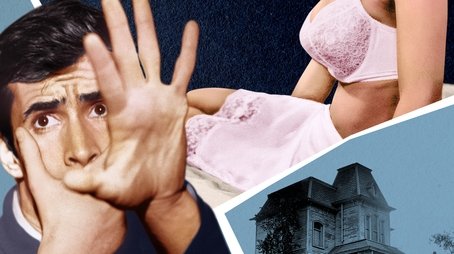
In the ending of Psycho, Marion Crane's sister, Lila, and boyfriend, Sam, investigate the Bates Motel after Marion goes missing. They discover the truth about Norman Bates and his mother. In a climactic confrontation, they find Norman dressed as his mother, who has been committing the murders. The police arrive, and it is revealed that Norman has been completely overtaken by his mother's personality. The film concludes with Norman being apprehended, and the audience learns the tragic fate of Marion and the psychological turmoil of Norman.
Now, let's delve into the ending in a more detailed, chronological narrative.
As the film approaches its climax, Lila Crane, Marion's sister, and Sam Loomis, Marion's boyfriend, grow increasingly concerned about Marion's disappearance. They decide to investigate the Bates Motel, where Marion was last seen. Their journey is filled with tension, as they arrive at the motel and are met with an unsettling atmosphere. The dilapidated buildings and the eerie silence amplify their unease.
Inside the motel, they encounter Norman Bates, who appears nervous and evasive. He offers them a polite but awkward demeanor, which only heightens their suspicions. Sam engages Norman in conversation, trying to glean information about Marion's whereabouts. Norman's demeanor shifts from friendly to defensive, revealing his internal conflict and the strain of his dual identity. The audience can sense the underlying tension as Norman struggles to maintain control over his emotions.
After their conversation, Lila and Sam decide to search for Marion in the Bates house, which looms ominously in the background. Lila's determination to find her sister drives her forward, while Sam remains cautious, aware of the potential danger. They enter the house, and Lila's heart races as she explores the dark, cluttered rooms filled with unsettling memorabilia. The atmosphere is thick with dread, and the audience can feel her fear and desperation.
In a pivotal moment, Lila discovers a hidden door leading to the cellar. As she descends the stairs, the tension escalates. She finds a shocking sight: the mummified corpse of Norman's mother, Mrs. Bates, sitting in a chair, her lifeless eyes staring blankly. The revelation is horrifying, as Lila realizes that Norman has been impersonating his mother, committing the murders in her name. The audience is left in shock as the truth about Norman's fractured psyche is unveiled.
Meanwhile, Sam, who is still upstairs, confronts Norman, trying to keep him occupied and prevent him from realizing Lila's discovery. Norman's mental state deteriorates further, and he becomes increasingly erratic. The audience witnesses the struggle within him as he battles between his own identity and that of his mother.
As Lila screams in terror upon discovering the truth, Norman, now fully embodying his mother's persona, rushes down to confront her. The scene is chaotic, filled with tension as Norman brandishes a knife, ready to attack. Just as he lunges at Lila, Sam intervenes, wrestling the knife away from Norman. The struggle culminates in Norman being subdued, and the police arrive to apprehend him.
In the final moments of the film, the audience learns the tragic fate of Marion Crane. Her body is discovered in the swamp, revealing the grim outcome of her encounter with Norman. The police explain that Norman Bates has been completely overtaken by his mother's personality, and he will be held accountable for the murders. The film closes with a chilling shot of Norman, now in custody, as he sits quietly, a haunting smile on his face, suggesting the deep psychological scars that remain.
The ending of Psycho leaves viewers with a profound sense of unease, as it explores themes of identity, madness, and the duality of human nature. Each character's fate is sealed by the tragic events that unfold, highlighting the devastating consequences of Norman's fractured psyche and the loss of Marion Crane.
Is there a post-credit scene?
The movie "Psycho," produced in 1960, does not have a post-credit scene. The film concludes with a powerful and unsettling final sequence that wraps up the story without any additional scenes after the credits.
In the final moments, after the shocking revelations about Norman Bates and his mother, the audience is left with a chilling sense of closure. The last scene features a police officer explaining Norman's psychological state, revealing that he has been impersonating his deceased mother. As the camera focuses on Norman, now in custody, his expression shifts from a facade of innocence to a haunting smile, suggesting the deep-seated madness within him. The film ends with a lingering shot of the Bates house, shrouded in darkness, reinforcing the eerie atmosphere and leaving viewers with a lasting impression of dread.
Thus, the film concludes without any additional scenes or content after the credits, maintaining its focus on the psychological horror and the tragic fate of its characters.
What motivates Marion Crane to steal the money?
Marion Crane is motivated by a desire to escape her mundane life and to be with her boyfriend, Sam Loomis. She feels trapped in her job and her circumstances, and when she sees an opportunity to take $40,000 from her employer, she impulsively decides to steal it to help Sam pay off his debts and to start a new life together.
What is the significance of the Bates Motel in the story?
The Bates Motel serves as a pivotal setting in 'Psycho.' It is isolated and eerie, reflecting the psychological tension of the film. The motel is run by Norman Bates, who embodies the duality of innocence and malevolence. It becomes the site of Marion's tragic encounter with Norman, marking the transition from her life to her demise.
How does Norman Bates' relationship with his mother influence his actions?
Norman Bates has a deeply troubled relationship with his mother, Norma Bates, who exerts a controlling influence over him. After her death, Norman's psyche fractures, leading him to adopt her persona. This internal conflict drives him to commit violent acts, particularly against women, as he struggles with his identity and the guilt of his mother's legacy.
What happens during the infamous shower scene?
In the shower scene, Marion Crane is brutally attacked by a shadowy figure while she is bathing. The scene is marked by rapid cuts, stark black-and-white cinematography, and a haunting score. The violence is shocking and sudden, symbolizing the loss of innocence and the abrupt end of Marion's character arc, as she is killed before the audience can fully understand her motivations.
What role does the character of Sam Loomis play in the story?
Sam Loomis serves as Marion Crane's love interest and represents the life she desires. He is depicted as a caring but somewhat helpless figure, trying to navigate the complications of his relationship with Marion and his obligations to his estranged wife. His search for Marion after her disappearance propels the narrative forward and ultimately leads to the revelation of the dark secrets surrounding the Bates family.
Is this family friendly?
"Psycho," produced in 1960, is not considered family-friendly due to its intense themes and graphic content. Here are some potentially objectionable or upsetting aspects:
-
Violence and Murder: The film features scenes of murder, including a famous shower scene that depicts a violent attack, which can be disturbing.
-
Psychological Horror: The film delves into themes of mental illness and psychological trauma, which may be unsettling for sensitive viewers.
-
Nudity and Sexual Undertones: There are implications of sexual situations and brief nudity, particularly in the context of the shower scene.
-
Tension and Suspense: The overall atmosphere is filled with suspense and tension, which can be anxiety-inducing for younger audiences.
-
Themes of Betrayal and Deception: The narrative explores dark themes of betrayal, identity, and moral ambiguity, which may be difficult for children to understand.
These elements contribute to the film's classification as a psychological thriller rather than a family-friendly movie.