



























































Popular
What motivates Miguel to pursue music despite his family's ban on it?
How does Miguel end up in the Land of the Dead?
What is the significance of the photo of Miguel's great-great-grandmother?
Who is Hector and what role does he play in Miguel's journey?
What does Miguel learn about family and memory throughout the film?
Should I watch it?
Ask Your Own Question

What is the plot?
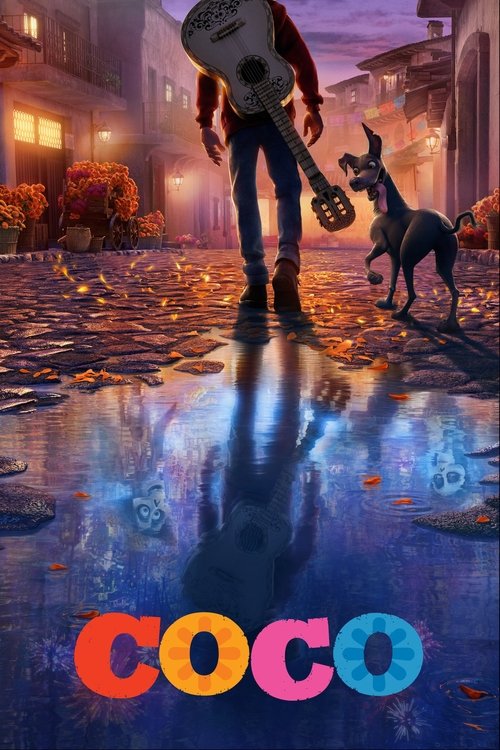
The sun rises over the colorful rooftops of Santa Cecilia, a small Mexican town nestled in the hills, its streets alive with the scent of marigolds and the sound of laughter. The air hums with anticipation--today is Día de Muertos, November 1st, 2017, and the town prepares to honor its ancestors. Inside the Rivera family home, the walls are lined with shoes, a testament to generations of craftsmanship. The centerpiece of the living room is the family ofrenda, a vibrant altar adorned with candles, flowers, and photographs of the departed. But one face is missing.
Twelve-year-old Miguel Rivera sits in his room, his fingers dancing across the strings of a homemade guitar. He sings along to an old film of Ernesto de la Cruz, the legendary singer whose music fills his dreams. "I don't want to make shoes," Miguel whispers to himself, "I want to make music." But the moment his grandmother, Abuelita, hears the chords, she storms in, snatching the guitar and breaking it in two. "Music is not allowed in this house!" she shouts, her voice echoing through the house. Miguel's great-grandmother, Mama Coco, sits quietly in her chair, her eyes distant, her memories fading like the petals on the altar.
Miguel retreats to the attic, where he keeps a secret shrine to Ernesto de la Cruz. He studies the films, memorizing every lyric, every gesture. He longs to be a musician, but his family's ban on music is absolute. The story goes that Miguel's great-great-grandfather abandoned his wife, Imelda, and their daughter Coco, to pursue a life of music, leaving behind only pain and silence. Imelda, heartbroken, banned music from the family and started a shoemaking business that has sustained them for generations.
That evening, the family gathers for the Día de Muertos celebration. Miguel watches as the townspeople place marigold petals on the bridge leading to the cemetery, a path for the spirits to return. He sneaks away, determined to prove his talent. He enters the town square, where a talent show is being held in honor of Ernesto de la Cruz. Miguel takes the stage, his guitar in hand, and begins to play. But before he can finish, Abuelita appears, dragging him home, scolding him for defying the family's traditions.
Frustrated and desperate, Miguel returns to the cemetery, where he discovers the tomb of Ernesto de la Cruz. He takes the famous musician's guitar, believing it will help him win the talent show. But as he strums the first chord, a strange energy fills the air. The marigold petals glow, and Miguel is pulled into the Land of the Dead, a vibrant, fantastical realm where the spirits of the departed live on.
Miguel finds himself in a bustling city of skeletons, their bodies reshaping and detaching as they go about their lives. He is confused and frightened, but he is also amazed by the beauty and color of this world. He meets a charming trickster named Héctor, a down-on-his-luck skeleton who offers to help Miguel find Ernesto de la Cruz in exchange for a favor. Héctor explains that he needs Miguel to place his photo on an ofrenda so he can visit his daughter before she forgets him, which would cause him to fade from existence.
Together, Miguel and Héctor set off on a journey through the Land of the Dead. They encounter a variety of spirits, including Miguel's ancestors, who are shocked to see him. Miguel's great-great-grandmother, Imelda, is particularly stern, warning him that he must return to the living world before sunrise or he will become one of the dead. Miguel insists that he must find Ernesto de la Cruz, believing him to be his great-great-grandfather.
Miguel and Héctor perform in a talent competition to win entry to Ernesto's mansion. Miguel's talent impresses the judges, but he is discovered by his family, who try to take him home. Miguel escapes, determined to prove his worth. He sneaks into Ernesto's mansion, where he is welcomed by the legendary singer himself. Ernesto is surprised and delighted to meet a descendant, but Héctor confronts them, imploring Miguel to take his photo. Héctor accuses Ernesto of stealing his songs, but Ernesto denies it, claiming that Héctor was a lazy partner who abandoned him.
As the two argue, Miguel begins to piece together the truth. Ernesto and Héctor were once a musical duo on the brink of fame, but Héctor grew homesick and tried to leave. Unable to write songs himself, Ernesto poisoned Héctor and stole his guitar and songs, passing them off as his own. Ernesto's crimes are revealed in a flashback, showing the moment he betrayed Héctor, leaving him to die alone.
Ernesto, desperate to protect his legacy, seizes Héctor's photo and has Miguel and Héctor thrown into a cenote pit, a deep, dark place where forgotten spirits are imprisoned. There, Héctor reveals the final truth: his daughter is named Coco, making him Miguel's actual great-great-grandfather. Coco is the only living person who still remembers him, and if she forgets, he will fade from existence.
Miguel is rescued by his family, who infiltrate Ernesto's concert to retrieve Héctor's photo. The family confronts Ernesto, exposing his crimes to the audience. The crowd turns on him, and Ernesto is crushed by a falling bell, mirroring his real-life death. Héctor's photo is lost in the chaos, but Miguel reveals the truth about Héctor's death to his family. Imelda and Héctor slowly reconcile, and the family's ban on music is finally lifted.
As the sun rises, Imelda and a fading Héctor bless Miguel and return him to the living world. Miguel returns home, apologizing to his family for running away. He plays "Remember Me" on Héctor's guitar, brightening Mama Coco to sing with him. She shares that she kept the torn piece of the photo with Héctor's face, then tells her family stories about her father, preserving his memory and existence in the Land of the Dead.
One year later, Miguel shows his new baby sister, Socorro, the family ofrenda, now displaying photos of Héctor and the recently deceased Mama Coco. The Rivera family celebrates Día de Muertos together, their hearts full of music and love, their traditions renewed and their bonds stronger than ever.








What is the ending?
In the ending of "Coco," Miguel successfully retrieves the blessing of his great-great-grandmother, Mama Imelda, allowing him to return to the living world. He plays "Remember Me" for her, which helps her remember her love for music and her family. Miguel returns to his family, and the film concludes with a heartfelt reunion, where he honors his ancestors and the importance of family.
As the story reaches its climax, Miguel finds himself in the Land of the Dead, where he has been on a quest to prove his passion for music and to find his great-great-grandfather, Ernesto de la Cruz. After a series of adventures and encounters, including a close bond with the charming trickster Hector, Miguel learns that Hector is actually his true ancestor, not Ernesto. This revelation comes as Miguel discovers that Ernesto had stolen Hector's songs and ultimately caused his death.
In the final scenes, Miguel confronts Ernesto at his grand concert, where he attempts to reclaim Hector's legacy. Miguel plays "Remember Me," a song that Hector had written for his daughter, Coco, who is Miguel's great-grandmother. As Miguel sings, the audience is moved, and the song resonates deeply with Mama Imelda, who is present in the Land of the Dead. The performance serves as a bridge, allowing Mama Imelda to remember her love for music and her family, which had been buried under her grief and anger towards it.
With the blessing of Mama Imelda, Miguel is able to return to the living world. He wakes up in his family's home, where he finds his family gathered, and he shares the stories of his adventures in the Land of the Dead. Miguel's experience has transformed him; he now understands the importance of family and the legacy of his ancestors. He brings the family together to honor their past, and they celebrate the music that had once been forbidden.
The film concludes with a poignant scene where Miguel places a photo of Hector on the ofrenda, ensuring that he is remembered. The final moments show the family united, with Miguel playing music freely, symbolizing the reconciliation of the past with the present. The spirits of the ancestors, including Hector, are seen joyfully celebrating, signifying that they will always be a part of Miguel's life and the lives of his family. The message of the film resonates with the themes of remembrance, love, and the enduring bonds of family, highlighting that music and memory are powerful forces that connect generations.
Is there a post-credit scene?
In the movie "Coco," there is no post-credit scene. The film concludes with a heartfelt resolution as Miguel and his family come together to honor their ancestors and celebrate their heritage. The story wraps up with a touching moment that emphasizes the importance of family and remembrance, leaving the audience with a sense of closure and emotional fulfillment. The credits roll without any additional scenes following the main story.
What motivates Miguel to pursue music despite his family's ban on it?
Miguel is deeply passionate about music, inspired by his idol Ernesto de la Cruz, a famous musician. He feels a strong connection to music, which he believes is his true calling. This passion drives him to secretly practice guitar and dream of performing, despite his family's disapproval rooted in a painful history with music.
How does Miguel end up in the Land of the Dead?
Miguel accidentally finds himself in the Land of the Dead after he takes Ernesto de la Cruz's guitar from his ofrenda to perform at a talent show. When he strums the guitar, he is magically transported to the vibrant and colorful realm of the deceased, where he must navigate the challenges of this new world to return to the living.
What is the significance of the photo of Miguel's great-great-grandmother?
The photo of Miguel's great-great-grandmother, Imelda, is crucial as it reveals the family's history with music. Imelda's decision to ban music stems from her heartbreak after her husband, who was a musician, abandoned her and their daughter. This photo symbolizes the family's fractured relationship with music and serves as a key to understanding Miguel's quest.
Who is Hector and what role does he play in Miguel's journey?
Hector is a charming yet mischievous skeleton who becomes Miguel's guide in the Land of the Dead. Initially, he seeks to return to the living world to visit his daughter, Coco. As they journey together, Hector reveals his connection to Miguel's family and helps Miguel understand the importance of family and memory, ultimately becoming a pivotal figure in Miguel's quest.
What does Miguel learn about family and memory throughout the film?
Throughout his journey in the Land of the Dead, Miguel learns that family and memory are intertwined. He discovers that honoring his ancestors and remembering them is essential, as it keeps their spirits alive. This realization culminates in his understanding that music can coexist with family, leading him to reconcile his passion for music with his family's legacy.
Is this family friendly?
"Coco" is generally considered family-friendly, but there are a few scenes and themes that might be potentially objectionable or upsetting for younger children or sensitive viewers. Here are some aspects to consider:
-
Death and the Afterlife: The film revolves around the concept of death and the Day of the Dead, which may be unsettling for some children. The portrayal of skeletons and the afterlife could be confusing or frightening.
-
Family Conflict: There are moments of tension and conflict within Miguel's family, particularly regarding his passion for music, which may evoke feelings of sadness or anxiety.
-
Emotional Moments: The film contains several poignant scenes that deal with loss, longing, and the importance of family, which could be emotionally intense for some viewers.
-
Ghostly Figures: The presence of spirits and skeletons, while depicted in a colorful and respectful manner, might be alarming to very young children.
-
Themes of Abandonment: Miguel's journey involves themes of feeling misunderstood and abandoned, which could resonate deeply and evoke strong emotions.
Overall, while "Coco" is a celebration of family and culture, these elements may require parental guidance for younger audiences.






