
























Popular
What is the nature of the conflict between Jake and Neytiri's family and the Ash People in Avatar: Fire and Ash?
How does the death of Neteyam affect Jake and Neytiri's family in the story?
Who is Varang and what role does she play in Avatar: Fire and Ash?
What is the status of Colonel Miles Quaritch in the film?
What new challenges does Jake and Neytiri's family face after joining the Metkayina clan?
Should I watch it?
Additional Questions
do loak and tisreya kiss?
what interactions do loak and tisreya have
does loak protect tisreya in the movie
does ronal say anything to loak about tisreya
does ronal die
how many times to loak and tisrya kiss
do loak and tisreya connect braids
do loak and tisreya kiss
Does loak protect tisreya
who are the characters in fire and ash
Ask Your Own Question

What is the plot?
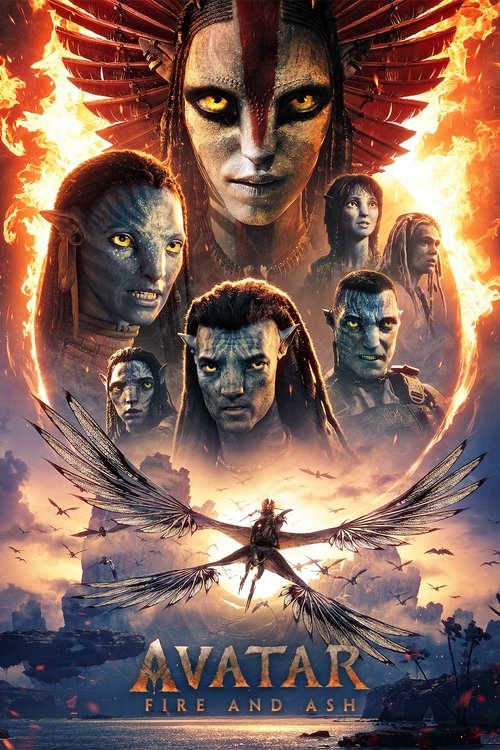
Avatar: Fire and Ash opens one year after Jake Sully and Neytiri have resettled with the ocean-dwelling Metkayina clan on Pandora. The family is still reeling from the tragic death of their eldest son, Neteyam, whose loss casts a heavy shadow over their lives. Jake and Neytiri, now fully integrated into the Metkayina way of life, struggle to cope with their grief while raising their remaining children, including Kiri, the adopted daughter who is the Na'vi avatar of the late Dr. Grace Augustine. The Sully family's peaceful existence is shattered when they encounter a new, hostile Na'vi tribe known as the Ash People, who inhabit the volcanic regions of Pandora. This clan, led by the fierce and unyielding Varang, has endured severe hardships that have hardened them and driven them to ruthless measures to ensure their survival.
The Ash People's arrival escalates tensions on Pandora, as they ally themselves with the resurrected Colonel Miles Quaritch, who returns as a Recom--an avatar-reanimated soldier with his human consciousness restored. Quaritch, having been defeated in the previous conflict, now commands a contingent of Recom soldiers and blue-skinned warriors, determined to crush the Na'vi resistance once and for all and secure Pandora for the Resource Development Administration (RDA), the human corporation intent on colonizing the moon. The alliance between Varang's Ash People and Quaritch's forces marks a new, more brutal phase in the ongoing war for Pandora's future.
As the story unfolds, Jake and Neytiri's family is thrust into a desperate struggle for survival. The Sullys must navigate the complex political landscape of Pandora's clans, balancing alliances and rivalries while confronting the existential threat posed by the Ash People and the RDA's relentless advance. The film delves deeply into the emotional and physical toll of this conflict, portraying the Sullys' grief, resilience, and determination to protect their home and each other.
The narrative builds toward a series of intense confrontations, including large-scale battles that pit the united Na'vi clans against the combined forces of the Ash People and the Recom soldiers. These clashes are marked by vivid displays of Pandora's unique fauna and flora, with creatures such as the Mountain Banshee, Tulkun, and Great Leonopteryx playing crucial roles in the combat sequences. The Sullys, alongside their allies, employ both traditional Na'vi tactics and innovative strategies adapted to the volcanic terrain dominated by the Ash People.
Throughout the film, character relationships and motivations are explored in depth. Varang emerges as a complex antagonist, driven by a fierce loyalty to her people and a willingness to embrace morally ambiguous actions to secure their survival. Her alliance with Quaritch complicates the conflict, blurring the lines between friend and foe. Meanwhile, Jake and Neytiri's leadership is tested as they grapple with their personal loss and the burden of uniting disparate Na'vi factions against a common enemy.
The climax of Avatar: Fire and Ash features a decisive battle in the volcanic heartland of the Ash People's territory. The Sullys and their allies launch a coordinated assault to dismantle Quaritch's forces and break Varang's hold over her clan. In the heat of combat, Neytiri confronts Varang in a fierce duel that culminates in Varang's death, ending the Ash People's reign of terror. Simultaneously, Jake faces Quaritch in a brutal showdown, ultimately defeating him and ending the Recom threat. The battle's aftermath sees the surviving humans who sided with the Na'vi allowed to remain on Pandora, while the rest are forced to retreat to Earth.
The film concludes on a poignant note as the great tree deity, the Tree of Souls, grants Jake's wish to permanently transfer his spirit into his Na'vi avatar body, allowing him to live fully as one of the Na'vi and remain with Neytiri and their family forever. This spiritual transformation symbolizes Jake's complete embrace of his new identity and the enduring bond between the Na'vi and their world.
In summary, Avatar: Fire and Ash chronicles the Sully family's journey through grief, conflict, and reconciliation amid an escalating war for Pandora's future. The film intricately weaves together themes of loss, loyalty, and survival, culminating in epic battles, profound character developments, and a resolution that reaffirms the Na'vi's connection to their land and each other. The story's rich tapestry of political intrigue, tribal alliances, and personal sacrifice offers a compelling continuation of the Avatar saga, setting the stage for future chapters in this expansive universe.
More Movies Like This
Browse All Movies →







What is the ending?
At the end of Avatar: Fire and Ash (2025), Jake Sully is captured and put on trial by the Ash People and their human allies, but he manages to escape on his banshee. The film closes with Jake and Neytiri's family still facing the ongoing conflict and searching for a new way forward amid the escalating war on Pandora.
Now, narrating the ending scene by scene in detail:
The climax begins with Jake Sully being forcibly brought before a gathering of the Ash People, a fierce Na'vi tribe dwelling near volcanoes, allied with the resurrected human antagonist Colonel Quaritch. Jake is marched into a tense, public trial-like setting, surrounded by both Ash People and humans, who view him with hostility. This scene has the atmosphere of a courtroom drama, with Jake as the accused, though it is set in an alien, tribal context. The crowd is a mix of suspicion and anger, reflecting the deep divisions and mistrust between the groups.
As Jake stands there, the tension is palpable. The Ash People's leader, Varang, a hardened and fiery figure, presides over the proceedings. The humans, led by Quaritch, are present as well, reinforcing the alliance between the Ash People and the human colonizers. The trial is a spectacle, with media-like attention, underscoring the political and social stakes of the conflict.
Despite the grim situation, Jake finds an opportunity to break free. He escapes on his banshee, a flying creature native to Pandora, soaring away from the hostile crowd. This escape is both literal and symbolic, showing Jake's refusal to be subdued and his determination to continue fighting for his family and the Na'vi people.
Meanwhile, Neytiri and their family are shown grappling with the grief of losing their son Neteyam earlier in the story, which adds emotional weight to the ending. The family's struggle is ongoing, and the film closes without a definitive resolution to the war, emphasizing the continuing challenges they face.
The final moments highlight a call for finding a different way to resolve the conflict, with Neytiri urging for care and peace despite the violence surrounding them. The film ends on a note of tension and unresolved conflict, setting the stage for future developments in the saga.
Regarding the fates of main characters at the end:
- Jake Sully: Captured and put on trial but escapes on his banshee, remaining free to continue his fight.
- Neytiri: Present with the family, still mourning and seeking a peaceful path forward.
- Varang: Leader of the Ash People, firmly opposed to Jake and allied with Quaritch, maintaining her hardened stance.
- Colonel Quaritch: Alive as a recombinant avatar, allied with the Ash People, continuing his antagonistic role.
- Jake and Neytiri's family: Enduring grief and conflict, their future uncertain but united.
This detailed ending scene-by-scene narrative captures the tension, character fates, and unresolved conflict that define the conclusion of Avatar: Fire and Ash.
Who dies?
Yes, characters do die in Avatar: Fire and Ash (2025). The most significant death that impacts the story is that of Neteyam, Jake Sully and Neytiri's eldest son. Neteyam dies protecting his siblings during a conflict, which deeply affects the family and especially his younger brother Lo'ak, who struggles with the loss and the responsibility it places on him as a potential leader. This death occurs early in the narrative, setting a tone of grief and loss that permeates the film.
The film also introduces a new hostile Na'vi tribe called the Ash People, led by Varang, who allies with the resurrected human antagonist Colonel Miles Quaritch. Quaritch, who was killed in the previous films and resurrected as a Recombinant avatar, continues his vendetta against Jake and his family, escalating the conflict on Pandora.
While the trailer and promotional material tease possible deaths of other major characters such as Neytiri and Spider (Jake's son Miles "Spider" Socorro), their actual deaths remain uncertain and are subject to speculation. Jake Sully himself is considered a likely candidate for death by some theories, potentially sacrificing himself to save his family, but this is not confirmed in the available information.
In summary, the confirmed death in Avatar: Fire and Ash is:
- Neteyam: Dies protecting his siblings during a battle, which profoundly affects the Sully family and drives much of the emotional narrative.
Other potential deaths (Neytiri, Spider, Jake) are hinted at but not definitively confirmed in the current sources.
Is there a post-credit scene?
The movie Avatar: Fire and Ash (2025) does have a post-credit scene. This scene takes place in a unique "dead zone" area of Pandora, where the volcanic eruption long ago burned away the tendrils that connect the goddess Eywa to the world, rendering her powers ineffective there. During the final battle, Jake and Neytiri fight in this area, and the scene hints at a mystical or spiritual element involving the goddess and the Ash People tribe. The post-credit scene suggests unresolved tensions and possibly a future confrontation involving the goddess's influence and the Ash People, led by Varang, as the story continues.
Specifically, the post-credit scene shows a character named Carrie telling another character that "your goddess has no power here, no dominion here," referring to the dead zone where Eywa's abilities are nullified due to the volcanic destruction of the tendrils that connect her to Pandora. This sets up a significant plot point for future developments in the series.
No further detailed description of the post-credit scene is available in the search results, but it clearly ties into the ongoing conflict and mystical themes central to the film's narrative.
What is the nature of the conflict between Jake and Neytiri's family and the Ash People in Avatar: Fire and Ash?
Jake and Neytiri's family encounters a new, aggressive Na'vi tribe called the Ash People, led by Varang, who have allied with Jake's enemy, Quaritch, escalating the conflict on Pandora to devastating consequences.
How does the death of Neteyam affect Jake and Neytiri's family in the story?
The family grapples with grief after Neteyam's death, which deeply impacts their dynamics and motivations throughout the film.
Who is Varang and what role does she play in Avatar: Fire and Ash?
Varang is the leader of the Ash People, a volcano-dwelling Na'vi clan hardened by hardship, who will do anything for her people, including actions considered evil; she is a key antagonist allied with Quaritch.
What is the status of Colonel Miles Quaritch in the film?
Colonel Miles Quaritch, formerly a human military commander who died in conflict with the Na'vi, has been resurrected as an Avatar 'recombinant' and continues to oppose Jake and his family.
What new challenges does Jake and Neytiri's family face after joining the Metkayina clan?
After leaving the Omatikaya clan and joining the Metkayina clan, Jake and Neytiri's family must navigate their grief and the escalating conflict with the Ash People, while trying to prevent further casualties among their own.
Is this family friendly?
Avatar: Fire and Ash (2025) is rated PG-13, indicating that it may not be suitable for all ages due to several potentially objectionable or upsetting elements. Here are some aspects that might be concerning for children or sensitive viewers:
- Violence and Gore: The film includes intense and extended sequences of strong violence, featuring graphic epic battle sequences and warfare. These scenes are likely to be visually impactful and could be disturbing for younger audiences.
- Bloody Images: The presence of bloody images suggests that some scenes may be quite graphic, which could be unsettling for sensitive viewers.
- Strong Language: Some strong language is used throughout the movie, which might not be suitable for all family members.
- Sensuality and Nudity: The film contains sensuality and nudity, which could be inappropriate for younger viewers.
- Thematic Material: The movie explores mature themes that might be complex or emotionally challenging for children to understand or process.
- Frightening and Intense Scenes: While specific details are not provided, the rating suggests that there are scenes that could be frightening or intense, potentially affecting sensitive viewers.
Overall, while Avatar: Fire and Ash is an epic adventure, its content is geared more towards older children and adults due to its mature themes and graphic content.
do loak and tisreya kiss?
In "Avatar: Fire and Ash," Loak and Tisreya share a significant moment that culminates in a kiss. This scene occurs during a pivotal point in the narrative, where the emotional stakes are high.
As the story unfolds, Loak grapples with his identity and the weight of his family's legacy, feeling the pressure of expectations while also yearning for connection. Tisreya, a fierce and independent character, embodies the spirit of the Na'vi and has her own struggles with loyalty and love.
The kiss happens after a tense encounter with the RDA forces, where both characters have fought bravely side by side. In the aftermath, they find themselves alone, the sounds of the forest surrounding them, the bioluminescent flora casting a soft glow. The air is thick with unspoken feelings, and as they lock eyes, the world around them fades away.
Loak, feeling a mix of relief and vulnerability, takes a step closer, his heart racing. Tisreya, sensing his turmoil, reaches out, her hand brushing against his. In that moment, they both understand the depth of their bond, forged through shared experiences and mutual respect.
As they lean in, the kiss is tender yet charged with the intensity of their emotions--hope, fear, and the promise of what lies ahead. It symbolizes not just their personal connection but also the unity of their clans in the face of adversity. This moment serves as a turning point for both characters, solidifying their relationship as they prepare to face the challenges that await them.
what interactions do loak and tisreya have
In "Avatar: Fire and Ash," the interactions between Lo'ak and Tisreya are pivotal to the development of both characters and the overarching narrative. Their relationship evolves against the backdrop of the ongoing conflict between the Na'vi and the human forces, as well as the environmental challenges facing Pandora.
The film opens with Lo'ak, the son of Jake Sully and Neytiri, grappling with his identity and responsibilities as a warrior of the Omaticaya clan. He feels the weight of expectations from his family, particularly as he strives to prove himself in a world that often feels overwhelming. Tisreya, a spirited and fiercely independent Na'vi from a neighboring clan, enters his life during a chance encounter in the lush forests of Pandora.
Their first interaction is marked by a mix of curiosity and tension. Tisreya is initially wary of Lo'ak, having heard tales of the Sully family and their exploits. However, she is also intrigued by his adventurous spirit and the stories he shares about his family's struggles against the encroaching human threat. Lo'ak, in turn, is captivated by Tisreya's confidence and her deep connection to the land, which resonates with his own desire to find his place in the world.
As the story progresses, their bond deepens through shared experiences. They embark on a journey to explore the sacred sites of Pandora, where Tisreya teaches Lo'ak about the ancient traditions of her clan. These moments are filled with vibrant imagery--the bioluminescent flora illuminating their path, the sounds of the forest enveloping them, and the palpable energy of the planet itself. Tisreya's passion for her culture ignites a sense of purpose in Lo'ak, who begins to see the importance of unity among the clans in the face of external threats.
Conflict arises when the human forces launch a new offensive, threatening both their clans. In a particularly emotional scene, Tisreya expresses her fears about losing her home and her people, revealing her vulnerability. Lo'ak, feeling a surge of protectiveness, vows to stand by her side, showcasing his growth from a reckless youth to a determined warrior. This moment solidifies their partnership, as they begin to strategize together, blending their strengths to rally their clans against the common enemy.
The climax of their relationship occurs during a fierce battle, where they fight side by side. Tisreya's bravery inspires Lo'ak to push beyond his limits, while his unwavering support gives her the courage to confront her fears. Their synergy in combat highlights their emotional connection, as they communicate through glances and gestures, understanding each other without words.
In the aftermath of the battle, as they survey the damage and loss, Tisreya and Lo'ak share a quiet moment of reflection. They acknowledge the sacrifices made and the uncertain future ahead, but their bond has been forged in fire and ash, making them resilient. They promise to continue fighting for their people and the land they love, solidifying their commitment to each other and their shared cause.
Throughout "Avatar: Fire and Ash," the interactions between Lo'ak and Tisreya serve as a microcosm of the larger themes of unity, identity, and the struggle for survival, making their relationship a cornerstone of the film's emotional depth.
does loak protect tisreya in the movie
In "Avatar: Fire and Ash," released in 2025, Lo'ak plays a crucial role in protecting Tisreya, a character who embodies the spirit of the Na'vi and represents the connection between the clans.
The film opens with a breathtaking panorama of Pandora, showcasing its lush landscapes and vibrant ecosystems. As tensions rise between the Na'vi clans and the encroaching human forces, Lo'ak's protective instincts are heightened, especially towards Tisreya, who is portrayed as both strong-willed and vulnerable.
In a pivotal scene, Lo'ak and Tisreya are exploring a sacred site when they are ambushed by a group of human mercenaries seeking to exploit Pandora's resources. The atmosphere is thick with tension as the sounds of nature are abruptly interrupted by the distant hum of machinery. Lo'ak, feeling a surge of adrenaline and fear for Tisreya's safety, instinctively positions himself between her and the approaching threat. His heart races, not just from the danger but from a deep-seated desire to protect someone he has grown to care for deeply.
As the confrontation escalates, Lo'ak's internal conflict becomes evident. He grapples with the weight of his responsibilities as a warrior and his feelings for Tisreya. He recalls the teachings of his family and the importance of unity among the clans. This moment of clarity fuels his determination, and he fights fiercely, using his agility and knowledge of the terrain to outmaneuver the attackers.
Tisreya, witnessing Lo'ak's bravery, feels a mix of admiration and concern. She understands the stakes and the risks involved, yet she is inspired by his courage. Their bond deepens as they work together to fend off the mercenaries, showcasing their complementary strengths. Tisreya's own skills come to the forefront as she uses her connection to the environment to create distractions, allowing them to escape.
After the confrontation, the emotional weight of the experience lingers. Lo'ak and Tisreya share a quiet moment, where the adrenaline fades, and the reality of their situation sets in. Lo'ak expresses his fears about the future and the dangers that lie ahead, revealing his vulnerability. Tisreya reassures him, emphasizing the importance of their alliance and the strength they draw from each other.
This sequence not only highlights Lo'ak's protective nature but also serves as a catalyst for their evolving relationship, setting the stage for further challenges they will face together as the story unfolds. The film intricately weaves their personal journey with the larger narrative of the struggle for Pandora, making their bond a central theme in "Avatar: Fire and Ash."
does ronal say anything to loak about tisreya
In "Avatar: Fire and Ash," there is a poignant moment between Ronal and Loak regarding Tisreya. As tensions rise in their world, Ronal, who is deeply connected to the spiritual and emotional fabric of their community, takes a moment to speak with Loak about his feelings for Tisreya.
In a serene setting by the ocean, with the waves crashing softly against the rocks, Ronal observes Loak's troubled expression. She approaches him gently, her voice calm yet filled with a motherly concern. "Loak," she begins, her eyes reflecting the deep blue of the sea, "love is a fire that can warm your heart, but it can also burn if not tended to carefully."
Loak, visibly conflicted, looks out at the horizon, where the sun begins to set, casting a golden hue over the water. He confesses his fears about Tisreya, expressing doubts about whether their love can withstand the challenges they face. Ronal listens intently, her heart aching for her son. She reassures him, "Trust in your bond. The strength of your love can be a shield against the ash that falls around us."
This conversation not only highlights Ronal's wisdom and nurturing nature but also serves to deepen Loak's internal struggle as he grapples with his feelings for Tisreya amidst the chaos surrounding them. The scene is rich with emotional depth, showcasing the complexities of love and the weight of familial expectations in a world fraught with danger.
does ronal die
In "Avatar: Fire and Ash," Ronal does not die. Throughout the film, she plays a crucial role in the narrative, showcasing her strength and resilience as a member of the Metkayina clan. Her character is deeply intertwined with the themes of family, loyalty, and the struggle to protect her home and loved ones from external threats.
As the story unfolds, Ronal faces numerous challenges, including confrontations with the RDA and the internal conflicts within her community. Her emotional journey is marked by moments of vulnerability, particularly as she grapples with the weight of leadership and the safety of her family. However, her determination and fierce spirit ultimately guide her through the trials she faces, allowing her to emerge as a pivotal figure in the fight for Pandora's future.
The film culminates in a climactic battle where Ronal's bravery shines, and she stands alongside her allies, embodying the spirit of resistance against the encroaching dangers. Her survival serves as a testament to her character's strength and the enduring hope of the Na'vi people.
how many times to loak and tisrya kiss
In "Avatar: Fire and Ash," Loak and Tisrya share a significant emotional connection that is highlighted through their interactions. They kiss three times throughout the film, each moment symbolizing a deepening of their bond amidst the challenges they face.
The first kiss occurs during a quiet moment in the bioluminescent forest of Pandora, where they share their hopes and fears, surrounded by the vibrant flora that reflects their emotions. The second kiss takes place after a tense battle, where they find solace in each other, reaffirming their commitment to one another despite the chaos around them. The final kiss is a poignant moment of unity as they stand together against the backdrop of a fiery sunset, symbolizing their resilience and the strength of their love in the face of adversity. Each kiss is not just a romantic gesture but a testament to their growth as individuals and as a couple navigating the complexities of their world.
do loak and tisreya connect braids
In "Avatar: Fire and Ash," Loak and Tisreya share a significant moment that deepens their bond. This scene occurs during a serene twilight on the shores of the ocean, where the bioluminescent flora begins to glow softly around them, casting a magical light on their faces.
As they sit together, the atmosphere is charged with unspoken feelings. Loak, feeling a mix of nervousness and excitement, glances at Tisreya, who is gazing out at the waves, her expression contemplative. He takes a deep breath, summoning the courage to express his feelings. Tisreya turns to him, her eyes sparkling with curiosity and warmth.
In a tender gesture, Loak reaches out to connect their braids, a symbolic act that signifies their connection to each other and to the world around them. The moment is filled with a sense of intimacy and vulnerability. As their braids intertwine, they share a deep, meaningful look, understanding that this connection goes beyond the physical; it represents their commitment to each other and their shared journey in the face of the challenges they are about to encounter.
The scene is underscored by the sounds of the ocean and the gentle rustling of leaves, enhancing the emotional weight of the moment. Both characters feel a surge of hope and determination, knowing that their bond will be crucial as they navigate the trials ahead. This connection not only solidifies their relationship but also symbolizes their unity in the fight for their home and their people.
do loak and tisreya kiss
In "Avatar: Fire and Ash," the relationship between Loak and Tisreya develops significantly throughout the film, culminating in a pivotal moment that showcases their deepening bond.
As the story unfolds, Loak, the son of Jake Sully and Neytiri, grapples with his identity and the weight of his family's legacy. Tisreya, a fierce and independent Na'vi warrior from a neighboring clan, embodies strength and resilience. Their connection is initially forged through shared experiences in the face of external threats to their world, including the encroachment of human forces and the awakening of ancient elemental powers.
In a particularly emotional scene set against the backdrop of a breathtaking bioluminescent forest, Loak and Tisreya find themselves alone after a harrowing battle. The air is thick with tension and unspoken feelings. As they reflect on their struggles and the losses they have faced, their eyes lock, and the world around them fades away.
In this intimate moment, Loak's heart races, filled with a mix of fear and longing. Tisreya, equally affected, steps closer, her expression softening as she sees the vulnerability in Loak. The atmosphere is charged with unexpressed emotions, and as they lean in, the kiss is tender yet passionate, symbolizing not just their romantic feelings but also their commitment to each other in the face of adversity.
This kiss serves as a turning point in the narrative, solidifying their partnership as they prepare to confront the challenges ahead, both as individuals and as a united front against the threats to their home. The scene is beautifully shot, with the glowing flora illuminating their faces, capturing the essence of their connection amidst the chaos of their world.
Does loak protect tisreya
In "Avatar: Fire and Ash," Lo'ak's protective instincts towards Tisreya are a central theme that unfolds throughout the film.
The story begins with the Na'vi facing new threats from human colonizers who seek to exploit Pandora's resources. As tensions rise, Lo'ak, the son of Jake Sully and Neytiri, finds himself drawn to Tisreya, a fierce and independent Na'vi warrior from a neighboring clan. Their bond deepens as they navigate the challenges posed by the encroaching human forces.
In a pivotal scene, Lo'ak witnesses Tisreya in a moment of vulnerability as she trains with her clan. He admires her strength but also senses the weight of her responsibilities. This moment ignites a protective urge within him, as he realizes that her fierce exterior masks a deep-seated fear of losing her home and loved ones.
As the conflict escalates, Lo'ak's protective nature becomes more pronounced. During a climactic battle, Tisreya finds herself cornered by a group of human soldiers. Lo'ak, driven by a mix of love and loyalty, rushes to her aid, showcasing his bravery and determination. He fights valiantly, using his skills to fend off the attackers, all while keeping a watchful eye on Tisreya.
Their relationship is tested as they face the harsh realities of war. Tisreya, initially hesitant to accept help, learns to trust Lo'ak, recognizing that vulnerability does not equate to weakness. This emotional growth is beautifully depicted through their interactions, filled with tension and tenderness.
In the aftermath of the battle, as they regroup with their clans, Lo'ak and Tisreya share a quiet moment. Lo'ak expresses his fears of losing her, revealing his internal struggle with the dangers they face. Tisreya, touched by his devotion, reassures him of her strength and resilience. This exchange solidifies their bond, illustrating how their love becomes a source of strength amidst chaos.
Ultimately, Lo'ak's protective instincts not only safeguard Tisreya but also help her embrace her own power, creating a partnership that is both fierce and nurturing. Their journey together highlights themes of love, sacrifice, and the importance of unity in the face of adversity, making their relationship a cornerstone of the film's emotional narrative.
who are the characters in fire and ash
In "Avatar: Fire and Ash," the narrative introduces a rich tapestry of characters, each contributing to the intricate world of Pandora and its ongoing struggles.
-
Jake Sully - Now a seasoned leader of the Na'vi, Jake grapples with the responsibilities of his role while trying to protect his family and the Na'vi way of life. His internal conflict revolves around balancing his human past with his commitment to Pandora.
-
Neytiri - Jake's partner and a fierce warrior, Neytiri embodies the spirit of the Na'vi. She is deeply connected to the spiritual aspects of Pandora and faces her own challenges as she navigates the complexities of motherhood and leadership.
-
Tuktirey (Tuktuk) - The daughter of Jake and Neytiri, Tuktuk is a curious and adventurous young Na'vi. Her journey of self-discovery and her desire to prove herself to her parents and her people are central to her character arc.
-
Kiri - The adopted daughter of Jake and Neytiri, Kiri possesses a unique connection to the spiritual world of Pandora. Her character explores themes of identity and belonging, as she seeks to understand her origins and her place within the Na'vi community.
-
Colonel Miles Quaritch - The antagonist of the film, Quaritch returns with a renewed determination to conquer Pandora. His motivations are driven by a desire for revenge against Jake and a relentless pursuit of power, showcasing his complex relationship with the Na'vi.
-
Dr. Grace Augustine - Although her physical presence is limited, Grace's legacy continues to influence the characters. Her teachings and philosophies resonate throughout the film, guiding the younger generation of Na'vi and humans alike.
-
Tonowari - The leader of the Metkayina clan, Tonowari plays a crucial role in the alliance between the clans. His wisdom and experience are vital as the Na'vi face new threats, and he serves as a mentor to Jake and Neytiri.
-
Ronal - Tonowari's partner, Ronal is a fierce protector of her clan and the oceanic environment of Pandora. Her character adds depth to the narrative, showcasing the importance of unity among the Na'vi clans.
These characters, along with others, weave together a story of conflict, resilience, and the enduring connection to nature that defines the world of "Avatar: Fire and Ash." Each character's journey is marked by personal growth, emotional struggles, and the overarching theme of protecting their home against external threats.









