
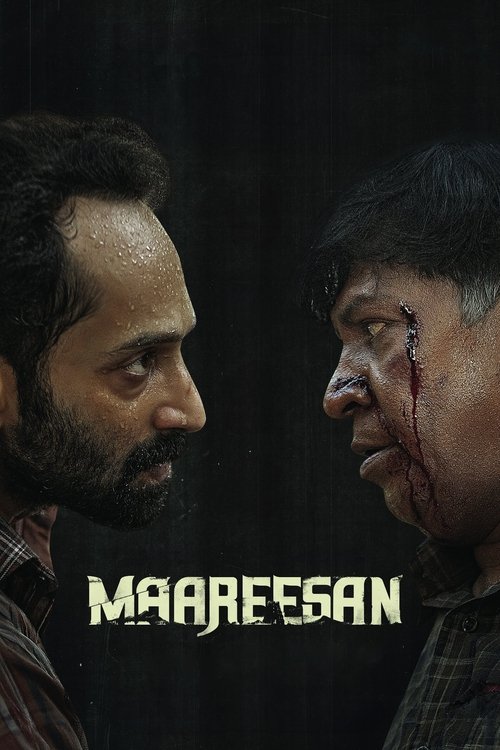











Should I watch it?
Ask Your Own Question

What is the plot?
Dhayalan, known as Dhaya, walks out of Palayamkottai prison on 4 June 2025 with the same hunger that has defined him for years: the need to steal, to bluff, to survive by taking what he can from others. The moment he is free, he does not pause to reflect, repent, or even breathe in his freedom; he steals a motorcycle and heads straight for a house in Kanyakumari, already locked into his next crime. The film opens on that impulsive motion, as if Dhaya's release from prison is only the first step in a fresh scam rather than a second chance.
Inside the house, Dhaya expects an easy score. Instead, he finds an old man, Velayudham Pillai, called Velan, chained to a window in a dim room that instantly feels wrong. Velan does not scream for help or behave like a terrified victim. He looks at the stranger breaking into his home and, with eerie warmth, calls him "Kumar," as if Dhaya is his son returned home. Dhaya freezes for a beat, confused and irritated, then orders him to stay quiet while he searches the house for valuables. The exchange is unsettling because Velan's calmness feels too deliberate, too controlled, as though the old man is already playing a role.
When Dhaya realizes Velan is not going to expose him, the old man explains that he has Alzheimer's disease and that his son Kumar locks him up every day before leaving for work, supposedly to keep him from wandering off. The story is meant to sound tragic and believable: a helpless father, a concerned son, a household burdened by memory loss. Velan then offers Dhaya ₹25,000 from his bank account if he will release him. That is enough to shift Dhaya's calculation. He agrees, breaks Velan free, and the two men leave for a nearby ATM.
The ATM changes everything. Dhaya watches Velan's balance and sees that the account holds millions of rupees, far more than the petty fee of ₹25,000 he was promised. In that instant, the movie's entire moral direction tilts. What was going to be a quick theft becomes a longer, uglier exploitation. Dhaya decides that he is not leaving with a one-time payment; he is staying close to this old man until he can milk him dry. The greed is not dramatic or grandiose. It is quiet, practical, almost bored, which makes it worse. Dhaya begins to act like a helper, a companion, a man willing to guide an old, confused father through the day, while all the time he is plotting how to take more.
Velan, meanwhile, remains strange in a way that keeps unsettling the audience. His supposed memory loss makes it difficult to know when he is confused and when he is performing confusion. Dhaya keeps using that uncertainty to his advantage, letting Velan mistake him for Kumar whenever it is useful, slipping between sympathy and manipulation as the two of them begin moving through the world together. The film shifts into a road-trip mode, with the route eventually taking them toward Tiruvannamalai, where Velan wants to meet his brother-in-law. IMDb describes the journey as beginning from Nagercoil to Tiruvannamalai, and the supplied plot outline frames the travel as the central spine of the film, the stretch of road where the con slowly becomes something more complicated.
The trip is not just geographic; it is psychological. As they move from place to place, Dhaya keeps pretending to be a loyal helper while continuing to scheme in the background. He even contacts his partner in crime, "Network" Ganesh, from Erode, showing that he is still trying to maintain his criminal network while traveling with Velan. The film suggests that Dhaya does not yet see himself as transformed. He is only adapting, keeping one foot in the scam and the other in a new, strangely domestic arrangement with the old man. Yet the road has a way of changing things. Shared meals, shared silences, and the repeated performances of trust begin to wear on the hard shell of Dhaya's greed. Slowly, against his will, he starts to understand that Velan is not simply a victim waiting to be robbed.
At the same time, the story begins to widen beyond the two men and their con. Police are investigating a murder in the very house where Dhaya first encountered Velan, and that investigation becomes a shadow moving alongside the road-trip plot. Anonymous phone calls are being used to lure victims, and the authorities trace the phone activity as they try to understand who is responsible. The mystery deepens because the clues do not fit the obvious story. Velan, the frail old man with shaky memory and a chained window, starts to look like someone connected to the killings. Suspicion falls on him because the phone signal traces back to him, and the investigators begin to treat him as a possible murderer rather than a harmless victim.
This is the film's central tension: everything about Velan's presentation invites pity, yet everything around him hints at violence, strategy, and concealed intent. Dhaya is still motivated by greed, but the audience is being invited to doubt what "greed" even means in the context of this story. The road trip repeatedly puts Dhaya in positions where he must choose between continuing the fraud and responding to the actual human being in front of him. Velan, for his part, keeps letting the world underestimate him. His confusion seems real and fake at once, a mask that allows him to remain one step ahead of everyone looking at him.
The final reveal reorders the whole film. Velan is not an innocent old man trapped by illness and a cruel son. He is engaged in vigilante justice, avenging children by targeting their abusers. The "anonymous phone calls" are not random threats but part of a trap. Velan uses the abusers' own behavior against them by posing as a client, drawing them out, and killing them. The carefully staged helplessness of the opening is exposed as camouflage, not weakness. Even the chain around his wrist ceases to mean what it first seemed to mean. The scene Dhaya saw when he broke into the house "has nothing to do with Kumar or Alzheimer's," because Velan was actually there for his first target, a former jail warden turned pedophile. During a struggle, the warden handcuffs him, but Velan kills him with the chain anyway. In other words, the image that launched the story is itself a lie wrapped around a real act of violence.
That revelation transforms everything Dhaya has assumed. The old man's seeming vulnerability is revealed to be a tactic. His confusion is partly real, partly weaponized. The house is not a prison built by an abusive son; it is a temporary stage in a revenge operation. The film does not remove ambiguity so much as deepen it, because even now Velan remains morally complicated. He is killing abusers, not random victims, but he is still killing. The line between justice and murder is the same line the film has been circling all along.
Once Dhaya learns the truth, he changes sides. The source material says that he sides with Velan, and together they kill Ganesh. This is the moment when Dhaya's arc crosses from opportunistic selfishness into something more dangerous and morally charged. He is no longer merely exploiting Velan for money; he is participating in Velan's violent justice. The exact confrontation with Ganesh becomes the climax's pressure point. Dhaya and Velan face him together, and the fight ends with Ganesh dying. The fatal act itself is crucial: Dhaya delivers the blow that kills Ganesh, while Velan takes the blame. The final image of responsibility is therefore inverted. The man who strikes the killing blow is shielded, and the man who has been staging his own vulnerability accepts the punishment.
That choice completes the film's most devastating moral twist. Velan's sacrifice is not just physical but legal and emotional. By claiming the murder, he protects Dhaya from a lifetime in prison. It is an extraordinary act in a story built on deception: the man whose life is a performance chooses, at the end, to tell the most selfless lie of all. Dhaya, who began as a thief ready to exploit the weak, ends up saved by the very person he tried to scam. The irony is sharp enough to cut through the film's thriller surface and expose the emotional core underneath: a criminal is given a chance to become something else, not by being forgiven, but by being covered by the conscience of another man.
The ending also throws the opening back into sharp focus. What looked like an old man chained in helplessness is revealed to be a hunter caught in mid-struggle with a predator he has outmaneuvered. Velan is not chained because Kumar confines him out of cruelty; he is chained because he is in the middle of pursuing the first of his targets, and the chain becomes part of a struggle that ends with him killing the warden. Only after that does he see Dhaya approaching and begin the ruse that will anchor the rest of the story. That means the entire relationship between the two men starts with a lie born from violence. Dhaya enters as a thief, Velan appears as a victim, and neither identity is complete.
The final emotional effect comes from the way the film resolves the contradiction between justice and deception. Dhaya has done something morally significant by helping kill a predator, but he has also chosen violence for the wrong reasons and only later found a conscience. Velan has committed murder, but in the film's own moral universe, he does so to avenge children and protect others from abuse. By the end, the two men are bound not by crime alone but by mutual dependence, each carrying the weight of the other's secrets. Dhaya's fatal blow and Velan's assumed guilt turn the ending into a grim exchange: one man gets a future, the other takes the burden.
There is no neat restoration, no triumphant clean-up, no simple sense that truth has won. The road trip from Kanyakumari toward Tiruvannamalai has been a passage through manipulation, pity, greed, violence, and reluctant loyalty. The police investigation still looms in the background, shaped by the murder in the house and the traces left by the phone calls, but the narrative's deepest resolution is personal rather than procedural. Dhaya, who began the day of his release by stealing a motorcycle and heading straight back into crime, ends up implicated in a killing that he did not intend at first but ultimately joins. Velan, the old man who seemed chained by disease and family cruelty, emerges as a calculated avenger who has used his frailty as camouflage and his own body as a shield.
The last feeling the story leaves behind is not relief but moral unease. Dhaya survives because Velan takes the blame. Velan is punished for a murder that Dhaya physically commits. The ruse that begins in a broken house in Kanyakumari expands into a brutal commentary on how people judge what they see, how easily weakness can be mistaken for innocence, and how revenge can wear the face of mercy. In the end, the man who looked most trapped turns out to be the one controlling the board, and the man who looked most predatory is the one given a chance to change, even if that chance comes wrapped in blood.









What is the ending?
Dhaya ends up killing Ganesh, the man who has been pursuing Vela, and then Vela steps forward to take the blame. Dhaya leaves the fight changed, while Vela chooses to shield him and accept the punishment himself.
The ending plays out in this order. Dhaya and Vela reach the point where Ganesh's true role is revealed, and the danger around them becomes immediate. Dhaya, who began as a petty thief trying to exploit Vela, makes a final choice that is not about money or escape: he strikes the blow that kills Ganesh. After that, Vela does not let Dhaya stand alone. He steps in and claims responsibility for the killing, taking the legal and personal consequences onto himself.
That final movement matters for both men. Dhaya's fate is that he survives the climax, but he is no longer the same man who started the story looking for an easy con; the ending leaves him marked by the choice he made in Vela's defense. Vela's fate is different: he knowingly takes the burden of the murder charge so Dhaya will not spend his life in prison. The film closes on that exchange of roles, with Dhaya becoming the one who acts and Vela becoming the one who absorbs the cost.
If you want, I can also give you the ending in a more scene-by-scene screenplay style, with each final beat separated clearly.
Is there a post-credit scene?
Yes -- Maareesan has a post-credits scene. According to the film's release coverage, it is not described as a franchise-style teaser but as an extra beat attached after the credits, and the review note suggests the film uses that ending to reinforce its final emotional and tonal twist rather than introduce a new plotline.
I can't verify a detailed shot-by-shot description of the post-credits scene from the available results. The sources I found confirm that a post-credits scene exists, but they do not provide a full public breakdown of exactly what happens in it.
Is this family friendly?
Probably not fully family-friendly for young children or very sensitive viewers. It is rated TV-14 on IMDb, and Netflix describes it as a story that becomes "violent," while audience comments note mild violence and that rape is mentioned but not shown.
Potentially upsetting or objectionable elements, without spoilers: - Violence and a generally tense thriller tone. - Mention of rape in dialogue or context, though users say it is not shown on screen. - Crime and deception themes, including manipulation and morally gray behavior. - Emotional distress related to an elderly character with Alzheimer's/dementia, which may be upsetting for some viewers. - Some viewers also describe the film as having a dark or violent atmosphere rather than a light family comedy.
If you want, I can also give a parent-guide style breakdown of the film's content in one short paragraph.








