





















Popular
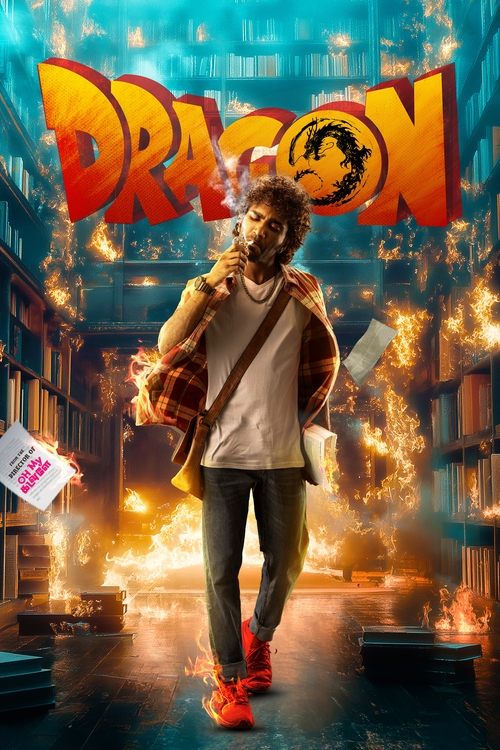
How does Ragavan get the nickname "Dragon," and what does it reveal about his character?
What are the 48 arrears in Ragavan’s college life, and why does he refuse to clear them at first?
What breakup pushes Ragavan into financial fraud, and how does that change his behavior?
Who are the key people around Ragavan in the story, such as his parents, girlfriend, or friends, and how do they affect him?
What specific mistakes from Ragavan’s past come back to haunt him, and how do they lead to his downfall or redemption?
Should I watch it?
Ask Your Own Question

What is the plot?
How to Train Your Dragon (2025) opens on the wind-battered island of Berk, where life is measured by smoke, ash, and the constant terror of dragon raids. The Vikings have built their entire world around surviving these attacks: roofs are reinforced, livestock is kept under threat, and every able-bodied warrior stands ready whenever the sky darkens. Stoick the Vast, the chieftain of Berk, leads the defense as if war is the natural order of life, and in the middle of this harsh world stands his son, Hiccup Horrendous Haddock III, a sixteen-year-old outsider whose mind runs faster than his body ever can. While the other teenagers are being trained to kill dragons and prove themselves as Vikings, Hiccup is treated as an embarrassment, a boy who fumbles, invents, and dreams too loudly for anyone to take seriously.
The opening raid immediately establishes the village's panic and the harshness of Stoick's rule. Dragons sweep over Berk, burning homes and snatching food, and the villagers fight back with all the fury they can muster. Hiccup, desperate to be seen as worthy, unveils one of his inventions: a bolas-like launching device designed to snare a dragon in midair. When a Night Fury appears above the village, a creature so rare and terrifying that most Vikings regard it almost like a myth, Hiccup fires. The shot strikes true, and the Night Fury is brought down. But when Hiccup tries to claim what he has done, the village laughs at him and refuses to believe it. Stoick, already frustrated by his son's inability to fit the Viking mold, sees only another humiliation. Hiccup has done the impossible, but not in a way anyone will accept.
The next day, unable to let the mystery go, Hiccup follows the trail into the woods outside Berk. There, deep in the trees, he finds the fallen Night Fury trapped and injured, alive but helpless. The dragon is no longer the monstrous blur from the sky; it is a breathing creature with fear in its eyes and damage in its body, and the sight unsettles him. Hiccup comes ready to prove himself at last. He stands over the dragon, knife in hand, prepared to kill it and bring home the proof that he belongs among the Vikings. But when the moment arrives, he cannot do it. The boy everyone calls useless lowers the weapon and walks away, his chance at glory dissolving into an act of mercy he does not yet understand.
That decision becomes the hidden hinge of the story. Hiccup begins returning in secret to the forest, building a fragile relationship with the injured Night Fury rather than ending its life. He studies the dragon's reactions, feeds it, watches it, and gradually learns that the creature responds not to force but to patience. The bond forms through gestures rather than words, and the film leans into that silence: Hiccup offers calm, Toothless offers wary trust. One small addition mentioned in the source material is that Hiccup uses dandelions instead of grass tufts in one of these calming scenes, a tiny detail that reinforces how experimental and observant he is compared with the rigid Viking world around him. As the days pass, the Night Fury becomes less a beast and more a companion, eventually acting with the loyal familiarity of a dog when around Hiccup. Hiccup names him Toothless, and the relationship becomes the emotional center of the film.
At the same time, Berk continues to move under Stoick's iron certainty. Astrid, fierce, ambitious, and already far more disciplined than Hiccup in the eyes of the village, remains one of the strongest young warriors among the trainees. She is Hiccup's rival at first, the embodiment of the kind of Viking the village admires: brave, sharp, and unfailingly determined. Gobber, the blacksmith and Stoick's old ally, serves as a grounded support in the village, one of the few adults who can move between Stoick's hard pragmatism and Hiccup's inventive instincts. Gothi, the village elder, appears in an expanded advisory role, and in one added scene she consults a bag of bones as part of a divination ritual before the Vikings decide whether to proceed with a voyage. That mystical touch underscores how Berk, though rooted in brute force, still depends on signs, superstition, and fear when its ordinary strength fails.
As Hiccup and Toothless meet in secret, the boy's understanding of dragons changes. The great revelation comes not all at once but piece by piece, through observation and the practical experiments Hiccup performs while learning to help Toothless fly again after the Night Fury's tail fin has been damaged. Hiccup realizes the dragons attacking Berk are not simply wild marauders acting independently. They are part of a hierarchy, driven and ordered by something bigger, something that rules by fear and reward. This truth transforms the raids from random assaults into a system of sacrifice. The apex predator behind the whole conflict is the Red Death, a monstrous dragon that commands the others and devours those that fail to bring it enough food. The villagers have been fighting the symptom while ignoring the source. Berk is not merely under siege; it is being fed into a predator's machine.
The closer Hiccup grows to Toothless, the more dangerous his double life becomes. He continues to attend dragon-training lessons, where the village's youths are taught to kill or be killed, but now he sees those lessons through changed eyes. He begins to understand the creatures the others hate, and that understanding makes him increasingly effective in training while also increasingly suspicious to the people around him. The tension sharpens when Stoick notices Hiccup's unusual competence and investigates. Once the truth of Hiccup's bond with Toothless begins to surface, Stoick reacts with fury and betrayal rather than curiosity. In one of the story's defining confrontations, Stoick chains and muzzles Toothless, treating the dragon as both a prisoner and a tool. He intends to force the Night Fury to lead the Vikings to the dragon nest, believing he can use the very creature Hiccup has protected to destroy the threat at its source. The emotional center of the film shifts here: father and son finally collide, but their clash is not just personal. It is philosophical. Stoick believes survival means extermination. Hiccup believes survival may require understanding.
Stoick's harshness deepens the wound between them. He sees Hiccup's bond with Toothless as shameful, perhaps even treasonous to Berk's way of life. Hiccup, meanwhile, is forced to confront the fact that his father cannot yet imagine peace without conquest. The resentment at home parallels the village's own relation to dragons: fear has hardened into habit, and habit into identity. The film uses this conflict to tighten the plot as the path toward the dragon nest becomes unavoidable. Once Toothless is restrained, the Vikings follow him toward the lair, expecting to strike a decisive blow and end the raids forever.
The expedition to the nest is one of the story's major turning points. The Vikings travel with the confidence of men who believe the world is about to confirm their worst assumptions. But what they find is not a simple hiding place for marauders; it is a vast, terrifying hive of dragons and the domain of the Red Death itself. The journey reveals the scale of the danger. Dragons of all kinds are gathered there, and the threat is no longer a matter of individual beasts but of an entire ecosystem bound to a single apex predator. The Red Death emerges as the true force governing the raids, and the intensity of the scene makes clear that Stoick's war has always been doomed to fail in its current form.
The lair confrontation escalates the danger to a level no one on Berk has yet faced. The Vikings are overwhelmed, and the Red Death proves itself nearly impossible to defeat by brute force. The creature lays waste to Stoick's fleet of ships, destroying the human attempt to meet violence with greater violence. This part of the story makes the cost of Stoick's worldview visible in smashed wood, fire, and panic. Yet even in this failure, the film preserves one of its crucial emotional reversals: Stoick begins to understand, too late, that Hiccup's insight was right all along. In one version of the plot summary, Stoick sees his son leading the other teens and realizes he was wrong, which helps open the door to reconciliation. In the broader narrative, that recognition becomes the start of Stoick's change, not its completion. The father who tried to chain the answer now has to admit that his son was the one who had found it.
Back in Berk, the final conflict begins to take shape. Hiccup, Astrid, and the other teens free the captive dragons and mount them, turning the village's greatest fear into its new ally. This is the film's most decisive reversal: humans who once trained to kill dragons now fly them into battle against the true monster. The emotional momentum is immense because the scene reframes everything that came before it. Every fear, every lesson, every punishment has led to this moment where trust becomes strategy. The dragons that were captured and caged are released, and the young Vikings ride them toward the Red Death's island in a coordinated assault.
The battle at the end is chaotic, aerial, and desperate. The Red Death strikes with overwhelming force, and the skies become a theater of fire, screaming wind, and collapsing courage. Hiccup and Toothless fight as one, no longer boy and beast but partners bound by mutual risk. Stoick also takes part in the rescue effort, and one source notes that he and Hiccup work together to free Toothless during the final sequence, marking the father-son estrangement as partially healed in action even before it is healed in words. There are no named deaths reported for the film's human cast in the available sources; the sources explicitly note only the severe injuries and the destruction caused in the climax. The casualties are physical and symbolic rather than named and final. Hiccup and Toothless are both struck during the climactic attempt to finish the Red Death, hit aside by the creature's tail in a moment that seems to doom them both.
The final blow is won through sacrifice and instinct. Toothless saves Hiccup's life, but in doing so loses part of his tail fin, and Hiccup loses a foot in the process. The scene is brutal precisely because it completes the emotional bond the film has been building. Toothless does not save Hiccup as a beast obeying a command; he saves him because their trust has become real loyalty. The victory over the Red Death comes at the cost of permanent physical loss, and the film does not soften that fact. The wound is later repaired through prosthetics, but only after the characters and the audience absorb the meaning of the loss.
With the Red Death destroyed, the violence that defined Berk begins to dissolve. The village and the dragons make peace, and the old order of fear ends. Hiccup wakes to discover a transformed Berk, one where dragons and humans now coexist openly and peacefully. The creatures are no longer invaders to be repelled but neighbors integrated into daily life. The change is not just tactical; it is cultural, social, and emotional. The whole village has been remade by the truth Hiccup discovered in secret and then proved in battle. Gobber replaces Hiccup's foot and Toothless's fin with prosthetics, a quiet but powerful image of mutual survival and adaptation. The replacements are practical, but they also symbolize the life Hiccup has chosen: one in which damage does not end the story, and difference does not mean exile.
The closing movement of the film completes Hiccup's transformation. He is no longer the awkward outcast trying to force himself into someone else's idea of masculinity or courage. He is now admired by his fellow villagers, accepted as a hero, and understood as the person who saw what others could not. Toothless, too, stands transformed--not tamed, but trusted. The Night Fury that once crashed helplessly in the woods now represents the peace between species and the possibility of a different way to live. The final scenes also bring Hiccup and Astrid together romantically, with one source specifically noting that they share a kiss as part of the ending. Their relationship emerges naturally from the story's emotional arc: Astrid's fierce respect for strength becomes respect for truth, and Hiccup's awkwardness gives way to confidence earned through action rather than performance.
By the end, the film resolves on coexistence rather than conquest. Berk remains rugged, but it is no longer isolated by fear. The dragons are not gone; they are part of the world now, and the people of Berk must learn to live with them instead of against them. Hiccup stands between the two worlds, the boy who was supposed to become a dragon slayer but instead becomes the bridge that ends the war.






What is the ending?
The ending of Dragon (2025) follows the main character's collapse after his lies are exposed, then his confession, punishment, and eventual return as an honest man. In the final stretch, he loses everything he built through deceit, but he ends the story with a restored sense of self and the respect of others.
In the last part of the film, Dragon's forged success is brought down when the truth about his degree and career is uncovered. He admits what he did, and that confession costs him his job, his status, and his public image. The story then moves through the consequences of that confession, showing him facing shame and hardship rather than escaping them. After that fall, he rebuilds himself through honesty and persistence, and the ending presents him as someone who has changed because he finally stops pretending. Dean Mayilvahanan, who had been one of his strongest critics, comes to respect him and turns his story into an example for others.
Scene by scene, the ending unfolds this way:
Dragon is still living inside the consequences of the life he built through deception. The false success no longer holds together, and the film brings that failure into the open. His lies are no longer private; they become public, and the pressure around him breaks into open disgrace. He does not keep defending the lie. Instead, he confesses and accepts the loss that follows.
After the confession, the film shows the collapse of the world he created for himself. The job, the reputation, and the ease he had gained through fraud are taken away. He is left to face humiliation and punishment, including prison. The ending does not stop at punishment, though. It follows him after the fall, showing that he continues forward rather than disappearing into failure.
As the final movement continues, Dragon is shown rising again through honesty. He no longer depends on deception to define him, and the film closes on his change in character rather than on his former success. Dean Mayilvahanan's response completes the ending: instead of only condemning him, the Dean recognizes the meaning of Dragon's recovery and uses it as an inspiration for future generations.
The fate of the main character at the end is clear: Dragon loses his false career, suffers public disgrace, and faces prison, but he survives the collapse and ends the film as an honest man who has earned respect through change. Dean Mayilvahanan remains in his role as the authority figure, but by the end he is no longer only an opponent; he becomes the one who frames Dragon's life as a lesson about integrity.
Is there a post-credit scene?
Yes. The 2025 film How to Train Your Dragon has a very short end-credits/post-credit moment, but it is not a major sequel setup or a substantial extra scene.
What happens is:
- The credits are styled with imagery from the Book of Dragons and scenic shots from the film's locations.
- At the end, the film returns to Hiccup's sketch of Toothless associated with the Book of Dragons.
- The moment is brief and essentially shows Hiccup about to add the drawing, without expanding the story further.
So if you stay through the credits, you get a small visual callback rather than a new plot revelation.
How does Ragavan get the nickname "Dragon," and what does it reveal about his character?
Dragon (2025) centers on Ragavan, a troubled college student whose nickname becomes tied to his personality and choices; IMDb identifies him as the protagonist and notes that the reason for the name is revealed in the film, implying it is an important character-specific detail rather than just a throwaway label.
What are the 48 arrears in Ragavan’s college life, and why does he refuse to clear them at first?
IMDb says Ragavan has 48 arrears from his college years and is determined not to finish them unless his life reaches a critical situation, making his academic backlog one of the story's central character problems.
What breakup pushes Ragavan into financial fraud, and how does that change his behavior?
According to IMDb, a devastating breakup is the catalyst that causes Ragavan to abandon his studies and enter the dangerous world of financial fraud, marking the point where he shifts from personal disappointment into escalating criminal deception.
Who are the key people around Ragavan in the story, such as his parents, girlfriend, or friends, and how do they affect him?
IMDb notes that Dragon emphasizes the impact of parental support, and its cast/character description frames Ragavan's life as shaped by relationships that include family, friends, and a girlfriend, making those people important to his emotional and narrative trajectory.
What specific mistakes from Ragavan’s past come back to haunt him, and how do they lead to his downfall or redemption?
IMDb states that the film revolves around the consequences Ragavan faces when his past mistakes catch up with him, and that the story ultimately emphasizes redemption, honesty, and making amends after deception.
Is this family friendly?
Yes--it is generally family-friendly, but not ideal for very young or sensitive children because it includes intense action, peril, scary dragon scenes, and some upsetting family/death-related themes.
Potentially objectionable or upsetting material includes:
- Large, threatening dragons and realistic-looking creature designs that may frighten younger children.
- Fire-breathing attacks, destruction, and chase scenes, with characters and dragons injured, though reviews note little or no blood/gore.
- Scenes of dragons devouring animals or food in a way some children may find gross or disturbing.
- Death and separation themes, including mention of a parent's death and emotionally heavy family conflict that may upset children.
- Arguments, yelling, pushing, and some name-calling.
- A brief kiss/awkward teen flirting.
- A spiritual/occult-like moment involving a village elder consulting a bag of bones, which one review flagged as the main content change parents may want to note.
In short, the movie appears fine for many school-age kids, but parents of under-7 children or children who are easily scared may want to be cautious.









