
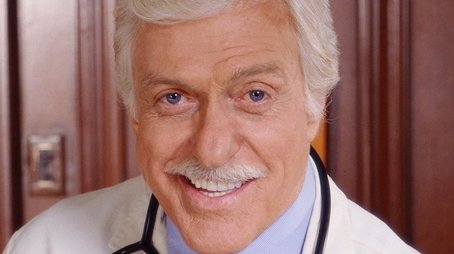


Popular
What is the relationship between Dr. Mark Sloan and his son, Steve Sloan?
How does Dr. Mark Sloan use his medical knowledge to solve crimes?
What role does the character of Jesse Travis play in the series?
What are some notable cases that Dr. Mark Sloan investigates?
How does the character of Amanda Bentley contribute to the series?
Should I watch it?
Ask Your Own Question

What is the plot?
In the pilot episode of "Diagnosis: Murder," we are introduced to Dr. Mark Sloan, a charming and dedicated physician who works at a Los Angeles hospital. The story begins with Dr. Sloan, played by Dick Van Dyke, attending a charity event where he mingles with various guests. During the event, he is approached by a woman named Claire, who expresses her concerns about her husband, a prominent businessman, who has been acting strangely. Mark reassures her but is soon distracted by a commotion.
The scene shifts to a nearby alley where a man is found dead. The police arrive, and it is revealed that the victim is a known criminal. Mark, intrigued by the circumstances surrounding the death, begins to investigate. He is joined by his son, Steve Sloan, a detective with the LAPD, who is initially skeptical of his father's involvement in the case. Their relationship is strained, as Steve believes that Mark should stick to medicine rather than meddle in police work.
As the investigation unfolds, Mark discovers that the victim had connections to a larger criminal organization. He interviews various witnesses, including Claire, who reveals that her husband had been receiving threats. Mark's instincts tell him that there is more to the story, and he becomes increasingly determined to uncover the truth. He also faces opposition from Steve, who warns him to stay out of the investigation for his own safety.
Mark's persistence leads him to a confrontation with a key suspect, a thug associated with the criminal organization. In a tense scene, Mark confronts the thug in a dimly lit warehouse. The thug threatens Mark, but he remains calm and uses his medical knowledge to deduce that the thug is hiding something. This encounter heightens the stakes, as Mark realizes that he is getting closer to the truth but also putting himself in danger.
Meanwhile, Claire's husband, who has been missing, reappears, and Mark suspects that he may be involved in the murder. Mark and Steve work together to track him down, leading to a dramatic chase through the city. They finally corner him in a parking garage, where a confrontation ensues. The husband reveals that he was being blackmailed and that the murder was part of a larger scheme orchestrated by the criminal organization.
As the episode progresses, Mark and Steve piece together the evidence, leading them to a climactic showdown with the criminal organization. They set a trap to catch the mastermind behind the murder. In a tense standoff, Mark uses his medical expertise to save a hostage and ultimately brings the criminals to justice. The episode concludes with Mark and Steve reconciling, acknowledging the importance of their partnership in solving the case. Mark reflects on the events, realizing that his medical skills can be used to help in more ways than just healing patients.








What is the ending?
In the final episode of "Diagnosis: Murder," Dr. Mark Sloan and his team solve a murder case involving a young woman found dead in a hotel room. The investigation leads them to uncover a web of deceit and betrayal, ultimately revealing the true killer. The episode concludes with Mark and his son, Steve, reflecting on the case and their bond, emphasizing the importance of family and justice.
As the episode begins, Dr. Mark Sloan, portrayed by Dick Van Dyke, is called to a crime scene where a young woman has been discovered dead in a hotel room. The atmosphere is tense, with police officers cordoning off the area and detectives gathering evidence. Mark, with his keen eye for detail, examines the scene, noting the signs of a struggle and the absence of personal belongings, which raises questions about the victim's identity and circumstances.
Scene transitions to the hospital where Mark works. He discusses the case with his son, Steve Sloan, a detective played by Barry Van Dyke. Their dynamic is warm yet professional, showcasing their mutual respect and the bond they share as father and son. Steve expresses his frustration with the lack of leads, while Mark remains optimistic, believing that every detail matters in solving the case.
As the investigation unfolds, Mark and Steve interview various suspects, including the victim's friends and acquaintances. Each interaction reveals layers of complexity in the victim's life, hinting at hidden relationships and potential motives. The tension builds as they uncover a connection to a local businessman, who seems to have a vested interest in keeping certain secrets buried.
In a pivotal scene, Mark and Steve confront the businessman, who initially appears cooperative but quickly becomes defensive when pressed about his alibi. The confrontation is charged with emotion, as Mark's determination to seek justice for the victim clashes with the businessman's attempts to manipulate the narrative. This moment highlights Mark's unwavering commitment to uncovering the truth, regardless of the personal cost.
As the climax approaches, Mark receives a crucial piece of evidence--a witness who saw the victim arguing with someone the night of her death. This revelation leads them to a shocking conclusion about the true identity of the killer. The tension escalates as Mark and Steve race against time to prevent another potential crime, showcasing their teamwork and dedication to justice.
In the final act, the killer is apprehended in a dramatic showdown, where Mark's quick thinking and Steve's law enforcement skills come into play. The resolution is satisfying, as the murderer is brought to justice, and the emotional weight of the case is lifted from Mark and Steve's shoulders.
The episode concludes with a reflective moment between Mark and Steve. They stand together, looking out over the city, discussing the importance of their work and the impact it has on the lives of others. Mark expresses pride in Steve's abilities, reinforcing their familial bond and shared commitment to helping those in need. The screen fades to black, leaving viewers with a sense of closure and the enduring message of the importance of family, justice, and the pursuit of truth.
Is there a post-credit scene?
"Diagnosis: Murder," which aired from 1993 to 2001, does not typically feature post-credit scenes. The show generally concludes with a final scene that wraps up the episode's storyline, often showcasing Dr. Mark Sloan, played by Dick Van Dyke, reflecting on the case or sharing a light-hearted moment with his son, Steve, or other characters. The episodes usually end with a sense of closure, but there are no additional scenes after the credits roll. The focus remains on the narrative and character development throughout the episode rather than extending into post-credit content.
What is the relationship between Dr. Mark Sloan and his son, Steve Sloan?
Dr. Mark Sloan, played by Dick Van Dyke, is a retired physician who often finds himself solving crimes alongside his son, Steve Sloan, a detective played by Barry Van Dyke. Their relationship is characterized by a blend of mutual respect and occasional tension, as Mark's medical expertise often clashes with Steve's law enforcement methods. Mark's desire to protect his son and his instinct to help others drives him to involve himself in investigations, which sometimes frustrates Steve, who wants to prove himself as a capable detective.
How does Dr. Mark Sloan use his medical knowledge to solve crimes?
Dr. Mark Sloan frequently applies his extensive medical knowledge to uncover clues that others might overlook. For instance, he often examines the bodies of victims to determine causes of death or to identify signs of foul play. His ability to connect medical symptoms with criminal behavior allows him to piece together evidence that leads to solving the case. This unique perspective often puts him at odds with law enforcement, who may not appreciate his unorthodox methods.
What role does the character of Jesse Travis play in the series?
Jesse Travis, portrayed by Charlie Schlatter, is a young medical intern who works closely with Dr. Mark Sloan. He serves as both an assistant and a protégé, often providing comic relief with his youthful exuberance and occasional naivety. Jesse is eager to learn from Mark, and his enthusiasm for medicine and crime-solving complements Mark's experience. Throughout the series, Jesse's character evolves as he gains confidence and becomes more involved in the investigations, often helping to bridge the gap between the medical and detective worlds.
What are some notable cases that Dr. Mark Sloan investigates?
Throughout the series, Dr. Mark Sloan investigates a variety of intriguing cases, including murders that occur in hospitals, art galleries, and even during high-profile events. One notable case involves a murder at a medical conference where Mark must navigate the complexities of professional rivalries and ethical dilemmas. Another memorable episode features a murder linked to a famous artist, where Mark's understanding of art and psychology plays a crucial role in solving the crime. Each case showcases Mark's ability to blend his medical expertise with detective work, often leading to unexpected twists.
How does the character of Amanda Bentley contribute to the series?
Amanda Bentley, played by Victoria Rowell, is a forensic pathologist who often collaborates with Dr. Mark Sloan on various cases. Her character brings a strong, independent female presence to the show, and her expertise in forensic science complements Mark's medical background. Amanda's dynamic with Mark is characterized by mutual respect and occasional romantic tension, adding depth to the storyline. She often challenges Mark's theories and provides critical insights that help unravel complex cases, making her an integral part of the investigative team.
Is this family friendly?
"Diagnosis: Murder," produced in 1993, is generally considered family-friendly, but it does contain some elements that may be potentially objectionable or upsetting for children or sensitive viewers. Here are a few aspects to consider:
-
Murder and Crime Themes: The show revolves around a medical doctor, Dr. Mark Sloan, who often investigates murders. While the violence is not graphic, the subject matter of murder and crime may be unsettling for younger viewers.
-
Medical Procedures: Some episodes feature medical emergencies and procedures that could be distressing, particularly for children who may be sensitive to blood or injuries.
-
Emotional Turmoil: Characters often experience grief, loss, and emotional distress related to the crimes being investigated. This can evoke strong feelings and may be difficult for some viewers to process.
-
Villainous Characters: The presence of antagonists who commit crimes can create tension and fear, which might be frightening for younger audiences.
-
Mild Language and Situational Humor: While the show is not overly explicit, there may be occasional mild language or innuendos that some parents might find inappropriate for younger children.
Overall, while "Diagnosis: Murder" is designed to be accessible to a broad audience, parents may want to preview episodes to determine their suitability for their children.