





Popular
What role does the character of Adam play in the story?
What is the significance of the prophecy in Good Omens?
How do Aziraphale and Crowley first meet in the series?
What is the relationship between Aziraphale and Crowley throughout the series?
What happens to the Four Horsemen of the Apocalypse in the series?
Should I watch it?
Ask Your Own Question

What is the plot?
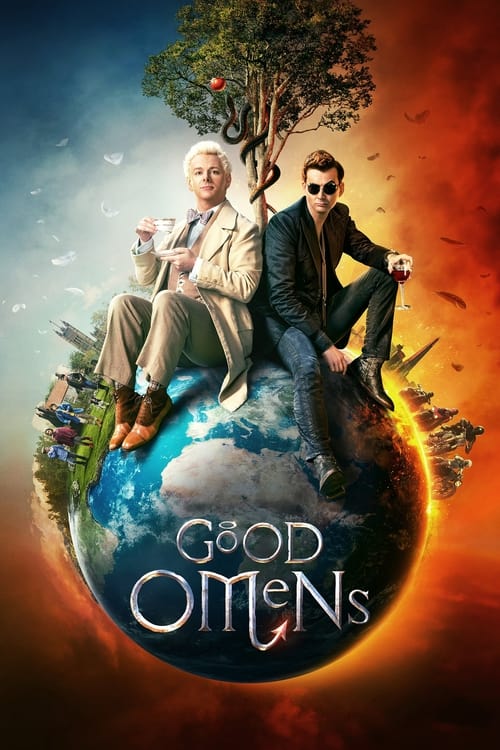
In the beginning, the story introduces the angel Aziraphale and the demon Crowley, who have been on Earth since the beginning of time. They have developed a friendship over the millennia, enjoying the pleasures of humanity. The narrative shifts to the year 2019, where they are both concerned about the impending apocalypse, which is set to occur on a specific date. They learn that the Antichrist, a child who will bring about the end of the world, has been misplaced.
The Antichrist, named Adam, is born in 11th-century England but is accidentally switched at birth with a human child named Warlock. The demon Crowley is tasked with delivering the Antichrist to the proper family, but due to a mix-up, Adam grows up in a small English town called Tadfield, unaware of his true identity. He is raised by loving parents, and as he grows, he begins to exhibit strange powers, such as the ability to change reality and influence those around him.
Meanwhile, Aziraphale and Crowley realize that they must find Adam to prevent the apocalypse. They begin their search, with Aziraphale using his connections in Heaven and Crowley using his contacts in Hell. They both have their own motivations: Aziraphale wants to save humanity, while Crowley is more concerned about preserving his comfortable life on Earth.
As the story progresses, we are introduced to the Four Horsemen of the Apocalypse: War, Famine, Pollution, and Death. They begin to gather, preparing for the end times. Each Horseman has their own unique characteristics and methods of bringing about destruction. War, for instance, is depicted as a fierce and ruthless warrior, while Famine uses a more insidious approach, promoting starvation through consumerism.
The narrative then shifts back to Adam, who is now a teenager. He is joined by his friends, known as the Them: Pepper, Wensleydale, and Brian. They embark on various adventures, showcasing Adam's powers and his growing influence over his friends. Adam is unaware of his true nature, but he begins to feel a sense of unease as strange occurrences happen around him.
As the date of the apocalypse approaches, Aziraphale and Crowley finally locate Adam. They attempt to convince him of his true identity and the consequences of his powers. However, Adam is resistant to their claims, feeling a strong connection to his human life and friends. He struggles with the idea of being the Antichrist, torn between his innate powers and his desire to be a normal boy.
In a pivotal moment, Adam decides to embrace his humanity rather than fulfill his destiny as the Antichrist. He uses his powers to alter reality, effectively stopping the apocalypse from occurring. This decision shocks both Aziraphale and Crowley, who realize that Adam's love for his friends and his life on Earth is stronger than any predestined fate.
As the story reaches its climax, the Four Horsemen are thwarted in their attempts to bring about the end of the world. Adam confronts them, using his powers to send them away and restore peace to Tadfield. The Horsemen, realizing they cannot succeed without the Antichrist's cooperation, retreat.
In the aftermath, Aziraphale and Crowley reflect on their experiences and the nature of good and evil. They acknowledge their friendship and the complexities of their roles in the universe. The story concludes with a sense of hope, as Adam and his friends continue their lives, unaware of the cosmic forces that had been at play. Aziraphale and Crowley, now more united than ever, look forward to their future on Earth, having successfully prevented the apocalypse.



What is the ending?
In the ending of Good Omens, Aziraphale and Crowley manage to prevent the apocalypse by working together, despite their differences. They confront the forces of Heaven and Hell, ultimately leading to a resolution that allows them to continue their friendship. The Antichrist, Adam, chooses to embrace his humanity, rejecting his predetermined role. The story concludes with a sense of hope and the continuation of life on Earth, as Aziraphale and Crowley enjoy a quiet moment together.
As the final moments of Good Omens unfold, the tension is palpable. The scene opens in a desolate field where the armies of Heaven and Hell are poised for battle. Aziraphale, the angel, stands resolute, his expression a mix of determination and concern. Crowley, the demon, leans against a tree, his sunglasses reflecting the chaos around them. They both know that the fate of the world hangs in the balance, and their friendship is the only thing that can tip the scales.
Suddenly, the ground shakes as the forces of Heaven and Hell clash. The sky darkens, and the air crackles with energy. Aziraphale and Crowley exchange a glance, a silent understanding passing between them. They know they must intervene. As they step forward, the armies pause, confused by the sight of the unlikely duo standing together.
Meanwhile, in a quiet corner of the world, Adam, the Antichrist, is grappling with his identity. He stands in the woods with his friends, the Them, who have been his companions throughout his childhood. Adam feels the weight of his powers and the expectations placed upon him. In a moment of clarity, he realizes that he has the choice to shape his own destiny. He rejects the notion of bringing about the apocalypse, choosing instead to embrace his humanity and the life he has built with his friends.
Back at the battlefield, Aziraphale and Crowley make their way to the front lines. They stand together, a united front against the impending doom. Aziraphale pleads with the angels, reminding them of the beauty of humanity, while Crowley counters with his own brand of charm, appealing to the demons. Their words resonate, creating a moment of hesitation among the celestial beings.
As the tension builds, Adam arrives at the battlefield, his presence commanding attention. He stands before the armies, a young boy who has the power to change everything. With a firm voice, he declares that he will not allow the apocalypse to happen. The forces of Heaven and Hell are taken aback, their plans unraveling before their eyes. Adam's friends, the Them, stand by his side, reinforcing his resolve.
In a climactic moment, Adam uses his powers to rewrite the narrative, causing the armies to disperse. The sky clears, and the threat of destruction fades away. Aziraphale and Crowley watch in awe, their expressions shifting from fear to relief. They realize that their bond, forged through centuries of companionship, has played a crucial role in this outcome.
As the dust settles, the characters begin to find their new paths. Aziraphale and Crowley, having defied their respective sides, share a quiet moment together. They sit on a bench, enjoying a cup of tea, a symbol of their enduring friendship. Their laughter echoes softly, a stark contrast to the chaos that had just unfolded.
Adam, now free from the expectations of his birthright, returns to his friends. They embrace, celebrating their victory over fate. The world continues to spin, life goes on, and the bonds of friendship prove stronger than any celestial decree.
In the final scene, Aziraphale and Crowley walk away from the battlefield, their future uncertain but filled with possibility. They glance back at the remnants of the conflict, knowing that they have changed the course of history together. The camera pulls back, revealing the vibrant world around them, a testament to the power of choice, love, and friendship. The story concludes with a sense of hope, leaving the audience with the understanding that the battle between good and evil is not always black and white, and that sometimes, the most profound changes come from the most unexpected alliances.
Who dies?
In the 2019 adaptation of "Good Omens," several characters experience death, each with unique circumstances that contribute to the narrative's themes of fate, free will, and the absurdity of existence. Here are the notable deaths:
-
Aziraphale: Although Aziraphale, the angel, does not die in a traditional sense, he faces a moment of existential crisis when he is confronted by the impending apocalypse. His character grapples with the idea of sacrifice and the potential loss of his existence. However, he ultimately survives, showcasing the resilience of his character and his bond with Crowley.
-
Crowley: Similar to Aziraphale, Crowley, the demon, does not die but faces a moment of potential demise during the climactic battle at the end of the series. His character is deeply conflicted about his role in the cosmic order and the impending apocalypse. He ultimately survives, emphasizing the theme of cooperation between good and evil.
-
Gabriel: The archangel Gabriel, played by Jon Hamm, does not die in the series, but he is temporarily incapacitated by Aziraphale and Crowley. This moment serves to highlight the absurdity of the celestial hierarchy and the lengths to which the protagonists will go to prevent the apocalypse.
-
The Antichrist (Adam Young): Adam, the young boy who is the Antichrist, does not die but instead chooses to reject his predetermined role in the apocalypse. This pivotal moment occurs when he uses his powers to alter reality, showcasing his growth and the theme of free will. His decision to embrace humanity rather than fulfill his dark destiny is a significant turning point in the narrative.
-
The Four Horsemen of the Apocalypse: While they do not die in a conventional sense, their presence is marked by chaos and destruction. They embody the impending doom of the apocalypse, but their ultimate defeat is a result of the combined efforts of Aziraphale, Crowley, and Adam, rather than a direct death.
-
Warlock Dowling: In the series, Warlock, the child initially believed to be the Antichrist, is revealed to be a red herring. He does not die, but his character serves as a contrast to Adam, highlighting the themes of identity and destiny.
-
The Witchfinder Sergeant: In a comedic twist, the Witchfinder Sergeant, played by Michael Sheen, meets his end in a humorous manner, showcasing the absurdity of the witch-hunting narrative. His death is not tragic but rather serves to underline the farcical elements of the story.
Overall, the deaths and near-deaths in "Good Omens" serve to explore the complexities of morality, the nature of good and evil, and the importance of choice in shaping one's destiny. The series ultimately emphasizes that life, in all its chaos, is worth fighting for, and the bonds formed between characters transcend the boundaries of their celestial roles.
Is there a post-credit scene?
Yes, the 2019 television adaptation of Good Omens features a post-credit scene.
As the credits roll, the scene opens with a serene view of a lush, green landscape, hinting at the peaceful resolution of the story. The camera then shifts to a quaint little bookshop, where we find Aziraphale, the angel, standing behind the counter. He is tidying up the shelves, a soft smile on his face, reflecting his contentment after the events that unfolded.
Suddenly, the door chimes, and in walks Crowley, the demon, with his signature sunglasses and a casual demeanor. He approaches Aziraphale with a playful smirk, and the two share a moment of camaraderie, their friendship evident in their banter. Crowley teases Aziraphale about his choice of books, while Aziraphale counters with a light-hearted jab about Crowley's taste in music.
The scene captures their dynamic perfectly, showcasing their contrasting yet complementary natures. As they continue to chat, the atmosphere is filled with warmth and humor, emphasizing the bond they have formed despite their celestial differences.
The final moments of the scene hint at their ongoing adventures, leaving viewers with a sense of hope and the possibility of more mischief to come. The screen fades to black, concluding the series with a delightful reminder of the enduring friendship between the angel and the demon.
What role does the character of Adam play in the story?
Adam, the young boy raised as the Antichrist, is central to the plot of Good Omens. He is unaware of his true identity and grows up in a small English town, surrounded by his friends, known as the Them. As the story progresses, Adam begins to exhibit powers that reflect his Antichrist nature, but he also embodies the innocence and morality of a child. His internal conflict arises when he learns about his destiny and the impending apocalypse. Ultimately, Adam's choice to embrace his humanity and reject the role of the Antichrist is pivotal in determining the outcome of the story.
What is the significance of the prophecy in Good Omens?
The prophecy in Good Omens, which is found in the book 'The Nice and Accurate Prophecies of Agnes Nutter, Witch', plays a crucial role in the unfolding events. It details the coming of the Antichrist and the end of the world, but its cryptic nature leads to misunderstandings and misinterpretations. The prophecy states that the Antichrist will be a child born to a specific family, but due to a mix-up at the hospital, the wrong child is raised as the Antichrist. This sets off a chain of events that drives the plot, as both Aziraphale and Crowley, the angel and demon, try to prevent the apocalypse.
How do Aziraphale and Crowley first meet in the series?
Aziraphale and Crowley first meet during the Garden of Eden scene, where Crowley, originally the angel known as the Serpent, tempts Eve to eat the forbidden fruit. Aziraphale, the angel tasked with guarding the garden, confronts Crowley. Their interaction is filled with tension and humor, showcasing their contrasting natures--Aziraphale's adherence to rules and Crowley's rebellious spirit. This meeting sets the foundation for their complex friendship that spans millennia, highlighting their shared disdain for the impending apocalypse.
What is the relationship between Aziraphale and Crowley throughout the series?
Aziraphale and Crowley's relationship is a central theme in Good Omens, characterized by a deep bond that transcends their roles as angel and demon. Throughout the series, they navigate their differences, often finding common ground in their shared love for humanity and the world. Their interactions are filled with witty banter, mutual respect, and moments of vulnerability. As they work together to prevent the apocalypse, their friendship deepens, revealing their internal struggles with loyalty, duty, and the desire to protect what they cherish. This relationship ultimately challenges the binary notions of good and evil.
What happens to the Four Horsemen of the Apocalypse in the series?
The Four Horsemen of the Apocalypse--War, Famine, Pollution, and Death--are introduced as formidable figures in Good Omens, each representing a different aspect of the end times. They are depicted with a modern twist, particularly Pollution, who replaces Pestilence after the discovery of antibiotics. As the story unfolds, they gather to fulfill their role in the impending apocalypse. However, their plans are thwarted by Aziraphale and Crowley, who work to prevent the end of the world. The Horsemen's interactions are marked by dark humor and a sense of inevitability, but they ultimately serve as a commentary on the absurdity of their mission in the face of human resilience.
Is this family friendly?
"Good Omens," produced in 2019, is a fantasy comedy series based on the novel by Neil Gaiman and Terry Pratchett. While it has a whimsical tone and humorous elements, there are several aspects that may be considered objectionable or upsetting for children or sensitive viewers:
-
Themes of Armageddon: The central plot revolves around the impending apocalypse, which may be distressing for younger audiences. The concept of the end of the world is explored in a comedic way, but it still involves serious themes.
-
Supernatural Elements: The show features demons, angels, and other supernatural beings, which might be frightening for some children. The portrayal of hell and demonic characters can be intense.
-
Violence: There are scenes that include mild violence, such as battles between angels and demons, and some characters face perilous situations. While not graphic, the implications of violence may be unsettling.
-
Dark Humor: The series employs dark humor that may not be suitable for all ages. Some jokes and situations touch on death, existential themes, and moral ambiguity.
-
Language: There are instances of mild profanity and suggestive language that may not be appropriate for younger viewers.
-
Mature Themes: The show explores themes of friendship, love, and morality, but it also delves into more complex issues like free will, which may require a level of maturity to fully understand.
-
Character Flaws: Some characters exhibit morally ambiguous behavior, which could be confusing for younger audiences trying to discern right from wrong.
Overall, while "Good Omens" has a lighthearted approach, its themes and content may not be suitable for all children or sensitive viewers. Parental discretion is advised.