
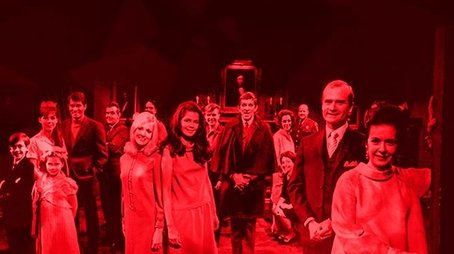


Popular
What is the significance of Barnabas Collins' curse as a vampire?
How does the character of Angelique influence Barnabas Collins' life?
What role does the Old House play in the story of Dark Shadows?
What is the relationship between Barnabas Collins and Josette DuPres?
How does the character of Victoria Winters fit into the Collins family saga?
Should I watch it?
Ask Your Own Question

What is the plot?
In the small coastal town of Collinsport, Maine, the wealthy Collins family resides at the eerie Collinwood mansion. The story begins with the arrival of a young governess named Victoria Winters, who has been hired to care for the troubled young boy, David Collins. Victoria is haunted by her mysterious past and is determined to uncover the truth about her origins. Upon her arrival, she is greeted by the housekeeper, Mrs. Johnson, who warns her about the strange happenings in the mansion.
Victoria meets the members of the Collins family, including the brooding and enigmatic Barnabas Collins, who has recently returned from England. Barnabas is charming yet carries a dark secret: he is a vampire, cursed to live eternally and tormented by his past. He becomes infatuated with Victoria, seeing in her a resemblance to his long-lost love, Josette. Meanwhile, David exhibits strange behavior, claiming to see a ghostly figure in the house, which adds to the tension and mystery surrounding Collinwood.
As Victoria settles into her role, she begins to experience supernatural occurrences, including visions of the ghost of Josette. David's behavior becomes increasingly erratic, and he reveals to Victoria that he has been communicating with a mysterious entity named the "ghost of the old house." This revelation leads Victoria to investigate the history of the Collins family and the mansion itself, uncovering dark secrets and tragic events that have plagued the family for generations.
Barnabas, desperate to regain his humanity, seeks the help of Dr. Julia Hoffman, a physician with an interest in the supernatural. Julia becomes fascinated by Barnabas and his condition, and she agrees to help him. Together, they attempt to find a cure for his vampirism, but their experiments lead to unforeseen consequences. Barnabas struggles with his bloodlust, and his attempts to control it lead to tension and conflict with the other characters.
As the story unfolds, Barnabas's relationship with Victoria deepens, but he is torn between his love for her and his vampiric nature. He tries to protect her from the dangers of his world, but his efforts often lead to tragic outcomes. The arrival of other supernatural beings, including the witch Angelique, who has a vendetta against Barnabas, complicates matters further. Angelique's jealousy and desire for revenge lead to a series of confrontations that threaten the lives of everyone at Collinwood.
Victoria learns more about her past, discovering that she is connected to the Collins family in ways she never imagined. This revelation adds layers to her character and her motivations, as she grapples with her identity and her feelings for Barnabas. The tension between the characters escalates, leading to dramatic confrontations and emotional turmoil.
As the series progresses, Barnabas's struggle with his vampirism intensifies. He faces moral dilemmas as he tries to balance his desire for love and his need for blood. The consequences of his actions lead to tragic events, including the deaths of key characters, which further complicate the relationships within the Collins family.
The arrival of new characters, including the ghost of Josette and other supernatural entities, adds to the complexity of the narrative. Each character's motivations and desires intertwine, leading to a web of intrigue, betrayal, and heartbreak. The story explores themes of love, loss, and the consequences of one's choices, all set against the backdrop of the hauntingly beautiful Collinwood mansion.
As the series reaches its climax, Barnabas must confront his past and the consequences of his actions. The final episodes are filled with suspense and emotional intensity as the characters face their fates. The resolution of the various plotlines brings closure to some characters while leaving others with unresolved tensions, setting the stage for future story arcs.
In the end, the legacy of the Collins family and the dark secrets of Collinwood continue to haunt the characters, leaving a lasting impact on their lives and the town of Collinsport. The intertwining fates of the characters culminate in a dramatic conclusion that resonates with the themes of love, sacrifice, and the eternal struggle between good and evil.








What is the ending?
The ending of Dark Shadows, produced in 1966, culminates in a dramatic confrontation involving the characters Barnabas Collins, Angelique, and the rest of the Collins family. Barnabas, having struggled with his vampire nature and the curse placed upon him by Angelique, ultimately finds a way to confront his past and seek redemption. The series concludes with a sense of unresolved tension, as the characters face their fates intertwined with the supernatural elements that have haunted them throughout the show.
As the final episodes of Dark Shadows unfold, the atmosphere in Collinwood is thick with tension and foreboding. The camera pans over the grand, decaying mansion, its once-majestic facade now a shadow of its former glory, reflecting the turmoil within.
Scene 1: The Confrontation Barnabas Collins, portrayed with a mix of desperation and determination, stands in the dimly lit drawing room, grappling with the weight of his vampire curse. He is torn between his love for Josette and the dark influence of Angelique, the witch who cursed him. The air crackles with supernatural energy as Angelique, played with a fierce intensity, confronts Barnabas. She is driven by jealousy and a desire for power, her eyes glinting with malice as she reveals her plan to reclaim Barnabas's love, even if it means destroying him.
Scene 2: The Family's Struggle Meanwhile, the Collins family, including Elizabeth, David, and Carolyn, are drawn into the chaos. Elizabeth, the matriarch, stands resolute, her face etched with worry but also fierce loyalty to her family. She rallies the others, urging them to confront the darkness that has plagued their lineage. David, a young boy caught in the crossfire of adult conflicts, embodies innocence and fear, while Carolyn, with her own struggles against the supernatural, seeks to protect her loved ones.
Scene 3: The Final Showdown The climax builds as Barnabas and Angelique face off in the eerie, candlelit drawing room. The tension is palpable, and the camera captures the flickering shadows dancing on the walls, mirroring the internal conflict of the characters. Barnabas, filled with regret and longing, pleads with Angelique to let go of her obsession. In a moment of vulnerability, he reveals his desire for redemption, hoping to break free from the chains of his past.
Scene 4: The Resolution As the confrontation escalates, the supernatural forces at play reach a fever pitch. The room is filled with swirling mist and flashes of light, symbolizing the clash between good and evil. In a final act of desperation, Barnabas confronts Angelique, and in a moment of clarity, he chooses to embrace his humanity over his vampire nature. The struggle culminates in a powerful moment where Barnabas, with tears in his eyes, forgives Angelique, recognizing the pain that has driven her actions.
Scene 5: The Aftermath In the aftermath of the confrontation, the camera shifts to the Collins family, who stand united, albeit shaken. Barnabas, now free from the curse, looks out over the cliffs of Collinsport, a sense of peace washing over him. He has faced his demons and emerged transformed, ready to embrace a new beginning. Angelique, however, is left in the shadows, her fate uncertain, a reminder of the consequences of unchecked ambition and desire.
As the series draws to a close, the final scene captures the essence of the Collins family's struggle against the darkness that has haunted them. The camera slowly zooms out from Collinwood, leaving viewers with a lingering sense of mystery and the understanding that while some battles may be won, the shadows of the past will always linger, shaping the future of those who remain. Each character's fate is intertwined with the supernatural legacy of the Collins family, leaving an indelible mark on their lives and the lives of those around them.
Is there a post-credit scene?
The original 1966 television series "Dark Shadows" does not feature post-credit scenes. The show, which aired from 1966 to 1971, typically concluded each episode with a dramatic cliffhanger or a suspenseful moment, but it did not include any additional scenes after the credits rolled. Each episode was designed to leave viewers eager for the next installment, often ending with a character in peril or a shocking revelation that would propel the story forward. The focus remained on the unfolding gothic drama and supernatural elements rather than on any post-episode content.
What is the significance of Barnabas Collins' curse as a vampire?
Barnabas Collins, introduced in episode 211, is a tragic figure cursed to live as a vampire after being turned by the witch Angelique. His internal struggle between his monstrous nature and his desire for love, particularly for Josette DuPres, drives much of the narrative. The curse symbolizes his isolation and the consequences of his past actions, as he seeks redemption while grappling with his thirst for blood.
How does the character of Angelique influence Barnabas Collins' life?
Angelique, a powerful witch, is pivotal in Barnabas' transformation into a vampire. Her unrequited love for him leads her to curse him, which sets off a chain of events filled with manipulation and revenge. Throughout the series, her obsession with Barnabas creates a tumultuous relationship marked by passion, betrayal, and a desire for power, showcasing her as both an antagonist and a tragic figure.
What role does the Old House play in the story of Dark Shadows?
The Old House, the ancestral home of the Collins family, serves as a central location in Dark Shadows. It is where Barnabas awakens from his coffin and begins to interact with the modern world. The house is steeped in history and mystery, reflecting the dark past of the Collins family. Its eerie atmosphere and hidden secrets contribute to the show's gothic tone, becoming a character in its own right as it houses many supernatural events.
What is the relationship between Barnabas Collins and Josette DuPres?
Barnabas Collins' love for Josette DuPres is a central emotional thread in Dark Shadows. Their romance is marked by tragedy, as Josette is ultimately driven to madness and death due to Barnabas' curse and Angelique's machinations. Barnabas' longing for Josette, even after her death, fuels his actions throughout the series, illustrating his deep emotional scars and the haunting nature of lost love.
How does the character of Victoria Winters fit into the Collins family saga?
Victoria Winters, introduced as the governess for David Collins, serves as a bridge between the past and present of the Collins family. Her mysterious origins and connection to the family history unfold as she becomes entwined with Barnabas and the supernatural events surrounding Collinwood. Victoria's quest for identity and her growing feelings for Barnabas add layers to the narrative, as she navigates the dangers of the Collins legacy.
Is this family friendly?
"Dark Shadows," produced in 1966, is a gothic soap opera that features a variety of themes and elements that may not be considered family-friendly. Here are some potentially objectionable or upsetting aspects that could affect children or sensitive viewers:
-
Supernatural Themes: The show prominently features vampires, ghosts, witches, and other supernatural entities, which may be frightening for younger audiences.
-
Violence and Threats: There are scenes that involve physical confrontations, threats of violence, and characters in perilous situations, which can be intense and unsettling.
-
Death and Mourning: The series frequently addresses themes of death, loss, and mourning, often depicted through dramatic and emotional scenes that may be distressing.
-
Romantic Entanglements: The show includes complex romantic relationships, some of which involve manipulation, obsession, and betrayal, which may be confusing or inappropriate for younger viewers.
-
Psychological Horror: Elements of psychological horror, including madness and despair, are woven into the narrative, creating an atmosphere of tension and unease.
-
Dark Atmosphere: The overall tone of the show is dark and brooding, with settings that include graveyards, haunted mansions, and eerie landscapes, which may be unsettling.
These elements contribute to a narrative that is more suited for older teens and adults rather than a young audience.