








Popular
What motivates Claire to return to the 18th century after her initial escape?
How does Jamie react to Claire's return after she leaves him?
What are the consequences of Jamie's decision to marry Laoghaire?
How does the character of Black Jack Randall influence the plot and Jamie's life?
What role does the theme of time travel play in Claire's character development?
Should I watch it?
Ask Your Own Question

What is the plot?
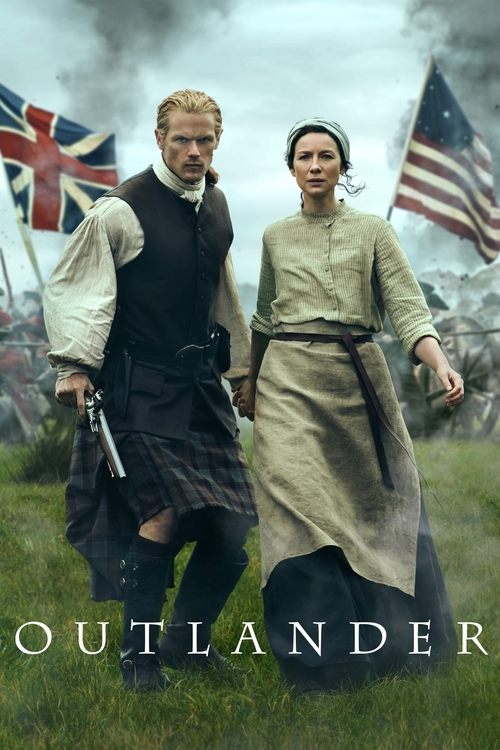
In 1945, Claire Randall, a former World War II nurse, is on a second honeymoon in the Scottish Highlands with her husband, Frank. They visit the standing stones at Craigh na Dun, where Claire touches one of the stones and is suddenly transported back in time to 1743. Disoriented, she encounters a group of Scottish Highlanders and is captured by a band of Redcoats, led by Captain Black Jack Randall, who is revealed to be an ancestor of her husband Frank.
Claire is rescued by a group of Highlanders, including Jamie Fraser, a young Scottish warrior. They take her to their clan's stronghold, Leoch, where she is treated for her injuries. Claire struggles to adapt to her new surroundings while trying to find a way back to her own time. She befriends the healer, Mother Hildegarde, and begins to learn about the customs and politics of 18th-century Scotland.
As Claire spends more time with the Highlanders, she develops a bond with Jamie. They share personal stories, and Claire finds herself drawn to him despite her commitment to Frank. Jamie is injured during a skirmish with the Redcoats, and Claire uses her medical knowledge to help him recover. Their relationship deepens, and they share a passionate kiss, complicating Claire's feelings.
Claire's true identity as a time traveler is revealed when she is confronted by Dougal MacKenzie, Jamie's uncle, who is suspicious of her. To protect herself, Claire claims to be a spy for the English, which earns her some trust among the Highlanders. However, her deception weighs heavily on her conscience, especially as her feelings for Jamie grow stronger.
As tensions rise between the Highlanders and the British, Claire learns of a plot to capture Jamie and his clan. She warns Jamie and the others, but her efforts to protect them lead to her being accused of witchcraft. Claire is imprisoned and faces execution, but Jamie and his friends devise a plan to rescue her. They successfully break her out of prison, and Claire is forced to flee with Jamie and the clan.
During their escape, Claire and Jamie are pursued by Black Jack Randall, who is determined to capture them. In a tense confrontation, Jamie fights Randall to protect Claire, showcasing his bravery and loyalty. They manage to evade Randall, but the danger is far from over.
As they continue their journey, Claire and Jamie's relationship deepens, and they eventually marry in a traditional Scottish ceremony. Claire struggles with her feelings of guilt about Frank, but she begins to accept her new life with Jamie. They face various challenges, including skirmishes with the British and the complexities of clan politics.
Claire learns that she is pregnant, which brings both joy and fear. She worries about the implications of raising a child in this tumultuous time. Jamie is supportive, but the couple faces external pressures, including the threat of war and the ongoing pursuit by Randall.
The season culminates in a dramatic confrontation at Wentworth Prison, where Jamie is captured and tortured by Randall. Claire, desperate to save him, makes a harrowing decision to confront Randall herself. She offers herself to Randall in exchange for Jamie's freedom, showcasing her bravery and love for Jamie.
In a brutal and emotional climax, Jamie is rescued, but not without lasting trauma from his ordeal. Claire and Jamie's bond is tested as they navigate the aftermath of their experiences. They return to the Highlands, where they must confront the realities of their lives and the choices they have made.
The season ends with Claire and Jamie reaffirming their commitment to each other, despite the challenges ahead. Claire's journey through time has irrevocably changed her, and she must now reconcile her past with her present as they prepare for the uncertain future.









What is the ending?
At the end of Outlander, Season 1, Claire Beauchamp is faced with a heart-wrenching decision between her love for Jamie Fraser and her desire to return to her own time. After a series of intense events, she ultimately chooses to stay with Jamie in the 18th century, solidifying their bond despite the dangers that lie ahead.
As the season draws to a close, the narrative unfolds with Claire and Jamie's relationship deepening amidst the backdrop of political turmoil and personal conflict. The final episodes are marked by a series of climactic events that test their love and commitment to one another.
The penultimate episode begins with Claire and Jamie preparing for the impending battle at Culloden. Tension fills the air as they navigate the uncertainty of their future. Claire, still grappling with her feelings for Frank, her husband in the 20th century, is torn between two worlds. Jamie, aware of the dangers that lie ahead, is determined to protect Claire at all costs.
In a pivotal scene, Jamie and Claire share a tender moment, reaffirming their love for one another. Jamie expresses his fears about the battle, and Claire, in turn, reveals her knowledge of the tragic outcome of Culloden. This moment is filled with emotional weight as they confront the reality of their situation, knowing that their time together may be limited.
As the battle approaches, the couple faces external threats, including the looming presence of Black Jack Randall, who has been a constant source of danger for Jamie. In a harrowing confrontation, Jamie is captured by Randall, leading to a desperate rescue attempt by Claire and the Highlanders. The tension escalates as they fight to save Jamie from Randall's clutches, showcasing the lengths to which Claire will go to protect the man she loves.
In the final moments of the season, after a fierce struggle, Jamie is freed, but the cost of their freedom is high. The couple is left to grapple with the aftermath of the battle and the uncertainty of their future together. Claire's decision to stay with Jamie is solidified as she chooses to embrace her life in the 18th century, fully aware of the challenges that lie ahead.
The season concludes with Claire and Jamie standing together, united in their love and determination to face whatever comes next. Their bond is stronger than ever, but the shadow of the impending conflict looms large, leaving viewers with a sense of anticipation for the trials they will face in the future.
In summary, the fate of the main characters is as follows: Claire chooses to remain with Jamie, fully committing to their life together in the past. Jamie, having survived the battle and the threat of Randall, stands by Claire's side, ready to face the challenges of their tumultuous world together. The season ends on a note of hope and resilience, emphasizing the strength of their love amidst the chaos of their lives.
Who dies?
In the TV show Outlander, several characters meet their demise throughout the series, each death carrying significant emotional weight and narrative impact. Here are some notable deaths, along with the circumstances surrounding them:
-
Colum MacKenzie's Death (Season 2, Episode 13 - "Dragonfly in Amber"): Colum, the leader of the MacKenzies and Jamie's uncle, suffers from a debilitating illness that causes him great pain. He chooses to end his life on his own terms rather than succumb to the agony of his condition. In a poignant scene, he asks Jamie to help him die peacefully. Colum takes a lethal dose of poison, surrounded by his family, expressing his love and gratitude before passing away. His death is a significant moment for Jamie, who grapples with the loss of his uncle and the weight of leadership that now falls on him.
-
Murtagh Fitzgibbons' Death (Season 5, Episode 12 - "Never My Love"): Murtagh, Jamie's loyal godfather and friend, dies during the Battle of Alamance. He fights alongside the Regulators, opposing the British forces. In a tragic turn of events, he is mortally wounded while trying to protect Jamie and Claire. His death is a heart-wrenching moment, as Jamie witnesses Murtagh's sacrifice. Murtagh's loyalty and bravery resonate deeply with Jamie, who is left to mourn the loss of a beloved figure who has been a constant in his life.
-
Frank Randall's Death (Season 2, Episode 1 - "Through a Glass, Darkly"): Frank, Claire's first husband, meets his end in a tragic accident. After Claire returns to the 20th century, she attempts to rebuild her life with Frank. However, their relationship is strained due to Claire's lingering feelings for Jamie. Frank is killed in a car accident while driving home from a visit to a historical site. The news of his death is delivered to Claire in a devastating moment, leaving her to grapple with guilt and sorrow over their complicated relationship.
-
Geillis Duncan's Death (Season 3, Episode 5 - "Freedom & Whisky"): Geillis, a witch and Claire's former acquaintance, is captured and put on trial for witchcraft. In a dramatic confrontation, she reveals her true nature and her connection to the time travel that Claire experiences. Ultimately, she is sentenced to be burned at the stake. In a moment of desperation, she tries to convince Claire to join her in the past, but Claire refuses. Geillis's death is a culmination of her choices and beliefs, leaving Claire to reflect on the dangers of their shared knowledge.
-
Laoghaire MacKenzie's Death (Season 6, Episode 8 - "I Am Not Alone"): Laoghaire, who has long harbored feelings for Jamie, meets her end in a tragic confrontation. After a series of misunderstandings and conflicts, she is fatally wounded during a skirmish. Her death serves as a reminder of the complexities of love and jealousy, as well as the consequences of the choices made by those around her.
Each of these deaths is intricately woven into the fabric of the story, highlighting themes of love, sacrifice, and the harsh realities of life in the turbulent historical periods depicted in Outlander. The emotional fallout from these losses profoundly affects the surviving characters, shaping their journeys and relationships as the series progresses.
Is there a post-credit scene?
In the TV show Outlander, produced in 2014, there are no post-credit scenes following the episodes. The series typically concludes with the final scene of each episode, leaving viewers to reflect on the events that have transpired without additional content after the credits roll. The focus remains on the narrative and character development throughout the episodes, rather than extending the story with post-credit sequences.
What motivates Claire to return to the 18th century after her initial escape?
Claire's decision to return to the 18th century is driven by her deep love for Jamie Fraser, her desire to protect him from the impending dangers of the Jacobite uprising, and her sense of belonging in that time period. Despite the comforts of her life in the 20th century, she feels a profound connection to Jamie and the life they built together, which compels her to risk everything to be with him again.
How does Jamie react to Claire's return after she leaves him?
When Claire returns to Jamie after years apart, he is initially overwhelmed with a mix of joy and confusion. His emotional state is tumultuous; he struggles with feelings of betrayal and abandonment, as he believed she had chosen her life in the 20th century. However, upon seeing her, his love reignites, and he grapples with the complexities of their relationship, torn between his past pain and the hope of rekindling their bond.
What are the consequences of Jamie's decision to marry Laoghaire?
Jamie's marriage to Laoghaire is fraught with emotional turmoil. He does this out of a sense of duty and to protect Claire's reputation after she leaves him. However, this decision leads to significant consequences, including feelings of guilt and betrayal for both Claire and Jamie. Their relationship is strained as Claire struggles with jealousy and the implications of Jamie's choice, which complicates their reunion and forces them to confront their feelings for each other.
How does the character of Black Jack Randall influence the plot and Jamie's life?
Black Jack Randall serves as a pivotal antagonist in the series, representing the brutal realities of the time. His sadistic nature and obsession with Jamie create a dark shadow over Jamie's life, leading to traumatic experiences that haunt him. Randall's actions not only affect Jamie's physical and mental state but also impact his relationship with Claire, as they both must navigate the repercussions of his cruelty and the scars it leaves on their lives.
What role does the theme of time travel play in Claire's character development?
Claire's time travel is central to her character development, as it forces her to adapt to vastly different cultures and societal norms. Her experiences in the 18th century challenge her modern sensibilities and shape her identity. As she navigates the complexities of her dual existence, Claire evolves from a WWII nurse into a strong, resourceful woman who must reconcile her past with her present, ultimately finding her place in both worlds.
Is this family friendly?
Outlander, produced in 2014, is not considered family-friendly due to its mature themes and content. Here are some potentially objectionable or upsetting aspects that may affect children or sensitive viewers:
-
Violence and Warfare: The series depicts battles and the brutality of war, including graphic injuries and death, which can be distressing.
-
Sexual Content: There are numerous explicit sexual scenes that explore complex relationships, which may be inappropriate for younger audiences.
-
Assault and Abuse: The show addresses themes of sexual assault and domestic violence, presenting them in a raw and unflinching manner that can be triggering.
-
Death and Grief: Characters experience significant loss, and the emotional weight of these events is portrayed in a poignant but heavy way.
-
Historical Context: The series includes themes of oppression, slavery, and the harsh realities of life in the 18th century, which may be difficult for some viewers to process.
-
Substance Use: There are instances of alcohol consumption and references to drug use, reflective of the historical setting.
These elements contribute to the show's mature rating and may not be suitable for all viewers, particularly children or those sensitive to such themes.