
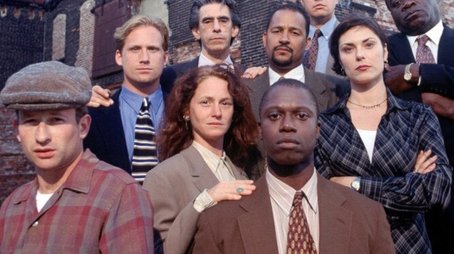


Popular
What happens to Detective Frank Pembleton during the series?
How does Detective John Munch's character evolve throughout the series?
What is the significance of the relationship between Detective Bayliss and Pembleton?
What are the key events surrounding the murder of the character Detective Steve Crosetti?
How does the series portray the impact of crime on the community in Baltimore?
Should I watch it?
Ask Your Own Question

What is the plot?
The series begins with the introduction of the Baltimore Police Department's Homicide Unit, showcasing the gritty realities of police work. Detectives Frank Pembleton and Tim Bayliss are central characters, often seen grappling with the emotional toll of their jobs. The first episode sets the tone with the investigation of a murder case involving a young boy, which deeply affects the detectives, particularly Bayliss, who struggles with the senselessness of the crime.
As the series progresses, the detectives face various cases, each revealing the complexities of human nature and the impact of crime on the community. One significant case involves the murder of a woman named Mary, which leads to a series of interviews with potential witnesses and suspects. Pembleton's intense interrogation style contrasts with Bayliss's more empathetic approach, highlighting their differing philosophies on police work.
In another episode, the detectives investigate a double homicide linked to a drug deal gone wrong. The case takes a turn when they discover that one of the victims was a police informant. This revelation complicates the investigation, as the detectives must navigate the murky waters of police corruption and loyalty. Tensions rise within the unit as they confront the reality of their colleagues' involvement in the drug trade.
The emotional weight of the job is further explored through the character of Detective John Munch, who often provides comic relief but also reveals his own vulnerabilities. His backstory is fleshed out as he deals with the fallout from a previous case that haunts him. Munch's interactions with his colleagues showcase the camaraderie and support within the unit, even as they face the darkness of their work.
As the series continues, the detectives tackle a high-profile case involving a serial killer targeting women in Baltimore. The investigation is fraught with pressure from the media and the public, leading to a race against time to catch the perpetrator. Pembleton's relentless pursuit of justice is tested as he faces personal demons, including his own doubts about the effectiveness of the justice system.
The climax of the series occurs when Pembleton is shot during a confrontation with a suspect. This traumatic event forces him to reevaluate his life and career. The aftermath of the shooting affects not only Pembleton but also Bayliss, who grapples with feelings of guilt and helplessness. The unit rallies around Pembleton, showcasing their loyalty and the bonds formed through shared experiences.
In the final episodes, the detectives confront the realities of their choices and the impact of their work on their personal lives. Bayliss, in particular, faces a crossroads as he considers leaving the force. The series concludes with a poignant reflection on the nature of justice and the toll of homicide investigations, leaving the characters forever changed by their experiences.
Throughout the series, the narrative weaves together individual cases with the overarching themes of loss, morality, and the search for truth, culminating in a rich tapestry of storytelling that captures the essence of life in the Homicide Unit.








What is the ending?
The ending of "Homicide: Life on the Street" culminates in the series finale titled "Forgive Us Our Trespasses." The episode centers around the aftermath of a tragic event involving Detective Frank Pembleton, who is grappling with the consequences of a shooting. The series concludes with a sense of unresolved tension, as the characters face their personal demons and the realities of their work in homicide.
As the episode unfolds, Pembleton is deeply affected by the shooting of a suspect, which leads him to question his own morality and the nature of justice. Meanwhile, Detective Bayliss is dealing with the emotional fallout from the case, reflecting on the impact of their work on their lives. The finale leaves viewers with a poignant sense of the weight of their experiences, as the detectives confront the harsh realities of their profession.
In the final scenes, the characters are shown in moments of introspection, highlighting their struggles and the burdens they carry. The series ends without a clear resolution, emphasizing the ongoing challenges they face in their lives and careers.
As the final episode of "Homicide: Life on the Street" begins, the camera pans over the familiar streets of Baltimore, setting a somber tone. The precinct is abuzz with the usual chaos, but there's an underlying tension that permeates the air. Detective Frank Pembleton, portrayed with a mix of intensity and vulnerability, is at the center of this turmoil. He is grappling with the aftermath of a shooting incident that has left him questioning his own actions and the moral implications of his job.
Scene 1: The precinct is filled with the sounds of ringing phones and the chatter of detectives. Pembleton sits at his desk, staring blankly at a case file. His partner, Detective Bayliss, approaches him, sensing the weight on his shoulders. Bayliss, who has always been the more emotionally expressive of the two, tries to engage Pembleton in conversation, but the latter is distant, lost in his thoughts. The camera captures the flicker of doubt in Pembleton's eyes, a reflection of his internal struggle.
Scene 2: As the day progresses, the detectives are called to a new crime scene. The atmosphere is tense as they arrive at the location, a stark reminder of the violence that plagues their city. Pembleton's demeanor is serious; he is acutely aware of the stakes involved. The scene is chaotic, with officers securing the area and paramedics tending to the wounded. The visual contrast between the vibrant city and the grim reality of the crime scene underscores the duality of their lives.
Scene 3: Back at the precinct, the detectives gather to discuss the case. The camaraderie among them is palpable, yet there's an undercurrent of anxiety. Pembleton's silence speaks volumes, and his colleagues exchange worried glances. Bayliss attempts to lighten the mood, but the heaviness of the situation looms over them. The dialogue is sharp, revealing the characters' personalities and their coping mechanisms in the face of adversity.
Scene 4: As the investigation unfolds, Pembleton is haunted by flashbacks of the shooting. The camera captures his internal conflict through close-ups of his face, showcasing the turmoil within. He seeks solace in conversations with his colleagues, but the weight of his actions continues to bear down on him. The emotional stakes rise as he confronts the reality of his choices, leading to moments of vulnerability that reveal his humanity.
Scene 5: In a pivotal moment, Pembleton confides in Bayliss about his fears and doubts. The scene is intimate, with the two detectives sharing a rare moment of honesty. Bayliss listens intently, offering support while grappling with his own feelings about the case. The dialogue is raw, reflecting the deep bond between them as they navigate the complexities of their profession.
Scene 6: The episode builds towards a climax as the detectives close in on a suspect. The tension is palpable as they confront the individual, leading to a dramatic standoff. Pembleton's resolve is tested, and the stakes are higher than ever. The scene is fraught with danger, and the camera captures the adrenaline-fueled moments as they work to bring the suspect to justice.
Scene 7: In the aftermath of the confrontation, Pembleton is left to reflect on the consequences of his actions. The final scenes are marked by a sense of introspection as he walks through the precinct, observing his colleagues. The camera lingers on their faces, each one telling a story of struggle and resilience. The emotional weight of their experiences hangs in the air, leaving viewers with a sense of unresolved tension.
Scene 8: The series concludes with Pembleton standing alone, looking out over the city. The skyline is a stark reminder of the challenges they face, and the camera captures the bittersweet nature of his journey. As the screen fades to black, the audience is left with a lingering sense of the complexities of life in homicide, the moral dilemmas faced by the detectives, and the enduring impact of their work.
In the end, Pembleton's fate remains uncertain, mirroring the struggles of his colleagues. Bayliss, too, is left to grapple with the emotional fallout of their experiences. The finale encapsulates the essence of "Homicide: Life on the Street," leaving viewers with a poignant reminder of the realities of life in law enforcement and the personal toll it takes on those who serve.
Is there a post-credit scene?
"Homicide: Life on the Street," produced in 1993, does not feature post-credit scenes in the traditional sense that many modern shows do. The series is known for its gritty realism and character-driven storytelling, often concluding episodes with a poignant or unresolved moment that reflects the ongoing struggles of the detectives in the Baltimore Police Department.
Each episode typically ends with a focus on the emotional weight of the cases, leaving viewers with a sense of the characters' burdens and the impact of their work on their personal lives. The show emphasizes the harsh realities of homicide investigations, often concluding with a somber tone rather than a light-hearted or conclusive post-credit scene.
If you have specific episodes or moments in mind, I can provide detailed summaries or analyses of those.
What happens to Detective Frank Pembleton during the series?
Detective Frank Pembleton, portrayed by Andre Braugher, is a central character known for his intense dedication to solving homicides. Throughout the series, he faces significant personal and professional challenges, including a life-threatening incident in Season 5 where he is shot during a confrontation with a suspect. This traumatic experience leads to a deep exploration of his character, as he grapples with the physical and emotional aftermath of the shooting, ultimately affecting his relationships with his colleagues and his approach to police work.
How does Detective John Munch's character evolve throughout the series?
Detective John Munch, played by Richard Belzer, is characterized by his cynical worldview and conspiracy theories. Over the course of the series, Munch's character evolves as he navigates various personal and professional relationships. His interactions with other detectives, particularly with Pembleton and Bayliss, reveal layers of vulnerability and humor. Munch's backstory, including his previous experiences in other police departments, adds depth to his character, showcasing his commitment to justice despite his jaded perspective.
What is the significance of the relationship between Detective Bayliss and Pembleton?
The relationship between Detective Tim Bayliss, portrayed by Kyle Secor, and Frank Pembleton is central to the narrative of 'Homicide: Life on the Street.' Initially, Bayliss admires Pembleton's skills and seeks his mentorship. However, as the series progresses, their dynamic shifts, particularly during high-stress investigations. Bayliss often struggles with his own insecurities and moral dilemmas, while Pembleton's intense personality and high standards create tension. Their relationship is marked by moments of camaraderie, conflict, and ultimately, mutual respect, reflecting the complexities of partnership in law enforcement.
What are the key events surrounding the murder of the character Detective Steve Crosetti?
Detective Steve Crosetti, played by Jon Seda, is a beloved character whose tragic storyline culminates in his suicide in Season 5. Crosetti's struggles with depression and the pressures of police work are subtly woven throughout the series. His death is a pivotal moment that deeply affects his colleagues, particularly Munch and Bayliss, who grapple with feelings of guilt and loss. The aftermath of Crosetti's death leads to significant character development, as the detectives confront the harsh realities of their profession and the emotional toll it takes on them.
How does the series portray the impact of crime on the community in Baltimore?
Throughout 'Homicide: Life on the Street,' the impact of crime on the Baltimore community is depicted through various storylines that highlight the struggles of residents and the detectives' efforts to address these issues. The series often features poignant scenes that showcase the emotional fallout of violent crime, including the grief of victims' families and the challenges faced by the police in solving cases. The detectives' interactions with community members reveal the complexities of urban life, as they navigate the delicate balance between enforcing the law and understanding the socio-economic factors that contribute to crime.
Is this family friendly?
"Homicide: Life on the Street," produced in 1993, is a gritty police procedural that delves into the lives of homicide detectives in Baltimore. The show is known for its realistic portrayal of crime and the emotional toll it takes on both the victims' families and the detectives themselves.
Potentially objectionable or upsetting aspects for children or sensitive viewers include:
-
Graphic Violence: The series often depicts crime scenes with dead bodies, which can be unsettling. The aftermath of violent crimes is shown in a stark and realistic manner.
-
Strong Language: Characters frequently use profanity, reflecting the harsh realities of their environment and the stress of their jobs.
-
Themes of Death and Grief: The show explores heavy themes such as murder, loss, and the impact of violence on families and communities, which may be distressing for younger viewers.
-
Substance Abuse: Some characters struggle with addiction, and scenes may depict drug use or the consequences of substance abuse.
-
Emotional Turmoil: The detectives often grapple with their own emotional struggles, including depression and moral dilemmas, which can be intense and may resonate deeply with sensitive viewers.
-
Social Issues: The series addresses complex social issues such as poverty, racism, and systemic injustice, which may be difficult for younger audiences to fully understand.
Overall, while "Homicide: Life on the Street" is critically acclaimed for its storytelling and character development, it is not considered family-friendly due to its mature themes and content.