


Popular
What is the significance of the character of Dr. Jekyll in the adaptation of 'Dr. Jekyll and Mr. Hyde'?
How does the character of the narrator in 'The Tell-Tale Heart' contribute to the story's tension?
What role does the setting play in 'The Monkey's Paw' and its impact on the characters?
How does the character of the ghost in 'The Signal-Man' affect the protagonist's actions?
What internal conflicts does the character of the Count face in 'The Count of Monte Cristo' episode?
Should I watch it?
Ask Your Own Question

What is the plot?
In the episode "The Monkey's Paw," the story begins with the White family, consisting of Mr. White, Mrs. White, and their son Herbert, gathered around a cozy fire in their home. They are enjoying a quiet evening when a friend, Sergeant-Major Morris, arrives. He brings with him tales of his adventures in India and introduces the family to a mysterious artifact: the monkey's paw. He explains that the paw has the power to grant three wishes but warns them of the dire consequences that accompany its use.
Intrigued yet skeptical, Mr. White takes the paw from Morris, who is visibly uneasy about its presence. Morris recounts how he used one of the wishes, which led to tragic results, and he ultimately throws the paw into the fire to rid himself of it. However, Mr. White retrieves it, dismissing the warnings as mere superstition. The family is curious about the paw's potential, and after some discussion, they decide to test its power.
Mr. White makes the first wish, asking for a sum of two hundred pounds to pay off their mortgage. The atmosphere is tense as they await the outcome. The next day, Herbert leaves for work, and the family goes about their day. Later, they receive shocking news: Herbert has died in a workplace accident, and the company offers them compensation of two hundred pounds. The family is devastated, realizing the cost of their wish.
In their grief, Mrs. White becomes increasingly distraught and urges Mr. White to use the second wish to bring Herbert back to life. Mr. White is hesitant, recalling the warnings about the paw, but ultimately, he cannot bear to see his wife in such pain. He reluctantly agrees and makes the wish. The atmosphere grows heavy with anticipation and dread.
Later that night, there is a loud knock at the door. Mrs. White, filled with hope, rushes to answer it, believing it to be Herbert returned. Mr. White, however, is filled with terror at the thought of what might come back. He frantically searches for the paw, realizing he must make a third wish to undo the second. As Mrs. White struggles to open the door, Mr. White finally finds the paw and wishes for Herbert to remain dead.
Just as Mrs. White manages to open the door, the scene is filled with tension. The door swings open, but there is nothing there. The couple stands in silence, the weight of their actions hanging heavily in the air. The episode concludes with the realization of the true horror of the monkey's paw and the irreversible consequences of their wishes.









What is the ending?
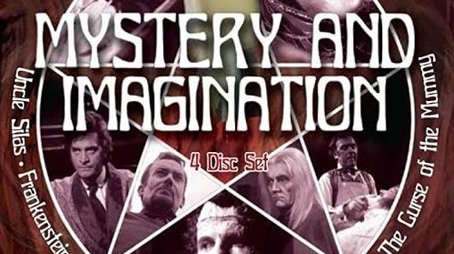
"Mystery and Imagination" is an anthology series that adapts classic horror and mystery stories, so the endings vary by episode. However, I can provide a detailed summary of one of the episodes, "The Tell-Tale Heart," which is based on Edgar Allan Poe's work.
In the short, simple narrative, the story concludes with the protagonist, driven mad by guilt, confessing to the murder he committed. He believes he can hear the heartbeat of the victim beneath the floorboards, which ultimately leads him to reveal his crime to the police.
Now, let's expand on that ending in a chronological and narrative fashion:
The episode opens with a dimly lit room, shadows dancing across the walls as the protagonist, a nervous and agitated man, recounts his tale. He insists on his sanity, despite the overwhelming anxiety that grips him. The camera zooms in on his wide, darting eyes, reflecting his inner turmoil.
As the story unfolds, we see him living with an old man whose eye he finds repulsive. The protagonist's obsession with the old man's eye grows, and he becomes consumed by the need to rid himself of it. Each night, he sneaks into the old man's room, the tension palpable as he waits for the perfect moment to strike. The creaking floorboards echo in the silence, amplifying his mounting dread.
On the fateful night, the old man awakens, sensing something amiss. The protagonist, heart racing, remains still, his breath shallow. The camera captures the flickering candlelight, casting eerie shadows that heighten the suspense. Finally, in a fit of rage and madness, he attacks the old man, smothering him to death. The act is brutal yet swift, and the protagonist's face contorts with a mix of triumph and horror.
After the murder, he dismembers the body and hides the pieces beneath the floorboards, a grim task that he undertakes with a manic energy. He cleans the room meticulously, convinced that he has committed the perfect crime. The scene shifts to the protagonist, now calm and collected, as he welcomes the police officers who arrive to investigate the old man's disappearance. He plays the role of the innocent, his demeanor deceptively composed.
However, as the officers question him, the protagonist's composure begins to crack. He hears a faint sound, a rhythmic thumping that grows louder and more insistent. The camera focuses on his face, a mask of horror as he realizes that it is the heartbeat of the old man, still echoing in his mind. The sound becomes unbearable, a manifestation of his guilt and paranoia.
In a climactic moment, the protagonist can no longer contain himself. He erupts, confessing to the murder in a fit of hysteria, shouting about the heartbeat that he cannot escape. The police officers, taken aback, watch as he unravels before them, revealing the hidden truth beneath the floorboards. The scene ends with the protagonist collapsing, consumed by his guilt, as the officers look on in disbelief.
In this haunting conclusion, the fate of the protagonist is sealed; he is left to grapple with the consequences of his actions, driven to madness by his own conscience. The old man, tragically, is lost to the violence of the protagonist's obsession, and the story serves as a chilling reminder of the destructive power of guilt and the fragility of the human mind.
Is there a post-credit scene?
The TV show "Mystery and Imagination," produced in 1966, does not feature post-credit scenes. Each episode concludes with a resolution to the story presented, and the format of the show typically does not include additional content after the credits roll. The focus remains on the narrative and the atmospheric storytelling that encapsulates the themes of mystery and suspense throughout the episodes.
What is the significance of the character of Dr. Jekyll in the adaptation of 'Dr. Jekyll and Mr. Hyde'?
In the adaptation of 'Dr. Jekyll and Mr. Hyde', Dr. Jekyll is portrayed as a conflicted scientist driven by his desire to separate the duality of human nature. His internal struggle is depicted through his transformation into Mr. Hyde, which serves as a physical manifestation of his darker impulses. The emotional turmoil he experiences highlights his desperation to control his darker side, ultimately leading to tragic consequences.
How does the character of the narrator in 'The Tell-Tale Heart' contribute to the story's tension?
In 'The Tell-Tale Heart', the narrator's descent into madness is central to the story's tension. His obsessive fixation on the old man's eye drives him to commit murder, and his frantic, erratic speech reflects his unstable mental state. As he recounts the events, his guilt manifests in the auditory hallucination of the beating heart, which symbolizes his overwhelming remorse and paranoia, heightening the suspense.
What role does the setting play in 'The Monkey's Paw' and its impact on the characters?
In 'The Monkey's Paw', the setting of the isolated, dimly lit home of the White family creates an atmosphere of foreboding and tension. The cozy yet claustrophobic environment contrasts sharply with the supernatural events that unfold, amplifying the characters' feelings of dread and helplessness. The setting serves as a physical representation of their entrapment in fate, as they grapple with the consequences of their wishes.
How does the character of the ghost in 'The Signal-Man' affect the protagonist's actions?
In 'The Signal-Man', the ghost serves as a harbinger of doom, deeply affecting the protagonist's actions and mental state. The protagonist's initial skepticism transforms into fear and urgency as he learns of the ghost's warnings about impending disasters. This haunting presence compels him to confront the reality of fate and the inevitability of tragedy, ultimately leading to a climactic moment of realization.
What internal conflicts does the character of the Count face in 'The Count of Monte Cristo' episode?
In 'The Count of Monte Cristo', the character of the Count grapples with profound internal conflicts stemming from his desire for revenge against those who wronged him. While he is driven by a thirst for justice, he also struggles with the moral implications of his actions. His emotional state oscillates between satisfaction and emptiness, as he realizes that vengeance does not bring the fulfillment he anticipated, leading to a complex exploration of his humanity.
Is this family friendly?
"Mystery and Imagination," produced in 1966, is an anthology series that adapts classic works of literature, often delving into themes of horror, suspense, and the supernatural. While the show is not overtly graphic, it does contain elements that may be unsettling for children or sensitive viewers.
-
Atmospheric Tension: Many episodes create a sense of dread and suspense, which could be frightening for younger audiences. The use of shadowy lighting and eerie sound effects enhances this feeling.
-
Supernatural Themes: The exploration of ghosts, madness, and the macabre can be disturbing. Some stories involve characters facing their fears or confronting dark aspects of human nature.
-
Moral Ambiguity: Characters often grapple with moral dilemmas, leading to unsettling conclusions that may provoke anxiety or confusion in younger viewers.
-
Death and Loss: Several episodes touch on themes of death, loss, and the consequences of one's actions, which could be emotionally heavy for sensitive individuals.
-
Psychological Horror: The show sometimes delves into the psychological state of characters, portraying madness or obsession, which may be distressing for some viewers.
Overall, while "Mystery and Imagination" is not explicitly violent or graphic, its themes and atmosphere may not be suitable for all children or sensitive viewers.