



Popular
What is Rin Okumura's true identity and how does it affect his relationships?
How does Yukio Okumura's character develop throughout the series?
What role does Mephisto Pheles play in the story and what are his motivations?
What is the significance of the True Cross Academy and its role in the plot?
How does the relationship between Rin and Shiemi Moriyama evolve throughout the series?
Should I watch it?
Ask Your Own Question

What is the plot?
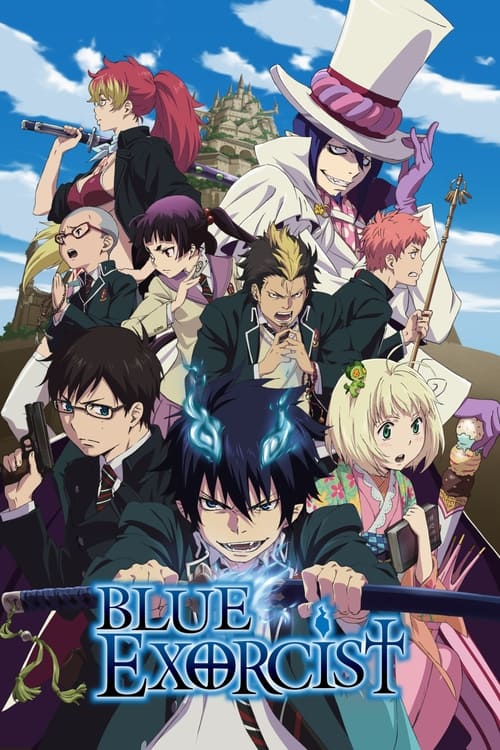
The story begins in a small town in Japan, where a young boy named Rin Okumura lives with his adoptive father, Father Fujimoto, who is a priest. One night, Rin discovers that he is the son of Satan when he accidentally unleashes his demonic powers while trying to protect Father Fujimoto from a demon attack. In the chaos, Father Fujimoto sacrifices himself to save Rin, urging him to control his powers and not to give in to his demonic heritage.
Following this traumatic event, Rin decides to become an exorcist to fight against demons and to find a way to defeat his biological father, Satan. He enrolls in True Cross Academy, a school for exorcists, where he meets other students, including his brother Yukio, who is a skilled exorcist and has been training to fight demons. Rin struggles to fit in, especially as he tries to hide his demonic nature from his classmates and teachers.
As Rin begins his training, he faces various challenges, including a rivalry with his classmate Shiemi Moriyama, who is a kind-hearted girl with a strong connection to plants and nature. Rin also encounters the school's strict and powerful teacher, Mephisto Pheles, who has his own mysterious agenda. Rin's internal conflict grows as he grapples with his identity and the fear of becoming like his father.
During a training exercise, Rin and his classmates are sent to a haunted forest where they must confront a powerful demon. Rin's powers manifest again, and he transforms into his demonic form, revealing his true nature to his classmates. This revelation causes tension and distrust among them, but Rin's determination to protect his friends and fight against evil begins to earn their respect.
As the story progresses, Rin learns about the existence of the Illuminati, a secret organization that seeks to use demons for their own purposes. The group is led by a powerful demon named Satan, who has plans to invade the human world. Rin and his friends band together to stop the Illuminati, leading to a series of confrontations with various demons and exorcists.
One significant battle occurs when Rin and Yukio face off against a powerful demon named Amaimon, who is one of Satan's sons. The fight is intense, with Rin struggling to control his powers while Yukio uses his marksmanship skills to support him. Ultimately, they manage to defeat Amaimon, but not without sustaining injuries and deepening their bond as brothers.
As the conflict escalates, Rin learns more about his past and the truth behind his mother's death. He discovers that she was killed by demons, which fuels his desire for revenge against Satan. This revelation drives Rin to train harder and embrace his powers, even as he wrestles with the fear of losing control.
The climax of the series occurs during the Exorcist's Festival, where Rin and his friends must confront a powerful demon that threatens the city. The battle is chaotic, with Rin unleashing his full demonic powers to protect his friends and the innocent people around them. The fight showcases Rin's growth as an exorcist and his determination to fight against his father's influence.
In the aftermath of the festival, Rin faces the consequences of his actions and the toll that his powers take on his relationships. He struggles with feelings of isolation and the fear that he may never fully escape his demonic heritage. However, with the support of his friends and brother, Rin begins to find a sense of purpose and belonging.
The series concludes with Rin and his friends preparing for future battles against demons and the Illuminati. Rin's journey of self-discovery continues as he embraces his identity as both a human and a demon, determined to forge his own path and protect those he cares about. The final scenes hint at the ongoing struggle against evil, leaving the door open for further adventures and challenges ahead.







What is the ending?
In the ending of the TV show Blue Exorcist, Rin Okumura confronts his demonic heritage and battles against his twin brother, Yukio, who is manipulated by the antagonist, Satan. The climax occurs during a fierce confrontation where Rin, with the help of his friends and allies, fights to save Yukio from being consumed by darkness. Ultimately, Rin's determination and love for his brother prevail, leading to a resolution where they both acknowledge their bond and the importance of fighting against their fate.
As the series concludes, Rin and Yukio, along with their friends, stand united against the forces of evil, symbolizing hope and the strength of family ties. The story ends with a sense of unresolved challenges, hinting at the ongoing struggle against demonic forces, but also with a newfound understanding and acceptance of their identities.
The final episodes of Blue Exorcist unfold with a palpable tension as the battle against Satan reaches its zenith. The scene opens in the depths of Gehenna, where Rin Okumura, his blue flames flickering with intensity, stands resolute against the overwhelming darkness that threatens to consume his brother, Yukio. The air is thick with despair, yet Rin's determination shines through as he recalls the bond they share, a bond forged through childhood memories and shared struggles.
As the confrontation escalates, Yukio, under the influence of Satan, wields his gun with a conflicted heart. His eyes, usually filled with resolve, now reflect a turmoil that stems from his fear of Rin's demonic nature. The brothers exchange heated words, each trying to reach the other amidst the chaos. Rin, desperate to save Yukio from the clutches of darkness, pleads with him, reminding him of their shared past and the love that binds them as brothers.
The scene shifts dramatically as the two engage in a fierce battle, their powers clashing in a spectacular display of blue flames and gunfire. Rin's flames, a manifestation of his demonic heritage, dance around him, illuminating the darkened landscape of Gehenna. Yukio, torn between his duty as an exorcist and his love for Rin, struggles to maintain control. The emotional stakes are high, and the audience can feel the weight of their shared history pressing down on them.
In a pivotal moment, Rin, fueled by his unwavering love for Yukio, unleashes the full extent of his powers. The blue flames surge around him, creating a protective barrier that shields Yukio from Satan's influence. This act of selflessness resonates deeply within Yukio, awakening the remnants of his brotherly love that had been overshadowed by fear and manipulation. The internal conflict within Yukio reaches a breaking point, and he hesitates, lowering his weapon as he grapples with the realization of what he is fighting against.
As the battle rages on, the other characters, including Shiemi, Izumo, and the rest of the True Cross Academy students, join the fray, rallying around Rin and Yukio. Their presence serves as a reminder of the strength found in friendship and unity. Together, they confront the demonic forces, showcasing their growth and determination to protect one another.
In the climax of the battle, Rin and Yukio finally come face to face, their eyes locking in a moment of understanding. Rin, with tears in his eyes, reaches out to Yukio, urging him to remember who he truly is. The emotional weight of their connection breaks through the darkness, and Yukio, overwhelmed by the love and support of his friends and brother, ultimately chooses to fight alongside Rin rather than against him.
The final confrontation with Satan culminates in a powerful display of their combined strength. With a united front, Rin and Yukio channel their powers together, creating a brilliant explosion of blue flames that engulfs the dark entity. The scene is both visually stunning and emotionally charged, symbolizing the triumph of love and familial bonds over darkness.
As the dust settles, the aftermath reveals the fate of the main characters. Rin and Yukio stand together, battered but unbroken, their bond stronger than ever. They have faced their fears and accepted their identities, no longer defined solely by their demonic heritage. Shiemi and Izumo, alongside their classmates, celebrate their victory, but the lingering threat of demonic forces remains, hinting at the ongoing challenges they will face.
In the closing moments, Rin and Yukio share a quiet conversation, reflecting on their journey and the importance of their relationship. They acknowledge the battles ahead but express a newfound hope for the future. The series ends with a sense of unity and resilience, leaving viewers with the understanding that while the fight against evil continues, the strength of family and friendship will always light the way.
Is there a post-credit scene?
In the 2011 anime series Blue Exorcist, there is indeed a post-credit scene that adds a light-hearted touch to the conclusion of the season.
As the credits roll, the scene shifts to a more comedic tone, featuring Rin Okumura and his friends. They are seen in a casual setting, where Rin is attempting to cook. The atmosphere is filled with laughter and camaraderie, showcasing the bonds that have formed among the characters throughout their trials.
Rin, with his usual enthusiasm, is trying to impress his friends with his cooking skills, but things quickly go awry. The food he prepares turns out to be a disaster, leading to a humorous moment where his friends react with exaggerated expressions of horror and disbelief. This scene highlights Rin's clumsiness and his earnest desire to connect with others, even if his efforts often lead to chaos.
The post-credit scene serves as a reminder of the lighter moments in their lives, contrasting with the darker themes of the series, and leaves viewers with a sense of warmth and hope for the characters' futures.
What is Rin Okumura's true identity and how does it affect his relationships?
Rin Okumura is revealed to be the son of Satan, which profoundly impacts his relationships with others. Initially, he struggles with feelings of isolation and fear of rejection, especially from his brother Yukio, who is a skilled exorcist. Rin's identity creates tension as he grapples with the expectations placed upon him and his desire to protect those he cares about, leading to emotional conflicts and moments of vulnerability.
How does Yukio Okumura's character develop throughout the series?
Yukio Okumura starts as a confident and skilled exorcist, often overshadowed by his brother Rin's more flamboyant personality. As the series progresses, Yukio's internal struggles with his feelings of inadequacy and his complex relationship with Rin come to the forefront. He battles with the pressure of being the 'perfect' exorcist and his fear of becoming like their father, Satan. This internal conflict leads to moments of tension and ultimately shapes his decisions and actions.
What role does Mephisto Pheles play in the story and what are his motivations?
Mephisto Pheles serves as a mysterious and manipulative figure throughout the series. He is the headmaster of True Cross Academy and has his own agenda regarding the balance between humans and demons. His motivations are often ambiguous, as he seems to play both sides, helping Rin and Yukio while also pushing them towards their destinies. His playful demeanor masks a deeper understanding of the conflict between good and evil, making him a pivotal character in the unfolding events.
What is the significance of the True Cross Academy and its role in the plot?
True Cross Academy is not just a school; it is a training ground for exorcists who combat demons. The academy serves as a backdrop for Rin and Yukio's development, where they learn to harness their abilities and confront their fears. The institution is steeped in history and tradition, and its various factions and characters, such as the Exorcist Order, play crucial roles in the overarching battle against Satan and his minions. The academy's environment fosters both camaraderie and rivalry, shaping the characters' growth.
How does the relationship between Rin and Shiemi Moriyama evolve throughout the series?
Rin and Shiemi Moriyama's relationship begins with Shiemi's initial shyness and her admiration for Rin's determination. As they face various challenges together, including battles against demons and personal struggles, their bond deepens. Shiemi becomes a source of support for Rin, helping him navigate his identity as Satan's son. Their relationship evolves from friendship to a deeper emotional connection, highlighting themes of trust, acceptance, and the power of companionship in overcoming adversity.
Is this family friendly?
"Blue Exorcist," produced in 2011, contains several elements that may not be considered family-friendly, particularly for younger viewers or those sensitive to certain themes. Here are some potentially objectionable or upsetting aspects:
-
Violence and Action: The series features frequent battles between exorcists and demons, which include intense fight scenes, blood, and injuries. Characters often face life-threatening situations.
-
Supernatural Themes: The show revolves around demons, hell, and the concept of exorcism, which may be unsettling for some viewers, especially younger children who might not grasp the fictional nature of these elements.
-
Dark Themes: The narrative explores themes of betrayal, loss, and the struggle between good and evil, which can evoke strong emotional responses. Characters deal with personal trauma and familial conflict.
-
Mature Language and Situations: There are instances of mild profanity and suggestive themes, including some innuendos and adult situations that may not be suitable for younger audiences.
-
Character Struggles: The protagonist, Rin Okumura, grapples with feelings of anger, isolation, and the burden of his demonic heritage, which can be emotionally intense and may resonate with viewers who have experienced similar feelings.
-
Death and Sacrifice: The series includes scenes of character deaths and sacrifices that can be quite impactful and may be distressing for sensitive viewers.
Overall, while "Blue Exorcist" has engaging storytelling and character development, its darker themes and content may not be appropriate for all audiences, particularly children.