



Popular
What is the significance of the Kyoto Arc in the story of Blue Exorcist?
How does Rin's relationship with Yukio evolve during the Kyoto Saga?
What role does Shura Kirigakure play in the Kyoto Saga?
What are the motivations of the Impure King and how does it affect the characters?
How does the character of Mephisto Pheles influence the events in the Kyoto Saga?
Should I watch it?
Ask Your Own Question

What is the plot?
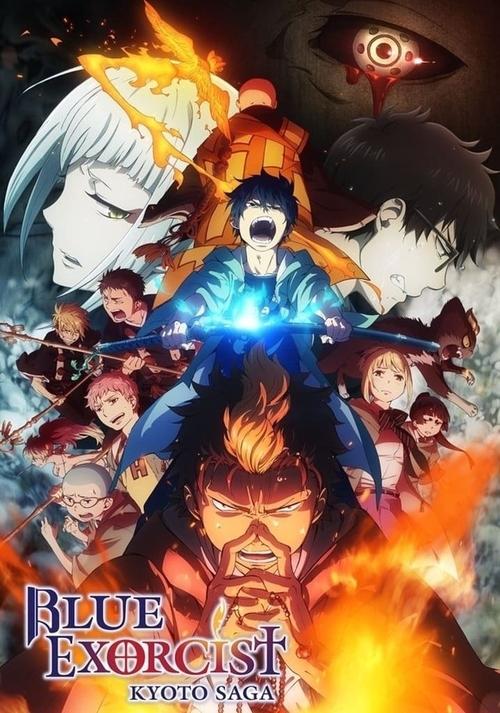
The story begins with Rin Okumura and his friends from True Cross Academy preparing for a trip to Kyoto for an exorcist training mission. They are excited but also anxious about the challenges that lie ahead. Rin, who is the son of Satan, struggles with his demonic powers and the fear of losing control. His internal conflict is palpable as he grapples with his identity and the expectations placed upon him as an exorcist.
Upon arriving in Kyoto, the group is greeted by the serene yet ominous atmosphere of the city. They meet their instructor, Shura Kirigakure, who is tasked with guiding them through their training. Shura is confident and somewhat brash, which both inspires and intimidates the students. The group is soon introduced to the local exorcists, including the enigmatic and powerful exorcist, Konekomaru Miwa, who has a deep-seated rivalry with Rin.
As the training begins, the students are put through rigorous exercises designed to test their abilities. Rin struggles to control his flames, often causing accidental destruction, which leads to tension among his peers. Meanwhile, Yukio Okumura, Rin's twin brother and a skilled marksman, is focused on proving himself as a capable exorcist. He is determined to protect Rin and keep his demonic side in check, which adds to the pressure he feels.
The plot thickens when a series of mysterious attacks occur in Kyoto, leading to the revelation that a group of demons, known as the Illuminati, is behind the chaos. The Illuminati seeks to resurrect Satan, and their leader, a powerful demon named Shura, has a personal vendetta against Rin. This revelation heightens the stakes for Rin and his friends, as they realize they are not just training but are also in the midst of a larger conflict.
During a training exercise, the group encounters a powerful demon that tests their skills. Rin, in a moment of desperation, unleashes his demonic powers, which causes a rift between him and his friends. They fear his abilities and question whether they can trust him. This moment of vulnerability for Rin showcases his fear of being seen as a monster, and he struggles with the isolation that comes from his powers.
As the story progresses, the group learns that the Illuminati is planning a major attack during the upcoming festival in Kyoto. They must work together to thwart this plan, but internal conflicts arise as trust issues deepen. Rin feels increasingly alienated, and his relationship with Yukio becomes strained as they argue over the best course of action. Yukio believes they should focus on strategy, while Rin wants to confront the demons head-on.
The night of the festival arrives, and the Illuminati launches their attack. The city is thrown into chaos as demons wreak havoc, and the exorcists scramble to protect civilians. Rin and his friends engage in fierce battles against the demons, showcasing their growth and teamwork. Rin, despite his fears, steps up to fight, determined to prove himself and protect those he cares about.
During the climactic battle, Rin faces off against Shura, who reveals her true intentions and her connection to the Illuminati. The fight is intense, with Rin struggling to maintain control over his flames while also trying to save his friends. The emotional stakes are high as he confronts his fears and the reality of his demonic heritage.
In a pivotal moment, Yukio is injured during the battle, which pushes Rin to his limits. Fueled by desperation and anger, Rin unleashes his full demonic power, transforming into a fearsome version of himself. This transformation terrifies his friends but also allows him to defeat the demons threatening them. The battle culminates in a showdown with the Illuminati's leader, where Rin's determination and newfound control over his powers shine through.
After the battle, the group is left to deal with the aftermath of their actions. Rin's transformation raises questions about his future as an exorcist and his relationship with his friends. The emotional toll of the fight weighs heavily on everyone, and they must confront their fears and insecurities moving forward.
In the final scenes, the group reflects on their experiences in Kyoto. They have grown stronger as individuals and as a team, but the threat of the Illuminati still looms. Rin's journey of self-acceptance continues as he learns to embrace both his human and demonic sides. The season ends with a sense of unresolved tension, hinting at the challenges that lie ahead for Rin and his friends as they prepare for the next chapter in their battle against evil.







What is the ending?
In the ending of "Blue Exorcist: Kyoto Saga," Rin Okumura confronts the powerful demon, Shura Kirigakure, and the other exorcists as they battle against the forces of the Impure King. The climax reveals the true strength of Rin's demonic powers and his determination to protect his friends and family. The series concludes with a sense of hope and the promise of future battles against evil, as Rin and his allies stand united.
As the final episodes of "Blue Exorcist: Kyoto Saga" unfold, the tension escalates dramatically. The scene opens in the heart of Kyoto, where the exorcists are engaged in a fierce battle against the Impure King, a monstrous entity threatening to unleash chaos. The air is thick with the scent of smoke and the sounds of clashing weapons and anguished cries. Rin Okumura, with his blue flames flickering around him, stands resolute, his heart pounding with a mix of fear and determination.
Rin's internal struggle is palpable; he grapples with the weight of his demonic heritage and the responsibility he feels to protect his friends. As he charges into battle, his thoughts are consumed by the desire to prove himself as a true exorcist, not just the son of Satan. His brother, Yukio, fights alongside him, showcasing his sharpshooting skills and tactical mind. The bond between the brothers is tested, but their shared goal of defeating the Impure King strengthens their resolve.
In a pivotal moment, Shura Kirigakure, the skilled exorcist, joins the fray, wielding her katana with precision. She embodies a fierce determination, her eyes blazing with the desire to protect those she cares about. The trio--Rin, Yukio, and Shura--form a powerful alliance, each contributing their unique strengths to the battle. The animation captures the intensity of their movements, the vibrant colors of Rin's flames contrasting against the dark, ominous presence of the Impure King.
As the fight reaches its climax, Rin unleashes the full extent of his demonic powers, transforming into a formidable force. The scene is visually stunning, with flames erupting around him, illuminating the darkness. His emotions surge as he recalls the faces of his friends and the sacrifices made to reach this moment. The stakes are high, and the weight of his lineage bears down on him, but he channels that energy into a fierce determination to protect his loved ones.
In a heart-stopping moment, Rin confronts the Impure King directly. The battle is fierce, and the animation captures the chaos of the fight--the ground shakes, and the air crackles with energy. Rin's internal conflict comes to a head as he embraces his identity, not as a demon, but as a protector. With a final, powerful attack, he manages to defeat the Impure King, the creature disintegrating into a cloud of dark energy.
As the dust settles, the aftermath of the battle reveals the emotional toll it has taken on the characters. Rin stands amidst the ruins, panting heavily, his flames flickering out as he regains his human form. Yukio approaches him, a mix of relief and pride in his eyes. The brothers share a moment of understanding, their bond strengthened by the trials they faced together.
Shura, too, acknowledges Rin's growth, her expression softening as she realizes the depth of his resolve. The trio stands together, united in their victory but aware that the fight against evil is far from over. The final scenes depict them walking away from the battlefield, the sun rising in the background, symbolizing hope and new beginnings.
In the closing moments, the series hints at future challenges, with Rin and his friends ready to face whatever comes next. The fate of each character is left open-ended, but there is a sense of camaraderie and strength among them. Rin, Yukio, and Shura emerge from the battle not just as exorcists, but as a family forged in the fires of conflict, ready to confront the darkness that lies ahead.
Is there a post-credit scene?
In "Blue Exorcist: Kyoto Saga," there is indeed a post-credit scene that adds a layer of intrigue to the story. After the main events of the final episode, the scene shifts to a serene setting where Rin Okumura and his friends are seen enjoying a peaceful moment together.
The atmosphere is light-hearted, contrasting with the intense battles and emotional turmoil that preceded it. Rin, Yukio, Shiemi, and the others are gathered, sharing laughter and camaraderie, which highlights their bond and the growth they have experienced throughout their trials.
As the scene unfolds, the focus shifts to Rin, who is momentarily lost in thought. He reflects on the challenges they faced in Kyoto and the importance of their friendships. This moment of introspection reveals Rin's determination to protect those he cares about and his resolve to continue growing stronger as an exorcist.
The scene concludes with a light-hearted exchange among the group, leaving viewers with a sense of hope and the promise of future adventures. This post-credit moment serves as a reminder of the themes of friendship and perseverance that are central to the series, while also teasing the potential for further developments in Rin's journey.
What is the significance of the Kyoto Arc in the story of Blue Exorcist?
The Kyoto Arc is crucial as it delves into the backstory of the main characters, particularly Rin Okumura and his brother Yukio. It introduces the concept of the Impure King, a powerful demon that poses a significant threat to both the human and demon worlds. The arc also explores the dynamics of the Exorcist organization and the challenges they face, highlighting the internal struggles of Rin as he grapples with his demonic heritage and his desire to protect his friends.
How does Rin's relationship with Yukio evolve during the Kyoto Saga?
Throughout the Kyoto Saga, Rin's relationship with Yukio becomes increasingly strained. Initially, they share a bond as brothers, but as the events unfold, Yukio's growing resentment towards Rin's demonic nature and his own insecurities lead to conflict. This culminates in a pivotal moment where Yukio confronts Rin about his powers, revealing his fear of losing control and the burden of being an Exorcist. Their relationship is tested as they navigate their differing ideologies and the weight of their family legacy.
What role does Shura Kirigakure play in the Kyoto Saga?
Shura Kirigakure serves as a mentor figure for Rin and Yukio during the Kyoto Saga. She is an experienced Exorcist who provides guidance and support as they face the challenges posed by the Impure King. Shura's character is marked by her strong-willed nature and her commitment to the Exorcist cause, but she also reveals a more vulnerable side as she reflects on her past and the sacrifices she has made. Her interactions with Rin and Yukio help to deepen their understanding of their roles as Exorcists.
What are the motivations of the Impure King and how does it affect the characters?
The Impure King is driven by a desire for revenge against humanity, stemming from its tragic backstory of being a demon that was wronged. This motivation creates a sense of urgency for the Exorcists, as they must confront this powerful entity to protect both their world and the human realm. The threat of the Impure King forces the characters, especially Rin and Yukio, to confront their fears and insecurities, ultimately pushing them to grow stronger and more united in their mission.
How does the character of Mephisto Pheles influence the events in the Kyoto Saga?
Mephisto Pheles plays a manipulative and enigmatic role in the Kyoto Saga, acting as a puppet master behind the scenes. His motivations are often shrouded in mystery, but he seems to have a vested interest in the outcomes of Rin and Yukio's struggles. Mephisto's actions often create tension and uncertainty, as he provides assistance while also pursuing his own agenda. His presence raises questions about loyalty and the true nature of good and evil, impacting the decisions and paths of the main characters.
Is this family friendly?
"Blue Exorcist: Kyoto Saga" contains several elements that may not be suitable for younger audiences or sensitive viewers. Here are some potentially objectionable aspects:
-
Violence and Action: The series features frequent battles between exorcists and demons, showcasing intense fight scenes that include physical harm, blood, and injuries.
-
Supernatural Themes: The presence of demons and the exploration of dark themes related to possession and the afterlife may be unsettling for some viewers.
-
Mature Themes: The storyline delves into complex themes such as betrayal, familial conflict, and the struggle between good and evil, which may be difficult for younger audiences to fully grasp.
-
Emotional Turmoil: Characters experience significant emotional distress, including feelings of anger, sadness, and despair, which could be upsetting for sensitive viewers.
-
Mild Language: There are instances of mild swearing and suggestive dialogue that may not be appropriate for children.
-
Character Deaths: The series includes moments of character loss that can evoke strong emotional reactions and may be distressing.
These elements contribute to a darker tone that may not be suitable for all viewers, particularly younger children.