
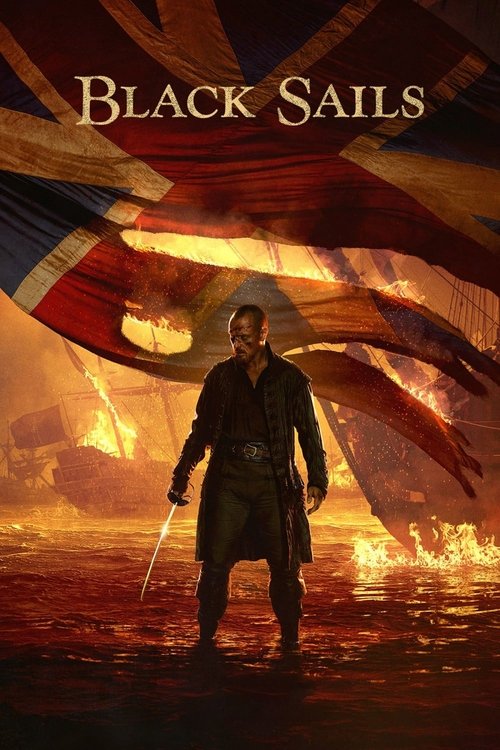











Popular
What motivates Captain Flint's actions throughout the series?
How does the relationship between Flint and Silver evolve over the series?
What role does Eleanor Guthrie play in the power dynamics of Nassau?
What is the significance of the character Charles Vane in the series?
How does the character of Jack Rackham contribute to the story's themes of loyalty and betrayal?
Should I watch it?
Ask Your Own Question

What is the plot?
In the first episode, "I," we are introduced to Captain Flint, who is a notorious pirate captain in the Caribbean. The story begins with Flint's ship, the Walrus, attacking a merchant ship, the Urca de Lima, which is carrying a significant amount of gold. Flint's crew, including the loyal John Silver, is eager for the treasure. Flint's motivations are revealed as he seeks to secure a future for piracy and to challenge the British Empire's control over the seas. Meanwhile, we see the character of Eleanor Guthrie, who runs a tavern in Nassau and is deeply involved in the pirate economy. She is shown to be resourceful and cunning, navigating the dangerous political landscape of the island.
As the episode progresses, Flint's plan to capture the Urca de Lima is set in motion. He learns that the ship will be heavily guarded, and he must devise a strategy to outsmart the British naval forces. Flint's crew is skeptical, but he manages to rally them with his charisma and vision. The tension builds as they prepare for the heist, showcasing Flint's leadership and the loyalty of his crew, particularly Silver, who is eager to prove himself.
In the second episode, "II," the heist begins. Flint and his crew ambush the Urca de Lima, leading to a fierce battle. The pirates board the ship, and a brutal fight ensues. Flint demonstrates his combat skills, taking down several guards, while Silver uses his wits to navigate the chaos. The crew manages to seize the gold, but not without casualties. The aftermath of the battle reveals the cost of their victory, as Flint grapples with the loss of crew members and the moral implications of their actions.
The narrative shifts to Eleanor, who is dealing with the fallout of the pirate activities in Nassau. She faces pressure from the British authorities, particularly from Captain Charles Vane, who is also a pirate but has different ambitions. Eleanor's relationship with Vane is complex, as they share a history, but their goals often clash. She is determined to maintain her power and influence in Nassau, even as the threat of the British navy looms larger.
In the third episode, "III," Flint's crew begins to celebrate their victory, but tensions rise as they argue over the distribution of the gold. Flint's leadership is challenged, and he must assert his authority to keep the crew united. Meanwhile, Silver's past is explored, revealing his motivations and the secrets he harbors. He is not just a simple cook; he has ambitions of his own and is willing to play the long game to achieve them.
As the season progresses, Flint's plans become increasingly ambitious. He seeks to establish a pirate republic, a place where pirates can live freely and without the oppression of colonial powers. This vision puts him at odds with other pirate leaders, including Vane and Blackbeard, who have their own ideas about power and control. Flint's determination to create a new world for pirates drives him to make alliances and enemies alike.
In the fourth episode, "IV," the conflict escalates as Flint's actions draw the attention of the British navy. The arrival of Captain Hornigold, a former mentor to Flint, complicates matters further. Hornigold represents the old ways of piracy, and his presence forces Flint to confront his past and the choices he has made. The tension between the old guard and the new generation of pirates becomes a central theme, as Flint struggles to assert his vision against traditionalists.
The fifth episode, "V," sees Flint's plans come to fruition as he gathers a coalition of pirates to challenge the British. The stakes are raised as they prepare for a major confrontation. Flint's leadership is tested as he must navigate the differing ambitions of his allies, including Vane and Blackbeard. The episode culminates in a dramatic battle at sea, where alliances are forged and broken, and the true cost of piracy is laid bare.
As the season continues, Flint's relationship with Silver deepens, revealing layers of trust and betrayal. Silver's cunning and resourcefulness become invaluable to Flint, but his own ambitions threaten to create a rift between them. The emotional stakes rise as Flint grapples with the consequences of his choices, and the toll of leadership weighs heavily on him.
In the final episodes of the season, the conflict with the British navy reaches a boiling point. Flint's coalition of pirates faces overwhelming odds, and sacrifices must be made. The battles are intense and brutal, showcasing the harsh realities of pirate life. Flint's vision for a pirate republic hangs in the balance as he confronts both external enemies and internal strife within his crew.
The season concludes with a climactic showdown, where Flint's leadership is put to the ultimate test. The outcome of the battles will determine the future of piracy in the Caribbean, and the characters must confront their own motivations and desires. Flint's journey from a ruthless pirate captain to a leader with a vision for change is complete, but the cost of that journey is profound, leaving the audience with a sense of uncertainty about the future of the characters and the world they inhabit.









What is the ending?
In the ending of "Black Sails," the conflict between the pirates and the British Empire reaches a climax. Captain Flint and his crew face dire consequences for their actions, leading to a final confrontation. The series concludes with the establishment of a new order in Nassau, the fate of several key characters is revealed, and the legacy of piracy is cemented.
As the final episodes unfold, the tension in Nassau escalates. The British fleet, led by Captain Charles Vane and the formidable Woodes Rogers, is poised to take control of the island. The pirates, led by Captain Flint, are desperate to secure their freedom and way of life.
In the first scene of the finale, Flint stands on the deck of the Walrus, his face a mask of determination and despair. He knows that the stakes have never been higher. The weight of his past decisions hangs heavily on him, and he is haunted by the ghosts of those he has lost. His resolve is to fight for the future of piracy, believing that their way of life is worth dying for.
Meanwhile, Silver, who has been Flint's ally and adversary throughout the series, grapples with his own internal conflict. He has grown from a cunning thief to a leader, but he is torn between loyalty to Flint and the desire to secure a future for himself and his crew. In a moment of vulnerability, he confesses to Flint that he wants to build a life beyond piracy, revealing his fear of the inevitable end that awaits them.
As the British forces land on the shores of Nassau, the pirates prepare for battle. The scene shifts to the streets of Nassau, where the citizens are caught in the crossfire. The tension is palpable as both sides prepare for a confrontation that will determine the fate of the island. The camera captures the chaos of the impending battle, with men shouting and weapons clashing, underscoring the desperation of the pirates to hold onto their freedom.
In the heat of battle, Flint and Vane find themselves face to face with Rogers. Flint, fueled by rage and a desire for revenge, charges at Rogers, but the confrontation is brutal. Flint's past decisions come back to haunt him as he realizes that his quest for power has led to this moment of reckoning. The fight is fierce, and Flint's emotional turmoil is evident as he fights not just for his life, but for the legacy of piracy itself.
As the battle rages on, Silver makes a pivotal decision. He chooses to side with the pirates, rallying them to fight against the British forces. His leadership shines through as he inspires the crew to stand together, showcasing his growth from a self-serving individual to a man willing to fight for a cause greater than himself.
In the climax of the series, Flint faces a devastating choice. He must confront the reality that his vision of a free pirate society may not be achievable. In a moment of clarity, he realizes that the fight for freedom has cost him everything he once held dear. The emotional weight of his journey culminates in a heart-wrenching decision that will change the course of his life forever.
As the dust settles after the battle, the fate of the main characters is revealed. Flint, having lost everything, is left to grapple with the consequences of his actions. He is ultimately captured, a tragic end for a man who once sought to be a legend. Silver, on the other hand, emerges as a leader, having secured a future for himself and the remaining pirates. He stands amidst the ruins of Nassau, contemplating the new order that has emerged from the chaos.
The series concludes with a poignant reflection on the legacy of piracy. The final scenes depict the transformation of Nassau, now under British control, but the spirit of the pirates lingers in the air. The characters' journeys come full circle, each facing the consequences of their choices, and the story of "Black Sails" ends with a powerful reminder of the cost of freedom and the enduring nature of rebellion.
Is there a post-credit scene?
"Black Sails" does not feature a post-credit scene in any of its episodes. The series, which aired from 2014 to 2017, concludes its narrative within the episodes themselves, wrapping up character arcs and storylines without additional scenes after the credits. Each episode ends with a focus on the unfolding drama and the complex relationships among the characters, leaving viewers to reflect on the events that transpired rather than introducing new material in a post-credit format.
What motivates Captain Flint's actions throughout the series?
Captain Flint, portrayed by Toby Stephens, is driven by a complex mix of revenge, ambition, and a desire for freedom. His past as a naval officer and the loss of his lover, Miranda, deeply influence his ruthless pursuit of power and wealth. Flint's internal struggle is evident as he grapples with his moral compass, often justifying his violent actions as necessary for the greater good of his crew and the fight against colonial oppression.
How does the relationship between Flint and Silver evolve over the series?
The relationship between Captain Flint and John Silver, played by Luke Arnold, begins with mutual distrust and manipulation. Initially, Silver seeks to use Flint to achieve his own goals, but as the series progresses, a complex bond forms between them. Flint sees Silver as a potential successor, while Silver learns to navigate Flint's darker impulses. Their dynamic shifts from adversaries to reluctant allies, culminating in a deep, albeit fraught, loyalty that is tested by betrayal and ambition.
What role does Eleanor Guthrie play in the power dynamics of Nassau?
Eleanor Guthrie, portrayed by Hannah New, is a pivotal character in the struggle for control over Nassau. As the daughter of the former governor, she initially wields significant influence in the pirate community, balancing her relationships with both the pirates and the British authorities. Her motivations are rooted in survival and ambition, as she seeks to establish her own power while navigating the treacherous waters of loyalty and betrayal. Eleanor's character arc reflects her transformation from a pawn in the game to a formidable player in her own right.
What is the significance of the character Charles Vane in the series?
Charles Vane, played by Zach McGowan, represents the brutal and chaotic nature of piracy. His fierce independence and refusal to conform to the emerging order of piracy under Flint and Silver highlight the tensions within the pirate community. Vane's motivations are driven by a desire for freedom and respect, often leading him to clash with Flint. His character embodies the struggle between the old ways of piracy and the new, ultimately facing the consequences of his uncompromising nature.
How does the character of Jack Rackham contribute to the story's themes of loyalty and betrayal?
Jack Rackham, portrayed by Toby Schmitz, serves as a foil to both Flint and Vane, embodying the complexities of loyalty and ambition. Initially seen as a comic relief, Rackham's character evolves as he grapples with the harsh realities of piracy. His relationships with Anne Bonny and the crew reflect the shifting allegiances and moral dilemmas faced by pirates. As he navigates the treacherous waters of loyalty to Flint and the desire for personal glory, Rackham's journey underscores the series' exploration of betrayal and the cost of ambition.
Is this family friendly?
"Black Sails" is not considered family-friendly due to its mature themes and content. The show contains several potentially objectionable or upsetting aspects, including:
-
Graphic Violence: The series features intense and brutal combat scenes, including sword fights, shootings, and graphic depictions of injuries and death.
-
Sexual Content: There are numerous scenes that depict sexual situations, nudity, and sexual violence, which may be inappropriate for younger viewers.
-
Strong Language: The dialogue includes frequent use of profanity and coarse language, which may not be suitable for children.
-
Substance Abuse: Characters are often shown consuming alcohol and engaging in reckless behavior, which could be concerning for sensitive viewers.
-
Moral Ambiguity: The characters often engage in morally questionable actions, including betrayal, manipulation, and treachery, which may be unsettling for some audiences.
-
Themes of Betrayal and Loss: The emotional weight of betrayal, loss, and the harsh realities of pirate life can be heavy and distressing.
These elements contribute to the show's mature rating and may not be appropriate for children or sensitive individuals.