







Popular
What is Mashiro Shiina's role in the story and how does her character develop throughout the series?
How does Sorata Kanda's relationship with Mashiro evolve over the course of the series?
What challenges does Mashiro face in her pursuit of becoming a successful artist?
What role does the character Jin Mitaka play in the dynamics of Sakurasou?
How does Nanami Aoyama's character contribute to the love triangle in the story?
Should I watch it?
Ask Your Own Question

What is the plot?
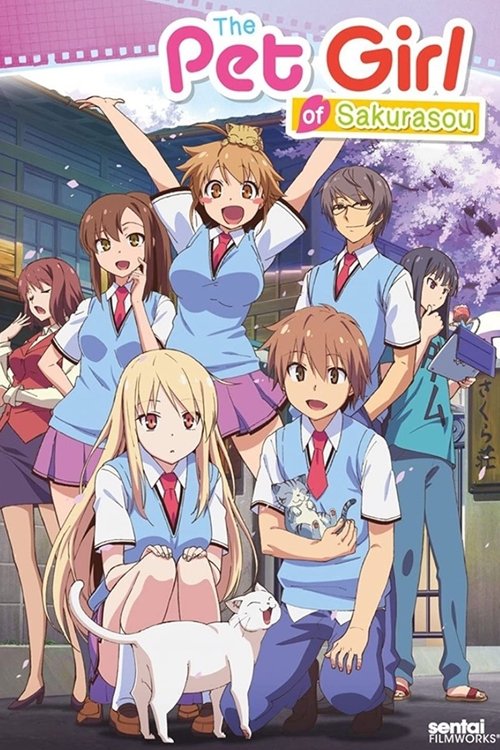
The story begins with Sorata Kanda, a high school student who is forced to move into Sakurasou, a dormitory known for housing students with eccentric talents. Sorata is initially reluctant but is compelled to stay after he finds a stray cat, which he names Jin. He is determined to find a home for Jin, as pets are not allowed in the dorm. Sorata's life in Sakurasou is chaotic, filled with unique residents, including Mashiro Shiina, a brilliant but socially inept artist, and other quirky characters like Jin, the pet girl, and the energetic Nanami Aoyama.
As Sorata settles into his new life, he becomes increasingly involved with Mashiro, who struggles with daily tasks and social interactions. Sorata takes on the role of her caretaker, helping her with basic needs and encouraging her artistic endeavors. Their relationship deepens as they share moments of vulnerability, with Sorata often feeling a mix of frustration and affection towards Mashiro's obliviousness.
The plot thickens when Mashiro decides to enter an art competition, which becomes a pivotal moment for her character. Sorata supports her by helping her prepare, but he also grapples with his own feelings of inadequacy as he compares himself to her talent. The competition serves as a backdrop for their growing bond, but it also highlights Sorata's internal conflict about his own future and aspirations.
As the competition approaches, tensions rise within Sakurasou. Nanami, who has feelings for Sorata, becomes increasingly jealous of the time he spends with Mashiro. This jealousy leads to misunderstandings and emotional confrontations, particularly when Nanami confesses her feelings to Sorata, who is unsure of how to respond. This love triangle adds complexity to the relationships within the dorm.
During the art competition, Mashiro's work is met with mixed reactions, and she struggles with self-doubt. Sorata's encouragement helps her push through, but the pressure takes a toll on both of them. Ultimately, Mashiro wins the competition, but the victory is bittersweet as it forces her to confront her own limitations and the reality of her talent. Sorata feels a sense of pride for her but is also reminded of his own lack of direction.
Following the competition, Mashiro's success leads to opportunities that pull her away from Sakurasou. She is offered a chance to study abroad, which creates a rift between her and Sorata. Sorata is torn between wanting her to succeed and fearing that she will leave him behind. This conflict culminates in a heartfelt confrontation where they both express their fears and desires, leading to a moment of clarity about their feelings for each other.
As the story progresses, Sorata's relationship with Nanami also evolves. He begins to recognize her feelings and the sacrifices she has made for him. This realization prompts him to reevaluate his own feelings and the nature of his relationships with both girls. The emotional stakes rise as Sorata must make a choice about who he truly cares for, leading to a climactic moment where he must confront his own insecurities.
In the final episodes, the characters face the impending changes that come with graduation and the end of their time at Sakurasou. Sorata, Mashiro, and Nanami each grapple with their futures and the impact of their relationships. Sorata ultimately decides to pursue his own dreams, inspired by Mashiro's determination. The series concludes with a sense of hope and possibility, as the characters take their first steps into adulthood, leaving behind the memories of their time in Sakurasou but carrying the lessons and bonds they formed with them.









What is the ending?
In the ending of "The Pet Girl of Sakurasou," Mashiro Shiina decides to pursue her dream of becoming a successful artist, while Sorata Kanda grapples with his feelings for her. After a heartfelt farewell, Sorata resolves to support her from afar, and the series concludes with a sense of hope for their futures.
As the final episodes unfold, the atmosphere in Sakurasou is charged with anticipation and emotion. The story begins with Sorata Kanda, who has been deeply affected by the impending departure of Mashiro Shiina. She has been accepted into a prestigious art school in Paris, a dream she has long held. Sorata, who has developed strong feelings for Mashiro, is torn between his desire to confess his love and his understanding of her ambitions.
In the first scene, Sorata watches Mashiro as she prepares for her journey. The room is filled with a bittersweet tension; the walls adorned with her artwork, each piece a testament to her growth as an artist. Sorata's heart aches as he realizes that this may be the last time he sees her in Sakurasou. He recalls their shared moments, from the chaos of their daily lives to the quiet times spent together, and he feels a mix of pride and sorrow.
As the day of Mashiro's departure approaches, the residents of Sakurasou gather to support her. They organize a farewell party, filled with laughter and tears. Mashiro, usually aloof and focused on her art, shows a rare vulnerability. She expresses her gratitude to her friends, particularly to Sorata, who has always been there for her. The scene is poignant, with each character reflecting on their relationships and the impact they have had on one another.
In a private moment, Sorata finally gathers the courage to confront Mashiro. He takes her aside, his heart racing. The setting is intimate, the soft glow of the evening light casting a warm hue around them. Sorata struggles to articulate his feelings, but ultimately, he tells her how much she means to him. Mashiro, taken aback, responds with her characteristic honesty. She admits that she has always relied on him but emphasizes that she must follow her own path now. The weight of her words hangs in the air, and Sorata feels a mix of heartbreak and understanding.
The next scene shifts to the day of Mashiro's departure. The atmosphere is heavy with emotion as the residents of Sakurasou gather at the train station. Sorata stands among them, his heart heavy. As Mashiro boards the train, she turns to look at him one last time. Their eyes meet, and in that moment, a silent promise is exchanged. Sorata watches as the train pulls away, feeling a profound sense of loss but also a flicker of hope for Mashiro's future.
In the final moments of the series, Sorata reflects on his own journey. He realizes that while he has let Mashiro go, he must also pursue his own dreams. The camera pans out, showing Sorata standing alone at the station, surrounded by the memories of their time together. He resolves to support Mashiro from afar, understanding that true love sometimes means letting go.
As the credits roll, the fates of the main characters are subtly hinted at. Mashiro embarks on her new adventure in Paris, ready to embrace the challenges ahead. Sorata, inspired by her courage, begins to focus on his own aspirations, determined to carve out his own path. The series concludes with a sense of hope and possibility, leaving viewers with the understanding that while their paths may diverge, the bonds they formed will always remain a part of them.
Is there a post-credit scene?
In "The Pet Girl of Sakurasou," there is no post-credit scene. The series concludes with its final episode, wrapping up the main story arcs and character developments without any additional scenes after the credits. The focus remains on the emotional resolutions and the relationships between the characters, particularly between Mashiro Shiina and Sorata Kanda, as they navigate their feelings and aspirations. The ending emphasizes the themes of growth, creativity, and the bonds formed within the unique environment of Sakurasou.
What is Mashiro Shiina's role in the story and how does her character develop throughout the series?
Mashiro Shiina is a talented but socially inept artist who transfers to Sakurasou. Initially, she struggles with everyday tasks and relies heavily on her roommate, Sorata Kanda, for support. As the series progresses, Mashiro's character develops as she learns to express her emotions and confront her insecurities, particularly regarding her art and her relationship with Sorata.
How does Sorata Kanda's relationship with Mashiro evolve over the course of the series?
Sorata Kanda starts as Mashiro's caretaker, helping her navigate daily life and encouraging her artistic pursuits. As they spend more time together, Sorata develops deep feelings for Mashiro, which complicates his relationships with other characters, especially with his childhood friend, Nanami Aoyama. Their relationship evolves from a platonic bond to a romantic tension, culminating in moments of vulnerability and emotional connection.
What challenges does Mashiro face in her pursuit of becoming a successful artist?
Mashiro faces numerous challenges, including her inability to manage daily life without assistance, her struggle to communicate her feelings, and the pressure of living up to her artistic talent. Throughout the series, she grapples with self-doubt and the fear of failure, particularly when her art is critiqued or when she feels overshadowed by others, pushing her to grow both personally and artistically.
What role does the character Jin Mitaka play in the dynamics of Sakurasou?
Jin Mitaka is a former resident of Sakurasou and a talented game designer who serves as a mentor figure to Sorata and the other residents. His laid-back attitude and experience in the creative field provide guidance and support, but he also has his own romantic subplot with Mashiro's older sister, which adds complexity to the relationships within the group. Jin's presence influences Sorata's growth and decisions regarding his own aspirations.
How does Nanami Aoyama's character contribute to the love triangle in the story?
Nanami Aoyama is Sorata's childhood friend who harbors feelings for him. Her character adds tension to the love triangle as she competes for Sorata's affection against Mashiro. Nanami is driven, ambitious, and often feels insecure about her own artistic abilities compared to Mashiro. Her emotional struggles and determination to win Sorata's heart create significant conflict and development throughout the series.
Is this family friendly?
"The Pet Girl of Sakurasou" contains several themes and scenes that may not be suitable for younger audiences or sensitive viewers. Here are some potentially objectionable aspects:
-
Mature Themes: The series explores complex themes such as mental health, unrequited love, and the struggles of pursuing one's dreams, which may be difficult for younger viewers to fully understand.
-
Romantic Situations: There are instances of romantic tension and relationships that include suggestive dialogue and situations, which may not be appropriate for children.
-
Emotional Turmoil: Characters experience significant emotional distress, including anxiety, depression, and feelings of inadequacy, which could be upsetting for sensitive viewers.
-
Innuendos and Suggestive Content: Some scenes contain innuendos and suggestive humor that may not be suitable for a younger audience.
-
Character Behavior: Certain characters exhibit behavior that could be considered inappropriate or irresponsible, including neglecting responsibilities and engaging in reckless actions.
These elements contribute to a narrative that, while rich and engaging, may not be family-friendly for all viewers.