
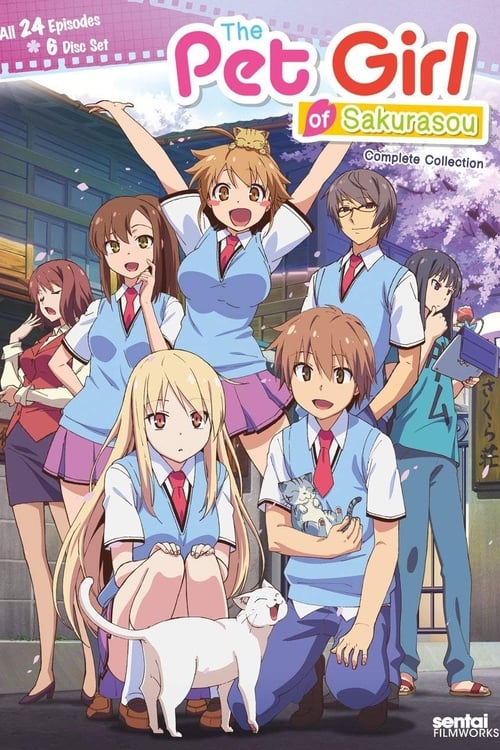







Popular
What is Mashiro Shiina's role in the story and how does her character develop throughout the season?
How does Sorata Kanda's relationship with Mashiro evolve throughout the season?
What challenges does Jin Mitaka face in his pursuit of becoming a successful manga artist?
How does the character of Nanami Aoyama influence Sorata's development?
What role does the setting of Sakurasou play in the characters' development?
Should I watch it?
Ask Your Own Question

What is the plot?
In the beginning of "The Pet Girl of Sakurasou," we are introduced to Mashiro Shiina, a talented but socially inept artist who transfers to Suimei High School. She arrives at the Sakurasou dormitory, which is known for housing students with eccentric personalities. The protagonist, Sorata Kanda, is a kind-hearted boy who has been living in Sakurasou due to his inability to find a place in the regular dorms after adopting a stray cat. Sorata is initially frustrated with the chaotic environment of Sakurasou, which is filled with quirky residents, including the energetic and loud Jin Mitaka, the shy and introverted Ryuunosuke Akasaka, and the overly enthusiastic Misaki Shina, who is also Mashiro's cousin.
Sorata's life takes a turn when he is tasked with taking care of Mashiro, who struggles with daily tasks and social interactions. He learns that she is a brilliant artist but lacks the ability to take care of herself. Sorata feels a sense of responsibility towards her and begins to help her with her daily needs, which leads to a growing bond between them. As he assists her, he discovers her unique artistic talent and becomes inspired to support her in pursuing her dreams.
As the story progresses, Sorata faces challenges in balancing his own aspirations with his responsibilities towards Mashiro. He is determined to apply to a prestigious game design school, but his commitment to helping Mashiro often distracts him from his own goals. This internal conflict creates tension as he grapples with his feelings for Mashiro and his desire to succeed in his own right.
The dynamics within Sakurasou become more complicated when Mashiro's artwork gains attention, leading to a competition that could determine her future as an artist. Sorata encourages her to participate, but he also struggles with jealousy and insecurity as he sees her talent overshadowing his own ambitions. This culminates in a pivotal moment where Sorata must confront his feelings and decide whether to prioritize his own dreams or support Mashiro wholeheartedly.
As the competition approaches, Sorata's relationship with Mashiro deepens, and he begins to realize that his feelings for her are more than just friendship. However, he is also aware of the challenges they face, including the pressure of their respective goals and the expectations placed upon them by their peers. The emotional stakes rise as Sorata must navigate his own insecurities while being a pillar of support for Mashiro.
In a critical scene, Sorata witnesses Mashiro's struggle to express herself during the competition. He steps in to help her, showcasing his growth as a character who is willing to put others before himself. This moment solidifies their bond and highlights the theme of selflessness that runs throughout the series. Sorata's actions inspire Mashiro, and she ultimately finds the courage to present her work, leading to a significant turning point in her artistic journey.
The climax of the season occurs during the competition, where Mashiro's artwork is revealed. The response from the audience is overwhelmingly positive, and she receives recognition for her talent. However, this success also brings about a realization for Sorata that he must confront his own aspirations and the reality of his feelings for Mashiro. The season ends on a note of uncertainty, as Sorata grapples with the implications of their relationship and what the future holds for both of them.
Throughout the season, the interactions among the residents of Sakurasou highlight their individual struggles and growth, creating a rich tapestry of relationships that drive the narrative forward. The emotional depth of the characters, particularly Sorata and Mashiro, is explored through their experiences, decisions, and the challenges they face in pursuing their dreams while navigating their feelings for one another. The season concludes with a sense of hope and the promise of further development in their journeys, leaving viewers eager for what comes next.









What is the ending?
In the ending of "The Pet Girl of Sakurasou," Mashiro Shiina finally completes her art exhibition, showcasing her growth as an artist. Sorata Kanda, who has been supporting her throughout, comes to terms with his feelings for her. The series concludes with a sense of hope and new beginnings as Sorata decides to pursue his own dreams while continuing to support Mashiro.
As the final episodes unfold, the atmosphere in Sakurasou is charged with anticipation. The art exhibition that Mashiro Shiina has been preparing for is just around the corner. Sorata Kanda, who has been a steadfast supporter of Mashiro, feels a mix of pride and anxiety. He knows how much this exhibition means to her, and he is determined to help her succeed.
Scene 1: The Art Exhibition Preparation In the days leading up to the exhibition, the tension is palpable. Mashiro, usually so focused and dedicated, is struggling with her emotions. She feels the weight of expectations, both from herself and from those around her. Sorata, noticing her distress, encourages her to express her true self through her art. He reminds her of the passion that drives her creativity, and this conversation reignites her determination.
Scene 2: The Day of the Exhibition The day of the exhibition arrives, and the gallery is filled with people eager to see Mashiro's work. Sorata stands by her side, beaming with pride as he watches her interact with the guests. Mashiro's pieces are a reflection of her journey, showcasing her growth not only as an artist but also as a person. The emotional weight of her past struggles is evident in her artwork, and the audience is captivated.
Scene 3: Sorata's Realization As the exhibition progresses, Sorata begins to confront his own feelings. He has been so focused on supporting Mashiro that he has neglected his own aspirations. Watching her shine makes him realize that he, too, must pursue his dreams. This moment of clarity is bittersweet; he understands that while he wants to be there for Mashiro, he cannot lose sight of his own path.
Scene 4: The Aftermath After the exhibition, Mashiro receives praise for her work, and the success is a turning point for her. She feels validated and more confident in her abilities. Sorata, however, is left with a sense of uncertainty. He knows he must make a decision about his future. In a heartfelt conversation with Mashiro, he expresses his desire to support her but also his need to find his own way.
Scene 5: A New Beginning The series concludes with Sorata making a promise to Mashiro. He vows to pursue his own dreams while continuing to be her support. Mashiro, in turn, promises to keep creating art that reflects her true self. The final scene captures a moment of hope as they stand together, looking towards the future. The bond they share is strong, and while they are both on their individual journeys, they are committed to each other.
In the end, Mashiro emerges as a confident artist, and Sorata begins to carve out his own identity. The other residents of Sakurasou, including Jin and Nanami, also find their paths, but the focus remains on the growth of Sorata and Mashiro. The series closes with a sense of optimism, emphasizing the importance of pursuing one's dreams while supporting those we care about.
Is there a post-credit scene?
In "The Pet Girl of Sakurasou," Season 1, there is no post-credit scene. The series concludes with its final episode, wrapping up the main story arcs and character developments without any additional scenes after the credits. The focus remains on the relationships and growth of the characters throughout the series, particularly highlighting the dynamics between Mashiro, Sorata, and their friends in Sakurasou. The ending emphasizes the themes of ambition, creativity, and the bonds formed in their unique living situation, leaving viewers with a sense of closure rather than a teaser for future events.
What is Mashiro Shiina's role in the story and how does her character develop throughout the season?
Mashiro Shiina is a talented but socially inept artist who transfers to Suimei High School and moves into Sakurasou. Initially, she struggles with everyday tasks and relies heavily on her roommate, Sorata Kanda, for support. As the season progresses, Mashiro's character develops as she learns to navigate her emotions and relationships, particularly her growing feelings for Sorata, which complicates their dynamic. Her artistic journey also reflects her personal growth, as she strives to create a masterpiece while grappling with her insecurities.
How does Sorata Kanda's relationship with Mashiro evolve throughout the season?
Sorata Kanda starts as Mashiro's caretaker, helping her with daily activities and encouraging her artistic endeavors. As they spend more time together, Sorata begins to develop romantic feelings for Mashiro, which creates tension, especially as he also grapples with his own aspirations as a game developer. Their relationship is marked by moments of vulnerability and misunderstanding, ultimately leading Sorata to confront his feelings and the implications of their bond.
What challenges does Jin Mitaka face in his pursuit of becoming a successful manga artist?
Jin Mitaka, a resident of Sakurasou and a skilled manga artist, faces several challenges throughout the season, including the pressure to succeed and the fear of failure. His relationship with Mashiro complicates his creative process, as he struggles to balance his feelings for her with his professional ambitions. Jin's journey highlights the emotional toll of artistic ambition, as he navigates the competitive world of manga while dealing with personal setbacks and the expectations of his peers.
How does the character of Nanami Aoyama influence Sorata's development?
Nanami Aoyama is a classmate of Sorata who harbors feelings for him. Her character serves as a contrast to Mashiro, as she is more socially adept and supportive of Sorata's dreams. Throughout the season, Nanami encourages Sorata to pursue his passion for game development, but her feelings for him create a love triangle that complicates his emotional state. As Sorata grapples with his feelings for both Nanami and Mashiro, he learns more about his own desires and the nature of love and friendship.
What role does the setting of Sakurasou play in the characters' development?
Sakurasou, a dormitory for students with unique talents, serves as a microcosm for the characters' struggles and growth. The eccentric environment fosters creativity but also highlights the challenges of living with others who have their own quirks and ambitions. The interactions within Sakurasou push the characters to confront their insecurities, support one another, and ultimately grow both personally and artistically. The setting becomes a catalyst for their development, as they learn to embrace their differences and work towards their goals together.
Is this family friendly?
"The Pet Girl of Sakurasou" contains several themes and scenes that may not be suitable for younger audiences or sensitive viewers. Here are some potentially objectionable aspects:
-
Mature Themes: The series explores complex themes such as mental health, personal struggles, and the pressures of creativity, which may be difficult for younger viewers to fully understand.
-
Romantic Relationships: There are romantic subplots that include elements of unrequited love, jealousy, and emotional turmoil, which may be intense for some viewers.
-
Innuendos and Suggestive Content: The show includes moments of suggestive humor and innuendos that may not be appropriate for children.
-
Character Behavior: Some characters exhibit behavior that can be seen as socially inappropriate or immature, which may not set a positive example for younger audiences.
-
Emotional Distress: Several characters face significant emotional challenges, including feelings of inadequacy and isolation, which could be upsetting for sensitive viewers.
-
Bullying and Conflict: There are instances of bullying and interpersonal conflict that may be distressing, particularly for younger viewers who may relate to these experiences.
Overall, while the series has comedic and heartwarming moments, its deeper themes and certain scenes may not be suitable for all audiences.