







Popular
What is the significance of the character Sarah Lynn in BoJack Horseman's life?
How does BoJack's relationship with his mother influence his behavior throughout the series?
What role does the character Todd Chavez play in BoJack's life?
How does the show depict BoJack's struggle with depression and self-worth?
What is the impact of the character Diane Nguyen on BoJack's development?
Should I watch it?
Ask Your Own Question

What is the plot?
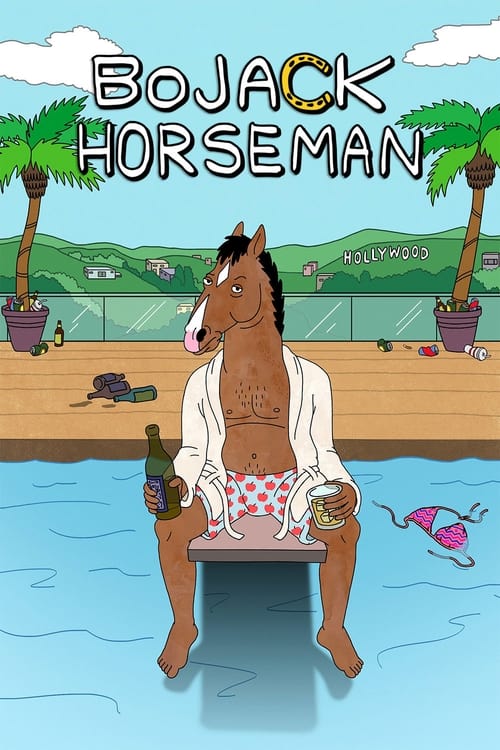
In the pilot episode of BoJack Horseman, we are introduced to BoJack, a washed-up actor who starred in a popular 90s sitcom called "Horsin' Around." He lives in a dilapidated house in Hollywood, surrounded by reminders of his past fame. BoJack struggles with depression and substance abuse, feeling disconnected from the world around him. He is visited by his former sitcom co-star, Sarah Lynn, who is now a pop star, and they reminisce about their time on the show. BoJack's life is further complicated when he meets Diane Nguyen, a ghostwriter who is hired to write his autobiography. BoJack is initially dismissive of Diane but eventually warms to her, seeing her as a potential friend.
As the story progresses, BoJack's interactions with Diane reveal his deep-seated insecurities and fears about his legacy. He grapples with the idea of being a has-been and the pressure to create a meaningful narrative for his life. Meanwhile, Diane struggles with her own issues, including her relationship with her boyfriend, Mr. Peanutbutter, a cheerful and optimistic dog who contrasts sharply with BoJack's cynical outlook. The dynamic between BoJack and Mr. Peanutbutter becomes a source of tension, as BoJack feels threatened by Mr. Peanutbutter's success and happiness.
In the following episodes, BoJack's attempts to revive his career lead him to take on various projects, including a role in a movie directed by a young filmmaker named Kelsey Jannings. However, his self-destructive behavior often sabotages these opportunities. He becomes increasingly reliant on alcohol and drugs, leading to a series of reckless decisions that alienate those around him. BoJack's relationship with Diane becomes strained as she confronts him about his behavior, and he struggles to accept help from others.
As the season unfolds, BoJack's past continues to haunt him. Flashbacks reveal his troubled childhood, including his complicated relationship with his mother, who is emotionally abusive. These memories contribute to BoJack's feelings of inadequacy and his fear of intimacy. He often pushes people away, including Diane, who ultimately decides to end their professional relationship after realizing that BoJack is not ready to change.
In a pivotal moment, BoJack is offered a chance to star in a new series, but he sabotages the opportunity by showing up to the audition inebriated. This decision leads to a confrontation with Kelsey, who calls him out on his behavior. BoJack's inability to take responsibility for his actions culminates in a series of events that leave him feeling more isolated than ever.
The season finale sees BoJack grappling with the consequences of his choices. He attends a party thrown by Mr. Peanutbutter and Diane, where he confronts his feelings of jealousy and inadequacy. In a moment of vulnerability, he opens up to Diane about his struggles, but she ultimately decides to leave him behind, recognizing that he needs to confront his demons alone. The season ends with BoJack reflecting on his life, feeling lost and uncertain about his future.
Throughout the first season, BoJack's journey is marked by moments of dark humor and poignant reflection, as he navigates the complexities of fame, friendship, and self-acceptance. Each character's arc intertwines with BoJack's, creating a rich tapestry of relationships that highlight the challenges of personal growth and the impact of past traumas.








What is the ending?
In the final episode of BoJack Horseman, titled "The Final Scene," BoJack finds himself in a moment of reflection after the events of the series. He attends a party at Princess Carolyn's house, where he interacts with various characters from his past. The episode concludes with BoJack contemplating his life choices and relationships, ultimately leaving the party with a sense of uncertainty about his future.
As the episode begins, we see BoJack Horseman in a state of introspection. He is at a party hosted by Princess Carolyn, who is celebrating the success of her new production. The atmosphere is lively, filled with laughter and chatter, but BoJack feels out of place. He wanders through the crowd, observing the interactions of his friends and former colleagues, including Todd, Diane, and Mr. Peanutbutter.
BoJack's internal struggle is palpable as he grapples with his past mistakes and the impact they have had on his relationships. He shares a moment with Diane, who has moved on with her life and is now in a healthier place. Their conversation is bittersweet, filled with unspoken words and lingering feelings. Diane expresses her concern for BoJack, urging him to seek help and confront his demons.
As the night progresses, BoJack encounters Todd, who has found success in his own right. Todd's enthusiasm and optimism serve as a stark contrast to BoJack's somber demeanor. They reminisce about their friendship, and Todd encourages BoJack to embrace change and take responsibility for his actions.
The party continues, and BoJack finds himself in a conversation with Mr. Peanutbutter, who is now happily married to Diane. Mr. Peanutbutter's unwavering positivity highlights BoJack's struggles with self-acceptance and his tendency to sabotage his relationships. The two share a moment of camaraderie, but BoJack's insecurities linger.
As the night winds down, BoJack steps outside for some fresh air. He reflects on his life, the choices he has made, and the people he has hurt. The weight of his past hangs heavily on him, and he realizes that he cannot escape the consequences of his actions. He contemplates reaching out for help, but the fear of vulnerability holds him back.
In the final moments of the episode, BoJack returns to the party, where he finds Princess Carolyn. They share a heartfelt conversation about their respective journeys and the challenges they have faced. Princess Carolyn expresses her pride in BoJack for making progress, even if it is small. BoJack acknowledges that he still has a long way to go, but he is willing to try.
The episode concludes with BoJack sitting on the roof of the house, looking up at the stars. He is surrounded by the people he cares about, but there is a sense of uncertainty about what lies ahead. The screen fades to black, leaving viewers with a lingering sense of hope mixed with the reality of BoJack's ongoing struggles.
In summary, the fates of the main characters are as follows: BoJack is left contemplating his future and the possibility of seeking help; Princess Carolyn continues to thrive in her career; Todd has found success and happiness; and Diane is moving forward with her life, having distanced herself from BoJack's toxic influence. The series ends on a note of ambiguity, reflecting the complexities of life and the ongoing journey of self-discovery and healing.
Is there a post-credit scene?
In the first season of "BoJack Horseman," there is indeed a post-credit scene that adds a humorous yet poignant touch to the episode. After the credits roll on the final episode of Season 1, titled "The Final Scene," viewers are treated to a brief moment featuring BoJack himself.
In this scene, BoJack is seen sitting in his living room, staring blankly at the television. The screen is filled with static, and he appears lost in thought, reflecting the deep sense of emptiness and disconnection that often plagues him throughout the series. The silence is palpable, emphasizing his isolation.
As the camera lingers on BoJack, he suddenly reaches for the remote and turns off the TV, plunging the room into darkness. This action symbolizes his struggle with his own demons and the desire to escape from the reality of his life. The scene encapsulates the overarching themes of the show--fame, loneliness, and the search for meaning--leaving the audience with a lingering sense of melancholy and introspection.
This post-credit moment serves as a microcosm of BoJack's character, highlighting his internal battles and the often bleak nature of his existence, while also providing a moment of levity that contrasts with the heavier themes explored throughout the season.
What is the significance of the character Sarah Lynn in BoJack Horseman's life?
Sarah Lynn, a former child star and BoJack's friend, represents the consequences of fame and the struggles of addiction. Her tragic arc highlights BoJack's inability to save those he cares about, reflecting his own unresolved issues with substance abuse and emotional trauma. Their relationship is marked by nostalgia and regret, culminating in her overdose, which deeply affects BoJack and serves as a catalyst for his self-reflection.
How does BoJack's relationship with his mother influence his behavior throughout the series?
BoJack's relationship with his mother, Beatrice Horseman, is fraught with emotional neglect and abuse. Her cold demeanor and high expectations instill in BoJack a deep-seated sense of inadequacy and a desperate need for validation. This toxic dynamic shapes his interactions with others, leading to patterns of self-sabotage and a fear of intimacy, as he grapples with the desire for approval while simultaneously pushing people away.
What role does the character Todd Chavez play in BoJack's life?
Todd Chavez serves as a foil to BoJack, embodying a carefree and optimistic spirit that contrasts sharply with BoJack's cynicism. Todd's unwavering loyalty and support provide a semblance of stability in BoJack's chaotic life. Despite often being overlooked, Todd's character growth throughout the series, including his own struggles with identity and purpose, highlights the importance of friendship and the impact of genuine connections on personal growth.
How does the show depict BoJack's struggle with depression and self-worth?
BoJack's struggle with depression is a central theme in the series, depicted through his erratic behavior, self-destructive tendencies, and moments of profound loneliness. The show uses visual metaphors, such as BoJack's recurring nightmares and the stark contrast between his public persona and private despair, to illustrate his internal battles. His journey reflects a complex relationship with self-worth, as he oscillates between moments of clarity and deep-seated self-loathing, ultimately seeking redemption.
What is the impact of the character Diane Nguyen on BoJack's development?
Diane Nguyen plays a crucial role in BoJack's development, serving as both a confidante and a moral compass. Their friendship is marked by deep conversations that challenge BoJack's worldview and force him to confront his flaws. Diane's own struggles with identity and purpose parallel BoJack's, creating a dynamic where they influence each other's growth. However, their relationship also becomes strained as BoJack's selfishness often overshadows his care for Diane, leading to pivotal moments of conflict that push both characters to evolve.
Is this family friendly?
"BoJack Horseman," while animated, is not considered family-friendly due to its mature themes and content. Here are some potentially objectionable or upsetting aspects that may occur:
-
Substance Abuse: The show frequently depicts characters using drugs and alcohol, often leading to reckless behavior and negative consequences.
-
Mental Health Issues: Characters struggle with depression, anxiety, and other mental health challenges, which are portrayed in a raw and sometimes distressing manner.
-
Suicidal Thoughts: There are moments where characters express suicidal ideation or engage in self-destructive behavior, which can be triggering for sensitive viewers.
-
Sexual Content: The series includes explicit discussions about sex, sexual relationships, and infidelity, often presented in a comedic but sometimes uncomfortable context.
-
Violence and Abuse: There are instances of emotional and physical abuse, as well as scenes that depict violence or aggressive behavior.
-
Dark Humor: The show employs dark humor that addresses serious topics like death, failure, and existential crises, which may not be suitable for younger audiences.
-
Complex Relationships: The dynamics between characters often involve manipulation, betrayal, and toxic relationships, which can be unsettling.
Overall, "BoJack Horseman" explores heavy themes with a blend of humor and tragedy, making it more appropriate for adult audiences.