
















Popular
What is the significance of the character Jin Seon-mi's journey throughout the series?
How does the relationship between Jin Seon-mi and the character Lee Geum-woo evolve?
What role does the character of the corrupt official play in the story?
How does the theme of family loyalty manifest in Jin Seon-mi's actions?
What are the key turning points in Jin Seon-mi's quest for justice?
Should I watch it?
Ask Your Own Question

What is the plot?
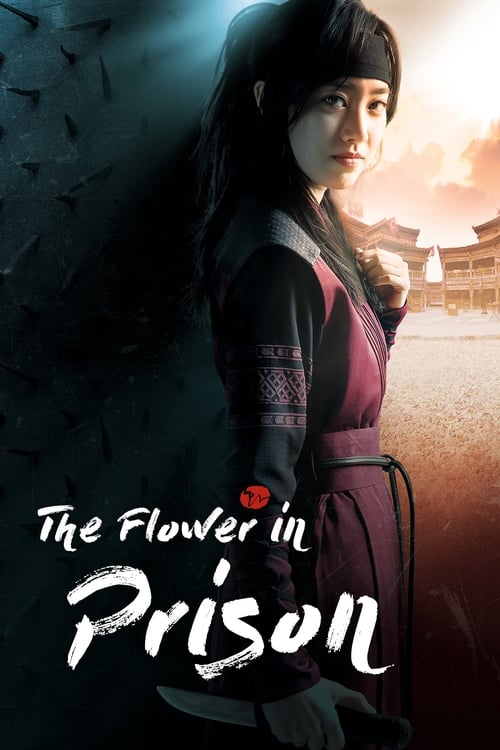
The story begins in the late Joseon era, where a young girl named Jin Seon is born in a prison. Her mother, a prisoner, gives birth to her while being shackled. The circumstances of her birth foreshadow a life filled with hardship and struggle. Jin Seon's mother is executed shortly after giving birth, leaving her to be raised in the prison by the other inmates. The prison is a harsh environment, and Jin Seon learns to navigate the dangers of her surroundings from a young age.
As Jin Seon grows up, she becomes a resourceful and resilient young woman. She befriends other inmates, including the kind-hearted but naive Yeon, and the sharp-witted and cunning Ok-nyeo. The trio forms a close bond, supporting each other through the trials of prison life. Jin Seon's determination to survive and her innate sense of justice begin to shape her character. She often finds herself in trouble for standing up to the guards and protecting her friends.
One day, a new prisoner arrives, a noblewoman named Lady Kim, who is accused of treason. Jin Seon is intrigued by her and learns about the outside world through her stories. Lady Kim becomes a mentor figure for Jin Seon, teaching her about the intricacies of noble life and the injustices faced by women in society. This relationship deepens Jin Seon's desire to seek justice and change her fate.
As the story progresses, Jin Seon discovers that her mother was wrongfully accused and executed. This revelation ignites a fire within her, and she vows to uncover the truth behind her mother's death. She begins to gather information and allies within the prison, including the guards who are sympathetic to her cause. Her determination to clear her mother's name becomes a driving force in her life.
Meanwhile, outside the prison walls, a power struggle unfolds among the nobility. The corrupt officials are involved in various schemes, and Jin Seon's quest for justice inadvertently entangles her in these political machinations. She learns that the man responsible for her mother's execution is a high-ranking official, and she devises a plan to confront him.
Jin Seon's plan involves a daring escape from the prison. With the help of her friends and some sympathetic guards, she orchestrates a chaotic distraction during a prison event. As the guards are preoccupied, she and her friends make their way through the prison, facing numerous obstacles. They encounter guards and other prisoners, leading to tense confrontations. Jin Seon's quick thinking and bravery help them evade capture, but not without close calls.
Once outside, Jin Seon and her friends are met with the harsh realities of the world beyond the prison. They must navigate the dangers of the streets, where they encounter thieves and corrupt officials. Jin Seon's resourcefulness shines as she uses her street smarts to survive. They seek refuge with a group of rebels who are fighting against the corrupt government, and Jin Seon becomes involved in their cause.
As Jin Seon delves deeper into the rebellion, she learns more about her mother's past and the injustices faced by many women in society. She becomes a symbol of hope for the oppressed, rallying others to join their fight. Her leadership skills emerge, and she begins to strategize ways to expose the corruption within the government.
The tension escalates when Jin Seon confronts the official responsible for her mother's death. In a dramatic showdown, she reveals the truth to the public, using evidence she has gathered. The confrontation is intense, filled with emotional stakes as Jin Seon faces the man who destroyed her family. The public's reaction is mixed, leading to further conflict as the officials attempt to silence her.
As the rebellion gains momentum, Jin Seon faces betrayal from within her ranks. A trusted ally turns out to be a spy for the government, leading to a devastating ambush. Many of her friends are captured, and Jin Seon is forced to make a difficult decision: to continue the fight or to save her friends. Her internal struggle is palpable as she weighs the cost of her ambitions against the safety of those she loves.
In a climactic battle, Jin Seon and the rebels confront the government forces. The fight is brutal, with both sides suffering losses. Jin Seon's determination drives her forward, but she is faced with the harsh reality of war. The emotional toll weighs heavily on her as she witnesses the sacrifices made by her friends and allies.
In the aftermath of the battle, Jin Seon is left to pick up the pieces. The rebellion has succeeded in exposing some of the corruption, but at a great cost. Many of her friends are lost, and she grapples with the weight of their sacrifices. Jin Seon's journey of self-discovery continues as she reflects on her mother's legacy and the fight for justice.
The series concludes with Jin Seon standing at a crossroads. She has grown from a girl born in prison to a leader fighting for justice. The final scenes depict her looking towards the future, determined to continue the fight for those who cannot fight for themselves. Her journey is one of resilience, hope, and the unyielding pursuit of truth.



What is the ending?
In the ending of "The Flower in Prison," the main character, Ok-nyeo, finally uncovers the truth about her past and the identity of her parents. After a series of confrontations and revelations, she manages to bring justice to those who wronged her and her family. The story concludes with Ok-nyeo finding a sense of peace and purpose, as she embraces her new life and the relationships she has built along the way.
As the final episodes unfold, the tension escalates. Ok-nyeo, having grown from a naive girl into a determined woman, is on a quest to uncover the truth about her lineage. The scene opens with her standing in front of a large, imposing building, the royal palace, where she believes answers about her parents lie. The air is thick with anticipation as she recalls the hardships she has faced, her heart pounding with a mix of fear and hope.
In the next scene, we see her confront the corrupt officials who have manipulated her life. The confrontation is intense; Ok-nyeo's voice trembles with emotion as she demands justice for her family. The officials, initially dismissive, begin to realize the strength of her resolve. The camera captures the determination in her eyes, reflecting her journey from a prisoner of circumstance to a woman of agency.
As the plot thickens, we witness the return of her childhood friend, the nobleman Kim Jeong-hwan, who has been a steadfast ally throughout her struggles. Their reunion is bittersweet, filled with unspoken feelings and shared memories. Jeong-hwan's loyalty is evident as he stands by her side, ready to support her in her quest for truth. The emotional weight of their bond is palpable, as they both understand the sacrifices they have made for each other.
In a pivotal scene, Ok-nyeo finally learns the identity of her mother, who had been a victim of the very system she is fighting against. This revelation hits her hard, and the audience can feel her anguish and anger. The scene is beautifully shot, with close-ups of her face as tears stream down her cheeks, symbolizing both her grief and her newfound determination to honor her mother's memory.
The climax of the series occurs when Ok-nyeo orchestrates a plan to expose the corruption within the government. With the help of her friends and allies, she gathers evidence and confronts the officials in a dramatic showdown. The tension is palpable as they present their findings, and the stakes are high. The scene is filled with suspense, as the audience holds their breath, waiting to see if justice will prevail.
As the dust settles, we see the aftermath of Ok-nyeo's efforts. The corrupt officials are brought to justice, and the kingdom begins to heal from the wounds of corruption. Ok-nyeo stands tall, a symbol of resilience and hope. The camera pans out, showing her surrounded by her friends and allies, a family she has chosen through her journey.
In the final moments, we see Ok-nyeo at a serene location, perhaps a garden or a quiet riverbank, reflecting on her journey. She smiles softly, a mixture of sadness and hope in her eyes. The series ends with her looking towards the horizon, symbolizing new beginnings and the promise of a brighter future.
The fates of the main characters are intertwined with Ok-nyeo's journey. Kim Jeong-hwan, having supported her throughout, finds his own path as a nobleman committed to reform. The other characters, including her loyal friends, also find their places in the new order, having played crucial roles in the fight against injustice. Each character's resolution reflects the overarching theme of resilience, justice, and the power of friendship, culminating in a satisfying conclusion that honors their struggles and triumphs.
Is there a post-credit scene?
The Flower in Prison does not have a post-credit scene. The series concludes with its final episode, wrapping up the storylines of the main characters without any additional scenes after the credits. The focus remains on the resolution of the characters' arcs and the themes of justice, love, and resilience that permeate the narrative throughout the series.
What is the significance of the character Jin Seon-mi's journey throughout the series?
Jin Seon-mi, the protagonist, embarks on a tumultuous journey from being a young girl in a prison to becoming a strong and resourceful woman. Her experiences in the prison shape her resilience and determination to seek justice for her family. Throughout the series, her internal struggles with her identity and the societal constraints placed upon her drive her character development, showcasing her evolution from a victim to a fighter.
How does the relationship between Jin Seon-mi and the character Lee Geum-woo evolve?
Jin Seon-mi and Lee Geum-woo's relationship begins with a shared sense of injustice and a mutual desire to uncover the truth behind their families' suffering. Initially, they are allies, united by their goals, but as the story progresses, their bond deepens into a romantic connection. Their relationship is tested by external conflicts and personal sacrifices, highlighting their emotional struggles and the impact of their choices on each other's lives.
What role does the character of the corrupt official play in the story?
The corrupt official, who represents the oppressive societal structures, serves as a significant antagonist in the series. His actions directly affect the lives of Jin Seon-mi and her loved ones, driving the plot forward. His greed and abuse of power create obstacles for the protagonists, forcing them to navigate a treacherous landscape of betrayal and injustice. His character embodies the systemic corruption that the series critiques, making him a pivotal figure in the narrative.
How does the theme of family loyalty manifest in Jin Seon-mi's actions?
Family loyalty is a central theme in Jin Seon-mi's journey. Her determination to uncover the truth about her father's wrongful imprisonment and her quest for justice for her family drive her actions throughout the series. This loyalty often puts her in dangerous situations, as she must confront powerful enemies and make difficult choices that test her moral compass. Her emotional turmoil reflects the weight of familial expectations and the sacrifices she is willing to make for her loved ones.
What are the key turning points in Jin Seon-mi's quest for justice?
Key turning points in Jin Seon-mi's quest for justice include her discovery of the truth behind her father's imprisonment, her encounters with Lee Geum-woo that solidify their partnership, and the moments when she confronts the corrupt officials directly. Each turning point is marked by intense emotional stakes, as she grapples with feelings of anger, betrayal, and hope. These moments not only propel the plot forward but also deepen her character, showcasing her growth and resilience in the face of adversity.
Is this family friendly?
"The Flower in Prison," produced in 2016, is a historical drama that contains several themes and scenes that may not be suitable for children or sensitive viewers. Here are some potentially objectionable or upsetting aspects:
-
Violence and Punishment: The show depicts various forms of violence, including physical punishment and torture, particularly in the context of the Joseon era's justice system. Scenes may include beatings or harsh treatment of prisoners.
-
Injustice and Corruption: The narrative explores themes of social injustice, corruption, and the struggles of the lower class against the ruling elite. This can be emotionally heavy and may be distressing for younger viewers.
-
Death and Loss: Characters face significant loss, including the death of loved ones. These moments are portrayed with emotional weight, which could be upsetting.
-
Emotional Turmoil: The characters experience intense emotional struggles, including betrayal, despair, and longing, which may resonate deeply and evoke strong feelings.
-
Themes of Oppression: The show addresses issues of gender inequality and the harsh realities faced by women in a patriarchal society, which may be difficult for some viewers to process.
Overall, while the series is rich in storytelling and character development, its mature themes and emotional depth may not be appropriate for all audiences, particularly children.









