
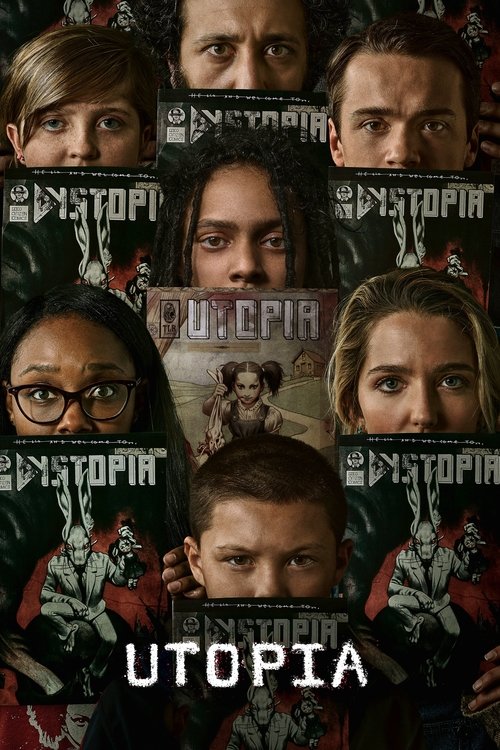















Popular
What is the significance of the comic book 'Utopia' within the story?
Who are the main characters in Utopia and what are their motivations?
What role does the character of Jessica Hyde play in the plot?
How does the character of Arby contribute to the story's conflict?
What is the nature of the virus in Utopia and how does it affect the characters?
Should I watch it?
Ask Your Own Question

What is the plot?
The series begins with a group of young adults who are fans of a graphic novel called "Utopia." The story follows Jessica Hyde, a mysterious woman who is searching for a manuscript of the sequel to the graphic novel. The group, consisting of Ian, Becky, Wilson, and Samantha, discovers that the original "Utopia" comic contains hidden messages about a global conspiracy involving a deadly virus. They believe that the comic holds the key to preventing a catastrophic event.
As they delve deeper into the comic's secrets, they are pursued by a shadowy organization known as The Harvest, which is intent on silencing anyone who knows about the conspiracy. The group learns that Jessica Hyde is not just a character in the comic but a real person who has been on the run for years. They eventually meet her, and she reveals that her father, a scientist, was involved in creating a virus that is part of the conspiracy.
The group decides to work together to uncover the truth behind the virus and The Harvest. They face numerous challenges, including betrayals and the constant threat of being hunted. Ian, who is particularly invested in the mission, becomes more determined to expose the truth, while Becky struggles with her own fears and doubts about their safety.
As they gather more information, they discover that The Harvest is planning to release the virus as part of a larger scheme to control the population. The group realizes they must act quickly to stop this from happening. They devise a plan to infiltrate a facility linked to The Harvest, hoping to find evidence that can expose the organization's intentions.
During their infiltration, they encounter intense security measures and are forced to navigate through a series of obstacles. Tensions rise as they face close calls with guards and surveillance systems. In a pivotal moment, they manage to obtain crucial documents that confirm the existence of the virus and its intended release.
However, their success is short-lived as they are ambushed by members of The Harvest. A chaotic confrontation ensues, leading to a desperate escape. Jessica showcases her combat skills, helping the group fend off their attackers. In the chaos, Wilson is captured, leaving the group devastated and determined to rescue him.
The group regroups and decides to launch a rescue mission for Wilson. They learn that he is being held at a remote location, and they prepare for a confrontation with The Harvest. Each member grapples with their own fears and motivations, with Ian feeling a sense of responsibility for Wilson's capture.
As they approach the location, they devise a plan to create a distraction while others attempt to rescue Wilson. The plan involves setting off an explosion to draw attention away from the area where Wilson is being held. The execution of the plan is fraught with tension, as they must time their actions perfectly to avoid detection.
In the midst of the rescue, they face unexpected challenges, including additional guards and security measures. The group works together, using their individual skills to navigate the facility. Jessica's determination to save Wilson drives her to take risks, while Ian and Becky support her efforts.
After a tense standoff, they manage to free Wilson, but not without sustaining injuries and losing valuable time. As they escape, they are pursued by The Harvest, leading to a high-stakes chase. The group narrowly avoids capture, but the experience leaves them shaken and aware of the dangers they face.
In the aftermath, they regroup and assess their next steps. They realize that they need to go public with their findings to prevent the virus from being released. However, they are aware that doing so will put them in even greater danger from The Harvest.
As they prepare to expose the conspiracy, they face internal conflicts and doubts about their safety. Jessica, feeling the weight of her past and the responsibility of the mission, becomes increasingly isolated. Ian and Becky try to rally the group, emphasizing the importance of their cause.
The climax of the series unfolds as they finally confront the leaders of The Harvest. In a tense showdown, they present their evidence to the public, but The Harvest retaliates with violence. The group must fight for their lives as they attempt to escape the chaos.
In the final moments, the group faces a devastating loss, leading to a sense of hopelessness. Jessica, feeling the burden of her father's legacy and the consequences of their actions, makes a critical decision that alters the course of their fight against The Harvest.
The series concludes with the group scattered and facing uncertain futures, but their resolve to continue the fight against the conspiracy remains strong. The final scenes hint at the ongoing battle against The Harvest and the lingering threat of the virus, leaving the story open-ended and filled with tension.







What is the ending?
In the ending of Utopia (2020), the group of friends confronts the true nature of the conspiracy surrounding the manuscript of the graphic novel. They face betrayal, loss, and the ultimate realization of the stakes involved in their fight against a powerful organization. The story concludes with a significant sacrifice and a cliffhanger that leaves the fate of the characters uncertain.
As the final episodes unfold, we see the group, now fractured and on the run, grappling with the consequences of their actions. Jessica Hyde, who has been a central figure throughout the series, is revealed to have deeper connections to the conspiracy than initially understood. Her motivations are driven by a desire for revenge against the organization that has wronged her and her family.
In a tense confrontation, Jessica and the remaining members of the group--Grant, Becky, and Wilson--find themselves cornered by the organization led by the enigmatic figure known as "The Harvest." The stakes are raised as they learn that the organization is planning to unleash a deadly virus, which is tied to the themes of control and manipulation that have permeated the series.
In a climactic moment, Jessica makes a critical decision to sacrifice herself to ensure the others can escape. She confronts The Harvest, revealing her true strength and determination. As she fights, the emotional weight of her past and her desire for freedom culminate in a powerful scene where she takes down several of the organization's operatives, but ultimately, she is captured.
Meanwhile, Grant, Becky, and Wilson manage to evade capture, but they are left with the haunting knowledge of Jessica's fate. The series ends with them vowing to continue the fight against the organization, setting the stage for potential future conflicts. The final scene leaves viewers with a sense of uncertainty, as the characters are left to grapple with their losses and the looming threat of the organization.
In summary, the ending of Utopia (2020) is marked by sacrifice, betrayal, and the unresolved tension of an ongoing battle against a powerful adversary, leaving the characters' futures hanging in the balance.
Is there a post-credit scene?
In the 2020 adaptation of "Utopia," there is no post-credit scene. The series concludes with its final episode, leaving viewers with a sense of unresolved tension and the implications of the characters' actions. The narrative wraps up the main story arcs but does not provide any additional scenes or content after the credits roll. The focus remains on the intense and dramatic conclusion of the plot, emphasizing the stakes involved in the characters' fight against the conspiracy surrounding the graphic novel "Utopia."
What is the significance of the comic book 'Utopia' within the story?
The comic book 'Utopia' serves as a central plot device in the series, believed to contain predictions about a deadly virus and a conspiracy involving a powerful organization. The characters are drawn to the comic as they seek to uncover the truth behind its contents, which they believe holds the key to stopping a catastrophic event.
Who are the main characters in Utopia and what are their motivations?
The main characters include Jessica Hyde, who is driven by a desire to find her father and uncover the truth about her past; Ian, a comic book enthusiast who becomes embroiled in the conspiracy; and Wilson Wilson, a paranoid survivalist who seeks to protect his friends. Each character's motivations intertwine as they navigate danger and betrayal.
What role does the character of Jessica Hyde play in the plot?
Jessica Hyde is a pivotal character whose mysterious background and connection to the comic book 'Utopia' propel the narrative forward. She is fiercely independent and resourceful, often acting as both a protector and a threat to the other characters, as her quest for answers leads to violent confrontations and revelations about her family's involvement in the conspiracy.
How does the character of Arby contribute to the story's conflict?
Arby, a seemingly innocent young man, is revealed to be a key antagonist working for the organization behind the conspiracy. His character embodies the conflict between innocence and manipulation, as he struggles with his loyalty to the organization and his growing awareness of the moral implications of their actions.
What is the nature of the virus in Utopia and how does it affect the characters?
The virus in 'Utopia' is a genetically engineered pathogen that poses a significant threat to humanity. Its existence is tied to the overarching conspiracy, and as the characters learn more about it, they face moral dilemmas regarding its implications. The fear of the virus drives the characters to take drastic actions, highlighting their desperation and the stakes involved in their quest for truth.
Is this family friendly?
The 2020 adaptation of Utopia is not considered family-friendly and contains several potentially objectionable or upsetting elements. Here are some aspects that may be concerning for children or sensitive viewers:
-
Graphic Violence: The show features intense scenes of violence, including shootings, physical confrontations, and bloodshed that can be quite graphic and disturbing.
-
Mature Themes: The narrative delves into dark themes such as conspiracy, betrayal, and the moral complexities of human behavior, which may be difficult for younger audiences to grasp.
-
Death and Trauma: Characters experience significant loss and trauma, with scenes depicting the aftermath of violent events that can evoke strong emotional responses.
-
Psychological Tension: The atmosphere is often tense and suspenseful, with moments that may induce anxiety or fear, particularly in scenes involving threats or danger.
-
Language: The dialogue includes strong language and profanity, which may not be suitable for younger viewers.
-
Disturbing Imagery: There are moments that include unsettling visuals or concepts, particularly related to the themes of disease and control.
These elements contribute to a mature viewing experience, making it more appropriate for adult audiences.








