














Popular
What is the significance of the comic book 'Utopia' within the story?
How does Jessica Hyde's character evolve throughout the season?
What role does the character Wilson Wilson play in the group dynamics?
What are the motivations behind the actions of the organization known as 'The Harvest'?
How does the character Arby contribute to the tension in the story?
Should I watch it?
Ask Your Own Question

What is the plot?
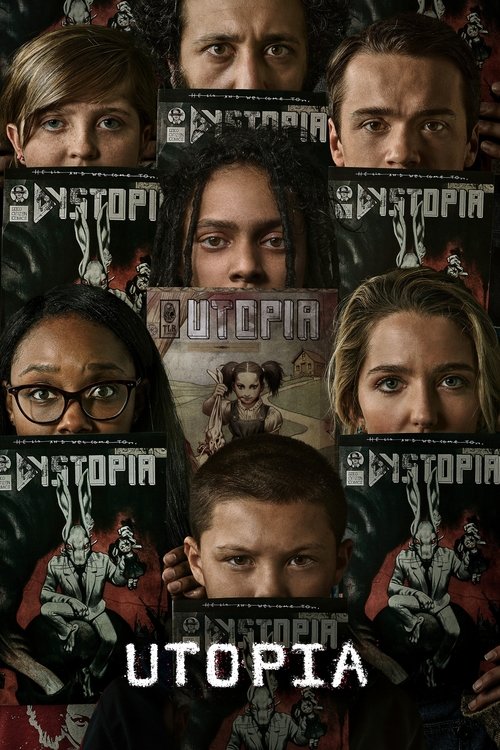
The series opens with a group of young adults who are fans of a cult graphic novel titled "Utopia." The story begins with Jessica Hyde, a mysterious woman, who is on the run from a group of armed men. She is seen in a tense chase scene, showcasing her agility and determination to escape. Meanwhile, a group of fans, including Ian, Becky, Wilson, and Samantha, are discussing the graphic novel and its rumored sequel, which is said to contain hidden truths about a global conspiracy.
As the group delves deeper into the comic, they discover a rare manuscript of "Utopia" that seems to hold clues about a pandemic and a sinister organization known as the Harvest. They become increasingly obsessed with uncovering the truth behind the comic, believing it to be more than just fiction. Their excitement turns to fear when they realize they are being hunted by the same men chasing Jessica.
The narrative shifts to Jessica, who is revealed to be the daughter of the original creator of "Utopia." She is determined to find her father, who has been missing for years. The group of fans, after a series of harrowing encounters, eventually meets Jessica, who reluctantly joins them. They form a bond as they share their knowledge of the comic and their fears about the impending threat.
As they investigate further, they learn about a mysterious organization that is conducting experiments on children, which ties back to the themes of the graphic novel. The group decides to confront the organization, leading to a series of dangerous encounters. They discover that the Harvest is not just a fictional entity but a real threat that is planning to unleash a deadly virus.
Tensions rise as the group faces internal conflicts, with some members questioning Jessica's motives and the validity of their quest. Ian, who has developed a strong connection with Jessica, struggles with his feelings for her while also trying to keep the group united. Meanwhile, Becky becomes increasingly paranoid about their safety, leading to a rift between her and the others.
In a pivotal moment, the group learns that the Harvest is planning to release the virus at a major public event. They devise a plan to infiltrate the event and stop the release. This leads to a high-stakes confrontation where they must navigate through security and evade capture. The tension escalates as they encounter armed guards and must use their wits to survive.
During the infiltration, they manage to gather crucial evidence about the Harvest's plans, but not without casualties. The group faces betrayal from within, as one member is revealed to be working for the Harvest. This betrayal leads to a chaotic escape, with the group narrowly avoiding capture while losing one of their own in the process.
As the season progresses, the stakes continue to rise. The group is forced to go into hiding, and they struggle with the emotional fallout of their experiences. Jessica reveals more about her past and her connection to the Harvest, deepening the group's understanding of the threat they face. They realize that they must not only stop the virus but also expose the organization to the public.
In the climax of the season, the group stages a final confrontation with the Harvest. They gather allies and plan a coordinated attack to bring the organization down. The battle is intense, filled with action and emotional moments as they fight for their lives and the future of humanity. Each character faces their fears and makes sacrifices for the greater good.
The season concludes with a shocking twist as the true extent of the Harvest's plans is revealed, leaving the group in a precarious position. They are left to grapple with the consequences of their actions and the realization that their fight is far from over. The final scene hints at a larger conspiracy, setting the stage for potential future conflicts and deepening the mystery surrounding "Utopia."






What is the ending?
In the ending of Utopia, season 1, the group of friends faces a devastating betrayal, leading to a tragic conclusion. Jessica, one of the main characters, is left in a precarious situation, while the others confront the consequences of their actions. The season culminates in a shocking revelation about the true nature of the conspiracy they have been entangled in, leaving the fate of humanity hanging in the balance.
As the final episode unfolds, we see the characters grappling with the fallout of their choices. The tension escalates as they realize the extent of the threat posed by the organization behind the mysterious comic book. The group is fractured, with trust eroding among them. Jessica, who has been a central figure in the narrative, finds herself isolated and vulnerable, facing the consequences of the group's decisions.
In a climactic confrontation, the characters are forced to confront the antagonist, who reveals the full scope of the plan that has been set in motion. The stakes are raised as they realize that their fight is not just for their own survival but for the future of humanity itself. The emotional weight of their journey culminates in a series of intense moments, where each character's motivations and fears come to the forefront.
As the episode draws to a close, the characters are left to reckon with their choices. Some find a semblance of resolution, while others are left with lingering questions and unresolved conflicts. The season ends on a note of uncertainty, with the fate of the world hanging in the balance and the characters forever changed by their experiences.
In summary, the ending of Utopia, season 1, is marked by betrayal, confrontation, and the heavy burden of choices made in the face of an overwhelming threat. Each character's journey concludes with a mix of resolution and ambiguity, setting the stage for potential future developments.
Is there a post-credit scene?
In the 2020 adaptation of "Utopia," there is no post-credit scene following the final episode of Season 1. The season concludes with a dramatic and intense climax, leaving viewers with a sense of unresolved tension and anticipation for potential future developments. The focus remains on the characters' fates and the overarching narrative, rather than any additional scenes or revelations after the credits.
What is the significance of the comic book 'Utopia' within the story?
The comic book 'Utopia' serves as a central plot device that connects the characters and drives the narrative forward. It is believed to contain predictions about a global pandemic and the actions of a mysterious organization known as 'The Harvest.' The characters' obsession with the comic leads them to uncover dark secrets and conspiracies, as they seek to understand its implications and prevent the catastrophic events it foretells.
How does Jessica Hyde's character evolve throughout the season?
Jessica Hyde is introduced as a fierce and enigmatic character, initially portrayed as a ruthless survivor with a traumatic past. As the season progresses, her motivations are revealed to be deeply tied to her father's legacy and the secrets of the comic. Her emotional journey showcases her struggle between trust and betrayal, as she grapples with her identity and the burden of her family's history, ultimately seeking redemption and a sense of belonging.
What role does the character Wilson Wilson play in the group dynamics?
Wilson Wilson is a pivotal character who serves as the group's strategist and voice of reason. His analytical mind and knowledge of the comic's lore help the group navigate the dangers they face. However, his internal conflict arises from his desire to protect his friends while also grappling with his own fears and insecurities. His character adds depth to the group dynamics, as he often finds himself torn between logic and the emotional turmoil of the situation.
What are the motivations behind the actions of the organization known as 'The Harvest'?
The Harvest is depicted as a shadowy organization with a sinister agenda, primarily focused on controlling the population through fear and manipulation. Their motivations are rooted in a desire for power and the belief that they can create a better world through drastic measures. This leads them to pursue the characters relentlessly, as they seek to eliminate anyone who poses a threat to their plans, showcasing their ruthless and calculating nature.
How does the character Arby contribute to the tension in the story?
Arby is introduced as a complex antagonist whose loyalty to The Harvest is juxtaposed with his own moral dilemmas. His character is marked by a childlike innocence that contrasts sharply with the violent actions he is compelled to take. As the season unfolds, Arby's internal conflict becomes a source of tension, as he struggles with the consequences of his actions and the impact they have on the lives of the main characters, ultimately leading to moments of both menace and vulnerability.
Is this family friendly?
"Utopia," season 1, produced in 2020, contains several elements that may not be suitable for children or sensitive viewers. Here are some potentially objectionable or upsetting aspects:
-
Violence: The show features graphic violence, including scenes of physical altercations, shootings, and bloodshed that can be intense and disturbing.
-
Death: There are moments that depict the death of characters, which can be emotionally heavy and unsettling.
-
Themes of Conspiracy and Paranoia: The narrative revolves around dark themes of conspiracy, which may be confusing or frightening for younger audiences.
-
Psychological Tension: The show includes scenes that create a sense of dread and anxiety, with characters facing life-threatening situations.
-
Mature Language: There is the use of strong language throughout the series, which may not be appropriate for younger viewers.
-
Mature Themes: The storyline touches on complex and mature themes, including betrayal, manipulation, and moral ambiguity, which may be difficult for children to understand.
These elements contribute to a tone that is more suited for mature audiences, making it less family-friendly.








