















Popular
What is the significance of the numbers tattooed on the children's necks?
How does Norman's plan to escape evolve throughout the series?
What role does Mama (Isabella) play in the children's lives?
What is the significance of the 'Promise' in the story?
How does Ray's character develop throughout the series?
Should I watch it?
Ask Your Own Question

What is the plot?
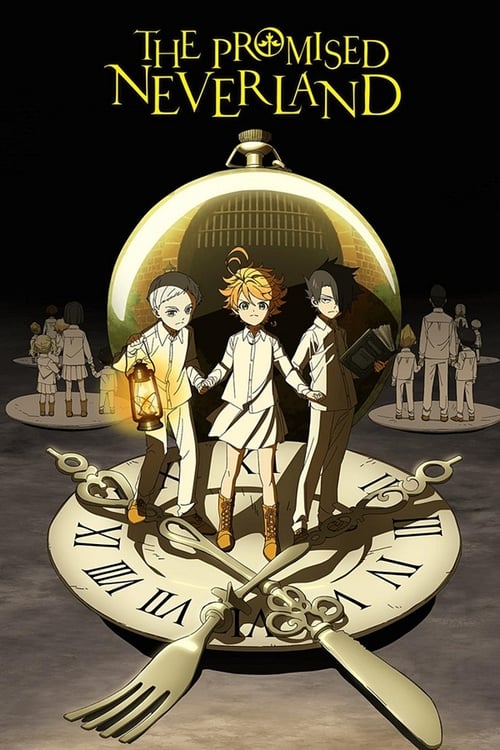
The story begins at Grace Field House, an orphanage where children live under the care of a woman known as "Mama," Isabella. The children, including Emma, Norman, and Ray, enjoy a seemingly idyllic life, playing and studying together. They are unaware of the dark truth that lies behind their existence. The children are raised to be farmed as food for demons, and they are monitored by Mama, who ensures they remain obedient and unaware of their fate.
One day, a young girl named Conny is adopted, and Emma and Norman accompany her to the gate to say goodbye. However, they discover that Conny has left her beloved stuffed toy behind. When they venture outside the orphanage to return it, they stumble upon a shocking scene: Conny's lifeless body is being loaded into a truck by a demon. This revelation shatters their innocence and reveals the horrifying truth about their existence. Emma and Norman vow to escape and save the other children.
Emma, Norman, and Ray begin to devise a plan to escape Grace Field House. They gather information about the orphanage, the demons, and the outside world. They learn that the children are raised until the age of twelve before being harvested. The trio realizes they must act quickly to save their friends, as they are all in grave danger. They start training themselves physically and mentally, preparing for the challenges ahead.
As they work on their escape plan, they discover that Mama is aware of their intentions. She begins to manipulate the situation, using psychological tactics to instill fear and maintain control over the children. Emma and Norman grow increasingly wary of Mama's watchful eye, but they remain determined to find a way out. They also begin to recruit other children to their cause, including Gilda and Don, who become integral to their plans.
The children devise a plan to escape through the forest surrounding the orphanage. They gather supplies and create a diversion to distract Mama and the other caretakers. On the night of their planned escape, they execute their plan, but things do not go as smoothly as they hoped. Mama catches wind of their intentions and sets traps to thwart their escape. The tension escalates as the children navigate through the dark forest, evading Mama's pursuit.
During their escape, they encounter a series of obstacles, including a dangerous demon that roams the woods. Emma and Norman work together to protect the younger children, showcasing their leadership and bravery. They manage to outsmart the demon and continue their journey toward freedom. However, the emotional toll of leaving their home and friends behind weighs heavily on them, especially for Emma, who feels a deep sense of responsibility for the other children.
As they reach the edge of the forest, they find a hidden passage that leads to the outside world. However, they are faced with a heartbreaking decision: they can only take a limited number of children with them. Emma struggles with the idea of leaving anyone behind, but ultimately, they decide to prioritize the youngest children. This decision creates tension among the group, as some feel betrayed by the choice.
Once outside, the children are met with a harsh and unfamiliar world. They are confronted by the reality of the demons that inhabit the land and the dangers that lie ahead. Emma, Norman, and Ray must quickly adapt to their new environment, using their wits and teamwork to survive. They encounter other humans who are also fighting against the demons, and they begin to learn more about the world outside the orphanage.
As they navigate this new world, they uncover more about the demons' society and the reasons behind the farming of humans. They learn about the existence of other orphanages and the different types of demons that exist. The children realize that their fight for survival is far from over, and they must continue to strategize and plan if they hope to save the remaining children still trapped in the orphanages.
The story culminates in a series of confrontations with the demons, where Emma, Norman, and Ray must use their intelligence and courage to outsmart their enemies. They face betrayal from unexpected sources and must grapple with the moral implications of their actions. The emotional stakes rise as they confront their fears and the reality of their situation, leading to a climactic showdown that tests their resolve and friendship.
In the end, the children manage to escape the immediate threat of the demons, but they are left with the knowledge that their journey is far from over. They must continue to fight for their freedom and the freedom of others, forging alliances and facing new challenges in a world that is both beautiful and terrifying. The bonds they have formed through their struggles become their greatest strength as they move forward into the unknown.








What is the ending?
In the ending of The Promised Neverland, Emma, Ray, and Norman confront the realities of their world and the choices they must make to save the children from the farms. Emma decides to sacrifice her own happiness for the sake of the children, aiming to create a world where they can live freely. In the final moments, she successfully negotiates a deal with the demons, allowing the children to escape while she remains behind. The series concludes with Emma's determination to find a way to reunite with her friends and the children, leaving her fate uncertain but filled with hope.
As the final episodes unfold, the tension escalates within the Grace Field House, where Emma, Ray, and Norman have been strategizing their escape from the clutches of the demons. The trio has grown from innocent children into determined fighters, each grappling with their own fears and desires.
In the first scene of the finale, Emma stands at the edge of the forest, her heart heavy with the weight of her decision. She gazes into the distance, reflecting on the lives of the children they have come to love. The sun sets, casting a warm glow that contrasts with the cold reality of their situation. Emma's resolve strengthens as she recalls the promise she made to her siblings: to ensure their freedom, no matter the cost.
The next scene shifts to the confrontation with the demons, particularly with Isabella, their former caretaker. Emma, Ray, and Norman face her in a tense standoff. Isabella, torn between her maternal instincts and her role as a demon, reveals her own struggles. The emotional stakes are high as they discuss the terms of their escape. Emma's compassion shines through as she tries to appeal to Isabella's humanity, urging her to understand the plight of the children.
As the negotiations unfold, Norman reveals his plan to eliminate the demons, a drastic measure that shocks Emma and Ray. They argue passionately, each expressing their differing views on how to achieve freedom. Emma, embodying hope and empathy, insists on finding a way to coexist with the demons rather than resorting to violence. This pivotal moment highlights the core conflict of the series: the struggle between survival and morality.
In a heart-wrenching scene, Emma makes the ultimate sacrifice. She offers herself to the demons in exchange for the safety of the other children. The emotional weight of this decision is palpable as her friends react with disbelief and sorrow. Emma's tears flow freely as she embraces her friends one last time, promising to find a way back to them. The scene is filled with tension, underscored by the haunting music that amplifies the gravity of her choice.
As the children escape into the human world, the scene shifts to Emma standing alone in the dark, surrounded by the demons. The atmosphere is heavy with uncertainty, yet Emma's spirit remains unbroken. She vows to create a world where all children can live without fear, her determination shining through the darkness.
The final moments of the series depict Emma's journey in the human world, where she encounters new challenges and faces the reality of her sacrifice. The screen fades to black, leaving viewers with a sense of hope intertwined with melancholy. Emma's fate remains ambiguous, but her unwavering spirit and commitment to her friends and siblings resonate deeply.
In conclusion, the fates of the main characters are intertwined with the themes of sacrifice, hope, and the quest for freedom. Emma's choice to remain behind signifies her growth and the depth of her love for the children, while Ray and Norman carry her spirit with them as they navigate their new lives. The series ends on a note of uncertainty, yet it is filled with the promise of a brighter future, driven by the bonds of friendship and the courage to fight for what is right.
Is there a post-credit scene?
In the 2019 anime adaptation of The Promised Neverland, there is no post-credit scene following the final episode. The series concludes with a dramatic and emotional climax, focusing on the characters' escape from Grace Field House and their determination to survive in a world filled with danger. The absence of a post-credit scene leaves the viewers with a sense of closure regarding the immediate story arc, while also hinting at the challenges that lie ahead for Emma, Ray, and Norman as they navigate their new reality outside the orphanage. The final moments emphasize their resolve and the bonds they share, setting the stage for their future adventures without additional content after the credits.
What is the significance of the numbers tattooed on the children's necks?
The numbers tattooed on the children's necks in The Promised Neverland serve as identifiers for the children raised in Grace Field House. Each child has a unique number that signifies their order of birth and status within the farm system. This branding is a constant reminder of their fate as livestock for demons, and it symbolizes their lack of freedom and individuality. The main characters, Emma, Norman, and Ray, are particularly affected by these numbers as they grapple with their identities and the harsh reality of their existence.
How does Norman's plan to escape evolve throughout the series?
Norman's plan to escape evolves significantly throughout The Promised Neverland. Initially, he collaborates with Emma and Ray to devise a strategy to escape the farm. As the story progresses, Norman's intelligence and strategic thinking become more pronounced. After being selected for 'adoption,' he pretends to accept his fate but secretly works on a plan to save the other children. His ultimate sacrifice, where he chooses to stay behind to ensure Emma and Ray can escape, showcases his deep love for his friends and his willingness to put their safety above his own.
What role does Mama (Isabella) play in the children's lives?
Mama, or Isabella, plays a complex and pivotal role in the children's lives at Grace Field House. Initially, she appears as a nurturing mother figure, providing care and comfort to the children. However, as the story unfolds, her true nature as a demon and overseer of the farm is revealed. Mama embodies the conflict between maternal affection and the harsh reality of their existence as livestock. Her internal struggle is highlighted when she shows moments of genuine care for the children, particularly Emma, which complicates her character and raises questions about her motivations and loyalty.
What is the significance of the 'Promise' in the story?
The 'Promise' in The Promised Neverland is a crucial plot element that shapes the world the characters inhabit. It refers to a pact made between humans and demons that allows for the coexistence of both species, but at a terrible cost. The Promise dictates that humans must raise children as livestock for the demons to consume. This agreement is central to the children's plight, as they seek to break free from this cycle of sacrifice. The Promise serves as a driving force for Emma and her friends, motivating them to find a way to escape and create a new world where humans and demons can live in harmony.
How does Ray's character develop throughout the series?
Ray's character undergoes significant development throughout The Promised Neverland. Initially portrayed as a cynical and pragmatic child, Ray is deeply aware of the farm's dark secrets and has been planning an escape for years. His intelligence and resourcefulness are evident, but he struggles with feelings of isolation and betrayal. As the story progresses, Ray's relationships with Emma and Norman deepen, revealing his vulnerabilities and desire for connection. His internal conflict between self-preservation and loyalty to his friends culminates in pivotal moments where he must choose between his own safety and the well-being of the group, showcasing his growth from a solitary strategist to a more empathetic and courageous individual.
Is this family friendly?
The Promised Neverland, while visually captivating and rich in storytelling, contains several elements that may not be suitable for children or sensitive viewers. Here are some potentially objectionable or upsetting aspects:
-
Themes of Abandonment and Betrayal: The show explores deep emotional themes, including the fear of abandonment and betrayal by trusted figures, which can be distressing for younger audiences.
-
Death and Violence: There are scenes that depict the death of characters, often in a tense and dramatic manner. The implications of violence against children are central to the plot, which can be unsettling.
-
Tension and Suspense: The series is filled with intense suspense and moments of high tension that may be frightening for younger viewers. The atmosphere is often dark and foreboding.
-
Mature Themes: The narrative includes discussions about survival, sacrifice, and the moral implications of the characters' choices, which may be complex and difficult for children to fully understand.
-
Emotional Distress: Characters experience significant emotional turmoil, including fear, despair, and hopelessness, which can be heavy for sensitive viewers.
-
Imagery of Predation: The show features predatory creatures and the concept of being hunted, which can evoke fear and anxiety.
These elements contribute to a narrative that, while compelling, may not be appropriate for all audiences, particularly younger children or those who are sensitive to such themes.









